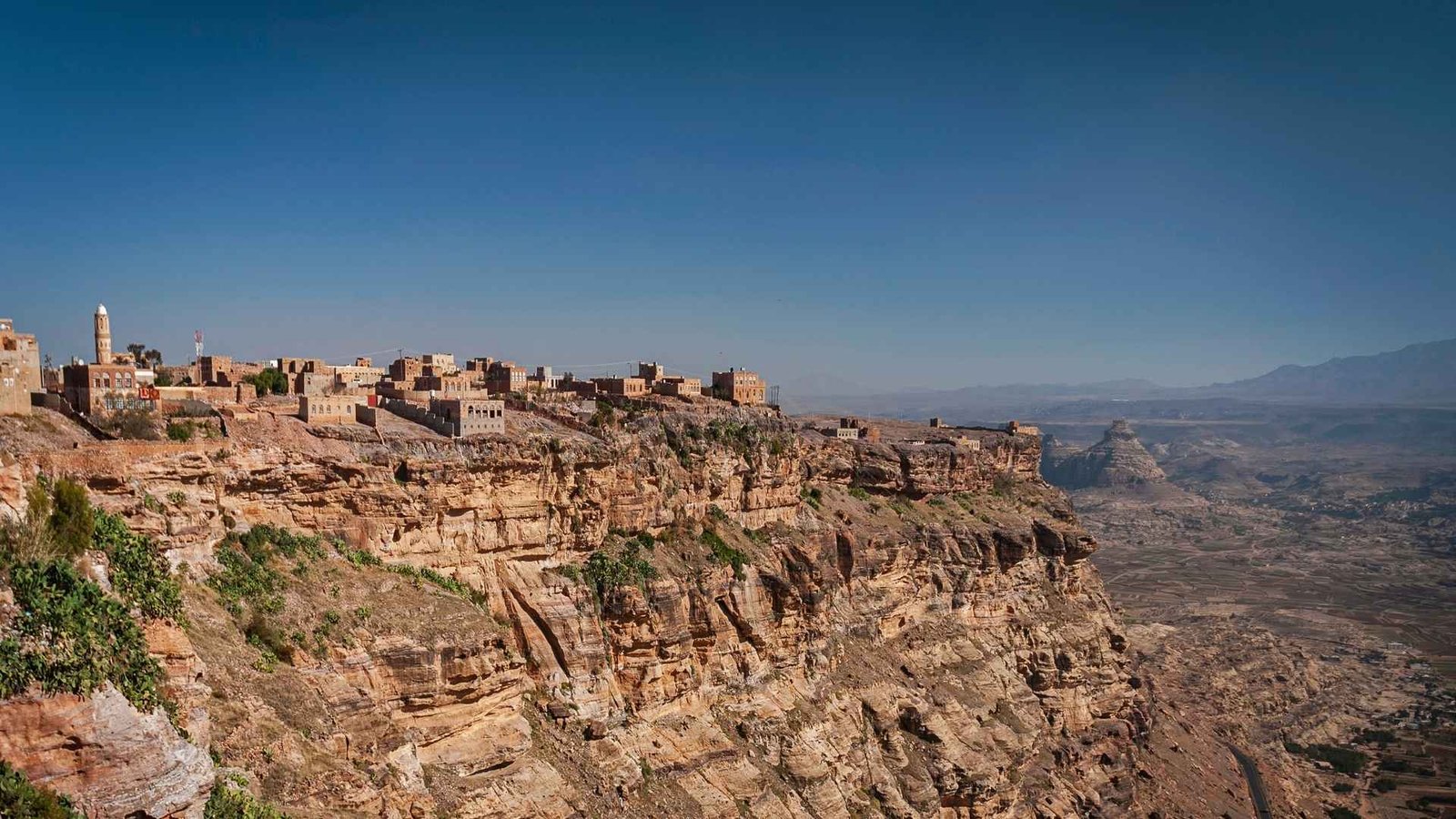
The qat seller in Manakha wraps my coffee beans in yesterday’s newspaper, his hands moving with the economy of someone who has performed this motion ten thousand times. Outside his shop, the Haraz Mountains drop away in terraces so old they predate Islam, stone walls holding soil that has grown coffee since the 15th century. This is Yemen at 2,500 metres, where the air tastes of cardamom and the villages seem to grow from the cliffs rather than sit upon them.
The Haraz Mountains occupy a peculiar position in the geography of global luxury—they are the source of what was once the world’s most coveted commodity, yet they remain largely unknown to the contemporary traveller. West of Sana’a, the massif rises abruptly from the Tihamah coastal plain, creating a microclimate where afternoon mists roll through valleys and winter rains sustain agriculture that would be impossible elsewhere on the Arabian Peninsula.
The coffee that grows here, specifically the varietals around Al Hutayb and Bani Matar, commands prices that would make a Geisha producer in Panama nod in recognition. But unlike the carefully branded single-origin bags in London roasteries, Haraz coffee mostly travels through traditional channels—to Saudi buyers who understand terroir in ways that predate modern marketing.
I stayed at the restored merchant house that now operates as Dar al-Hajar Guesthouse, where the rooms occupy what were once storage chambers for coffee awaiting the caravans to Mocha. The owner, whose family has worked these terraces for seven generations, walked me through his processing method one morning before dawn. We moved between drying beds where beans turned slowly in the mountain sun, and he spoke about rainfall patterns with the specificity of someone whose livelihood depends on reading weather the way others read markets.
The coffee itself—when finally brewed in the traditional jabana pot over almond-wood coals—carried notes I had never encountered: tamarind, dried lime, something almost savoury that the owner attributed to the volcanic soils specific to this elevation.
What differentiates the Haraz Mountains from other coffee regions is not merely altitude or microclimate but the complete integration of cultivation into a built landscape that has evolved over centuries. The villages themselves function as part of the agricultural system—their stone towers providing storage, their placement creating microclimates, their terraced foundations extending the growing surfaces. This is not farming as we typically conceive it, but rather a form of inhabited ecology where human settlement and cultivation are inseparable. For those seeking live travel inspiration beyond the conventional luxury narrative, the Haraz Mountains present a different proposition entirely: immersion in a working landscape where beauty and utility have never been divorced.
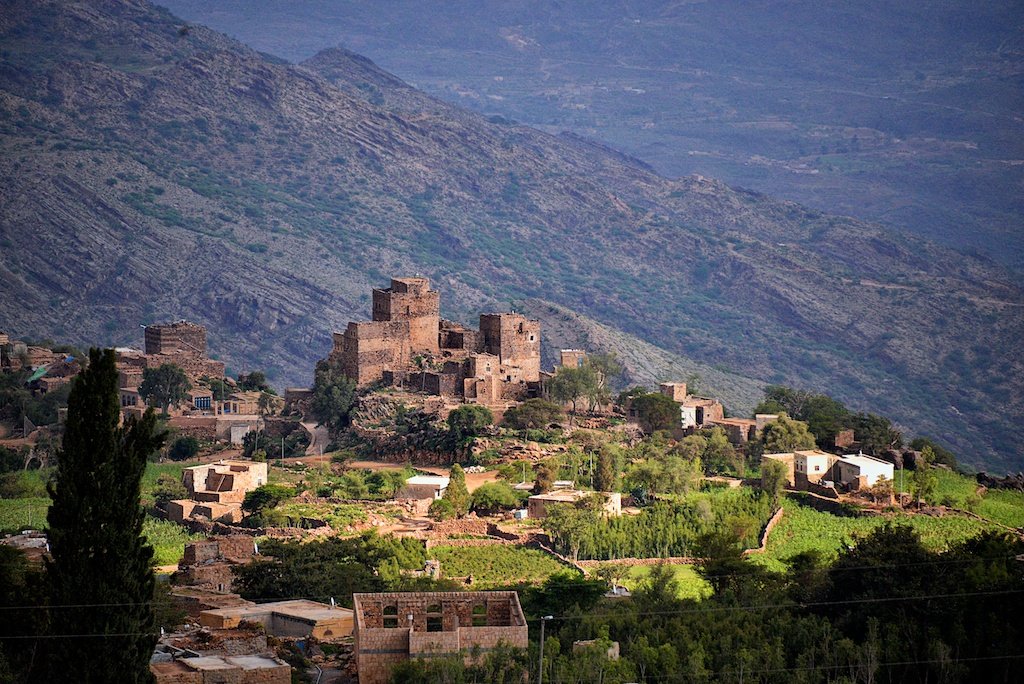
The stone towers of Haraz villages—particularly in Manakha, Hajjarah, and Thula—represent one of the world’s most distinctive vernacular architectures, yet they receive a fraction of the attention lavished on, say, Tuscan farmhouses or Provençal mas. Built from the same basalt and limestone that forms the mountains, these structures rise five, six, sometimes seven storeys directly from cliff faces, their walls tapering as they climb, their upper floors featuring the distinctive white-framed windows that break the monochrome stone like teeth. The structural logic is Ottoman in its sophistication: thick walls at the base for storage and livestock, middle floors for daily living, upper levels for entertaining and sleeping where the air moves more freely.
At Sama Tower in Al Hajjarah—now operated as a guesthouse by the Al-Hajj family—I spent three nights in a room whose windows looked directly down a thousand-metre drop into the wadi below. The architecture creates a curious psychological effect: you feel simultaneously exposed and completely secure, suspended between earth and air. The restoration here respects original materials and techniques while introducing minimal modern comforts—running water, proper ventilation, electrical lighting that doesn’t compete with the oil lamps still used in common areas. This is not preservation as museum practice but as living adaptation, and it represents exactly the kind of culturally grounded luxury that justifies the complexity of reaching these mountains.
What makes the Haraz architectural tradition particularly compelling is its response to specific environmental pressures. These are not decorative choices but survival strategies: the tall, narrow profile presents minimal surface area to wind and sun; the thick walls regulate temperature in a climate of extreme diurnal variation; the upper-floor majlis rooms with their surrounding windows create natural ventilation that makes the hottest afternoons tolerable. Standing in such a room at sunset, watching the light change across the western ranges, you understand that this is luxury defined not by excess but by precision—every element serving multiple purposes, nothing wasted, nothing merely ornamental.
The Weekly Market at Suq al-Khamis
Thursday market in the Haraz town of Bait al-Faqih draws traders from across the western highlands, a weekly convergence that has operated on the same site since at least the 16th century. By the time I arrived at eight in the morning, the main square was already dense with commerce: sacks of coffee beans arranged by varietal and elevation, mounds of qat wrapped in banana leaves, daggers with handles of rhino horn and sandalwood, bolts of cloth from India and Somalia, frankincense from the Mahra, honey from the higher elevations where bees work the ziziphus flowers.
I came to understand the market not as spectacle but as information system—a weekly aggregation of mountain intelligence. Prices here respond to rainfall, to political developments, to harvest quality, to road conditions in the passes. The coffee merchants assess beans with a fluency that would impress any specialty buyer: they distinguish not just between regions but between specific slopes, specific processing methods, specific harvest weeks. One dealer let me taste through samples from five different elevations around Bani Matar, and the progression was as clear as any wine flight—rising complexity with altitude, more acidity in the highest lots, more body in the mid-elevations.
For travellers accustomed to luxury travel guides that emphasise private access and exclusive experiences, Suq al-Khamis offers something more valuable: authentic immersion in an economic and social system that functions exactly as it has for centuries. There is no performance here, no adaptation for tourist consumption. You are simply present in a place where serious business occurs according to protocols that predate the nation-state. This is the experiential luxury that cannot be engineered—the privilege of witnessing systems that work precisely because they have never been asked to explain themselves to outsiders.
The essentials: Haraz Mountains
Best season: October through March offers the most stable conditions and clearest mountain weather; avoid July-August when rains make roads difficult
Getting there: Fly to Sana’a (limited international connections via Cairo, Amman, or Addis Ababa); the Haraz Mountains lie 90-120 kilometres west, requiring 3-4 hours by four-wheel drive with experienced local driver
Where to stay: Sama Tower in Al Hajjarah or Dar al-Hajar Guesthouse near Manakha; expect £80-150 per night including meals; advance booking essential through specialist operator
Budget signal: £3,000-5,000 per person for week-long itinerary including guide, accommodation, ground transport, and security arrangements; this is not a destination for independent travel
Insider tip: Bring cash (USD or Euros) as cards are useless; carry your own supply of bottled water; learn basic Arabic greetings—English is rare outside Sana’a, and cultural respect matters immensely
The agricultural terraces of the Haraz Mountains represent one of the world’s most extensive pre-modern landscape modifications, comparable in scope to the rice terraces of Banaue or the andenes of Peru. UNESCO’s tentative list acknowledges their significance, though full World Heritage designation remains complicated by Yemen’s political situation. Walking these terraces with a local guide—I hired Abdullah, whose family farms near Al Hutayb—you begin to grasp the temporal depth involved. Some of these walls are demonstrably pre-Islamic; others incorporate Roman-era stonework; still others show Ottoman repairs. Yet they all function as a single integrated system, conducting water, preventing erosion, creating the microclimates necessary for coffee, grapes, almonds, pomegranates.
The maintenance of such terraces requires communal labour and shared knowledge that cannot be transmitted through documentation alone. Abdullah showed me how to read the walls for water stress, how to identify sections needing repair before they fail, how to understand the relationship between upper and lower terraces so that irrigation and drainage work in concert rather than opposition. This is not knowledge that can be acquired quickly or casually—it accumulates across generations, encoded in practice rather than text. That such knowledge persists despite decades of conflict and economic disruption speaks to the resilience of mountain cultures generally and Haraz farming communities specifically.
For the visitor, walking these terraces at dawn—when the mist is still caught in the valleys and the first light turns the stone walls pink—provides access to a working sublime that differs entirely from the preserved heritage sites more commonly featured in luxury travel narratives. This is not landscape as scenery but landscape as ongoing negotiation between human need and environmental constraint, beautiful precisely because it remains functional and necessary rather than merely picturesque.
The Question of Going Now
Yemen’s security situation makes travel here impossible to recommend without significant caveats. The conflict that began in 2015 continues with varying intensity, and while the Haraz Mountains lie in territory that has seen less direct fighting than other regions, the broader infrastructure challenges—limited fuel, uncertain road security, minimal medical facilities—create genuine risks. The British Foreign Office advises against all travel to Yemen, and most insurance policies explicitly exclude coverage there. These are not warnings to be dismissed lightly.
Yet the Haraz Mountains remain inhabited and functional, and a small number of specialist operators—notably the team at Yemen Journey, based in Sana’a—continue to facilitate travel for those willing to accept the complexities involved. Such travel requires extensive advance coordination, local knowledge, security protocols, and an acceptance that plans may need to change instantly based on conditions. It is emphatically not adventure tourism or war tourism but rather serious travel undertaken with full awareness of context and consequence. The reward is access to one of the world’s most distinctive mountain cultures at a moment when its future—like much of Yemen’s cultural heritage—remains uncertain.
I make no argument that everyone should or could go. But for those whose travel practice includes engagement with difficult places—who understand luxury not merely as comfort but as rare and meaningful access—the Haraz Mountains present an opportunity that may not persist indefinitely. The coffee terraces will likely survive; they have endured worse than the current conflict.
But the knowledge systems that maintain them, the architectural traditions that created these stone villages, the weekly markets that aggregate mountain intelligence—these depend on continuity of practice and transmission across generations. They are, in that sense, more fragile than the stones themselves. To witness them now is to accept responsibility for understanding their context completely, and to engage with them in ways that contribute to their persistence rather than their exploitation. That, finally, is the luxury that matters most—the privilege of presence accompanied by the obligation of care.
The tri-coloured lakes of Kelimutu appear at dawn like something from a fever dream—one turquoise, another jade, the third the colour of black coffee. I stand at 1,639 metres, breath visible in the mountain air, watching sulphuric gases rise from crater floors that shift hue with the seasons, the mineral content, and, if you believe the Lio people, the restless spirits of the dead.
Where Volcanoes Draw the Map
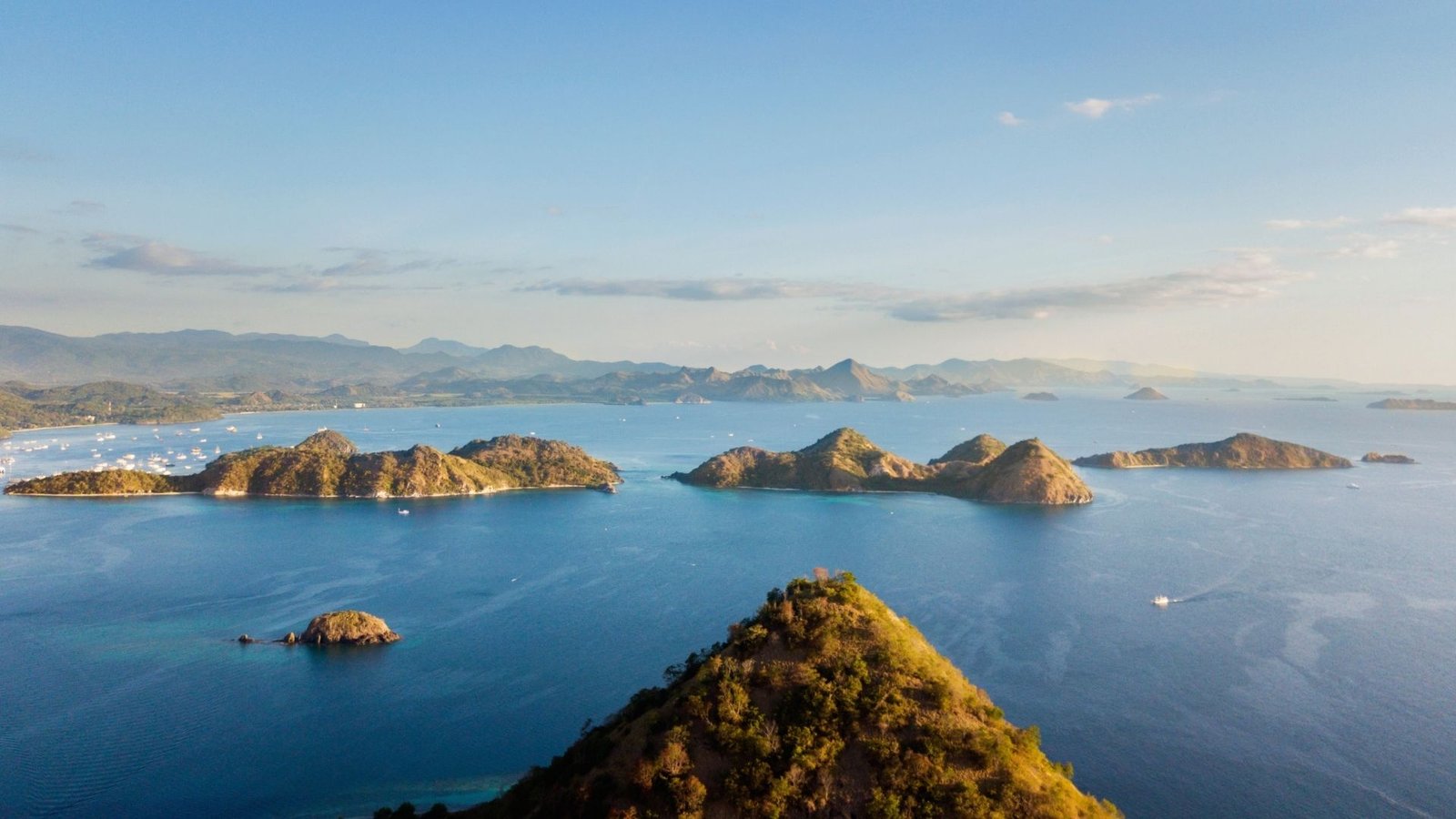
Flores Island stretches 360 kilometres across the Nusa Tenggara archipelago, a jagged spine of volcanic peaks that have shaped not just the topography but the cultures that cling to its slopes. Unlike Bali, where tourism has redrawn the social contract, Flores remains a place where geography determines faith, language, and identity. Drive two hours east and you’ll cross not just districts but entire worldviews—from Catholic fishing communities descended from Portuguese traders to animist villages where megaliths still receive offerings of betel nut and palm wine.
The volcanoes on Flores Island aren’t scenic backdrops. They’re active participants in daily life. Kelimutu last erupted in 1968, and locals read its three lakes the way others read newspapers—the colours signal which ancestors are content and which demand appeasement. Egon, further east on Flores Island, sent ash clouds over Maumere in 2004 and 2008. The soil these mountains produce grows some of Indonesia’s finest Arabica coffee, cultivated at altitudes where morning mist lingers past noon. At Amanwana on nearby Moyo Island—a two-hour speedboat transfer from western Flores Island—guests drink estate-grown coffee sourced from these volcanic slopes, though the resort’s seventeen tents offer a more refined vantage point for considering geological violence.
The landscape shifts with geological logic. The western regencies around Ruteng feature terraced rice paddies that cascade down hillsides in patterns unchanged for centuries. Move east towards Maumere and the terrain turns drier, more Timor than Java, with lontar palms replacing rice terraces and coral reefs replacing volcanic sand. This isn’t a destination that offers consistency. It demands adaptation, a willingness to let the island dictate terms. Those seeking live travel inspiration will find it in the way geography here still determines human possibility rather than the reverse.
Flores serves as the gateway to Komodo National Park, though this fact tends to overshadow the Flores Island. The UNESCO World Heritage site encompasses three major islands—Komodo, Rinca, and Padar—plus numerous smaller ones, protecting the world’s largest lizards and some of Indonesia’s most extraordinary marine biodiversity. But the park has become a victim of its own appeal. In 2023, authorities announced plans to build a ‘Jurassic Park’ styled facility on Rinca, complete with elevated walkways and viewing platforms, sparking outrage from conservationists who argue the dragons need protection from tourism, not increased exposure to it.
I sailed to Rinca aboard a private charter arranged through Plataran Komodo Resort & Spa, a property perched on Waecicu Beach with views across the strait to Komodo Island. The resort’s teak-and-thatch bungalows feel appropriately remote—no television, patchy internet, the kind of place where sundowners on your private deck count as the evening’s entertainment. The boat departure was timed for first light, when dragons emerge from their burrows to warm cold blood in the early sun. Our ranger carried a forked stick, the only defence against an animal whose saliva contains fifty strains of bacteria.
What struck me on Flores Island wasn’t the dragons themselves—impressive as they are at three metres and eighty kilograms—but the terrestrial poverty surrounding them. Rinca is a harsh place: brittle savannah grass, skeletal trees, temperatures that reach forty degrees by midday. The dragons survive here because they’re supremely adapted scavengers, capable of eating eighty percent of their body weight in a single feeding. Watching one tear into a goat carcass (provided by rangers, a controversial practice) offers no Attenborough-style majesty. It’s brutal, efficient, and strangely compelling precisely because it refuses to perform for human witnesses.
The Ngada Highlands and Living Animism
The Ngada villages around Bajawa exist in a permanent negotiation between the modern Indonesian state and something far older. In Bena, a cluster of traditional houses arranged around a central plaza, animist rituals continue despite the Catholic churches that dot the surrounding hills. The village’s thirty families maintain ancestral houses with steep thatched roofs that sweep nearly to the ground. In the plaza stand ngadhu and bhaga—paired structures representing male and female principles, each one tied to a specific clan lineage.
I arrived during preparations for a reba ceremony, a harvest ritual that involves days of buffalo sacrifice, palm wine consumption, and dances that enact the Ngada creation myths. The Catholic catechist who showed me around saw no contradiction in attending Sunday mass and pouring blood offerings on megalithic altars. ‘The Church is for the next life,’ he explained. ‘The ancestors manage this one.’ His English was excellent; his teenage son wore a Chelsea football shirt and filmed the ceremony on a smartphone for TikTok. Tradition here isn’t static or pure. It’s a living compromise, shaped by tourists like me who pay 50,000 rupiah entry fees that fund roof repairs and school fees.
The road to Bena from Bajawa winds through some of Flores Island’s most striking countryside—rice terraces that shift from emerald to gold depending on the season, volcanic cones rising abruptly from valleys, villages where women still weave ikat textiles on backstrap looms. This is where luxury travel guides tend to fall silent, because there’s no luxury property within two hours’ drive and the experience itself resists commodification. You sleep where you can—small guesthouses, family compounds—and wake to roosters and gong music at dawn.
The essentials: Flores Island
Best season: May through September offers dry conditions and calm seas for boat transfers; October through April brings rain but fewer visitors and lusher landscapes
Getting there: Daily flights from Bali to Labuan Bajo (western Flores) or Maumere (eastern Flores); overland travel between them requires three days minimum by 4WD
Where to stay: Plataran Komodo Resort & Spa in Labuan Bajo offers beachfront bungalows from US$450 per night; in eastern Flores, accommodation is modest—expect guesthouses at US$30-60
Budget signal: Plan for US$300-500 daily including private boat charters, guides, and quality accommodation where available; eastern regions cost significantly less but offer fewer amenities
Insider tip: Hire a driver-guide for the full cross-island journey rather than attempting self-drive; roads are poorly signed, fuel stations sparse, and a knowledgeable local transforms logistics into cultural education
The marine park at Riung, on Flores Island’s northern coast, comprises seventeen islands scattered across protected waters that support healthy coral systems and significant populations of flying foxes. Unlike the heavily visited sites around Labuan Bajo, Riung receives perhaps a dozen foreign visitors weekly. The town itself offers little—a few warung serving grilled fish, a modest pier, a sense that you’ve driven to the end of a road that didn’t expect company.
I hired a boat for the day, a wooden affair with an outboard motor and a captain who spoke no English but understood ‘snorkelling’ and ‘flying fox’ well enough. We anchored off Pulau Tiga, where the water was so clear I could count individual fish species from the boat: midnight snapper, parrotfish grinding coral into sand, a hawksbill turtle that surfaced briefly before descending into the blue. The coral wasn’t pristine—bleaching events and dynamite fishing have taken their toll—but it was recovering, protected now by Marine Protected Area status that restricts both fishing methods and visitor numbers.
The flying foxes roost on Pulau Kalong, dense colonies that darken entire trees. At dusk they lift off in waves, thousands of them streaming towards the mainland in search of fruiting trees, their wingspans stretching a metre across. It’s a spectacle that would draw tour groups anywhere else. Here it drew just us, returning to Riung as stars emerged and the captain navigated by memory rather than GPS. The absence of infrastructure—no floating restaurant, no sunset cocktail bar—felt like the point rather than a deficit.
Coffee, Cloth, and the Economics of Staying
Flores Island’s economy runs on coffee and cloth, the twin pillars that have sustained highland communities for generations. In Manggarai, west of Ruteng, smallholder farmers grow Arabica at altitudes between 1,200 and 1,700 metres. The coffee here rivals anything from Sumatra or Sulawesi, with notes of chocolate and tobacco that reflect volcanic soil chemistry. Yet most of it leaves the island as raw beans, processed in Surabaya or Singapore, robbing local farmers of value-added profits.
A few initiatives are trying to change this. Kopi Manggarai, a cooperative outside Ruteng, has invested in processing equipment and direct trade relationships with speciality roasters in Melbourne and Amsterdam. The manager showed me their drying beds, beans spread on raised platforms to cure in the sun, while explaining the price differentials: a farmer selling raw beans to a middleman might receive 40,000 rupiah per kilogram; the cooperative pays 65,000 and provides technical training on pruning and fermentation. It’s not charity. It’s a recognition that Flores Island coffee can command premium prices if it reaches buyers who care about terroir and traceability, concepts the Indonesian Ministry of Tourism is beginning to promote as part of cultural heritage preservation.
Ikat weaving follows similar patterns. In Sikka regency, women produce textiles whose patterns denote clan affiliation and social status—knowledge passed from mothers to daughters, colours derived from indigo, morinda root, and turmeric. A single sarong requires four months of work: spinning cotton by hand, dyeing and re-dyeing threads in complex resist patterns, weaving on backstrap looms that demand absolute concentration.
A master weaver might produce six pieces annually, selling them for prices that don’t reflect the labour involved—500,000 to two million rupiah, depending on complexity. Tourism offers a potential market, but only if visitors understand what they’re buying. The cheap ikat sold in Labuan Bajo shops comes from factories in Java. The real cloth hangs in village homes, too valuable to display casually, brought out only for ceremonies or the occasional educated buyer willing to pay accordingly.
Raffles Hotel Singapore: The Hotel that maintains superior class in Asia, now for 140 years
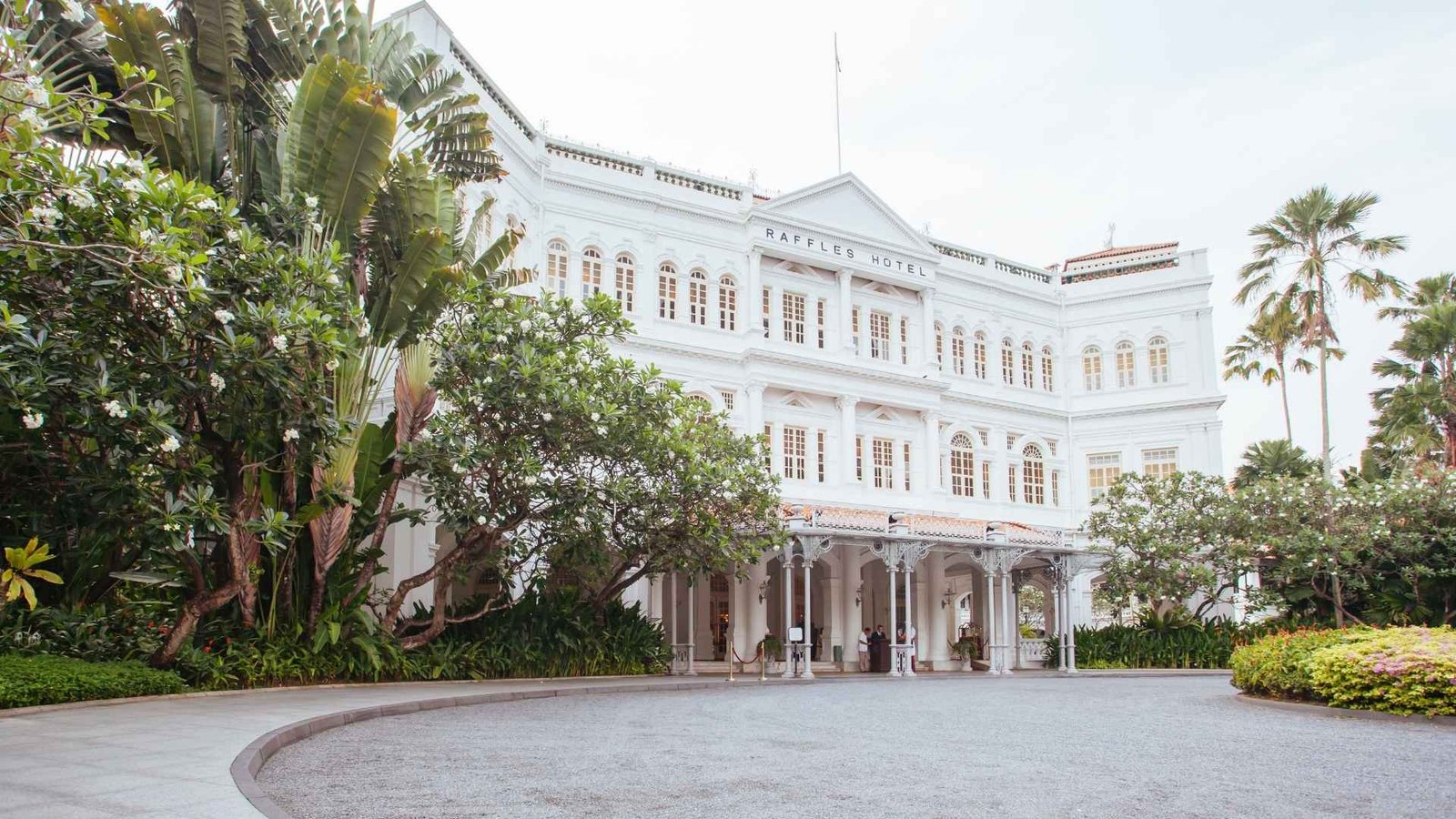
Raffles Hotel Singapore is ekceptional: There are hotels that are beautiful. There are hotels that are expensive. And then there is Raffles Hotel Singapore — a hotel that has spent 140 years defining a standard that every other luxury property in Asia is quietly measured against. Raffles Hotel Singapore encapsulates luxury and history.
That’s not marketing language. It’s a geographic and cultural fact.
What makes a hotel iconic — and why most aren’t
Discovering the Legacy of Raffles Hotel Singapore
The legacy of Raffles Hotel Singapore is unparalleled in the hospitality industry, setting benchmarks that others aspire to reach.
Raffles Hotel Singapore defines what it means to be iconic in the world of luxury hotels.
The rich history of Raffles Hotel Singapore tells a story of resilience and enduring elegance.
When pondering the essence of luxury, Raffles Hotel Singapore undoubtedly stands out as a significant player.
The word “iconic” is used so freely in travel writing that it has nearly lost its meaning. A hotel with a good infinity pool gets called iconic. A rooftop bar with a city view gets called iconic. Raffles Singapore doesn’t need the word — it simply is the thing the word is supposed to describe.
The contrast of Raffles Hotel Singapore against the modern skyline is a striking reminder of its rich heritage.
The commitment to preserving the essence of Raffles Hotel Singapore shines bright through every renovation.
Raffles Hotel Singapore’s restoration symbolizes a commitment to quality and tradition.
Opened in 1887 and named after Sir Stamford Raffles, the founder of modern Singapore, the hotel has occupied the same plot on Beach Road through the British colonial era, two world wars, Japanese occupation, independence, and the transformation of Singapore from trading port to one of the wealthiest city-states on earth. It has outlasted empires. It will outlast the current generation of glass-and-steel competitors too.
Here, at Raffles Hotel Singapore, the standard of service is unsurpassed, reflecting years of excellence.
Raffles Hotel Singapore has played a pivotal role in shaping hospitality culture in the region.
Guests of Raffles Hotel Singapore experience a level of service that is tailored and attentive.
The question worth asking is not whether Raffles is the most spectacular hotel in Singapore — it isn’t, and it doesn’t try to be. The question is why it remains the one that matters most.
The Singapore Sling is just one of the many reasons why Raffles Hotel Singapore remains a must-visit.
The colonial paradox at the heart of Singapore
Raffles exists in permanent tension with the city around it. Singapore is relentlessly modern, relentlessly ambitious, and deeply proud of having built one of the most sophisticated urban environments on the planet in the space of two generations. And yet its most beloved institution is a white colonial building with ceiling fans, timber verandas, and a cocktail invented in 1915.
This is not an accident or a nostalgic quirk. It reflects something real about how excellence works: the places that define quality over long periods of time are not the ones chasing the newest format, but the ones that identified something essential and then protected it through every renovation, ownership change, and shift in market taste.
Raffles Hotel Singapore stands proudly among the finest hotels in Asia, embodying luxury and sophistication.
Raffles Hotel Singapore symbolizes the pinnacle of luxury, attracting elite clientele from around the globe.
The 2019 restoration — a meticulous three-phase project — is the clearest recent example. The bones of the building were preserved. The materials were respected. The service philosophy was retained and sharpened. What emerged was not a reimagined Raffles but the original Raffles, done again properly.
Why the service here feels different
Every serious luxury hotel has a service philosophy written somewhere. Raffles has one that is actually practised. Part of the reason is structural: the hotel converted entirely to suites after the 2019 restoration, which means the minimum offering is already more than most hotels manage at their best. That changes the dynamic immediately.
But the more interesting reason is cultural. Raffles has trained enough generations of hospitality professionals that the standard has become self-reinforcing. Staff who trained here carry the ethos elsewhere in the region. The hotel has seeded a regional service culture in ways that can’t be tracked but can absolutely be felt.
What you notice as a guest is not any single dramatic gesture but a continuous, unobtrusive competence. Your name is used correctly. Your preferences are anticipated. Problems are resolved before you’ve quite finished describing them. This is what genuine luxury hospitality feels like when it hasn’t been bureaucratised.
The Long Bar — and what a drink can mean
The Singapore Sling was created here in 1915 by bartender Ngiam Tong Boon, and it has spent the subsequent century becoming one of the most replicated cocktails in the world. The copies are universally inferior. The original, served in the Long Bar with its peanut shells on the floor and lazy ceiling fans overhead, is something different — not because the recipe is secret, but because the setting completes it.
The Long Bar returned to its original location in the 2019 restoration, after years of displacement during construction. This was the right call. The bar is a social institution as much as a drinking establishment, and social institutions need their proper geography to function.
Come in the evening, not the afternoon. Come for the atmosphere as much as the drink. Leave room for a second one.
Raffles’ position on the Asian luxury map
Place Raffles alongside the other great hotels of the region — The Peninsula Hong Kong, The Oriental Bangkok, The Taj in Mumbai — and a pattern becomes clear. These are not just luxury properties; they are locations where the culture of a city concentrates and becomes visible. They attract the best local talent, serve as the setting for the most important business and social encounters, and function as a quality benchmark for everything around them.
Raffles does this for Singapore with particular clarity. Somerset Maugham wrote here. Rudyard Kipling ate here. When Singaporeans themselves use Raffles as a mark of quality — when “Raffles standard” is an understood phrase in a city that knows its luxury — the hotel has earned a position that money alone cannot buy.
Who should stay here — and who should simply visit
You don’t have to stay at Raffles to experience it. The hotel is open to non-residents in its restaurants and bars, and an evening at BBR by Alain Ducasse or a quiet hour in the Writer’s Bar gives you access to the atmosphere and the service at a fraction of the room rate. The courtyard gardens, often overlooked by guests in a hurry, are some of the most beautiful spaces in Singapore.
For those who do stay: the Courtyard Suites are the entry point — well-proportioned, already a significant step above what most five-star hotels in the city offer. The Palm Court Suites open onto one of the finest courtyards in Asia. The Presidential Suite exists for those who need to ask no questions.
What Raffles is not: a design hotel, a social-media backdrop, or a place for people who measure luxury by novelty. It is, precisely and unapologetically, a place for people who understand that the most sophisticated thing a hotel can do is to be completely, consistently itself.
That turns out to be harder than it looks. After 140 years, Raffles still makes it look easy.
Beautiful Structures in Asia: Architectural Wonders You Need to See
Asia is home to some of the most breathtaking architectural achievements in the world — structures that range from ancient temples built centuries ago to futuristic skyscrapers that redefine modern skylines. What makes the continent particularly fascinating is the contrast. In a single journey, you can experience the 7 Most Beautiful Structures in Asia, monuments shaped by religion, empire, and tradition alongside ultra-modern cities pushing the boundaries of engineering.
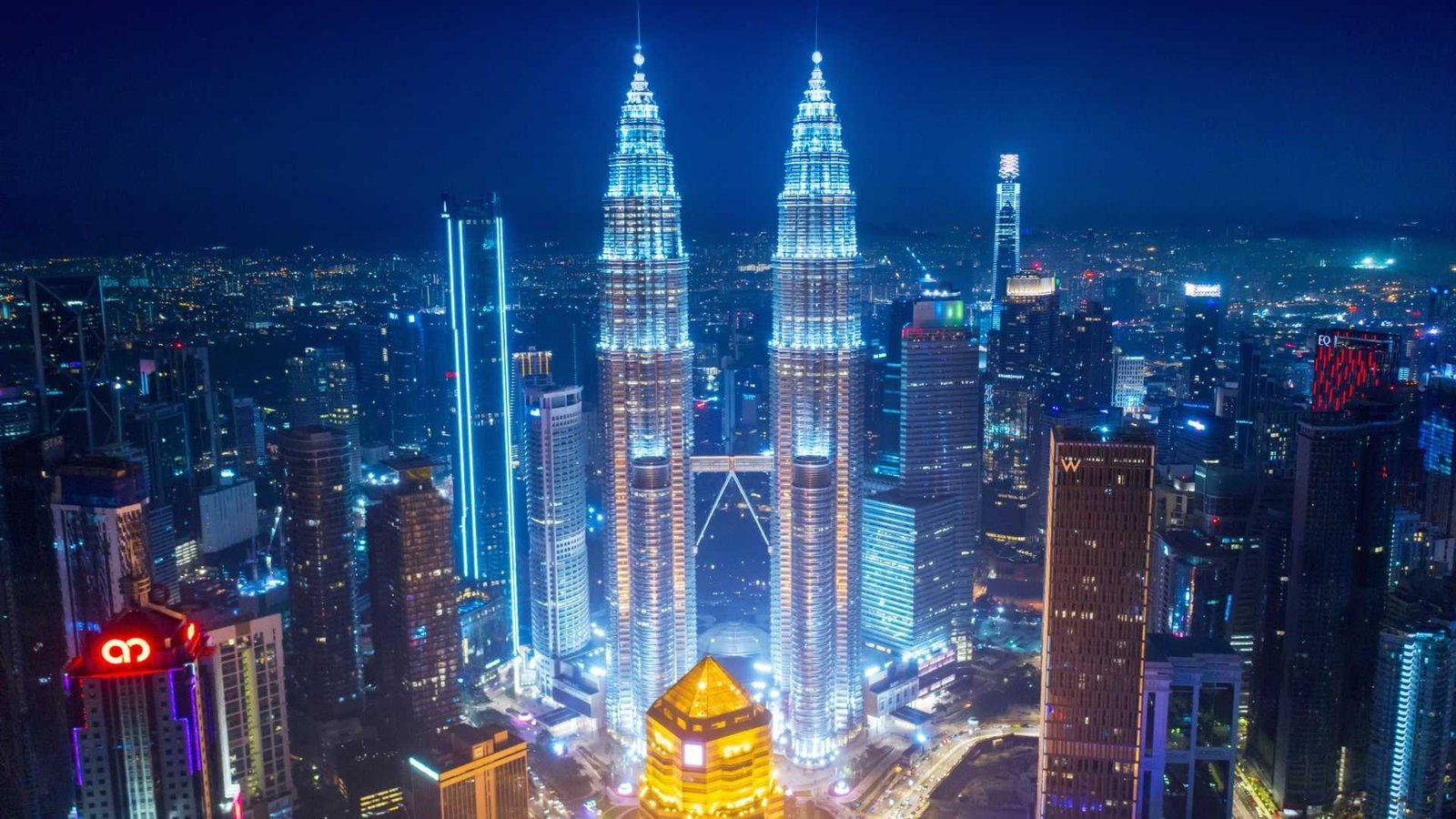
Even seeing the 7 Most Beautiful Structures in Asia from a distance can leave a lasting impression. I still remember catching my first glimpse of Kuala Lumpur’s skyline and spotting the Petronas Twin Towers rising above the city — elegant, symmetrical, and instantly recognizable even from afar. Moments like that remind you that architecture isn’t just about buildings; it’s about atmosphere, identity, and the emotions places create.
Standing in front of truly remarkable structures, including the 7 Most Beautiful Structures in Asia, often creates a unique kind of awe. The scale, craftsmanship, history, and cultural meaning combine into experiences that photos simply can’t capture. Whether it’s watching sunrise over ancient temples, walking through imperial palaces, or looking up at record-breaking towers, these encounters often become defining memories of travel in Asia.
In this guide, we explore the 7 most beautiful structures in Asia — architectural landmarks that showcase the continent’s diversity, creativity, and cultural depth, emphasizing the 7 Most Beautiful Structures in Asia.
1. Taj Mahal — India
The 7 Most Beautiful Structures in Asia offer not only a visual feast but also a journey through the rich tapestry of history and culture that defines the continent.
Visiting the 7 Most Beautiful Structures in Asia can change your perspective on architectural beauty and its impact on society.
Many travelers seek out the 7 Most Beautiful Structures in Asia not just for their beauty, but for the stories they tell about our shared history.
Exploring the 7 Most Beautiful Structures in Asia is an opportunity to connect with the past and appreciate the artistry of human endeavor.
To experience the 7 Most Beautiful Structures in Asia is to understand the essence of the cultures that created them.
When planning your travels, include the 7 Most Beautiful Structures in Asia in your itinerary to ensure a memorable journey.
Some places carry so much global recognition that you almost wonder whether they can live up to the expectation. The Taj Mahal is one of those rare landmarks that doesn’t just meet the hype — it exceeds it. Long before you arrive, you already know the silhouette: the white domes, the minarets, the perfect symmetry. But seeing it in person is something entirely different. The scale, the details, and the atmosphere combine into a moment that feels surprisingly emotional.
These 7 Most Beautiful Structures in Asia exemplify the incredible craftsmanship and dedication of their builders.
The 7 Most Beautiful Structures in Asia are not just tourist attractions; they are integral to understanding the region’s heritage.
Many of the 7 Most Beautiful Structures in Asia have inspired artists and architects around the world.
Experiencing the 7 Most Beautiful Structures in Asia can ignite a passion for architecture and design.
Many people find that the 7 Most Beautiful Structures in Asia leave a lasting impression long after they depart.
Exploring the narrative behind the 7 Most Beautiful Structures in Asia enhances the travel experience.
Each of the 7 Most Beautiful Structures in Asia has a story that connects to the cultural history of its location.
One of the most striking things about the Taj Mahal is how it reveals itself gradually. As you pass through the grand entrance gate, the monument suddenly appears framed in the distance, almost like a perfectly composed photograph. The white marble seems to glow depending on the time of day — soft and pale in the morning, bright under midday sun, and warm with golden tones near sunset. That changing light gives the structure an almost living quality.
Experiencing the 7 Most Beautiful Structures in Asia offers insight into the civilizations that built them.
The 7 Most Beautiful Structures in Asia are celebrated for their architectural brilliance and historical significance.
In conclusion, exploring the 7 Most Beautiful Structures in Asia is not just a journey, but an opportunity to understand diverse cultures.
Built in the 17th century by Mughal emperor Shah Jahan in memory of his wife Mumtaz Mahal, the Taj Mahal is often described as the world’s greatest monument to love. Yet beyond the romantic story, what truly defines the experience is the craftsmanship. Intricate floral carvings, precious stone inlays, geometric patterns, and flawless symmetry create a level of detail that rewards slow exploration. The longer you spend there, the more you notice.
There’s also a surprising sense of calm despite its fame. Standing near the reflecting pools with the gardens stretching out in perfect alignment, the atmosphere feels peaceful — almost contemplative — especially in the early morning hours before crowds fully arrive. It’s the kind of place where you naturally pause, take photos, then pause again simply to absorb the moment.
Why the Taj Mahal Is One of the Most Beautiful Structures in Asia
Perfect architectural symmetry and proportions
White marble that changes color with natural light
Extraordinary craftsmanship with stone inlays and carvings
Deep historical and emotional significance
UNESCO World Heritage Site and global cultural icon
Beautiful garden setting with reflective water features
Best Experiences at the Taj Mahal
Visiting at sunrise for softer light and fewer crowds
Walking through the Mughal gardens toward the main monument
Viewing marble details up close inside the complex
Photography from the reflecting pools
Seeing the monument at sunset from across the Yamuna River
Best time to visit: October to March (cooler temperatures and clearer skies)
The Taj Mahal isn’t just an architectural masterpiece — it’s an experience shaped by light, emotion, and history. For many travelers, it becomes one of those rare moments where a famous landmark genuinely feels unforgettable, not because of what you expected, but because of how it makes you feel standing there.
2. Tokyo Skytree — Japan
Tokyo is a city that constantly reminds you how far human innovation can go, and nowhere is that feeling more obvious than when you look up at Tokyo Skytree. Rising 634 meters into the sky, the tower dominates the skyline with a presence that feels almost futuristic — like something designed for a different era. Even from a distance, you notice how it stands apart from the dense urban landscape, elegant yet impossibly tall.
What makes Tokyo Skytree particularly fascinating isn’t just its height, but what it represents. Japan is one of the most technologically advanced countries in the world, and the tower reflects that identity perfectly. Built with cutting-edge earthquake-resistant engineering, the structure was designed to withstand powerful seismic activity while maintaining stability — an extraordinary achievement considering its scale. Knowing that level of precision and innovation exists beneath what you’re seeing adds another layer of appreciation.
Ascending the tower is often described as surreal. As the elevator doors open onto the observation decks, Tokyo stretches endlessly in every direction — a sea of buildings, lights, and movement that seems to go on forever. On clear days, you can even see Mount Fuji on the horizon, creating a striking contrast between natural and urban landscapes. At night, the experience transforms again, with the city glowing beneath you in an ocean of neon and light.
The tower itself also changes character after sunset. Carefully designed illumination patterns bathe the structure in shifting colors, turning it into a luminous centerpiece visible across the city. It becomes less of a building and more of a symbol — modern Japan reaching upward, technologically confident, and visually stunning.
Why Tokyo Skytree Is One of the Most Beautiful Structures in Asia
Panoramic views over one of the largest cities on Earth
Elegant modern design inspired by traditional Japanese aesthetics
Dynamic nighttime illumination creating a changing skyline icon
Symbol of Japan’s innovation and technological leadership
Best Experiences at Tokyo Skytree
Visiting the Tembo Deck observation level for city views
Watching sunset transition into nighttime city lights
Viewing Mount Fuji on clear weather days
Exploring the shopping and dining complex below the tower
Photography of illuminated tower after dark
Best time to visit: Year-round (clear winter days often provide the best visibility)
Tokyo Skytree represents a different kind of beauty compared to ancient monuments. It’s not rooted in history or mythology, but in human progress — engineering, technology, and ambition. Standing beneath it or looking out across Tokyo from its heights, you don’t just admire the structure itself; you feel the scale of what modern civilization is capable of achieving.
4. Petra — Jordan
Some destinations are memorable not only because of what you see, but because of how you arrive there. Petra is one of those places. The journey begins through a narrow canyon known as the Siq, with towering rock walls rising on both sides, gradually building anticipation with every step. Then suddenly, the passage opens — and the Treasury appears, carved directly into rose-colored stone. It’s one of the most dramatic architectural reveals anywhere in the world.
Petra dates back more than 2,000 years and was once the thriving capital of the Nabataean civilization, a trading empire that controlled important desert routes. What makes the city extraordinary is how architecture and nature merge seamlessly. Buildings are not constructed on the landscape — they are carved into it, blending human craftsmanship with geological beauty.
The colors of the stone shift throughout the day, from soft pink to deep red and orange depending on sunlight. Walking deeper into the ancient city reveals temples, tombs, staircases, and entire facades sculpted into cliffs, creating a sense of exploration that feels almost cinematic. It’s easy to understand why Petra is often called one of the New Seven Wonders of the World.
Why Petra Is One of the Most Beautiful Structures in Asia
Architecture carved directly into natural rock cliffs
Iconic Treasury facade with dramatic entrance experience
Ancient city with deep historical significance
Unique desert landscape setting
UNESCO World Heritage Site and global wonder
Changing colors of stone throughout the day
Best Experiences at Petra
Walking through the Siq canyon to the Treasury
Hiking to the Monastery viewpoint
Exploring ancient tombs and ruins
Visiting during sunrise or sunset for softer colors
Experiencing Petra by Night candlelight events
Best time to visit: March to May and September to November (comfortable temperatures)
Petra feels less like a historical site and more like discovering a lost world. The combination of natural geology and human artistry creates a sense of wonder that stays with you long after you leave.
5. Himeji Castle — Japan
Himeji Castle is often described as Japan’s most beautiful castle, and the nickname “White Heron Castle” explains why. The brilliant white exterior and elegant layered rooftops create a structure that appears almost weightless, as if it could lift into the sky. Unlike many historic buildings that feel heavy or imposing, Himeji combines strength with grace.
Originally built in the 14th century and expanded over centuries, the castle remains one of the best-preserved examples of feudal Japanese architecture. Walking through its gates and defensive corridors reveals a sophisticated design intended to confuse enemies, with winding paths, hidden openings, and strategic vantage points.
What makes Himeji especially memorable is its harmony with the surrounding landscape. During cherry blossom season, pink flowers frame the white walls, creating one of Japan’s most iconic seasonal scenes. Even outside spring, the balance between architecture and environment gives the castle a timeless beauty.
Why Himeji Castle Is One of the Most Beautiful Structures in Asia
Elegant white exterior and layered roof design
Best-preserved feudal castle in Japan
UNESCO World Heritage Site
Sophisticated defensive architecture
Stunning seasonal scenery, especially cherry blossoms
Deep cultural and historical significance
Best Experiences at Himeji Castle
Exploring the interior wooden corridors
Walking through castle grounds and gardens
Photography during cherry blossom season
Viewing panoramic scenery from upper levels
Learning about samurai-era defense strategies
Best time to visit: March to May (cherry blossoms) or October to November (autumn colors)
Himeji Castle represents architectural beauty through refinement and balance. It’s not only a symbol of Japan’s past — it’s a reminder of how elegance and functionality can coexist perfectly.
6. Marina Bay Sands — Singapore
Few modern buildings in the world are as instantly recognizable as Marina Bay Sands. Rising above Singapore’s waterfront, the three towers connected by a ship-like rooftop structure create a silhouette that feels futuristic and almost surreal. It’s the kind of architecture that makes you stop, look up, and wonder how it was even possible to build.
The engineering achievement alone is remarkable. The rooftop SkyPark spans across the towers, supporting gardens, restaurants, and the famous infinity pool overlooking the city skyline. Seeing the structure from ground level emphasizes its scale, while viewing Singapore from the top provides an entirely different perspective — a modern city designed with precision and ambition.
At night, Marina Bay Sands becomes even more dramatic. Lights reflect off the water, the skyline glows, and the building transforms into a centerpiece of Singapore’s futuristic identity. It’s not just a hotel — it’s a symbol of how architecture can define a city.
Why Marina Bay Sands Is One of the Most Beautiful Structures in Asia
Unique three-tower design with rooftop SkyPark
Engineering innovation and modern architecture
Iconic Singapore skyline landmark
Infinity pool overlooking the city
Spectacular nighttime illumination
Combination of luxury, design, and urban scenery
Best Experiences at Marina Bay Sands
Viewing the skyline from the observation deck
Watching the city lights after sunset
Exploring Gardens by the Bay nearby
Dining with panoramic views
Photography from Marina Bay waterfront
Best time to visit: Year-round (evenings provide the most dramatic views)
Marina Bay Sands represents the modern face of Asia — bold, innovative, and visually unforgettable. It shows how architecture can move beyond function and become a defining symbol of an entire destination.
7. Wat Rong Khun (White Temple) — Thailand
Some structures are impressive because of their history. Others stand out because they challenge everything you expect architecture to be. Wat Rong Khun — widely known as the White Temple — falls into the second category. Located near Chiang Rai in northern Thailand, the temple looks almost otherworldly at first glance, as if it belongs more in a dream than in reality.
Unlike ancient temples built centuries ago, Wat Rong Khun is a modern creation designed by Thai artist Chalermchai Kositpipat. Construction began in 1997 and continues today, with the vision of creating a spiritual and artistic masterpiece unlike any other temple in the world. The entire structure is covered in brilliant white plaster embedded with mirrored glass fragments, causing the building to shimmer and sparkle under sunlight. The effect is mesmerizing — delicate, luminous, and constantly changing as light shifts throughout the day.
What makes the experience especially memorable is the symbolism woven into every detail. Visitors cross a bridge over sculpted hands reaching upward from below, representing human desire and suffering before entering the sacred space. Inside, traditional Buddhist themes mix with modern imagery, creating a surprising contrast between ancient spirituality and contemporary culture. It’s unexpected, thought-provoking, and visually unforgettable.
Standing in front of Wat Rong Khun often creates a sense of disbelief — the level of detail, the brightness of the white surfaces, and the creativity of the design combine into something that feels almost surreal. It’s architecture not just as a building, but as artistic expression.
Why Wat Rong Khun Is One of the Most Beautiful Structures in Asia
Unique all-white design symbolizing purity
Mirrored glass creating shimmering light effects
Blend of traditional Buddhist architecture and modern art
Highly detailed sculptures and symbolic elements
One of the most visually distinctive temples in the world
Continuing artistic vision still under construction
Best Experiences at Wat Rong Khun
Walking across the symbolic bridge entrance
Observing intricate details and sculptures up close
Photography during bright daylight when the temple sparkles
Exploring the surrounding art installations and buildings
Visiting early morning to avoid crowds
Best time to visit: November to February (cooler temperatures and clearer skies)
Wat Rong Khun provides the perfect conclusion to Asia’s architectural diversity. From ancient wonders to futuristic skyscrapers, the continent offers extraordinary structures — and this modern masterpiece proves that creativity and spiritual symbolism continue to evolve even today. It’s not just a temple you visit; it’s an experience you remember.
Interesting Facts and Travel Tips About Asia’s Architectural Wonders
Visiting famous structures across Asia is not just about sightseeing — it’s about understanding history, culture, and human ambition across thousands of years. From ancient civilizations to modern megacities, architecture in Asia reflects deep symbolism, technological progress, and artistic expression. Knowing a few key facts and travel tips beforehand can make the experience even more meaningful.
Fascinating Facts About Architecture in Asia
Asia contains some of the oldest surviving structures in the world, with architectural traditions dating back thousands of years.
Many famous landmarks were built with symbolic meaning, reflecting religion, cosmology, or political power rather than purely practical design.
The Taj Mahal took over 20 years to complete and involved thousands of craftsmen and artisans.
Angkor Wat is the largest religious monument on Earth, covering more than 160 hectares.
Tokyo Skytree was engineered to withstand major earthquakes, using advanced vibration control systems.
Petra was hidden from the Western world until 1812, when it was rediscovered by a Swiss explorer.
Himeji Castle has survived wars, earthquakes, and bombings, making it one of Japan’s best-preserved historic structures.
Modern Asian megacities are home to some of the world’s tallest buildings, reflecting rapid economic and technological growth.
Travel Tips for Visiting Famous Structures in Asia
Arrive early or late in the day: Sunrise and sunset often provide the best lighting and fewer crowds.
Dress respectfully: Many temples and religious sites require modest clothing.
Check seasonal weather: Heat, humidity, or monsoon rains can affect comfort and visibility.
Book tickets in advance: Popular attractions like observation towers or major monuments can sell out.
Allow time to explore: Some sites, especially ancient complexes, are much larger than expected.
Hire local guides when possible: Understanding the symbolism and history adds depth to the experience.
Visit viewpoints nearby: Many landmarks are even more impressive when seen from a distance.
Frequently Asked Questions About the Most Beautiful Structures in Asia
What is the most famous structure in Asia?
The Taj Mahal in India is widely considered the most famous structure in Asia due to its global recognition, architectural beauty, and historical significance. Other iconic landmarks include Angkor Wat, Petra, and Tokyo Skytree.
Which country in Asia has the best architecture?
Several countries stand out for architecture, including India, Japan, Cambodia, Thailand, and Singapore. Each offers unique styles ranging from ancient temples and castles to modern skyscrapers.
Are these structures ancient or modern?
Asia offers both. Some landmarks like Angkor Wat and Petra are centuries old, while others such as Tokyo Skytree and Marina Bay Sands represent modern engineering and design innovation.
When is the best time to visit famous landmarks in Asia?
The best time depends on location, but generally cooler months and dry seasons provide the most comfortable conditions. Early mornings and late afternoons also offer better lighting and fewer crowds.
Are famous structures in Asia expensive to visit?
Costs vary widely. Some historical sites have affordable entrance fees, while observation towers or premium experiences may cost more. Overall, Asia offers options for most budgets.
Why are Asian structures so unique compared to other regions?
Asia’s architecture reflects a combination of ancient civilizations, religious traditions, cultural symbolism, and rapid modern development. This diversity creates a unique mix of historical and futuristic landmarks.
Final Thoughts: Architecture That Tells the Story of Civilizations
Asia’s architectural landmarks reveal far more than design and engineering — they tell the story of civilizations, beliefs, ambition, and creativity across thousands of years. From monuments built for emperors and gods to towers representing technological progress, each structure reflects a moment in human history.
Even imagining these places can spark curiosity and inspiration. Whether you’re drawn to ancient wonders, cultural heritage, or modern skylines, exploring Asia through its architecture offers a deeper understanding of the continent itself.
For travelers, photographers, and culture lovers alike, these structures are not just destinations — they are experiences that stay with you long after the journey ends.
10 Best Beaches in Asia: Ultimate Guide to Paradise Shores – Discover the 10 best beaches in asia
Asia is home to some of the most spectacular beaches on the planet — destinations that regularly rank among the world’s best for their powder-soft sand, crystal-clear water, and postcard-perfect scenery. But beyond the rankings and Instagram photos, what makes beaches in Asia truly special is the feeling they create. There’s a sense of escape here that’s hard to replicate anywhere else.
From the clear waters of Boracay to the serene shores of Nacpan, these are the 10 best beaches in asia that offer incredible experiences and breathtaking views. Many travelers include these beautiful locations in their itineraries, proving just how popular the 10 best beaches in asia are.
Finding the best beaches can be a challenge, but the 10 best beaches in asia offer a range of experiences, from bustling beach parties to tranquil escapes. Choosing from the 10 best beaches in asia guarantees unforgettable memories.
As you explore the 10 best beaches in asia, you’ll uncover unique activities and stunning landscapes. Each of these beaches has something special to offer that defines why they are among the 10 best beaches in asia.
Whether you’re planning a trip to the vibrant shores of Thailand or the remote islands of the Philippines, the 10 best beaches in asia cater to every type of traveler’s desires.
Join us as we unveil the gems of the region, and get inspired by the reasons why the 10 best beaches in asia deserve a spot on your travel bucket list.
Each entry in our list of the 10 best beaches in asia offers its own unique charm and beauty.
As we journey through the 10 best beaches in asia, keep an eye out for the picturesque landscapes and exciting activities that await you.
With numerous options available, you can’t go wrong choosing from the 10 best beaches in asia for your next getaway.
With their stunning beauty, it’s no wonder the 10 best beaches in asia attract so many visitors year after year.
As we explore the 10 best beaches in asia, you’ll discover a blend of culture, adventure, and relaxation.
I still remember the first time I arrived on a tropical beach in Southeast Asia. The heat was gentle rather than overwhelming, the ocean shimmered in shades of turquoise I had only seen in travel magazines, and the pace of life instantly slowed down. It wasn’t just beautiful — it felt untouched, calm, and almost surreal. The kind of place where time stops mattering.
Every traveler should experience the allure of the 10 best beaches in asia at least once in their lifetime.
Imagine yourself sinking your feet into warm white sand, a cold drink in your hand, and the soft sounds of chill-out music drifting through the air — something straight out of a Café del Mar sunset playlist. Palm trees sway lightly in the breeze, the horizon glows orange and pink, and for a moment, the only thing that matters is the rhythm of the waves.
That feeling is exactly why travelers return to Asia’s beaches again and again. Whether you’re looking for dramatic limestone cliffs in Thailand, remote island escapes in the Philippines, or exotic sandbanks in the Maldives, this region offers an unmatched variety of coastal experiences.
In this guide, we’ll explore the 10 best beaches in Asia — destinations that combine natural beauty, atmosphere, and unforgettable travel experiences.
1. White Beach, Boracay — Philippines
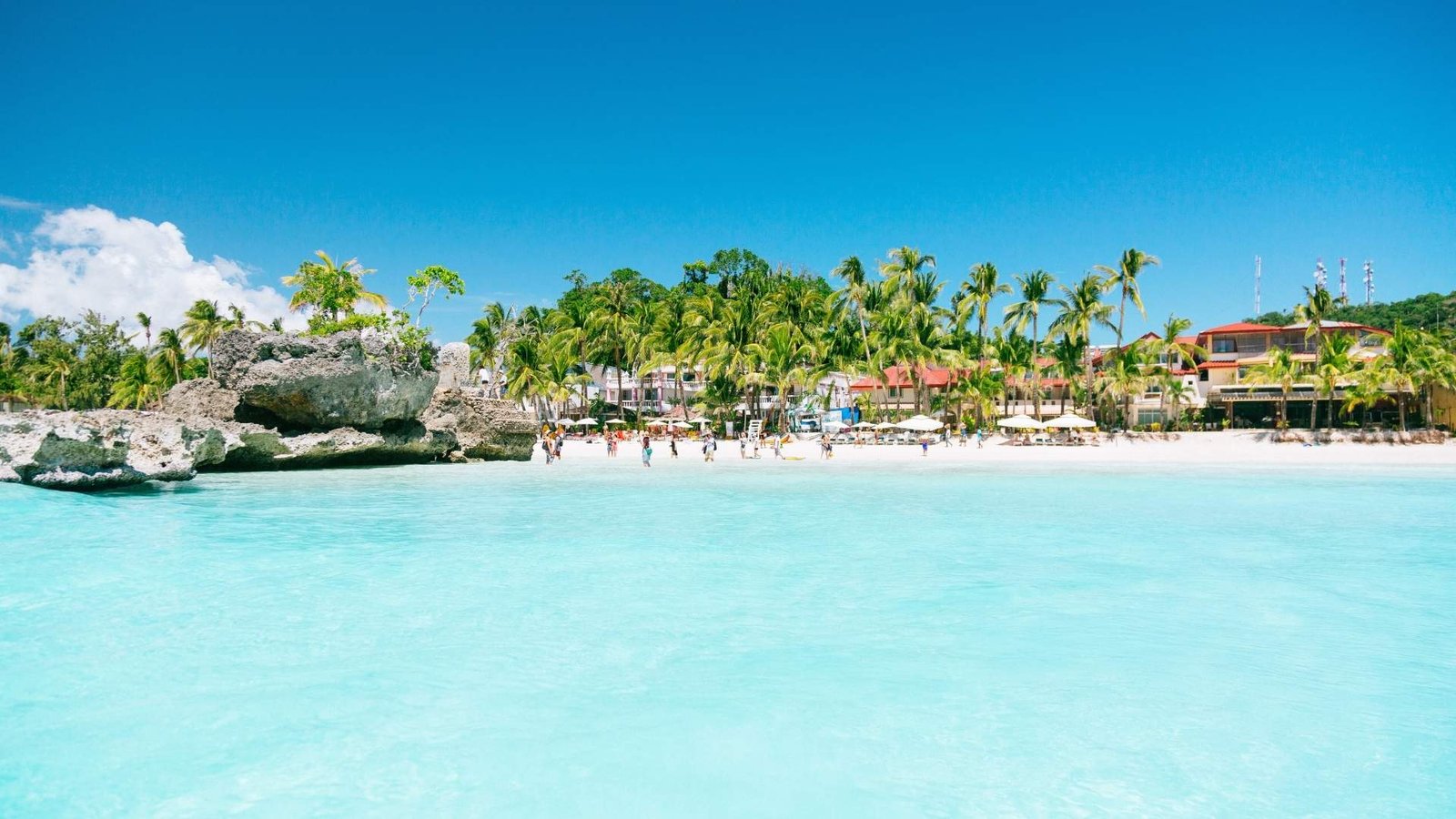
Boracay is one of those rare destinations that has lived multiple lives. Long before it became famous worldwide, the island was a quiet tropical escape known mainly to backpackers and adventurous travelers. In the early days — especially around Station 1 near the iconic White House Resort and Waling-Waling Beach Hotel — Boracay had an almost mythical reputation: powder-white sand, swaying palms, and very little development. It felt raw, pristine, and exclusive all at once.
Then came the boom years. By the late 1990s and 2000s, Boracay transformed into one of Asia’s premier party destinations, attracting celebrities, public personalities, and international jet-set travelers. Beachfront bars, fire dancers, and vibrant nightlife gave the island a legendary status similar to Ibiza — but with tropical Southeast Asian charm.
Today, Boracay has entered a new era. After a government-led environmental rehabilitation in 2018, the island reopened with stricter regulations, improved infrastructure, and a renewed focus on sustainability. The result is arguably the best version of Boracay yet: cleaner beaches, more organized transport, modern facilities, and a noticeably more relaxed atmosphere.
And perhaps the biggest surprise for many travelers — Boracay doesn’t have to be expensive. While luxury resorts still dominate parts of Station 1, budget-friendly hotels, guesthouses, and affordable local restaurants make it possible to experience this world-class beach without breaking the bank if you know where to look.
The 10 best beaches in asia are more than just destinations; they are experiences that linger in your memory long after you’ve left.
As you plan your itinerary, remember to include some of the beautiful spots from the 10 best beaches in asia.
Every beach lover dreams of basking in the sun on one of the 10 best beaches in asia, enjoying the gentle waves and the warm sand.
Let the 10 best beaches in asia be your guide to paradise, where each wave brings a new adventure.
As we dive into our selection, you’ll see why these are the 10 best beaches in asia that everyone should visit.
From iconic landmarks to hidden gems, the 10 best beaches in asia offer an array of experiences for all kinds of travelers.
Traveling along the coast, you’ll experience firsthand the magic of the 10 best beaches in asia.
As you explore, you’ll realize that the 10 best beaches in asia are not just places; they are stories waiting to be told.
With each visit, the allure of the 10 best beaches in asia will draw you back time and again.
Remember, the journey to the 10 best beaches in asia is just as important as the destination itself.
As you plan your getaway, think of how the 10 best beaches in asia can fulfill your dreams of a perfect escape.
Each entry on our list is worthy of its title as one of the 10 best beaches in asia.
Wander through the natural beauty of the 10 best beaches in asia, and you will find yourself enchanted.
With breathtaking scenery, the 10 best beaches in asia offer a feast for the senses.
The diversity among the 10 best beaches in asia is what makes them such a wonderful destination to explore.
Ultra-fine white sand often described as “powder soft”
Calm, swimmable waters ideal for all ages
Spectacular sunsets almost every evening
Wide range of accommodation from budget to luxury
Excellent food scene, from local eateries to international dining
Vibrant but manageable nightlife
Modern infrastructure after the island rehabilitation
Best Areas to Stay
Station 1: Luxury resorts, quieter atmosphere, widest beachfront
Station 2: Central location, nightlife, restaurants, shopping
Station 3: Budget-friendly options, more local vibe, fewer crowds
Best Things to Do in Boracay
Sunset sailing on a traditional paraw boat
Island hopping and snorkeling tours
Kitesurfing at Bulabog Beach (seasonal)
Beachfront dining and fire dance shows
Helmet diving and water sports
Relaxing spa treatments by the sea
Best for: First-time tropical travelers, couples, nightlife, luxury and budget mix
Best time to visit: November to May (dry season, calm seas)
Boracay’s journey from untouched paradise to global hotspot — and now to a more balanced, sustainable destination — makes it one of the most fascinating beach stories in Asia. For many travelers, it’s not just a beautiful beach. It’s the beach that defines tropical dreams.
2. Railay Beach, Krabi — Thailand
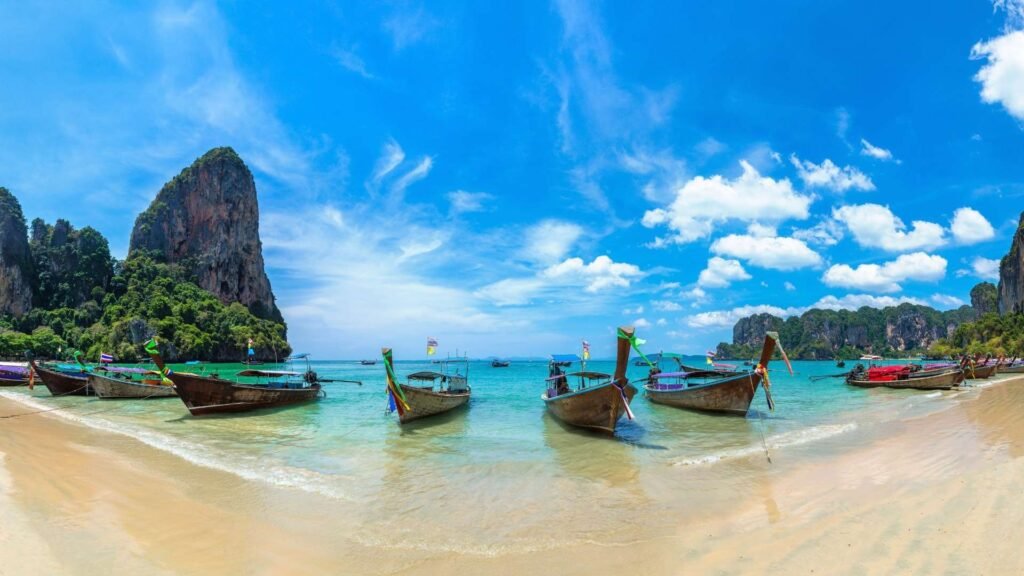
Arriving at Railay Beach is part of what makes it unforgettable. There are no roads leading here — the only way in is by boat. As you approach the shoreline, towering limestone cliffs rise dramatically from the turquoise sea, creating a landscape that feels almost cinematic. It’s the kind of place where you immediately slow down, take a deep breath, and realize you’ve arrived somewhere truly special.
Although technically located on the mainland of Krabi, Railay feels like a secluded island cut off from the rest of Thailand. The cliffs form a natural barrier that separates it from busy roads and cities, giving the entire peninsula a peaceful, self-contained atmosphere. Over the years, Railay has become famous not only for its beaches but also as one of the world’s top rock-climbing destinations, attracting adventurers from across the globe.
What makes Railay stand out among Asia’s best beaches is the combination of dramatic scenery and accessibility. Unlike remote islands that require long travel times, Railay offers postcard-level beauty with relatively easy access from Krabi and Phuket, making it ideal for travelers who want paradise without complicated logistics.
Why Railay Beach Is One of the Best Beaches in Asia
Iconic limestone cliffs rising straight from the ocean
Crystal-clear water with excellent swimming conditions
Unique boat-only access creating a secluded atmosphere
World-class rock climbing and adventure activities
Balanced mix of resorts, restaurants, and relaxed nightlife
Best Things to Do in Railay
Relax on Railay West Beach for classic tropical scenery
Visit Phra Nang Cave Beach, one of Thailand’s most beautiful ساحlines
Try rock climbing or watch climbers scale the cliffs
Kayak around limestone formations and hidden coves
Hike to Railay Viewpoint and lagoon for panoramic views
Take boat trips to nearby islands like Koh Poda and Chicken Island
Best for: Couples, adventure travelers, photographers, scenic landscapes, romantic getaways
Best time to visit: December to March (dry season with calm seas and clear skies)
Railay delivers something rare — a destination that feels remote and dramatic while still being comfortable and accessible. For many travelers, it’s the moment Thailand transforms from a holiday into a memory that stays with you long after you leave.
3. Nacpan Beach, El Nido — Philippines
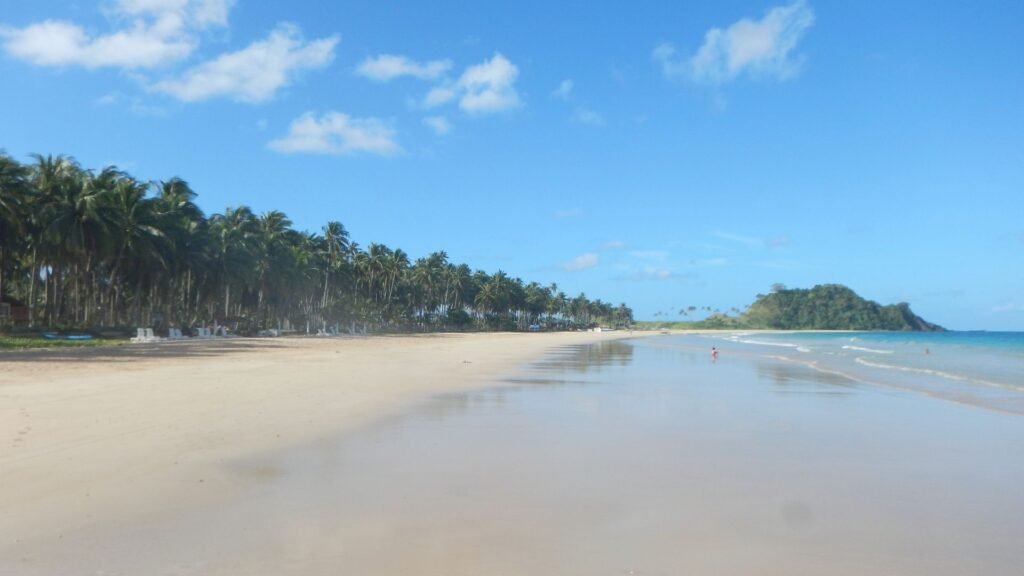
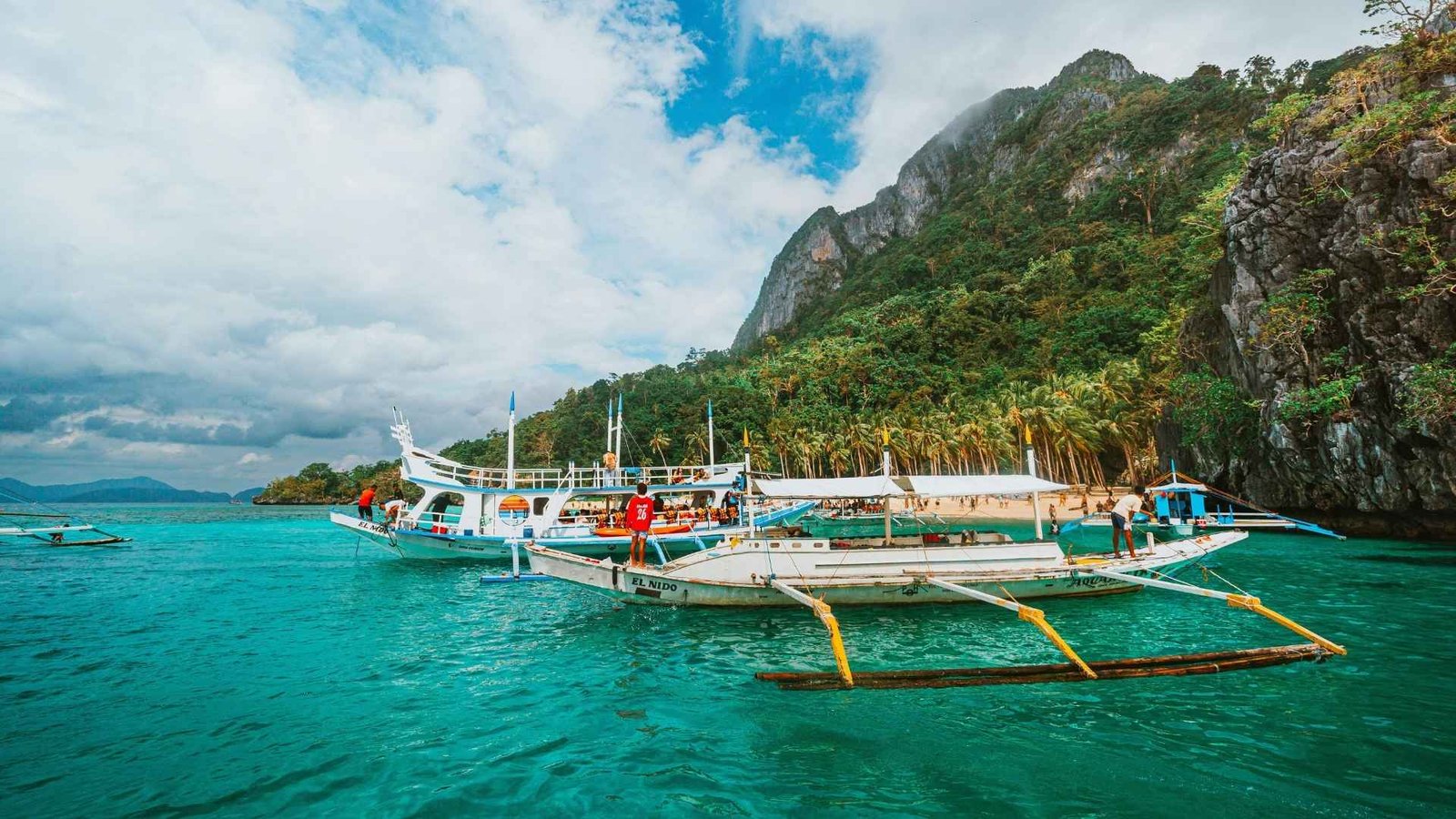
If Boracay represents the vibrant, polished side of tropical travel, Nacpan Beach in El Nido feels like stepping into the Philippines of decades past — raw, spacious, and wonderfully untouched. The moment you arrive, the scale of the landscape stands out. A long stretch of golden sand curves along the coastline, framed by coconut palms and rolling green hills, with far fewer crowds than many famous Southeast Asian beaches.
Located about 45 minutes from El Nido town on the island of Palawan, Nacpan offers a sense of escape that’s increasingly rare in Asia. There are no towering resorts dominating the skyline, no loud nightlife scenes — just open space, warm water, and the calming rhythm of the ocean. It’s the kind of place where you can walk for half an hour and still feel like you have the beach mostly to yourself.
Palawan itself is often described as the last frontier of the Philippines, and Nacpan perfectly captures that reputation. While El Nido is globally famous for its limestone lagoons and island-hopping tours, Nacpan delivers something simpler — and arguably more powerful — the experience of pure tropical serenity.
Why Nacpan Beach Is One of the Best Beaches in Asia
Four kilometers of wide, uncrowded golden sand
Clear, swimmable water with gentle waves
Natural scenery with minimal overdevelopment
Authentic island atmosphere compared to more commercial beaches
Beautiful palm tree backdrops perfect for photography
Close proximity to El Nido’s famous island-hopping tours
Peaceful sunsets with fewer crowds
Best Things to Do at Nacpan Beach
Relax under palm trees with fresh coconut drinks
Swim and enjoy the calm shoreline
Walk to Twin Beach viewpoint for panoramic scenery
Rent a motorbike and explore nearby countryside
Enjoy beachfront seafood and local Filipino dishes
Watch the sunset over the West Philippine Sea
Best for: Nature lovers, couples, peaceful escapes, photographers, travelers seeking less crowded beaches
Best time to visit: November to May (dry season with the calmest conditions)
Nacpan Beach offers something increasingly difficult to find in Asia — space, quiet, and authenticity. It may not have the nightlife of Boracay or the dramatic cliffs of Thailand, but its beauty lies in its simplicity. For many travelers, it becomes the place where they finally disconnect, slow down, and experience the true rhythm of island life.
4. Pink Beach, Komodo — Indonesia
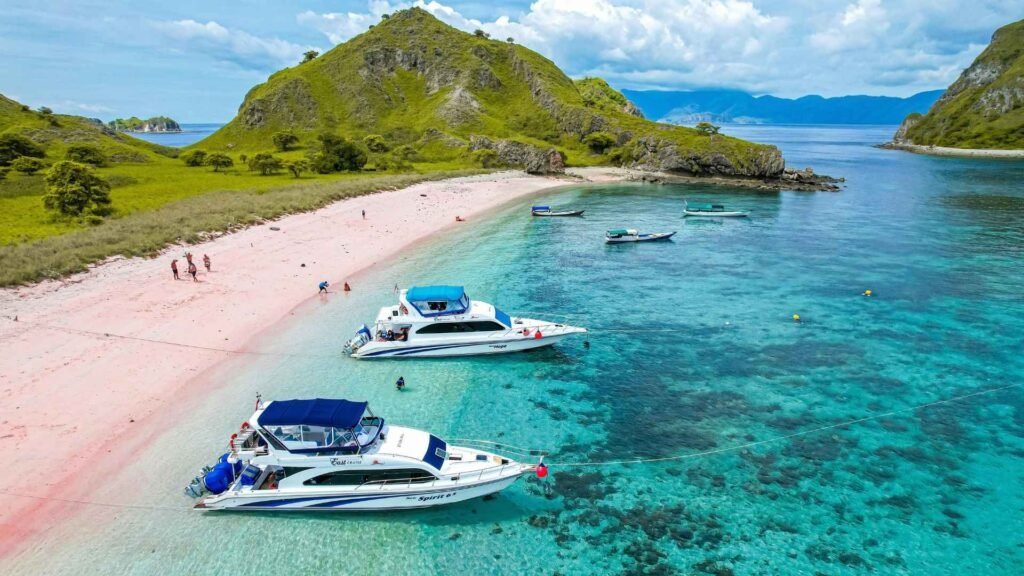
Some beaches impress with scale, others with atmosphere — but Pink Beach in Komodo National Park stands out instantly because of something far more unusual: the sand itself. With soft hues of blush and rose blending into turquoise water, the shoreline looks almost surreal, like a tropical landscape filtered through a dream. It’s one of the few genuinely pink-sand beaches in the world, and seeing it in person feels every bit as extraordinary as you would imagine.
The color comes from microscopic fragments of red coral mixed with white sand, creating the distinctive pink tone that changes depending on sunlight and tides. Set within the protected Komodo National Park — home to the famous Komodo dragons — the surrounding scenery remains largely untouched, with rugged hills, clear water, and thriving marine life completing the experience.
Reaching Pink Beach typically involves a boat journey from Labuan Bajo on Flores Island, which adds a sense of adventure and exclusivity. Unlike heavily developed resort destinations, there are no large hotels here — just nature in its purest form. That remoteness is exactly what makes the destination so memorable.
Why Pink Beach Is One of the Best Beaches in Asia
Rare natural pink-colored sand found in very few places worldwide
Crystal-clear water with exceptional snorkeling and marine biodiversity
Located inside a UNESCO-protected national park environment
Remote setting with minimal commercial development
Dramatic surrounding hills and panoramic viewpoints
Part of the broader Komodo adventure experience
Best Things to Do at Pink Beach
Snorkel among coral reefs and tropical fish
Hike nearby hills for elevated views of the coastline
Combine the visit with Komodo dragon island tours
Relax on the uniquely colored sand and swim in calm waters
Photography during midday sun when the pink color appears strongest
Best time to visit: April to November (dry season with optimal sea conditions)
Pink Beach isn’t just beautiful — it’s rare. The combination of unusual color, protected wilderness, and marine life creates a destination that feels both exotic and exclusive. For many travelers exploring Indonesia, it becomes one of those unforgettable moments that defines the entire journey.
5. Maya Bay, Koh Phi Phi — Thailand
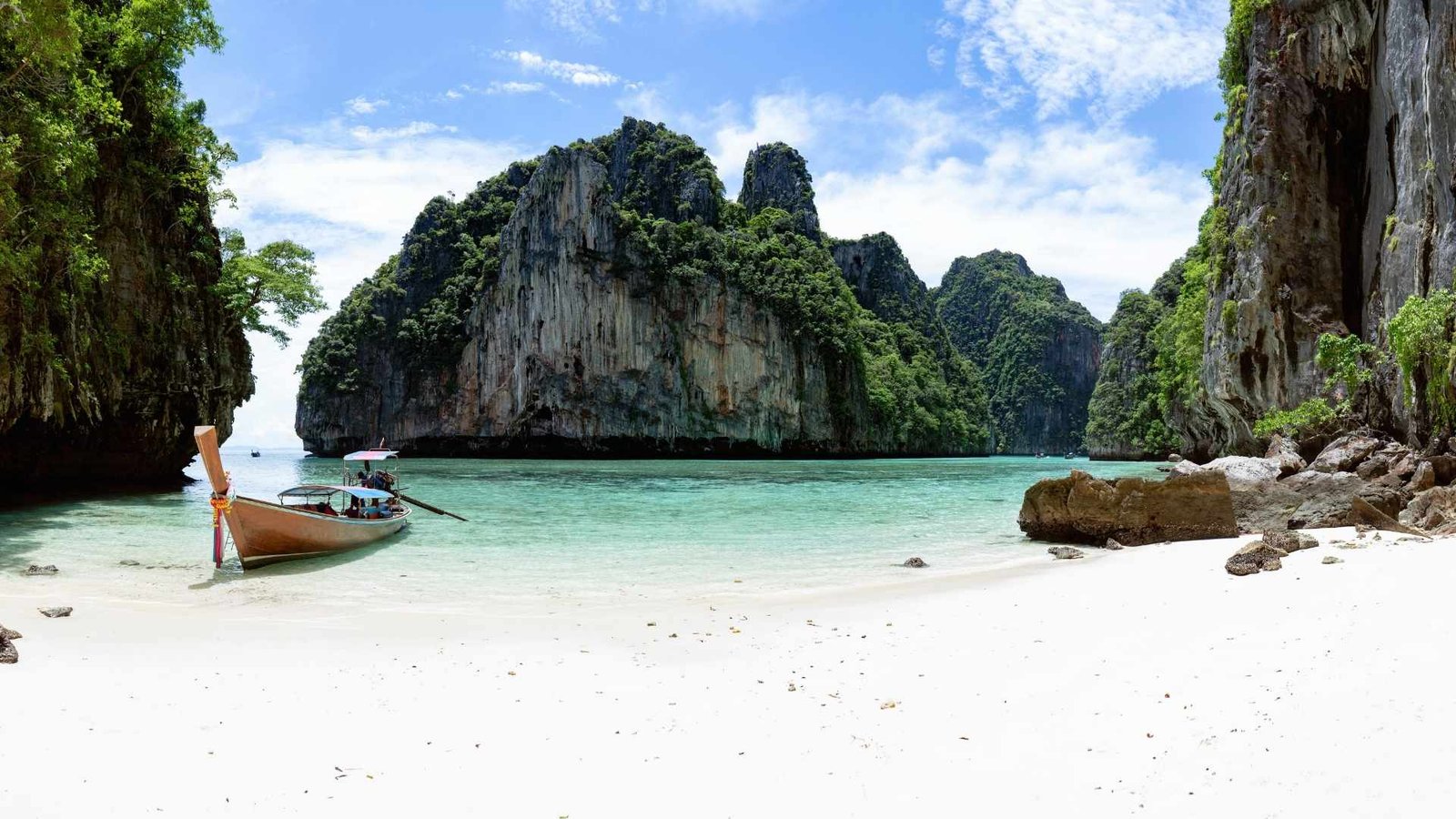
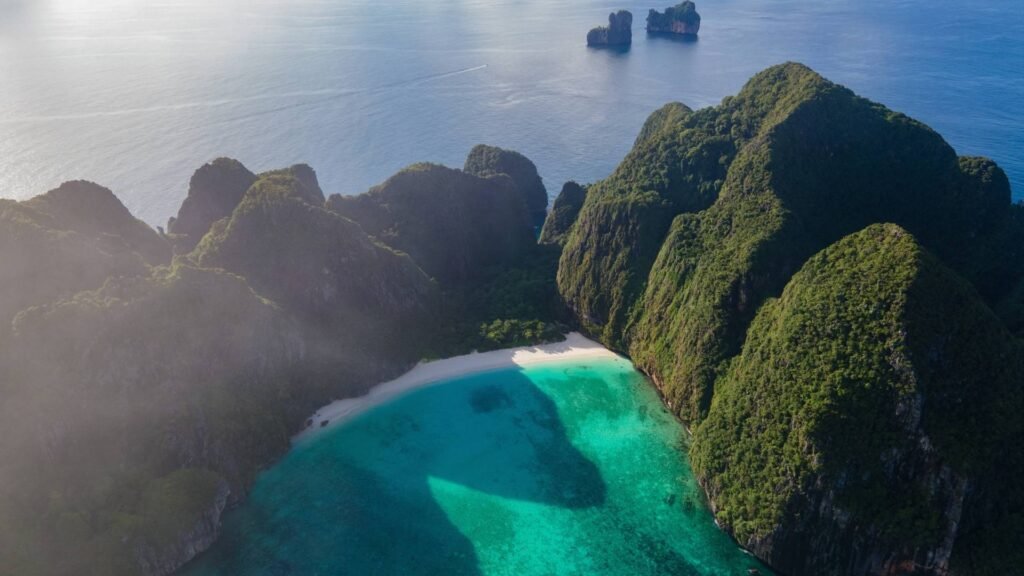
Few beaches in Asia are as instantly recognizable as Maya Bay. Surrounded by towering limestone cliffs that rise dramatically from emerald water, the bay feels enclosed, almost secret — like a hidden lagoon discovered by accident. Its global fame skyrocketed after appearing in the film The Beach, but even without Hollywood exposure, the scenery alone would have made it legendary.
After years of overtourism, Maya Bay was temporarily closed to allow environmental recovery. Today, it has reopened with strict visitor regulations, limited access, and conservation measures designed to protect its fragile ecosystem. The result is a destination that once again feels closer to its original natural beauty, with clearer water and healthier marine life.
Visiting Maya Bay now feels more special precisely because access is controlled. You’re not just seeing a famous location — you’re witnessing one of Thailand’s most iconic natural landscapes in a more sustainable era.
Why Maya Bay Is One of the Best Beaches in Asia
World-famous scenery surrounded by dramatic limestone cliffs
Protected ecosystem with improved environmental conditions
Crystal-clear shallow waters and bright white sand
Unique enclosed bay creating a cinematic atmosphere
Easy access from Phuket and Krabi via boat tours
One of Southeast Asia’s ultimate bucket-list destinations
Best Things to Do at Maya Bay
Walk along the iconic shoreline and viewpoints
Snorkel in nearby coral areas outside the main bay
Combine with Phi Phi island hopping tours
Visit early morning for fewer crowds and softer light
Photography of limestone cliffs and emerald water
Best for: Bucket-list travelers, photographers, couples, Thailand first-time visitors
Best time to visit: January to April (calmest seas and best visibility)
Maya Bay proves that some destinations become famous for a reason. Even after global attention and years of tourism pressure, its natural beauty remains undeniable — a place where towering cliffs, tropical water, and cinematic scenery come together in a way few beaches on Earth can match.
6. Kelingking Beach, Nusa Penida — Indonesia
Kelingking Beach is one of those places that almost doesn’t look real when you first see it. From the viewpoint high above the ocean, the dramatic cliff formation curves outward into the sea, resembling the shape of a giant prehistoric creature — which is why it’s often nicknamed the “T-Rex beach.” The contrast between deep blue water, white crashing waves, and rugged green cliffs creates one of the most photographed coastal landscapes in all of Asia.
Located on Nusa Penida island near Bali, Kelingking has gained global attention in recent years, yet standing on the cliff edge still feels wild and untamed. Unlike resort beaches with easy access, reaching the shoreline requires a steep and challenging hike down narrow paths carved into the cliffside. That effort is exactly what preserves its sense of adventure — only determined travelers make it all the way to the sand.
Even if you never descend to the beach itself, the viewpoint alone is worth the journey. Few locations deliver such a dramatic perspective of nature’s scale and power.
Why Kelingking Beach Is One of the Best Beaches in Asia
Iconic cliff formation with world-famous panoramic views
Turquoise water contrasting against dramatic limestone landscapes
Remote and adventurous atmosphere compared to Bali mainland
Photographic scenery unlike almost anywhere else
Sense of discovery and achievement for those who hike down
Best Things to Do at Kelingking
Enjoy the cliff-top viewpoint and photography spots
Hike down to the beach for a secluded experience
Explore nearby Nusa Penida coastal attractions
Watch waves crashing dramatically against the cliffs
Visit early morning for fewer crowds and cooler temperatures
Best for
Adventure travelers, photographers, nature lovers, Bali visitors seeking unique landscapes
Best time to visit: May to October (dry season with clearer skies and safer hiking conditions)
Kelingking Beach is less about relaxation and more about awe. It’s the kind of destination that reminds you how powerful and dramatic nature can be — a place where the journey and the view become just as memorable as the destination itself.
7. Fulhadhoo Island — Maldives
The Maldives often brings to mind images of overwater villas, private butlers, and ultra-luxury resorts — but islands like Fulhadhoo reveal a different side of this tropical nation. Here, the same turquoise lagoons and powder-white sand exist without the extreme price tags, creating a more accessible version of paradise that still feels exclusive.
Fulhadhoo is a small local island in the Baa Atoll, surrounded by long sandbanks, crystal-clear water, and vibrant coral reefs. What immediately stands out is the sense of space. Unlike resort islands where every corner is curated, Fulhadhoo offers stretches of beach where you might walk for minutes without seeing another person.
The calm, shallow lagoons display the Maldives’ famous shades of blue — from pale aquamarine to deep sapphire — creating scenery that feels almost unreal under bright sunlight. It’s the type of environment where time slows down naturally, and the simplest activities, like swimming or watching sunsets, become the highlight of the day.
Why Fulhadhoo Is One of the Best Beaches in Asia
Maldives-level beauty without ultra-luxury pricing
Long sandbanks and uncrowded beaches
Crystal-clear lagoons ideal for swimming
Excellent snorkeling with coral reefs nearby
Authentic island atmosphere compared to private resorts
Stunning color gradients in the ocean
Best Things to Do on Fulhadhoo
Snorkel coral reefs with tropical fish and marine life
Best time to visit: December to April (dry season with calm seas and sunshine)
Fulhadhoo proves that the Maldives isn’t only for luxury travelers. With its natural beauty, tranquility, and affordability compared to resort islands, it offers one of the most rewarding tropical beach experiences in Asia — and one that feels genuinely untouched.
8. Radhanagar Beach, Havelock Island — India
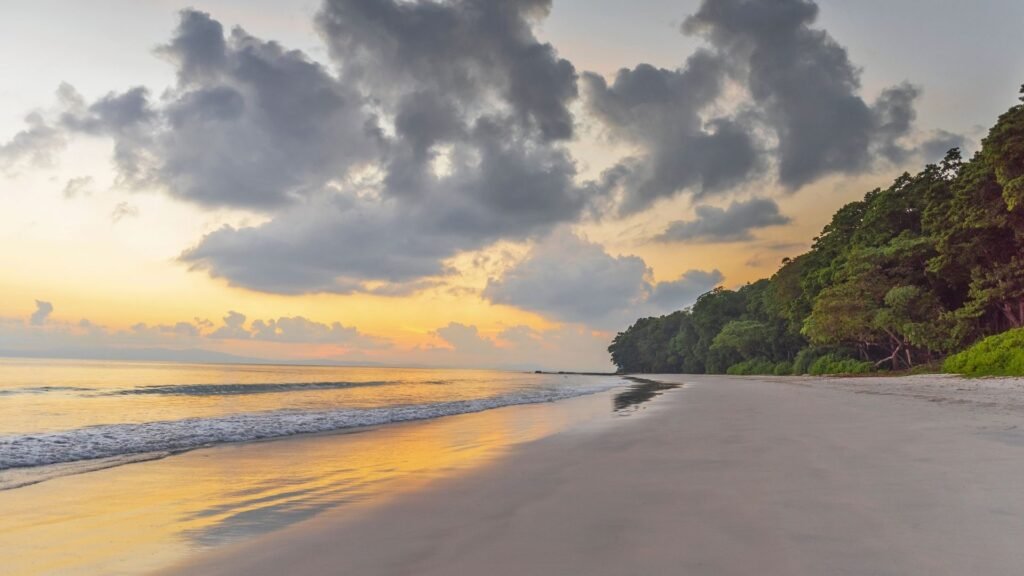
Radhanagar Beach, located on Havelock Island in India’s remote Andaman archipelago, is often described as one of Asia’s most beautiful — and it’s easy to understand why the moment you arrive. Dense tropical forest opens suddenly onto a wide stretch of soft white sand, framed by turquoise water and almost untouched natural surroundings. There are no high-rise resorts dominating the view, just jungle, ocean, and open sky.
The Andaman Islands sit closer to Southeast Asia than mainland India, and the atmosphere reflects that unique geography. The water is exceptionally clear, the beaches feel spacious, and the pace of life is calm and unhurried. Compared to more famous destinations in Thailand or Bali, Radhanagar still feels like a discovery.
What truly sets the beach apart is its balance — dramatic beauty without heavy commercialization. It delivers the postcard-perfect tropical experience while maintaining a sense of authenticity that many popular destinations have lost.
Why Radhanagar Beach Is One of the Best Beaches in Asia
Wide, pristine white sand shoreline with minimal development
Clear, swimmable water with gentle waves
Lush jungle backdrop creating a dramatic setting
Peaceful atmosphere compared to mainstream tourist hotspots
Often ranked among the best beaches in Asia by travel publications
Part of the unique Andaman Islands experience
Best Things to Do at Radhanagar Beach
Swimming in calm, clear water
Walking along the expansive shoreline
Watching sunsets over the Bay of Bengal
Exploring nearby islands and coral reefs
Relaxing in nature with minimal crowds
Best for: Nature lovers, couples, tranquility seekers, off-the-beaten-path travelers
Best time to visit: November to April (dry season with the best weather conditions)
Radhanagar Beach offers something increasingly rare — tropical beauty that still feels authentic and undiscovered. For travelers willing to journey a little farther, the reward is one of Asia’s most serene coastal landscapes.
9. Ngapali Beach — Myanmar
Ngapali Beach is one of Southeast Asia’s best-kept secrets. Stretching along Myanmar’s Bay of Bengal coastline, the beach combines palm-lined sand, clear water, and a peaceful atmosphere that feels worlds away from crowded resort destinations. Unlike heavily commercialized beaches elsewhere in Asia, Ngapali retains a sense of authenticity shaped by nearby fishing villages and local life.
The rhythm here is slower. Wooden fishing boats rest on the shore, bicycles replace traffic jams, and sunsets unfold without crowds competing for space. The scenery is beautiful in a quiet, understated way — less dramatic than limestone cliffs, but deeply relaxing.
Travel to Myanmar has fluctuated over the years due to political circumstances, which has limited mass tourism. As a result, Ngapali has remained relatively untouched compared to neighboring countries, preserving its charm.
Why Ngapali Beach Is One of the Best Beaches in Asia
Long palm-lined coastline with minimal crowds
Authentic local atmosphere and fishing village culture
Soft sand and calm swimming conditions
Relaxed luxury resorts without overdevelopment
Peaceful sunsets and uncrowded beaches
Unique destination compared to mainstream Southeast Asia
Best Things to Do at Ngapali
Cycle through nearby fishing villages
Enjoy fresh seafood at beachfront restaurants
Snorkeling and boat trips to nearby islands
Sunset walks along the coastline
Relaxation at boutique resorts and spas
Best for: Relaxation seekers, couples, luxury travelers, travelers looking for hidden gems
Best time to visit: November to March (dry season with comfortable temperatures)
Ngapali isn’t about dramatic landmarks or nightlife — it’s about peace. For travelers who value quiet beauty and authenticity, it can easily become one of the most memorable beach experiences in Asia.
10. Haeundae Beach, Busan — South Korea
Not all of Asia’s best beaches are remote tropical islands. Haeundae Beach in Busan offers something completely different — a vibrant urban coastline where city energy meets the ocean. Skyscrapers rise behind golden sand, beach festivals fill the calendar, and the atmosphere blends relaxation with metropolitan excitement.
During summer, Haeundae becomes one of South Korea’s most popular holiday destinations, drawing visitors from across the country. The wide beach provides plenty of space, while nearby restaurants, markets, and nightlife create an experience that extends far beyond the shoreline.
What makes Haeundae special is its contrast. You can spend the afternoon swimming or sunbathing, then walk minutes into a modern city filled with street food, luxury hotels, and cultural attractions. It’s a beach destination that combines urban exploration with coastal relaxation.
Why Haeundae Is One of the Best Beaches in Asia
Unique city-meets-beach atmosphere
Wide sandy shoreline with modern facilities
Festivals, nightlife, and cultural attractions nearby
Excellent food scene including seafood markets
Easy accessibility within a major international city
Distinct experience compared to tropical island beaches
Best Things to Do at Haeundae
Swimming and sunbathing during summer season
Visiting Haeundae Market for Korean street food
Walking along the coastal boardwalk
Exploring Busan’s temples and cultural attractions
Enjoying nightlife and beachfront cafes
Best for: Urban travelers, food lovers, festival visitors, city-beach experiences
Best time to visit: June to September (warm weather and beach season)
Haeundae provides the perfect finale to Asia’s beach diversity. From remote tropical islands to vibrant coastal cities, the region offers experiences for every type of traveler — proving that paradise doesn’t always look the same.
Travel Tips and Interesting Facts About Beaches in Asia
Before choosing your perfect beach destination in Asia, it helps to understand a few regional differences. From climate patterns to cultural nuances, small details can significantly improve your travel experience and help you avoid common mistakes.
General Travel Tips for Visiting Beaches in Asia
Check monsoon seasons carefully: Weather varies greatly across Asia. While Thailand may be rainy, Indonesia could have perfect sunshine at the same time.
Book early during peak months: December to April is high season across many tropical destinations.
Cash is still important: Smaller islands often have limited ATMs or card acceptance.
Respect local customs: Some countries have modest dress expectations away from resort areas.
Sun protection is essential: Tropical sun near the equator is much stronger than many travelers expect.
Travel insurance is highly recommended: Especially for activities like diving, snorkeling, or island hopping.
Interesting Facts About Beaches in Asia
Asia is home to some of the whitest sand beaches in the world, particularly in the Philippines and Maldives.
Indonesia has more than 17,000 islands, offering enormous coastal diversity.
The Maldives is the lowest country on Earth, with an average elevation of just 1.5 meters above sea level.
Thailand’s limestone cliffs were formed over millions of years from ancient coral reefs.
The Andaman Sea and Coral Triangle region contain some of the highest marine biodiversity on the planet.
Many Southeast Asian beaches experience bioluminescent plankton, where the water glows at night.
Frequently Asked Questions About the Best Beaches in Asia
Which country in Asia has the best beaches?
The Philippines, Thailand, Indonesia, and the Maldives are often considered to have the best beaches in Asia due to their tropical climate, clear water, and scenic coastlines. Each offers different experiences ranging from luxury resorts to remote island escapes.
What is the best time to visit beaches in Asia?
Generally, the best time to visit Southeast Asian beaches is between November and April during the dry season. However, Indonesia often has ideal weather from May to October, so timing depends on your destination.
Are beaches in Asia expensive to visit?
Asia offers options for every budget. Destinations like Thailand and the Philippines can be very affordable, while the Maldives and luxury resorts in Bali or Phuket can be more expensive. Budget travelers can still find excellent value across the region.
Which Asian beaches are best for honeymoon?
The Maldives, Boracay, Bali, and Thailand’s island resorts are among the most popular honeymoon destinations due to their romantic scenery, luxury accommodations, and tropical atmosphere.
Is it safe to swim at beaches in Asia?
Most major beaches are safe for swimming, especially during calm seasons. However, travelers should always watch for local safety flags, currents, jellyfish warnings, and weather conditions.
What are the least crowded beach destinations in Asia?
Less crowded destinations include parts of Palawan in the Philippines, the Andaman Islands in India, certain Indonesian islands, and lesser-known areas of Thailand and Vietnam.
Final Thoughts: Asia’s Beaches Offer Something for Everyone
The beauty of Asia’s coastline lies in its diversity. You can find powder-white sand in the Philippines, dramatic cliffs in Thailand, exotic pink beaches in Indonesia, untouched islands in India, hidden gems in Myanmar, and even energetic urban shores in South Korea — all within one continent.
Whether you’re dreaming of a luxury escape, a romantic honeymoon, or a backpacking adventure, the beaches of Asia deliver some of the most unforgettable travel experiences on Earth. And once you’ve experienced one, it rarely stays just one — travelers often find themselves returning again and again to explore more of the region’s tropical paradise.
Planning your next trip? Asia’s beaches are waiting.
Boracay — The Shangri-La of the Philippines: White Sand Beaches and Island Life in the Philippines
Boracay is one of the most famous beach destinations in the Philippines, known for its powder-fine white sand, clear turquoise water, and relaxed tropical atmosphere. Often referred to as the Shangri-La of the Philippines, the island offers a surprisingly diverse travel experience — from luxury resorts and water sports to vibrant nightlife and peaceful sunset moments.
After a major environmental rehabilitation in recent years, Boracay has re-emerged as a cleaner, more sustainable destination while still retaining the charm that made it world-famous.
Why Visit Boracay?
The biggest draw of Boracay is its coastline. White Beach, the island’s main stretch of sand, is often ranked among the best beaches in the world thanks to its soft texture, shallow water, and stunning sunsets.
Many travelers consider Boracay the Shangri-La of the Philippines, where they can enjoy the stunning beauty of nature and the island’s charm.
But Boracay is more than just a beach destination. Visitors also come for:
Island hopping and boat excursions
Snorkeling and diving
Parasailing, kiteboarding, and water sports
Beachfront dining and nightlife
Spa and wellness experiences
Relaxed tropical island atmosphere
The island offers both lively areas and quiet corners, making it suitable for different travel styles.
White Beach — The Heart of Boracay
White Beach is divided into three main sections, commonly called Station 1, Station 2, and Station 3.
Station 1 — Wider beach, upscale resorts, quieter atmosphere
Station 2 — Restaurants, nightlife, shopping, and central location
Station 3 — More budget-friendly accommodation and relaxed vibe
Most visitors spend their time along this coastline, where everything is within walking distance.
Activities and Experiences
While relaxing on the beach is a major highlight, Boracay also offers plenty of activities for more active travelers.
Popular experiences include:
Island hopping tours to nearby beaches and snorkeling spots
Sunset sailing on traditional paraw boats
Scuba diving and snorkeling excursions
Paddleboarding and kayaking
Cliff jumping and adventure activities
Spa treatments and beachfront massages
For those seeking nightlife, Boracay offers beach bars, live music venues, and restaurants that stay lively after sunset.
When to Visit Boracay
The best time to visit Boracay is during the dry season, typically from November to May.
December to April offers the sunniest weather and calm seas
January to May is ideal for beach activities
June to October is wetter but greener with fewer crowds
Weather conditions can vary, but Boracay remains a year-round destination.
Travel Style and Budget
Boracay accommodates a wide range of budgets.
Travelers can choose from:
Luxury beachfront resorts
Boutique hotels and mid-range accommodation
Budget guesthouses and hostels
Prices are generally higher than in some other parts of the Philippines due to the island’s popularity, but visitors often find good value for the quality of beaches and experiences.
Who Boracay Is Perfect For
Boracay is especially well suited for:
Beach lovers and tropical island travelers
Couples and honeymoon trips
Friends traveling together
First-time visitors to the Philippines
Travelers wanting a mix of relaxation and nightlife
Short beach holidays combined with other destinations
It may be less ideal for travelers seeking remote, untouched islands with minimal tourism.
How to Get to Boracay
Boracay does not have its own major airport. Most travelers fly to either Caticlan Airport (the closest) or Kalibo Airport, followed by a short transfer by land and boat to the island.
The journey is straightforward and well organized due to the island’s popularity.
Via Caticlan (recommended): Fly from Manila (Ninoy Aquino) to Caticlan’s Godofredo P. Ramos Airport — the flight takes around 55 minutes and multiple carriers operate it daily. From Caticlan Jetty Port, a bangka (outrigger boat) crosses to Boracay’s Cagban Jetty in approximately 15 minutes. The terminal fee and environmental fee are collected at the port. Total journey from Manila to beach: under 2 hours.
Via Kalibo (budget alternative): Kalibo Airport, 70 kilometres from Caticlan, handles more international and low-cost carrier traffic. The tradeoff is a 2-hour land transfer to the port rather than 15 minutes. Worth it if the fare difference is significant; otherwise Caticlan is the more efficient gateway.
Getting around on the island: Boracay is 7 kilometres long and navigable end-to-end by tricycle (the standard local transport, fixed-rate per zone) or electric trike. The main White Beach path — Station 1 at the northern end to Station 3 at the south — is walkable in about 30 minutes along the shoreline. Renting an e-bike is the most flexible option for exploring beyond White Beach toward Diniwid in the north or the quieter eastern coast.
Plan Your Boracay Trip
Boracay remains one of Southeast Asia’s most iconic tropical destinations for good reason. With its world-class beaches, vibrant atmosphere, and wide range of activities, the island offers an easy and memorable introduction to the Philippines.
Boracay rewards visitors who approach it with realistic expectations: this is not a remote, undiscovered island — it is a well-organized tropical resort destination that happens to have genuinely exceptional beaches. The infrastructure is good, the range of accommodation is wide, and the island has been through enough development cycles that the better operators have raised their standards considerably. The 2018 government-mandated closure for environmental rehabilitation removed the worst of the overcrowded, poorly managed facilities and the recovery has been broadly successful.
The pairing that works best for most visitors: two or three nights on Boracay combined with time elsewhere in the Philippines — Palawan, Cebu, or Manila. Boracay as a standalone trip is efficient and satisfying; as part of a wider Philippine itinerary it completes a picture of the country’s range that no single island could provide alone.
Top Travel Destinations in the Philippines — Where to Go for Beaches, Nature, and Adventure
The Philippines is one of Southeast Asia’s most diverse travel destinations, made up of more than 7,000 islands spread across tropical waters. From world-famous white sand beaches to dramatic limestone cliffs, historic cities, rice terraces, and vibrant marine life, the country offers an extraordinary variety of experiences.
Choosing where to go in the Philippines can feel overwhelming because each region has its own character. Some islands focus on relaxation and nightlife, while others are known for nature, diving, culture, or adventure.
Here are some of the top destinations in the Philippines to help you plan your trip.
Boracay — Iconic White Sand Beaches
Boracay is one of the most famous beach destinations in Asia, known for its powder-soft white sand and crystal-clear water. The island offers a mix of relaxation, water sports, dining, and nightlife, making it popular with couples, friends, and first-time visitors to the Philippines.
White Beach is the main attraction, but visitors can also enjoy island hopping, sunset sailing, spa experiences, and nearby snorkeling spots.
Boracay is ideal for travelers seeking an easy and beautiful tropical escape with modern amenities.
Palawan — Dramatic Landscapes and Island Hopping
Palawan is often considered the most beautiful region of the Philippines. Its landscapes include limestone cliffs, turquoise lagoons, hidden beaches, and rich marine ecosystems.
Popular destinations within Palawan include El Nido, Coron, and Puerto Princesa. Activities range from island hopping and kayaking to diving in shipwreck sites and exploring underground rivers.
Palawan is perfect for nature lovers, photographers, and travelers seeking spectacular scenery.
Cebu — Culture, Beaches, and Adventure
Cebu combines history, city life, and island adventures. Cebu City is one of the oldest cities in the country and offers cultural landmarks, while nearby islands provide beaches, waterfalls, and diving spots.
The region is also famous for activities such as canyoneering in Kawasan Falls and snorkeling with whale sharks in Oslob.
Cebu is a great choice for travelers wanting a mix of culture and outdoor experiences.
Siargao — Surfing and Island Lifestyle
Siargao has gained international recognition as the surfing capital of the Philippines, but even non-surfers find plenty to enjoy. The island offers lagoons, palm-lined roads, island hopping, and a laid-back atmosphere.
Cloud 9 is the most famous surf break, but Siargao is also known for its natural pools, mangroves, and nearby islands.
Siargao is ideal for travelers looking for a relaxed, trendy island destination with strong nature appeal.
Bohol — Chocolate Hills and Unique Nature
Bohol is known for its unusual landscapes and wildlife. The Chocolate Hills, a series of symmetrical green mounds that turn brown during the dry season, are one of the country’s most famous natural landmarks.
Visitors can also see tarsiers (one of the world’s smallest primates), enjoy river cruises, and relax on Panglao Island’s beaches.
Bohol works well for families, couples, and travelers interested in nature and culture.
Manila — Gateway and Urban Energy
Manila is the capital and main international gateway to the Philippines. While many travelers pass through quickly, the city offers historical sites, shopping, nightlife, and cultural attractions.
Intramuros, the historic Spanish-era district, provides insight into the country’s colonial history, while modern districts offer restaurants and entertainment.
Manila is best experienced as a short urban stop before exploring the islands.
Banaue and the Rice Terraces — Cultural Landscapes
The Banaue Rice Terraces in northern Luzon are sometimes called the “Eighth Wonder of the World.” These ancient terraces, carved into the mountains more than 2,000 years ago, reflect indigenous engineering and cultural traditions.
Visitors can hike through mountain villages, experience local culture, and enjoy dramatic scenery.
This region is perfect for travelers seeking cultural immersion and nature.
Davao and Mindanao — Nature and Diversity
Mindanao, the southern part of the Philippines, offers mountains, wildlife, and cultural diversity. Davao City is known for its cleanliness, food scene, and access to outdoor adventures, including Mount Apo, the country’s highest peak.
The region receives fewer international visitors, making it appealing for travelers seeking less crowded destinations.
Plan Your Philippines Itinerary
Most trips to the Philippines combine two or more destinations depending on travel time.
Popular combinations include:
Manila + Boracay (classic beach trip)
Cebu + Bohol (culture and nature)
Palawan + Manila (scenery and city)
Siargao + Cebu (island lifestyle and adventure)
Because travel between islands often involves flights or ferries, planning realistic travel time is important.
Discover More Destinations in the Philippines
The Philippines offers incredible variety — from world-class beaches and diving to mountains, culture, and adventure. Whether you’re planning a relaxing holiday or an active journey, there is a destination to match your travel style.
Explore our Philippines articles below for detailed guides, travel tips, and inspiration for your island adventure.
How to Plan a Trip to Japan — Step by Step Guide for First-Time Visitors
Planning a trip to Japan can feel overwhelming at first. The country is rich in culture, experiences, and destinations, and many travelers aren’t sure where to begin — how long to stay, where to go, when to visit, or how to get around.
The good news is that Japan is one of the safest and most organized travel destinations in the world. With a little preparation, planning your trip can be straightforward and even enjoyable.
This step-by-step guide will help you move from the first idea to a fully planned Japan itinerary.
Step 1: Decide When to Visit Japan
Japan is a year-round destination, but the season you choose will shape your experience.
Spring (March–May) is famous for cherry blossoms and mild temperatures. Summer (June–August) brings festivals, mountain travel, and hot weather. Autumn (September–November) offers colorful foliage and comfortable conditions. Winter (December–February) is ideal for skiing, snow scenery, and fewer crowds in cities.
If seasonal scenery is important to you, timing your visit carefully makes a big difference.
Step 2: Planning a trip to Japan: Choose How Long to Stay
Japan rewards longer trips, but even shorter visits can be memorable.
Typical trip lengths:
7–10 days → Tokyo + Kyoto + nearby excursions
10–14 days → Tokyo + Kyoto + Osaka + additional regions
2–3 weeks → Multiple regions with deeper exploration
Travel time between cities is efficient thanks to high-speed trains, making multi-city itineraries practical.
Step 3: Decide Where to Go
First-time visitors often follow the classic route:
Tokyo — modern culture and city life
Kyoto — temples and traditional Japan
Osaka — food and entertainment
Additional popular destinations include:
Mount Fuji and Hakone for nature and hot springs
Hiroshima and Miyajima for history
Nara for ancient temples
Hokkaido for outdoor adventures
Okinawa for beaches and tropical scenery
Your choices should reflect your interests — culture, nature, cities, food, or relaxation.
Step 4: Book Flights and Accommodation
Flights to Japan are widely available from major international airports, and prices vary depending on season and booking time.
Accommodation options include:
Hotels (budget to luxury)
Traditional ryokan inns
Capsule hotels
Guesthouses and apartments
Booking accommodation early is recommended during peak seasons such as cherry blossom and autumn foliage periods.
Step 5: Understand Transportation in Japan
Japan’s transportation system is one of the most efficient in the world. When you plan a trip to say Japan and maybe Tokyo, it is a must to know how to use the sophisticated public transportation like the Shinkansen. A life time experience.
The high-speed Shinkansen (bullet train) connects major cities quickly and comfortably. Urban metro systems are reliable and easy to use, even for first-time visitors.
Many travelers consider rail passes depending on their itinerary, but local transport cards and individual tickets also work well.
Step 6: Plan Experiences and Activities
Japan offers a wide range of experiences beyond sightseeing.
Popular activities include:
Visiting temples and shrines
Food tours and cooking classes
Onsen (hot spring) bathing
Cultural experiences such as tea ceremonies
Scenic train journeys
Shopping districts and markets
Nature excursions and hiking
You don’t need to plan every detail in advance, but booking popular attractions early can save time.
Step 7: Prepare for Cultural Differences
Japan is welcoming to visitors, but cultural norms differ from Western countries.
Important things to know include:
Politeness and respect are highly valued
Shoes are removed in some places
Public behavior is generally quiet and orderly
Tipping is not expected
Cash is still commonly used
Understanding these basics helps travelers feel more comfortable and confident.
Step 8: Budget and Money Planning
Japan can fit a range of budgets depending on travel style.
Costs vary based on:
Accommodation type
Dining choices
Transportation distances
Activities and experiences
While Japan has a reputation for being expensive, many travelers find excellent value considering the quality, safety, and reliability.
Step 9: Final Preparations Before Departure
Before traveling, it’s helpful to:
Check passport validity and visa requirements
Arrange travel insurance
Download useful travel apps
Prepare basic itinerary details
Notify your bank if needed
Pack for the season and activities
Good preparation reduces stress and allows you to enjoy the journey more fully.
Starting to Plan Your Japan Adventure
Planning a trip to Japan may seem complex at first, but the process becomes easier once you break it into steps. The country rewards preparation with unforgettable experiences — from cultural discoveries and world-class cuisine to beautiful landscapes and unique traditions.
For many travelers, Japan becomes a destination they return to again and again.
Explore our Japan articles below for more inspiration, destination guides, and travel tips to help you plan your journey.
Top Destinations — Where to Go on Your First or Next Trip
Japan offers an incredible diversity of destinations within a relatively compact country. From futuristic megacities and historic temple towns to mountain landscapes and coastal scenery, choosing where to travel to japan can feel overwhelming — especially for first-time visitors.
The good news is that Japan’s transport system makes it easy to combine several destinations in one trip. Many travelers follow a classic route between Tokyo, Kyoto, and Osaka, while others explore beyond the main tourist path to discover regional culture, nature, and hidden gems.
Here are some of the top destinations to help you decide where to travel.
Tokyo — Dynamic Capital
Tokyo is often the starting point for travel to Japan, and for good reason. The city combines ultra-modern architecture, historic neighborhoods, world-class shopping, incredible food, and unique cultural experiences.
You can visit ancient temples in Asakusa, explore the fashion districts of Shibuya and Harajuku, enjoy panoramic city views, and discover some of the best dining in the world — all in a single day.
Tokyo is ideal for travelers interested in modern Japan, technology, nightlife, shopping, and urban culture.
Kyoto — Traditional Japan at Its Most Beautiful
Kyoto represents the cultural heart of Japan. As the former imperial capital for more than 1,000 years, the city is home to thousands of temples, shrines, gardens, and historic districts.
Visitors come to Kyoto to experience traditional architecture, geisha culture, tea ceremonies, and seasonal beauty such as cherry blossoms in spring and autumn foliage.
Kyoto is perfect for travelers seeking history, culture, and iconic Japanese scenery.
Osaka — Food, Energy, and Entertainment
Osaka is known as Japan’s kitchen and offers a more relaxed, outgoing atmosphere compared to Tokyo. The city is famous for street food, nightlife, and friendly locals.
Popular attractions include Osaka Castle, vibrant entertainment districts like Dotonbori, and nearby Universal Studios Japan.
Osaka works especially well combined with Kyoto and Nara, making it a convenient base for exploring the Kansai region.
Mount Fuji and Hakone — Iconic Landscapes and Hot Springs
Mount Fuji is Japan’s most famous natural landmark and a symbol of the country. Many travelers visit the Fuji Five Lakes region or Hakone to enjoy views of the mountain, scenic nature, and traditional hot spring experiences.
Hakone is particularly popular because it’s easily accessible from Tokyo and offers a relaxing contrast to the big city.
This area is ideal for nature lovers and those wanting a traditional ryokan stay.
Hiroshima and Miyajima — History and Scenic Beauty
Hiroshima is an important historical destination, known worldwide for the Peace Memorial Park and Museum, which commemorate the events of World War II.
Nearby Miyajima Island offers one of Japan’s most iconic sights — the floating torii gate of Itsukushima Shrine — along with beautiful hiking trails and coastal scenery.
This region combines powerful history with natural beauty and is often included in longer Japan itineraries.
Hokkaido — Nature and Outdoor Adventures
Hokkaido, Japan’s northern island, is famous for wide-open landscapes, national parks, and outdoor activities. In winter, it offers some of the world’s best powder snow for skiing and snowboarding, while summer brings hiking, flower fields, and cooler temperatures.
The main city, Sapporo, is known for food, festivals, and beer culture.
Hokkaido is ideal for travelers looking for nature, outdoor adventures, and fewer crowds.
Okinawa — Tropical Side
Okinawa feels very different from mainland Japan. Located in the south, the islands offer tropical beaches, coral reefs, relaxed island culture, and unique history influenced by the former Ryukyu Kingdom.
Visitors come for beach holidays, diving, snorkeling, and warm weather almost year-round.
Okinawa is perfect for travelers wanting a combination of Japanese culture and tropical relaxation.
Nara — Ancient Temples and Sacred Deer
Nara was Japan’s first permanent capital and remains one of the country’s most historic destinations. The city is famous for its friendly deer roaming freely in Nara Park and the massive Great Buddha statue inside Todai-ji Temple.
Nara is easily visited as a day trip from Kyoto or Osaka and offers a peaceful atmosphere compared with larger cities.
Kanazawa — Culture Without the Crowds
Kanazawa is often called “Little Kyoto” because of its preserved samurai districts, geisha neighborhoods, and historic gardens. The city offers rich cultural experiences with fewer crowds than Kyoto.
Highlights include Kenrokuen Garden, one of Japan’s most beautiful landscape gardens, and a renowned seafood scene.
Kanazawa is ideal for travelers wanting traditional Japan in a quieter setting.
Plan Your Itinerary
Most travelers combine several destinations depending on trip length. Popular itineraries include:
Tokyo + Kyoto + Osaka (classic first trip)
Tokyo + Hakone + Kyoto (culture and nature)
Tokyo + Kyoto + Hiroshima (longer cultural journey)
Hokkaido or Okinawa (regional exploration)
Japan rewards both first-time visitors and returning travelers, with new experiences waiting in every region.
Discover More Destinations
Explore our Japan articles below to find detailed guides, travel tips, and inspiration for planning your journey through one of the world’s most fascinating countries.