
10 Best Beaches in Asia: Ultimate Guide to Paradise Shores
Asia is home to some of the most spectacular beaches on the planet — destinations that regularly rank among the world’s best for their powder-soft sand, crystal-clear water, and postcard-perfect scenery. But beyond the rankings and Instagram photos, what makes beaches in Asia truly special is the feeling they create. There’s a sense of escape here that’s hard to replicate anywhere else.
I still remember the first time I arrived on a tropical beach in Southeast Asia. The heat was gentle rather than overwhelming, the ocean shimmered in shades of turquoise I had only seen in travel magazines, and the pace of life instantly slowed down. It wasn’t just beautiful — it felt untouched, calm, and almost surreal. The kind of place where time stops mattering.
Imagine yourself sinking your feet into warm white sand, a cold drink in your hand, and the soft sounds of chill-out music drifting through the air — something straight out of a Café del Mar sunset playlist. Palm trees sway lightly in the breeze, the horizon glows orange and pink, and for a moment, the only thing that matters is the rhythm of the waves.
That feeling is exactly why travelers return to Asia’s beaches again and again. Whether you’re looking for dramatic limestone cliffs in Thailand, remote island escapes in the Philippines, or exotic sandbanks in the Maldives, this region offers an unmatched variety of coastal experiences.
In this guide, we’ll explore the 10 best beaches in Asia — destinations that combine natural beauty, atmosphere, and unforgettable travel experiences.
1. White Beach, Boracay — Philippines
Boracay is one of those rare destinations that has lived multiple lives. Long before it became famous worldwide, the island was a quiet tropical escape known mainly to backpackers and adventurous travelers. In the early days — especially around Station 1 near the iconic White House Resort and Waling-Waling Beach Hotel — Boracay had an almost mythical reputation: powder-white sand, swaying palms, and very little development. It felt raw, pristine, and exclusive all at once.
Then came the boom years. By the late 1990s and 2000s, Boracay transformed into one of Asia’s premier party destinations, attracting celebrities, public personalities, and international jet-set travelers. Beachfront bars, fire dancers, and vibrant nightlife gave the island a legendary status similar to Ibiza — but with tropical Southeast Asian charm.
Today, Boracay has entered a new era. After a government-led environmental rehabilitation in 2018, the island reopened with stricter regulations, improved infrastructure, and a renewed focus on sustainability. The result is arguably the best version of Boracay yet: cleaner beaches, more organized transport, modern facilities, and a noticeably more relaxed atmosphere.
And perhaps the biggest surprise for many travelers — Boracay doesn’t have to be expensive. While luxury resorts still dominate parts of Station 1, budget-friendly hotels, guesthouses, and affordable local restaurants make it possible to experience this world-class beach without breaking the bank if you know where to look.

Why Boracay Is One of the Best Beaches in Asia
- Ultra-fine white sand often described as “powder soft”
- Calm, swimmable waters ideal for all ages
- Spectacular sunsets almost every evening
- Wide range of accommodation from budget to luxury
- Excellent food scene, from local eateries to international dining
- Vibrant but manageable nightlife
- Modern infrastructure after the island rehabilitation
Best Areas to Stay
- Station 1: Luxury resorts, quieter atmosphere, widest beachfront
- Station 2: Central location, nightlife, restaurants, shopping
- Station 3: Budget-friendly options, more local vibe, fewer crowds
Best Things to Do in Boracay
- Sunset sailing on a traditional paraw boat
- Island hopping and snorkeling tours
- Kitesurfing at Bulabog Beach (seasonal)
- Beachfront dining and fire dance shows
- Helmet diving and water sports
- Relaxing spa treatments by the sea
Best for: First-time tropical travelers, couples, nightlife, luxury and budget mix
Best time to visit: November to May (dry season, calm seas)
Boracay’s journey from untouched paradise to global hotspot — and now to a more balanced, sustainable destination — makes it one of the most fascinating beach stories in Asia. For many travelers, it’s not just a beautiful beach. It’s the beach that defines tropical dreams.
2. Railay Beach, Krabi — Thailand
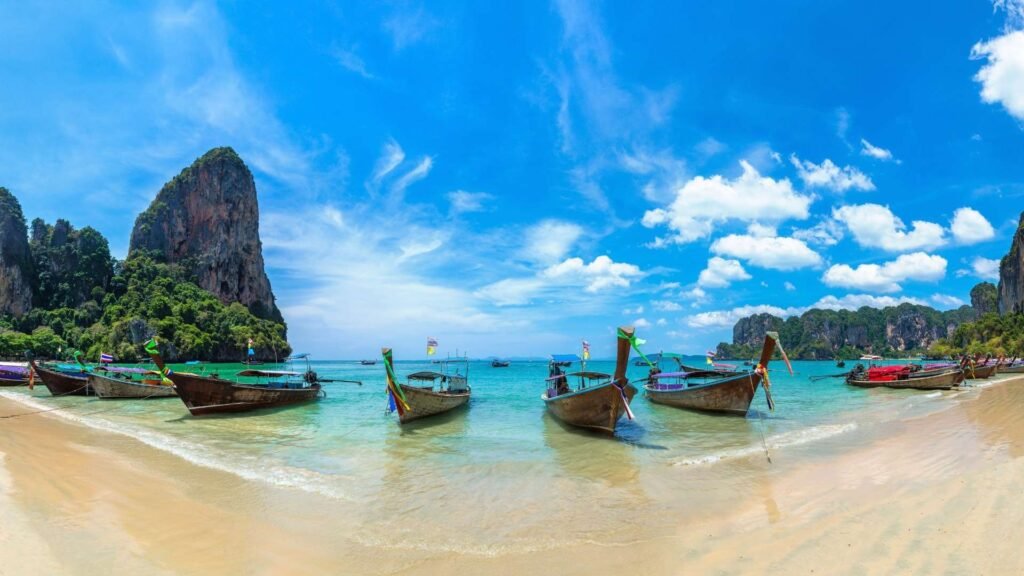
Arriving at Railay Beach is part of what makes it unforgettable. There are no roads leading here — the only way in is by boat. As you approach the shoreline, towering limestone cliffs rise dramatically from the turquoise sea, creating a landscape that feels almost cinematic. It’s the kind of place where you immediately slow down, take a deep breath, and realize you’ve arrived somewhere truly special.
Although technically located on the mainland of Krabi, Railay feels like a secluded island cut off from the rest of Thailand. The cliffs form a natural barrier that separates it from busy roads and cities, giving the entire peninsula a peaceful, self-contained atmosphere. Over the years, Railay has become famous not only for its beaches but also as one of the world’s top rock-climbing destinations, attracting adventurers from across the globe.
What makes Railay stand out among Asia’s best beaches is the combination of dramatic scenery and accessibility. Unlike remote islands that require long travel times, Railay offers postcard-level beauty with relatively easy access from Krabi and Phuket, making it ideal for travelers who want paradise without complicated logistics.
Why Railay Beach Is One of the Best Beaches in Asia
- Iconic limestone cliffs rising straight from the ocean
- Crystal-clear water with excellent swimming conditions
- Unique boat-only access creating a secluded atmosphere
- World-class rock climbing and adventure activities
- Multiple beaches within walking distance (Railay West, Railay East, Phra Nang)
- Spectacular sunset views over the Andaman Sea
- Balanced mix of resorts, restaurants, and relaxed nightlife
Best Things to Do in Railay
- Relax on Railay West Beach for classic tropical scenery
- Visit Phra Nang Cave Beach, one of Thailand’s most beautiful ساحlines
- Try rock climbing or watch climbers scale the cliffs
- Kayak around limestone formations and hidden coves
- Hike to Railay Viewpoint and lagoon for panoramic views
- Take boat trips to nearby islands like Koh Poda and Chicken Island
Best for: Couples, adventure travelers, photographers, scenic landscapes, romantic getaways
Best time to visit: December to March (dry season with calm seas and clear skies)
Railay delivers something rare — a destination that feels remote and dramatic while still being comfortable and accessible. For many travelers, it’s the moment Thailand transforms from a holiday into a memory that stays with you long after you leave.
3. Nacpan Beach, El Nido — Philippines
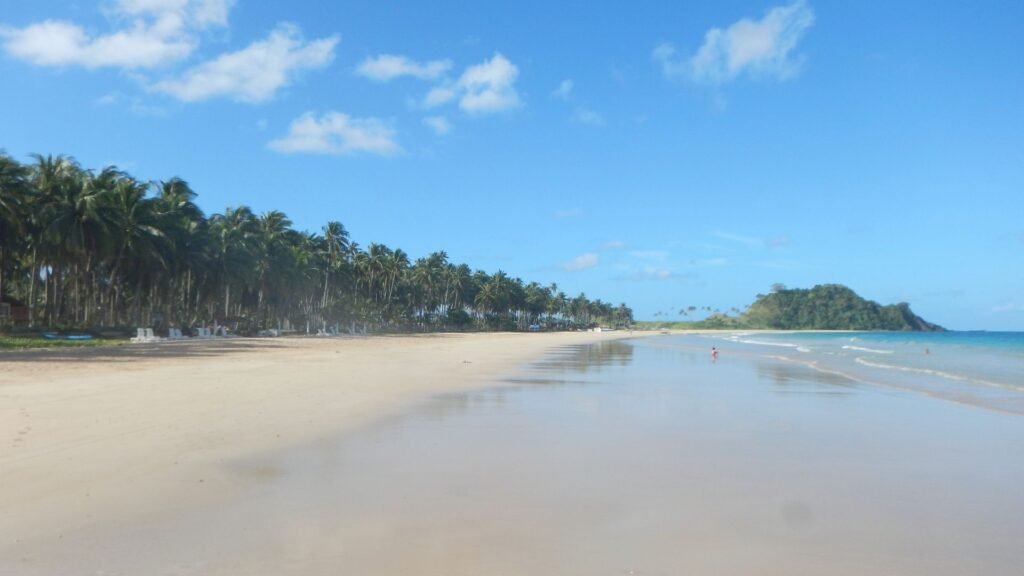
If Boracay represents the vibrant, polished side of tropical travel, Nacpan Beach in El Nido feels like stepping into the Philippines of decades past — raw, spacious, and wonderfully untouched. The moment you arrive, the scale of the landscape stands out. A long stretch of golden sand curves along the coastline, framed by coconut palms and rolling green hills, with far fewer crowds than many famous Southeast Asian beaches.
Located about 45 minutes from El Nido town on the island of Palawan, Nacpan offers a sense of escape that’s increasingly rare in Asia. There are no towering resorts dominating the skyline, no loud nightlife scenes — just open space, warm water, and the calming rhythm of the ocean. It’s the kind of place where you can walk for half an hour and still feel like you have the beach mostly to yourself.
Palawan itself is often described as the last frontier of the Philippines, and Nacpan perfectly captures that reputation. While El Nido is globally famous for its limestone lagoons and island-hopping tours, Nacpan delivers something simpler — and arguably more powerful — the experience of pure tropical serenity.
Why Nacpan Beach Is One of the Best Beaches in Asia
- Four kilometers of wide, uncrowded golden sand
- Clear, swimmable water with gentle waves
- Natural scenery with minimal overdevelopment
- Authentic island atmosphere compared to more commercial beaches
- Beautiful palm tree backdrops perfect for photography
- Close proximity to El Nido’s famous island-hopping tours
- Peaceful sunsets with fewer crowds
Best Things to Do at Nacpan Beach
- Relax under palm trees with fresh coconut drinks
- Swim and enjoy the calm shoreline
- Walk to Twin Beach viewpoint for panoramic scenery
- Rent a motorbike and explore nearby countryside
- Enjoy beachfront seafood and local Filipino dishes
- Watch the sunset over the West Philippine Sea
Best for: Nature lovers, couples, peaceful escapes, photographers, travelers seeking less crowded beaches
Best time to visit: November to May (dry season with the calmest conditions)
Nacpan Beach offers something increasingly difficult to find in Asia — space, quiet, and authenticity. It may not have the nightlife of Boracay or the dramatic cliffs of Thailand, but its beauty lies in its simplicity. For many travelers, it becomes the place where they finally disconnect, slow down, and experience the true rhythm of island life.
4. Pink Beach, Komodo — Indonesia
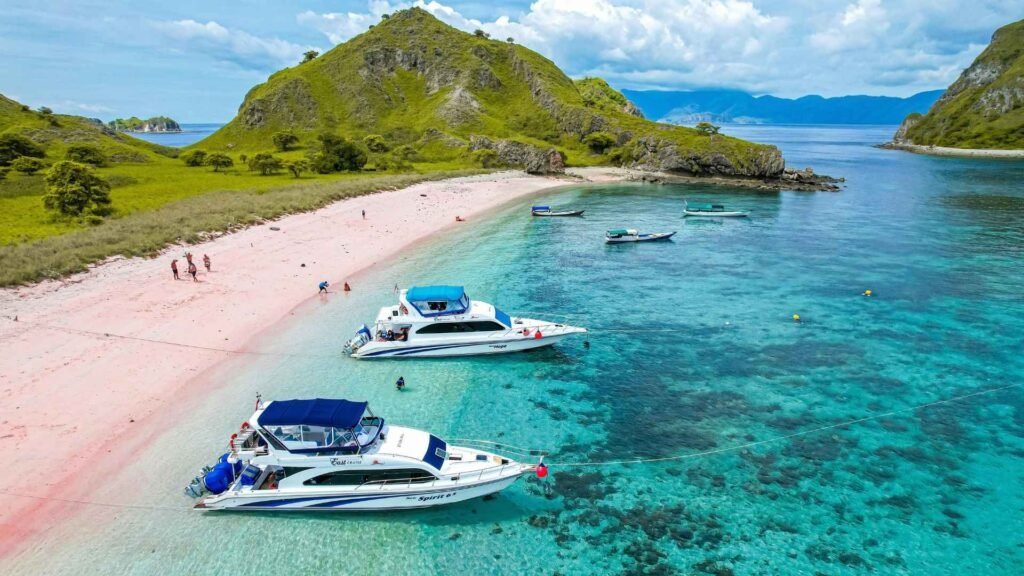
Some beaches impress with scale, others with atmosphere — but Pink Beach in Komodo National Park stands out instantly because of something far more unusual: the sand itself. With soft hues of blush and rose blending into turquoise water, the shoreline looks almost surreal, like a tropical landscape filtered through a dream. It’s one of the few genuinely pink-sand beaches in the world, and seeing it in person feels every bit as extraordinary as you would imagine.
The color comes from microscopic fragments of red coral mixed with white sand, creating the distinctive pink tone that changes depending on sunlight and tides. Set within the protected Komodo National Park — home to the famous Komodo dragons — the surrounding scenery remains largely untouched, with rugged hills, clear water, and thriving marine life completing the experience.
Reaching Pink Beach typically involves a boat journey from Labuan Bajo on Flores Island, which adds a sense of adventure and exclusivity. Unlike heavily developed resort destinations, there are no large hotels here — just nature in its purest form. That remoteness is exactly what makes the destination so memorable.
Why Pink Beach Is One of the Best Beaches in Asia
- Rare natural pink-colored sand found in very few places worldwide
- Crystal-clear water with exceptional snorkeling and marine biodiversity
- Located inside a UNESCO-protected national park environment
- Remote setting with minimal commercial development
- Dramatic surrounding hills and panoramic viewpoints
- Part of the broader Komodo adventure experience
Best Things to Do at Pink Beach
- Snorkel among coral reefs and tropical fish
- Hike nearby hills for elevated views of the coastline
- Combine the visit with Komodo dragon island tours
- Relax on the uniquely colored sand and swim in calm waters
- Photography during midday sun when the pink color appears strongest
Best for: Adventure travelers, nature lovers, photographers, bucket-list experiences, snorkeling enthusiasts
Best time to visit: April to November (dry season with optimal sea conditions)
Pink Beach isn’t just beautiful — it’s rare. The combination of unusual color, protected wilderness, and marine life creates a destination that feels both exotic and exclusive. For many travelers exploring Indonesia, it becomes one of those unforgettable moments that defines the entire journey.
5. Maya Bay, Koh Phi Phi — Thailand
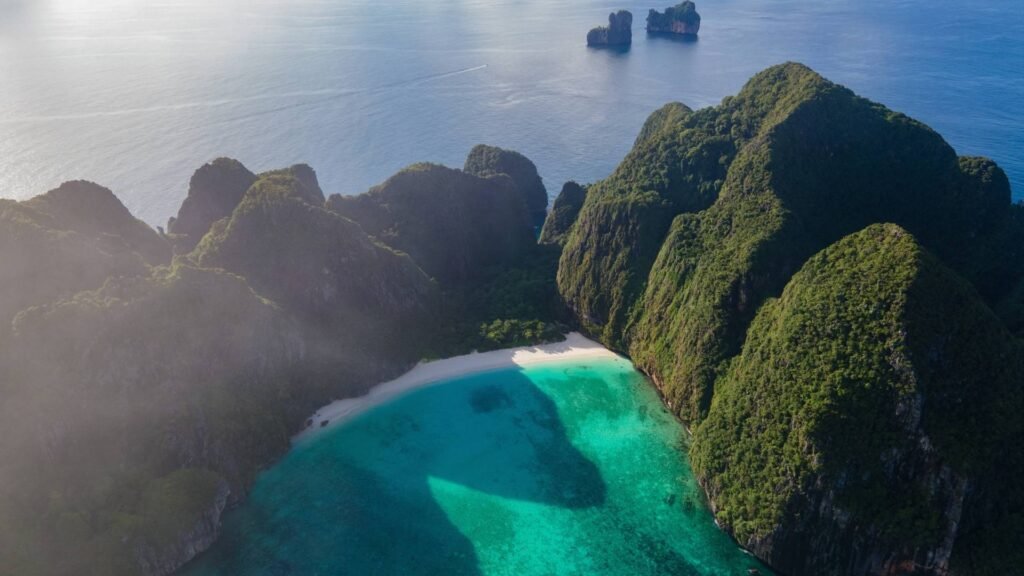
Few beaches in Asia are as instantly recognizable as Maya Bay. Surrounded by towering limestone cliffs that rise dramatically from emerald water, the bay feels enclosed, almost secret — like a hidden lagoon discovered by accident. Its global fame skyrocketed after appearing in the film The Beach, but even without Hollywood exposure, the scenery alone would have made it legendary.
After years of overtourism, Maya Bay was temporarily closed to allow environmental recovery. Today, it has reopened with strict visitor regulations, limited access, and conservation measures designed to protect its fragile ecosystem. The result is a destination that once again feels closer to its original natural beauty, with clearer water and healthier marine life.
Visiting Maya Bay now feels more special precisely because access is controlled. You’re not just seeing a famous location — you’re witnessing one of Thailand’s most iconic natural landscapes in a more sustainable era.
Why Maya Bay Is One of the Best Beaches in Asia
- World-famous scenery surrounded by dramatic limestone cliffs
- Protected ecosystem with improved environmental conditions
- Crystal-clear shallow waters and bright white sand
- Unique enclosed bay creating a cinematic atmosphere
- Easy access from Phuket and Krabi via boat tours
- One of Southeast Asia’s ultimate bucket-list destinations
Best Things to Do at Maya Bay
- Walk along the iconic shoreline and viewpoints
- Snorkel in nearby coral areas outside the main bay
- Combine with Phi Phi island hopping tours
- Visit early morning for fewer crowds and softer light
- Photography of limestone cliffs and emerald water
Best for: Bucket-list travelers, photographers, couples, Thailand first-time visitors
Best time to visit: January to April (calmest seas and best visibility)
Maya Bay proves that some destinations become famous for a reason. Even after global attention and years of tourism pressure, its natural beauty remains undeniable — a place where towering cliffs, tropical water, and cinematic scenery come together in a way few beaches on Earth can match.
6. Kelingking Beach, Nusa Penida — Indonesia
Kelingking Beach is one of those places that almost doesn’t look real when you first see it. From the viewpoint high above the ocean, the dramatic cliff formation curves outward into the sea, resembling the shape of a giant prehistoric creature — which is why it’s often nicknamed the “T-Rex beach.” The contrast between deep blue water, white crashing waves, and rugged green cliffs creates one of the most photographed coastal landscapes in all of Asia.
Located on Nusa Penida island near Bali, Kelingking has gained global attention in recent years, yet standing on the cliff edge still feels wild and untamed. Unlike resort beaches with easy access, reaching the shoreline requires a steep and challenging hike down narrow paths carved into the cliffside. That effort is exactly what preserves its sense of adventure — only determined travelers make it all the way to the sand.
Even if you never descend to the beach itself, the viewpoint alone is worth the journey. Few locations deliver such a dramatic perspective of nature’s scale and power.
Why Kelingking Beach Is One of the Best Beaches in Asia
- Iconic cliff formation with world-famous panoramic views
- Turquoise water contrasting against dramatic limestone landscapes
- Remote and adventurous atmosphere compared to Bali mainland
- Photographic scenery unlike almost anywhere else
- Sense of discovery and achievement for those who hike down
Best Things to Do at Kelingking
- Enjoy the cliff-top viewpoint and photography spots
- Hike down to the beach for a secluded experience
- Explore nearby Nusa Penida coastal attractions
- Watch waves crashing dramatically against the cliffs
- Visit early morning for fewer crowds and cooler temperatures
Best for
Adventure travelers, photographers, nature lovers, Bali visitors seeking unique landscapes
Best time to visit: May to October (dry season with clearer skies and safer hiking conditions)
Kelingking Beach is less about relaxation and more about awe. It’s the kind of destination that reminds you how powerful and dramatic nature can be — a place where the journey and the view become just as memorable as the destination itself.
7. Fulhadhoo Island — Maldives
The Maldives often brings to mind images of overwater villas, private butlers, and ultra-luxury resorts — but islands like Fulhadhoo reveal a different side of this tropical nation. Here, the same turquoise lagoons and powder-white sand exist without the extreme price tags, creating a more accessible version of paradise that still feels exclusive.
Fulhadhoo is a small local island in the Baa Atoll, surrounded by long sandbanks, crystal-clear water, and vibrant coral reefs. What immediately stands out is the sense of space. Unlike resort islands where every corner is curated, Fulhadhoo offers stretches of beach where you might walk for minutes without seeing another person.
The calm, shallow lagoons display the Maldives’ famous shades of blue — from pale aquamarine to deep sapphire — creating scenery that feels almost unreal under bright sunlight. It’s the type of environment where time slows down naturally, and the simplest activities, like swimming or watching sunsets, become the highlight of the day.
Why Fulhadhoo Is One of the Best Beaches in Asia
- Maldives-level beauty without ultra-luxury pricing
- Long sandbanks and uncrowded beaches
- Crystal-clear lagoons ideal for swimming
- Excellent snorkeling with coral reefs nearby
- Authentic island atmosphere compared to private resorts
- Stunning color gradients in the ocean
Best Things to Do on Fulhadhoo
- Snorkel coral reefs with tropical fish and marine life
- Walk along remote sandbanks during low tide
- Enjoy sunset views over the Indian Ocean
- Take boat excursions to nearby islands
- Relax in peaceful surroundings away from crowds
Best for: Couples, honeymooners, relaxation seekers, budget-conscious Maldives travelers, snorkeling enthusiasts
Best time to visit: December to April (dry season with calm seas and sunshine)
Fulhadhoo proves that the Maldives isn’t only for luxury travelers. With its natural beauty, tranquility, and affordability compared to resort islands, it offers one of the most rewarding tropical beach experiences in Asia — and one that feels genuinely untouched.
8. Radhanagar Beach, Havelock Island — India
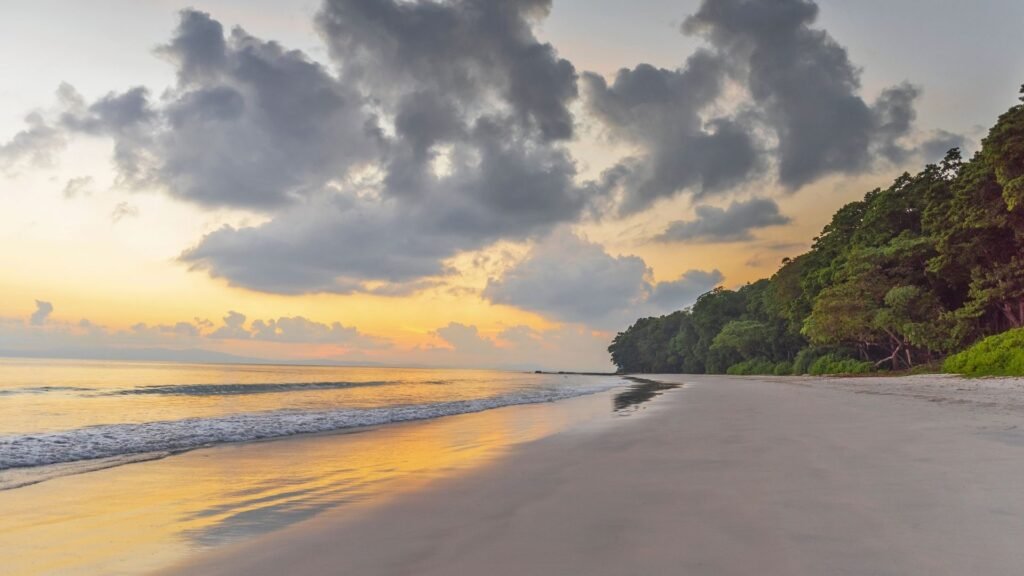
Radhanagar Beach, located on Havelock Island in India’s remote Andaman archipelago, is often described as one of Asia’s most beautiful — and it’s easy to understand why the moment you arrive. Dense tropical forest opens suddenly onto a wide stretch of soft white sand, framed by turquoise water and almost untouched natural surroundings. There are no high-rise resorts dominating the view, just jungle, ocean, and open sky.
The Andaman Islands sit closer to Southeast Asia than mainland India, and the atmosphere reflects that unique geography. The water is exceptionally clear, the beaches feel spacious, and the pace of life is calm and unhurried. Compared to more famous destinations in Thailand or Bali, Radhanagar still feels like a discovery.
What truly sets the beach apart is its balance — dramatic beauty without heavy commercialization. It delivers the postcard-perfect tropical experience while maintaining a sense of authenticity that many popular destinations have lost.
Why Radhanagar Beach Is One of the Best Beaches in Asia
- Wide, pristine white sand shoreline with minimal development
- Clear, swimmable water with gentle waves
- Lush jungle backdrop creating a dramatic setting
- Peaceful atmosphere compared to mainstream tourist hotspots
- Often ranked among the best beaches in Asia by travel publications
- Part of the unique Andaman Islands experience
Best Things to Do at Radhanagar Beach
- Swimming in calm, clear water
- Walking along the expansive shoreline
- Watching sunsets over the Bay of Bengal
- Exploring nearby islands and coral reefs
- Relaxing in nature with minimal crowds
Best for: Nature lovers, couples, tranquility seekers, off-the-beaten-path travelers
Best time to visit: November to April (dry season with the best weather conditions)
Radhanagar Beach offers something increasingly rare — tropical beauty that still feels authentic and undiscovered. For travelers willing to journey a little farther, the reward is one of Asia’s most serene coastal landscapes.
9. Ngapali Beach — Myanmar
Ngapali Beach is one of Southeast Asia’s best-kept secrets. Stretching along Myanmar’s Bay of Bengal coastline, the beach combines palm-lined sand, clear water, and a peaceful atmosphere that feels worlds away from crowded resort destinations. Unlike heavily commercialized beaches elsewhere in Asia, Ngapali retains a sense of authenticity shaped by nearby fishing villages and local life.
The rhythm here is slower. Wooden fishing boats rest on the shore, bicycles replace traffic jams, and sunsets unfold without crowds competing for space. The scenery is beautiful in a quiet, understated way — less dramatic than limestone cliffs, but deeply relaxing.
Travel to Myanmar has fluctuated over the years due to political circumstances, which has limited mass tourism. As a result, Ngapali has remained relatively untouched compared to neighboring countries, preserving its charm.
Why Ngapali Beach Is One of the Best Beaches in Asia
- Long palm-lined coastline with minimal crowds
- Authentic local atmosphere and fishing village culture
- Soft sand and calm swimming conditions
- Relaxed luxury resorts without overdevelopment
- Peaceful sunsets and uncrowded beaches
- Unique destination compared to mainstream Southeast Asia
Best Things to Do at Ngapali
- Cycle through nearby fishing villages
- Enjoy fresh seafood at beachfront restaurants
- Snorkeling and boat trips to nearby islands
- Sunset walks along the coastline
- Relaxation at boutique resorts and spas
Best for: Relaxation seekers, couples, luxury travelers, travelers looking for hidden gems
Best time to visit: November to March (dry season with comfortable temperatures)
Ngapali isn’t about dramatic landmarks or nightlife — it’s about peace. For travelers who value quiet beauty and authenticity, it can easily become one of the most memorable beach experiences in Asia.
10. Haeundae Beach, Busan — South Korea
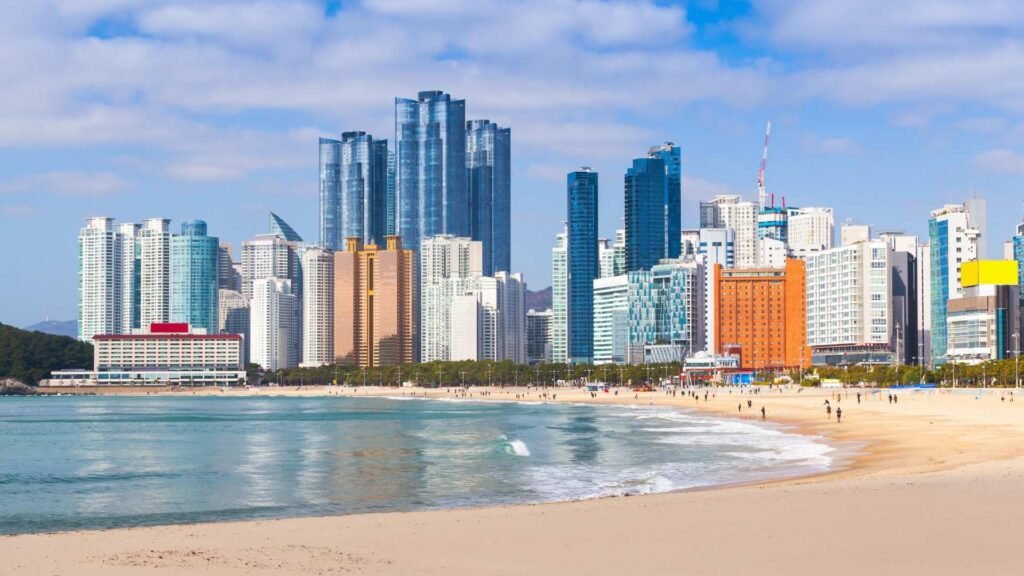
Not all of Asia’s best beaches are remote tropical islands. Haeundae Beach in Busan offers something completely different — a vibrant urban coastline where city energy meets the ocean. Skyscrapers rise behind golden sand, beach festivals fill the calendar, and the atmosphere blends relaxation with metropolitan excitement.
During summer, Haeundae becomes one of South Korea’s most popular holiday destinations, drawing visitors from across the country. The wide beach provides plenty of space, while nearby restaurants, markets, and nightlife create an experience that extends far beyond the shoreline.
What makes Haeundae special is its contrast. You can spend the afternoon swimming or sunbathing, then walk minutes into a modern city filled with street food, luxury hotels, and cultural attractions. It’s a beach destination that combines urban exploration with coastal relaxation.
Why Haeundae Is One of the Best Beaches in Asia
- Unique city-meets-beach atmosphere
- Wide sandy shoreline with modern facilities
- Festivals, nightlife, and cultural attractions nearby
- Excellent food scene including seafood markets
- Easy accessibility within a major international city
- Distinct experience compared to tropical island beaches
Best Things to Do at Haeundae
- Swimming and sunbathing during summer season
- Visiting Haeundae Market for Korean street food
- Walking along the coastal boardwalk
- Exploring Busan’s temples and cultural attractions
- Enjoying nightlife and beachfront cafes
Best for: Urban travelers, food lovers, festival visitors, city-beach experiences
Best time to visit: June to September (warm weather and beach season)
Haeundae provides the perfect finale to Asia’s beach diversity. From remote tropical islands to vibrant coastal cities, the region offers experiences for every type of traveler — proving that paradise doesn’t always look the same.
Travel Tips and Interesting Facts About Beaches in Asia
Before choosing your perfect beach destination in Asia, it helps to understand a few regional differences. From climate patterns to cultural nuances, small details can significantly improve your travel experience and help you avoid common mistakes.
General Travel Tips for Visiting Beaches in Asia
- Check monsoon seasons carefully: Weather varies greatly across Asia. While Thailand may be rainy, Indonesia could have perfect sunshine at the same time.
- Book early during peak months: December to April is high season across many tropical destinations.
- Cash is still important: Smaller islands often have limited ATMs or card acceptance.
- Respect local customs: Some countries have modest dress expectations away from resort areas.
- Sun protection is essential: Tropical sun near the equator is much stronger than many travelers expect.
- Transportation takes time: Remote islands often require multiple transfers (flights, ferries, boats).
- Travel insurance is highly recommended: Especially for activities like diving, snorkeling, or island hopping.
Interesting Facts About Beaches in Asia
- Asia is home to some of the whitest sand beaches in the world, particularly in the Philippines and Maldives.
- Indonesia has more than 17,000 islands, offering enormous coastal diversity.
- The Maldives is the lowest country on Earth, with an average elevation of just 1.5 meters above sea level.
- Thailand’s limestone cliffs were formed over millions of years from ancient coral reefs.
- The Andaman Sea and Coral Triangle region contain some of the highest marine biodiversity on the planet.
- Many Southeast Asian beaches experience bioluminescent plankton, where the water glows at night.
Frequently Asked Questions About the Best Beaches in Asia
Which country in Asia has the best beaches?
The Philippines, Thailand, Indonesia, and the Maldives are often considered to have the best beaches in Asia due to their tropical climate, clear water, and scenic coastlines. Each offers different experiences ranging from luxury resorts to remote island escapes.
What is the best time to visit beaches in Asia?
Generally, the best time to visit Southeast Asian beaches is between November and April during the dry season. However, Indonesia often has ideal weather from May to October, so timing depends on your destination.
Are beaches in Asia expensive to visit?
Asia offers options for every budget. Destinations like Thailand and the Philippines can be very affordable, while the Maldives and luxury resorts in Bali or Phuket can be more expensive. Budget travelers can still find excellent value across the region.
Which Asian beaches are best for honeymoon?
The Maldives, Boracay, Bali, and Thailand’s island resorts are among the most popular honeymoon destinations due to their romantic scenery, luxury accommodations, and tropical atmosphere.
Is it safe to swim at beaches in Asia?
Most major beaches are safe for swimming, especially during calm seasons. However, travelers should always watch for local safety flags, currents, jellyfish warnings, and weather conditions.
What are the least crowded beach destinations in Asia?
Less crowded destinations include parts of Palawan in the Philippines, the Andaman Islands in India, certain Indonesian islands, and lesser-known areas of Thailand and Vietnam.
Final Thoughts: Asia’s Beaches Offer Something for Everyone
The beauty of Asia’s coastline lies in its diversity. You can find powder-white sand in the Philippines, dramatic cliffs in Thailand, exotic pink beaches in Indonesia, untouched islands in India, hidden gems in Myanmar, and even energetic urban shores in South Korea — all within one continent.
Whether you’re dreaming of a luxury escape, a romantic honeymoon, or a backpacking adventure, the beaches of Asia deliver some of the most unforgettable travel experiences on Earth. And once you’ve experienced one, it rarely stays just one — travelers often find themselves returning again and again to explore more of the region’s tropical paradise.
Planning your next trip? Asia’s beaches are waiting.