Architecture

  • Warsaw, heard before it is seen

    Warsaw, heard before it is seen

    Old Town Market Square, Warsaw at dusk
    Photo: Rhododendrites / Wikimedia Commons (CC BY-SA 4.0)

    Poland’s capital is one of Europe’s most underrated cultural cities. It does not get the same attention as Vienna or Prague, and that is part of its strength. It is not in the business of selling itself — it is in the business of being itself.

    Culture · Poland

    It is a quarter to ten on a Thursday evening, and I am walking down a stairway to a cellar in Stare Miasto, where a piano trio is finding its first ballad. The jazz here has a particular quality: it is not trying to remind you of anything else. It is its own conversation, conducted at its own tempo. Above ground the Old Town has just turned quiet enough that you can hear your own footsteps on the stones. That is how Warsaw works. Only once you’ve slowed down.


    The rebuilt city is not a copy

    Warsaw was levelled in 1944. Eighty-five per cent of the buildings disappeared. What you see today in Stare Miasto is not the original — it is a deliberate reconstruction, completed in the years after the war using Bellotto’s eighteenth-century paintings as architectural reference. UNESCO placed the area on the World Heritage list in 1980, not because the houses were old, but because the act of reconstruction was itself a feat of cultural will.

    That gives Stare Miasto a strange quality when you walk through it. It is not an old town that survived. It is an old town that was called back to life. On Rynek Starego Miasta — the Old Town square — you sit in the afternoon at a café trying to find the line between what was reconstructed and what is real. After a while you give up. It is both at the same time. That is the point.


    The Royal Route, walked slowly

    Take the slow route from Krakowskie Przedmieście and don’t hurry. The Royal Route runs south towards Łazienki, past the presidential palace, the university and the Holy Cross Church, where Chopin’s heart rests in a pillar behind the inscription “where your treasure is, there will your heart be also.” It is the kind of detail the city does not advertise. You find it if you bother to walk slowly enough.

    The walk takes an hour if you stop at the cafés you pass. It takes twenty minutes if you are in a hurry. One of those two experiences is Warsaw. The other is a transit.


    Sunday afternoon at Łazienki

    Every Sunday from mid-May to the end of September, pianists play Chopin under the famous Chopin monument in Łazienki Królewskie. Noon and four o’clock. Two concerts, free, under open sky, surrounded by old forest and water.

    It sounds like a tourist arrangement. It is not. The pianists are internationally recognised, the repertoire is serious, and the audience consists in equal parts of locals with blankets and thermos flasks, and travellers who know what they have come for. You sit on the grass or on one of the benches. There is no reservation, no stage. Just a grand piano under the trees, and a quality of listening that is rare outside the concert hall.

    Afterwards you walk through the park to Pałac na Wyspie — the palace on the water — and onwards to the orangery, where one of Europe’s best-preserved eighteenth-century theatres still stages performances. With good planning, you can have a Sunday where Chopin in the afternoon and chamber music in the evening follow each other naturally. That is the kind of day a modern luxury journey is made of. Not because it is expensive — it really isn’t — but because it is right.


    Stalin’s gift, and what went on inside it

    Rising in the centre of Warsaw stands the Pałac Kultury i Nauki — the Palace of Culture and Science — 237 metres tall, a “gift” from Stalin to the Polish people in 1955, designed by Lev Rudnev as the westernmost of Moscow’s seven socialist-realist sisters. Poles have had seventy years to find a comfortable relationship with it. They are still not done. Each generation calls it something new: pajac, strzykawka, Stalin’s rocket. It is still standing, and it is still Poland’s landmark — like it or not.

    The interesting part is what went on inside it. In the 1960s the Palace of Culture housed two of Warsaw’s most legendary nightlife venues: the Russian restaurant Trojka, and the Kongresowa restaurant with its dance floor and striptease shows. This was the beating heart of Warsaw’s nightlife during the communist period — inside a building officially dedicated to Stalin. It is the kind of absurdity the city’s residents weren’t necessarily proud of, but which they also can’t pretend away. The Palace of Culture, after all, did house culture. Including the kind that moved on the dance floor after midnight.

    Today the building still contains four theatres, a multiplex cinema, museums, a swimming pool, the Sala Kongresowa concert hall where the Rolling Stones played in 1967, and more than ten bars and a nightclub. Take the lift to the thirtieth floor and stand on the observation terrace at 114 metres. You see the modern Warsaw that grew up around the monument. It is a cityscape that tells you more about the complexity of history than any guidebook.


    Jazz in the cellar, piano in the hall

    Warsaw’s jazz scene is one of the most serious in Europe, and almost no one outside Poland knows it. The club 12on14 in the Mokotów district programmes both Polish masters and international guests, and the room is built specifically for the small-format setting. Tygmont in the centre is where the younger Polish musicians try out new material. Both share the same quality: you come for the music, not for the atmosphere. The atmosphere adapts.

    That tells you something about the city’s character. Warsaw doesn’t need to lay atmosphere on top. The atmosphere comes from people being absorbed in what they are doing. The waitress knows the concert programme. The pianist knows the audience. It is a closed circuit of engagement, and as a traveller you are allowed to step into it without being sold anything.


    Where to stay

    Two hotels carry old Warsaw forward with quality. Hotel Bristol on Krakowskie Przedmieście has been serving coffee to successive generations of writers, statesmen and artists since 1901 — and it does not feel like a museum. It is a working grand hotel where the Art Nouveau has been restored with patience rather than pomp. Raffles Europejski, next door, is the modern counterpart: clean-lined, with a contemporary art collection in the corridors and a bar where locals actually meet in the evening. That last point is the most important indicator of whether a hotel is properly placed. The locals come.

    Below both runs the Royal Route, which you can walk all the way to Łazienki in an hour, if you take it slowly.


    Avoid

    Long days that try to fit “everything at once”. Warsaw doesn’t give back much if you treat it as a checklist. Three days with one main thread per day — Stare Miasto on one, Łazienki and the Palace of Culture on another, jazz and contemporary art on the third — and you’ll get more out of the city than most tourists do in a week.

    Skip the large tourist restaurants on the Rynek square itself. The food is average; the price is not. The serious modern Polish kitchen — mineral, precise, remarkable — is two streets away, where Varsovians eat themselves.


    Arrivals from the Nordic capitals

    TravelTalk is a Nordic publication. Here is how Nordic readers reach Warsaw.

    From Copenhagen: Direct to Warsaw Chopin (WAW) with LOT and SAS, around 1 hour 45 minutes. Daily year-round.

    From Oslo: Direct with LOT and Norwegian, around 2 hours. Norway has a quiet but persistent cultural connection to Polish exile literature — several of the Polish avant-garde writers found their first Nordic translators in Oslo.

    From Stockholm: Direct with LOT and SAS, around 1 hour 25 minutes. Sweden received thousands of Polish refugees in 1968, and the Polish-Swedish cultural exchange has remained unusually rich — particularly in poetry and film.

    From Helsinki: Direct with Finnair, around 1 hour 50 minutes. For Finnish travellers, Warsaw is the city that most directly mirrors Helsinki’s own experience: a capital that has had to redefine itself in the twentieth century, and that has chosen culture as the load-bearing element.


    Factbox: practical Warsaw

    Season: May to September for the Chopin concerts at Łazienki. December for the Christmas markets in Stare Miasto, which have a particular and quiet quality.

    Language: English in all better hotels and restaurants. Polish gratefully received in shorter phrases.

    Currency: Polish złoty (PLN). Check current rates when planning.

    Hotels mentioned: Hotel Bristol (Krakowskie Przedmieście 42/44). Raffles Europejski Warsaw (Krakowskie Przedmieście 13).

    Łazienki Chopin concerts: Every Sunday, mid-May to end of September, noon and 4pm. Free admission. Confirm dates at lazienki-krolewskie.pl.

    Pałac Kultury i Nauki: Observation terrace on the thirtieth floor, ticket at the entrance from ul. Marszałkowska. The building is open daily and contains theatres, cinema, museums and bars.


    This article is for: Culture · City breaks · Poland · Central Europe · Adult travel · Music · Architecture · Reconstruction and memory

  • Maramureș: Where Wooden Churches Touch Romania’s Sky

    Maramureș: Where Wooden Churches Touch Romania’s Sky

    .tt-article__hero-image,.tt-article__inline-image{margin:0 0 2em;border-radius:10px;overflow:hidden;line-height:0}.tt-article__hero-image img,.tt-article__inline-image img{width:100%;height:auto;max-height:520px;object-fit:cover;display:block}.tt-article__image-credit{font-size:.75em;color:#888;padding:5px 10px;background:#f8f8f8;line-height:1.3}.tt-article__image-credit a{color:#888}.tt-article__standfirst{font-size:1.1em;line-height:1.65;margin:0 0 2em;color:#333}.tt-article__tips-box{background:#f9f5f0;border-left:4px solid #b8860b;padding:18px 22px;margin:2.2em 0;border-radius:4px}.tt-article__tips-box h3{margin:0 0 10px;font-size:.9em;text-transform:uppercase;letter-spacing:.06em;color:#b8860b}.tt-article__tips-box ul{margin:0;padding-left:18px}.tt-article__tips-box li{margin-bottom:5px;font-size:.95em}.tt-article__inline-image{margin:1.8em 0 2em}

    Maramureș: Where Wooden Churches Touch Romania's Sky
    Photo: Viorel Petcu / Wikimedia Commons (cc by-sa 3.0 ro)

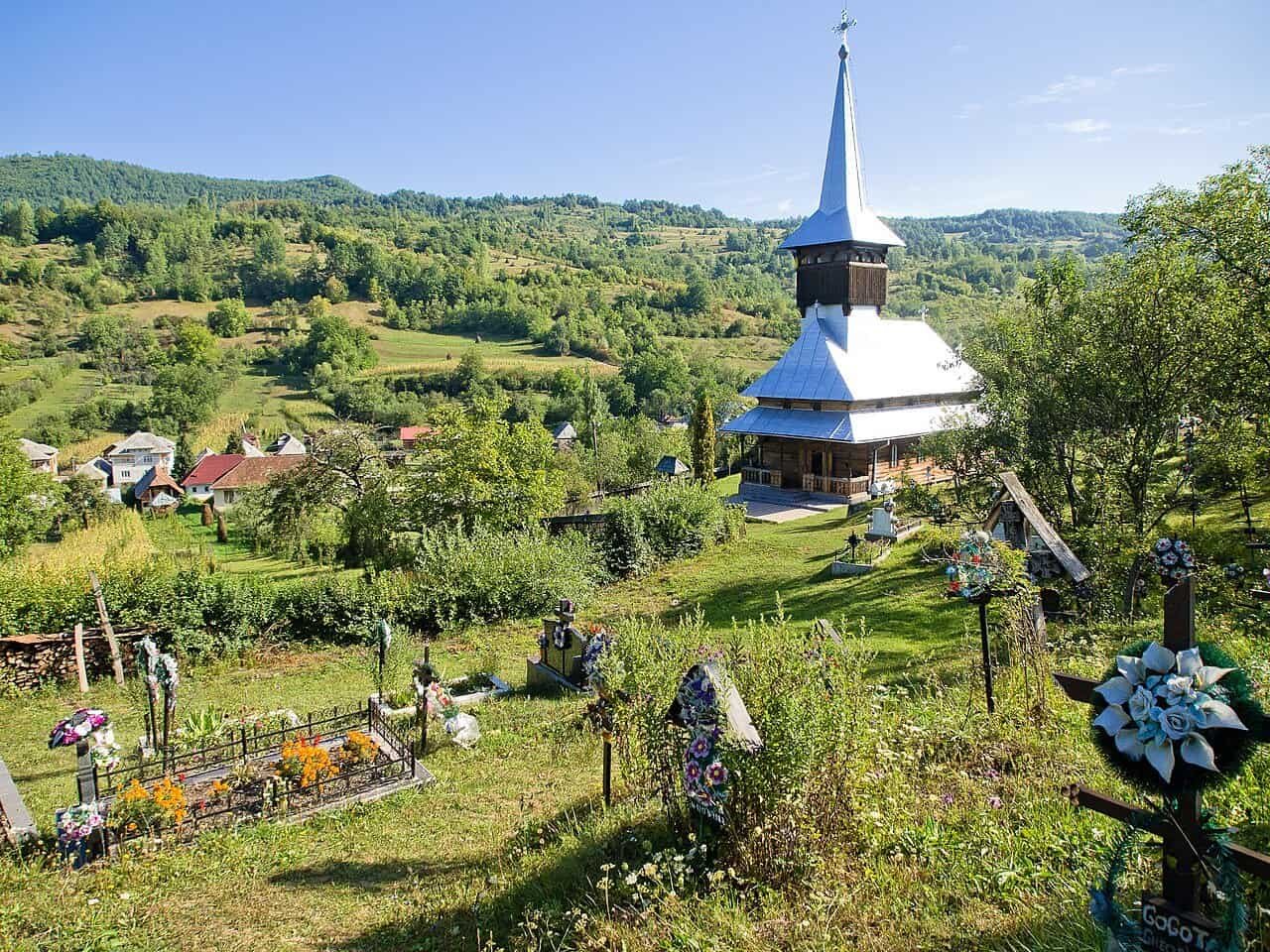
    The axe marks are still visible on the oak beams overhead, each strike a century and a half old. Father Vasile stands beneath the nave of Șurdești Church, his hand resting on timber darker than charcoal, and tells me the builders used no nails, no metal fasteners of any kind. Just mortise and tenon joints, wood pegs, and an understanding of engineering that modern architects study but rarely replicate.

    The Architecture That Defied the Habsburgs

    The Maramureș wooden churches exist because of a ban. In the 18th century, the Habsburg Empire forbade Orthodox Romanians in this northern region from building in stone—a material reserved for Catholic structures. The response was not capitulation but ingenuity. Local craftsmen turned to what surrounded them: the spruce and oak forests of the Carpathian foothills. Between 1700 and 1800, they constructed churches with soaring spires that reach seventy-eight metres at Șurdești, making it the tallest wooden structure in Europe. These were not humble substitutes. They were Gothic cathedrals rendered in timber, with double-tiered roofs that shed snow and proportions that make stone seem pedestrian.

    Eight of these churches now hold UNESCO World Heritage status, scattered across villages with populations of a few hundred. At Bârsana, the monastery complex rebuilt in traditional style in the 1990s demonstrates continuity of technique. I watched a carpenter there shape roof shingles using a draw knife, each one split from spruce logs with the grain running unbroken from top to bottom—the only way they'll last. The interior frescoes, painted directly onto wood panels, depict Biblical scenes with faces that could belong to local villagers. Saint Peter wears a sheepskin vest. The Last Judgement includes figures in regional dress tumbling into hell. This was theology made local, architecture made defiant.

    Maramureș: Where Wooden Churches Touch Romania's Sky
    Photo: Adam Jones Adam63 / Wikimedia Commons (cc by-sa 3.0)

    Where the Merry Cemetery is Not a Joke

    Săpânța's cemetery operates on a principle foreign to most European traditions: death should be narrated, not mourned. Stan Ioan Pătraș began carving and painting the wooden crosses in 1935, depicting scenes from the deceased's life with acidic humour and unflinching honesty. A drunk meets his end under a cart. A nagging wife drives her husband to distraction. A Communist informer is shown with his ear to a keyhole. The crosses are painted in vivid blues—extracted traditionally from cobalt—with epitaphs written in rhyming couplets that range from tender to savage. 'Here lies Dumitru the drinker / Who loved țuică more than his thinker' is one of the gentler examples.

    What tourists mistake for kitsch is actually radical transparency. In Maramureș, the careful curation of legacy that defines most Western funerary practice is replaced by something closer to oral history carved in oak. The crosses function as village record, genealogy, and gossip made permanent. Stan's successor, Dumitru Pop, continues the tradition with commissions that arrive months before death. Families specify what should be depicted, though Pop retains editorial control over the verse. The cemetery has spawned imitators across Romania, but none approach the original's combination of craft and candour. It remains a working graveyard where fresh graves appear monthly, each cross a story that won't be softened by time.

    The Last Place the Maramureșeni Still Dress

    Sunday morning in Ieud, and the women wear pleated wool skirts heavy enough to hold their shape without movement, white blouses with blackwork embroidery at the cuffs, and headscarves tied in ways that signal marital status and village affiliation. This is not performance. The church of Ieud Sus—one of the UNESCO eight, with foundations from 1364—still fills each week with a congregation in traditional dress. The men wear black felt hats and waistcoats with pewter buttons. The liturgy is sung, not spoken, in a Romanian that retains medieval cadences flattened out elsewhere.

    The Maramureșeni identity persists because isolation permitted it. These valleys remained outside Habsburg urbanism, outside Ceaușescu's systematisation campaigns, outside the homogenising pressures that erased regional distinction across most of Europe. At Casa Iurca de Călinești, a 300-year-old wooden house maintained by the Teleki family as a private museum and guesthouse, I saw how domestic architecture mirrors ecclesiastical: the same post-and-beam construction, the same hand-adzed surfaces, the same decoration concentrated on gates and portals. The carved wooden gates of Maramureș—some twelve metres tall, with geometric motifs derived from pre-Christian symbols—mark property boundaries but also announce identity. Each family's gate is distinct, and their designs are not copied. In a region where surnames repeat and villages blur together, the gate is signature.

    The essentials: Maramureș

    • Best season: Late May through September for accessible roads and church festivals; October for autumn colour and fewer visitors
    • Getting there: Fly to Cluj-Napoca (90 minutes from London), then drive three hours north through Dej. No direct rail connections. Car hire essential
    • Where to stay: Pensiunea Casa Lucia in Breb for authentic farmhouse accommodation (£45/night with dinner), or Hotel Iezer in Borșa for mountain access and modern comfort (from £80/night)
    • Budget signal: Expect £60–£90 per day including accommodation, meals, and local guides. Church entry typically by donation
    • Insider tip: Father Vasile at Șurdești Church offers impromptu architectural tours if you arrive during afternoon hours. Bring cash for the donation box—cards are not accepted
    Maramureș: Where Wooden Churches Touch Romania's Sky
    Photo: Krasqa / Wikimedia Commons (cc by-sa 4.0)

    Why the Food Tastes of Smoke and Preservation

    The cuisine of Maramureș is what remains when refrigeration never arrived. Every farmhouse has a cămară—a dedicated larder where smoked meats hang from beams and pickled vegetables fill ceramic crocks through winter. Șuncă de Maramureș, the regional smoked pork, cures for months in smoke from beech wood, developing a mahogany surface and a flavour closer to Spanish jamón than anything else in Romania. At Restaurant La Cruce in Săpânța, chef Mihai Hodișan serves it sliced thin with fresh horseradish and bread baked in a wood-fired oven each morning. The menu rotates with what's preserved or in season: sour soups thickened with bran, sheep's cheese aged in spruce bark, potato dishes enriched with lard rendered from autumn slaughter.

    I ate better at Pensiunea Casa Lucia in Breb, a village of two hundred where Maria Timiș cooks for guests in her farmhouse kitchen. Dinner arrived in stages: ciorba de burtă, the tripe soup that Romanians consider medicinal; mămăligă, the polenta that functions as both bread and plate; and tochitura, a stew of pork and beef with an undertow of paprika and garlic. Everything emerged from ingredients within twenty kilometres. The wine was homemade, extracted from grapes that barely ripen this far north, sour enough to strip paint. This is experiential luxury defined by proximity to production, not polish. Breakfast included fresh sheep's milk still warm, bread torn from loaves the size of car tyres, and plum jam so thick it had to be spooned in chunks. The preservation techniques—smoking, fermenting, curing in brine—produce flavours that register as ancient, because they are.

    What the Snow Road Reveals in Winter

    The Băile Borșa to Prislop Pass route closes by November and doesn't reopen until May. This is deliberate, not neglect. The mountain road climbs to 1,416 metres through forests where European bison were reintroduced in 2022—Romania's first wild population in two centuries. In summer, it's passable in any vehicle. In winter, it becomes a corridor for loggers on horseback and the occasional cross-country skier. I took it in late October with a guide from Pensiunea Brădețel, driving as far as the first snow permitted before continuing on foot. The silence at altitude is not restful. It's the silence of isolation that most of Europe eliminated with infrastructure.

    The villages on the southern slope—Poienile Izei, Botiza, Rozavlea—remain occupied year-round but functionally cut off from December through March. Supplies come in by horse-drawn sled. Medical emergencies require helicopter evacuation. Yet the population has not abandoned these places. At Hotel Iezer in Borșa, owner Radu Mihăilescu explained that Maramureș experiences reverse migration: young people returning from jobs in Spain and Italy to reclaim family land and open guesthouses. The [luxury travel guides](https://traveltalk.travel/travel-interests/) omit this region because it offers no spas, no Michelin stars, no international hotel brands. What it offers instead is what genuine remoteness feels like—the discomfort and the clarity both. The [live travel inspiration](https://traveltalk.travel/destinations/) most travellers seek is usually curated approximation. In Maramureș, it's simply what remains when approximation never arrived.

    Explore further