
From the traveltalk.dk family – started in Denmark in 2018
Austria: The Complete Guide to the Alps’ Favourite All Year Round
Danes account for over 1.6 million overnight stays in Austria every year – and there is a good reason for that. Few countries in Europe can match Austria’s unique combination of majestic mountains, world-class ski resorts, historic cities, culinary experiences and an infrastructure that makes it remarkably easy to get around. From Copenhagen to Innsbruck takes just 12-14 hours by car, and by air you are there in 1.5-2 hours. Austria is quite simply Denmark’s perfect neighbour to the south – close enough to be convenient, exotic enough to feel like a proper holiday.
While most people know Austria for its world-famous ski areas in Ischgl, St. Anton and Kitzbühel, the truth is that Austria is one of Europe’s most versatile holiday destinations. In winter you will find perfectly groomed pistes, cosy après-ski and alpine villages blanketed in snow. In summer the same mountains transform into a paradise for hikers, mountain bikers and nature lovers. The cities of Vienna and Salzburg hum with culture, music and café life all year round. And when you get hungry? Austrian cuisine, from Wiener schnitzel to Kaiserschmarrn and Sachertorte, is an experience in its own right.
This is the complete guide to travelling in Austria – based on decades of experience. If you are short on time, you can jump straight to our overview of 50 good reasons to choose Austria. Here you will find everything you need to know to plan the perfect Austrian holiday, whether you dream of world-class skiing, mountain hikes in the summer heat, a culture weekend in Vienna or your family’s first alpine holiday.
[lmg_match config=”traveltalk-oestrig”]
📄 Travel facts for your trip to Austria
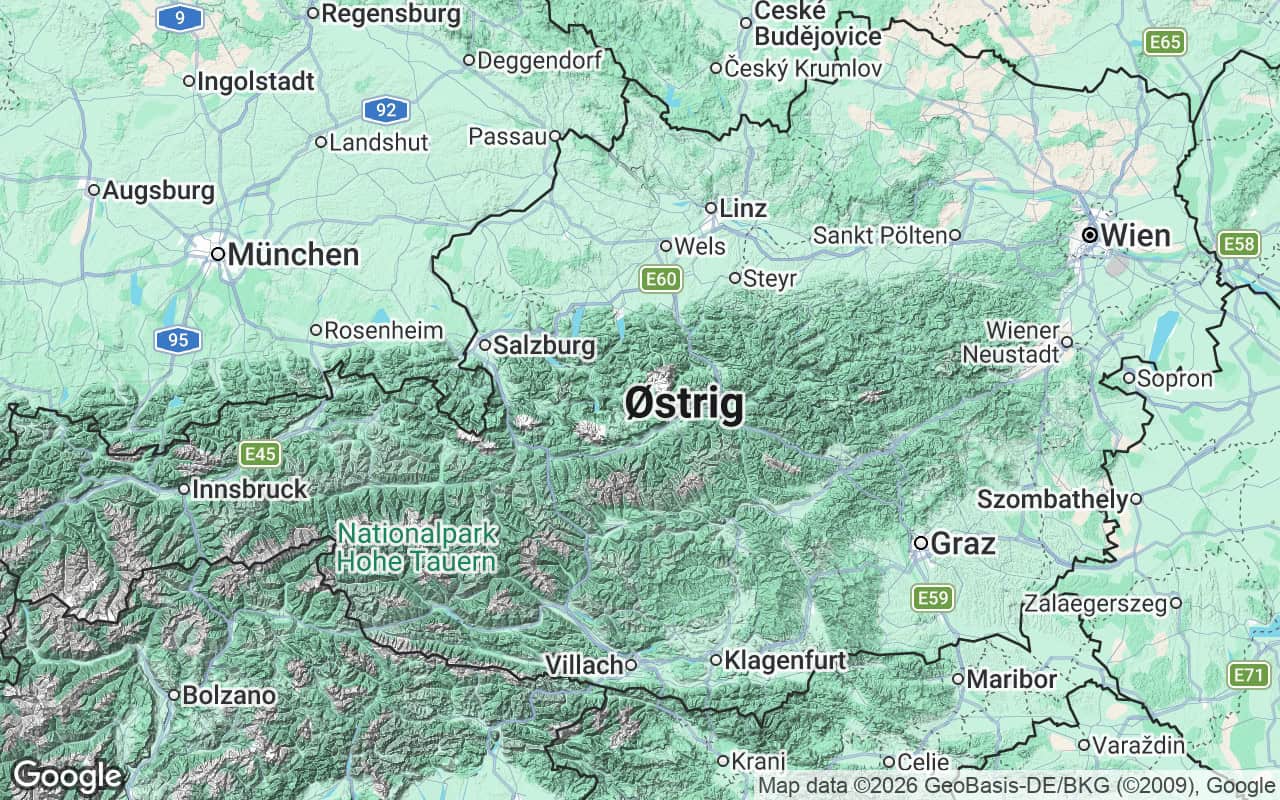
- Location: Central Europe, landlocked – the Alps cover around two-thirds of the country
- Capital: Vienna
- Language: German
- Currency: euro (EUR)
- Highest point: Grossglockner, 3,798 m
- Best season: December to March for skiing, May to September for hiking, lakes and cities
- Recommended length of stay: 7 days is enough for both a city and an alpine valley
- ✈️ Departing from: Copenhagen Airport (CPH) – around two hours to Vienna year round, and to Innsbruck and Salzburg during the ski season
💡 Traveltalk tip
Combine city and mountains – that is exactly what Austria does best, and few other countries can match it. Vienna in the morning and an alpine valley the same evening is no exaggeration: the railjet train runs between Vienna and Innsbruck in just over four hours right across the country, and you do not need to hire a car to fit both into one week.
Insider tip: public transport reaches even the small mountain villages, so a car is rarely necessary – trains and regional buses serve the valleys closely. The lift passes in peak season, however, are among the most expensive in Europe, and that is where the real saving lies: plan your trip for early December or late March, when there is still plenty of snow and the pass costs a fraction of the price.
🤝 Travel partner – this spot is available. This is where we recommend travel partners: Who can deliver the trip or simply accommodation/transport? Do you arrange trips to Austria? This space could be yours – write to us at hello@leisuretalk.net.
Top areas:
Why Austria? Europe’s most versatile travel destination
Austria occupies a very special position among European holiday destinations. The country combines the best of several worlds: the dramatic nature of the Alps, Central European culture and history, German precision and efficiency, and Italian joie de vivre. For Danish travellers this means practical advantages that few other destinations can offer.
Geographically, Austria is ideally placed. By car, the northern ski areas such as Kitzbühel and Innsbruck are only 11-14 hours away – a manageable drive that can be split over two days with an overnight stop in Germany. If you prefer the train, the Snälltåget offers direct night services from Copenhagen to the Austrian Alpine country, where you wake up to mountain panoramas instead of motorway views. And if you fly, you land in Munich, Innsbruck or Salzburg in 1.5-2 hours – faster than many domestic flights.
Economically, Austria offers good value for money. Prices for food, accommodation and activities are generally below the levels in Switzerland, Norway and parts of Italy, while quality is top class. A mid-range hotel typically costs 600-1,200 DKK per night for a double room, and a solid restaurant meal comes to 150-250 DKK per person. Lift passes for the major ski areas are around 400-550 DKK per day – less than comparable areas in France or Switzerland.
But it is Austria’s versatility that truly sets it apart. This is a country where you can:
- Ski in the morning and visit world-class museums in Vienna in the afternoon
- Hike on a glacier one day and taste wine in the Wachau Valley the next
- Challenge yourself on black runs in St. Anton or take the family on easy blue runs in Saalbach
- Enjoy classical music in a 17th-century concert hall or dance to electronic music in alpine discos
- Eat Wiener schnitzel in a Michelin-starred restaurant or enjoy a “Brettljause” in a mountain inn 2,000 metres above sea level
27% of Austria’s surface is protected nature – six national parks ensure that the landscapes remain untouched for future generations. UNESCO has listed 10 Austrian sites as World Heritage, including Vienna’s historic centre, the Hallstatt-Dachstein cultural landscape and the Semmering railway. And with over 695 peaks above 3,000 metres, including the Großglockner (3,798 metres), you have a playground for mountain experiences that rivals anything in the Alps.
Winter in Austria: much more than just skiing
Austria is Denmark’s absolutely biggest ski holiday destination – and for good reason. No other places combine reliable snow, well-developed facilities, manageable distances and family-friendly prices in quite the same way. From December to April the Austrian Alps are transformed into a winter paradise, where skiing naturally takes centre stage, but where winter offers much, much more.

The best ski areas for Danes
Austria’s ski areas are legendary, and its most iconic runs feature on every list. But which suits you best?
Ischgl is the capital of après-ski and one of the liveliest areas in the Alps. With over 238 kilometres of piste and a direct link to the Swiss resort of Samnaun, Ischgl attracts both serious skiers and party lovers. The area sits high (1,400–2,872 metres), which ensures excellent snow conditions from November to May. The Danish ski travel firms Danski and Nortlander have turned Ischgl into a Danish stronghold, with their own hotels and a social skiing culture.
Skiing in Ischgl, Austria, now with an extra gear
St. Anton am Arlberg is for the serious. This is where modern alpine skiing was invented, and the area draws advanced skiers from around the world. 305 kilometres of piste and some of the Alps’ best off-piste options make St. Anton a mecca for ski enthusiasts. The village has kept its authentic Austrian charm despite its international fame.
St. Anton’s ski race: the year’s last race and a huge party
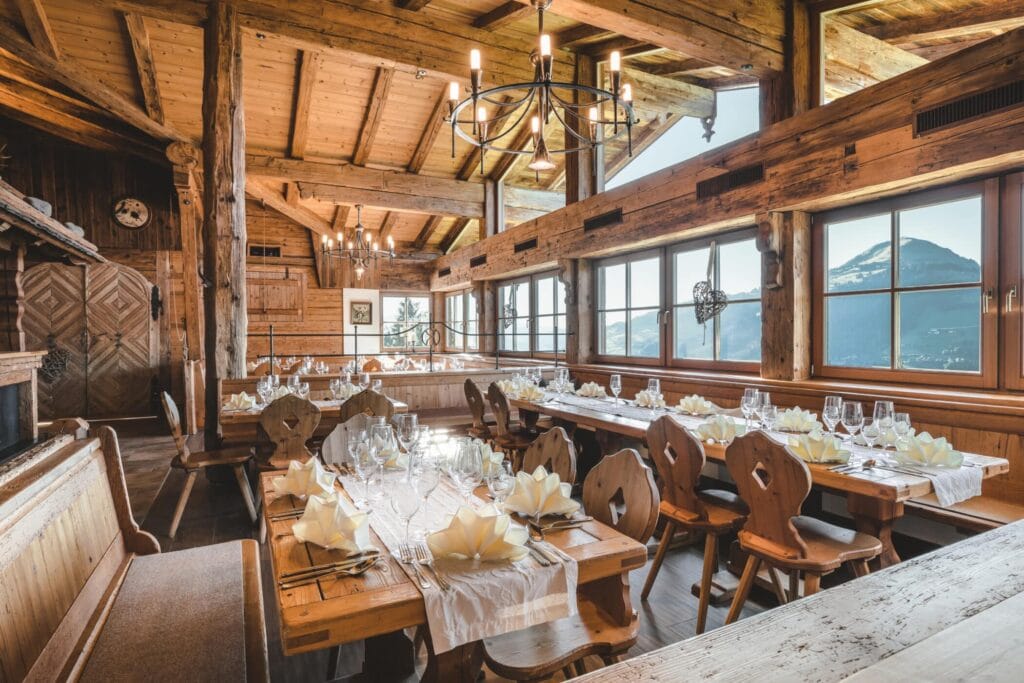
Kitzbühel is glamour and tradition. Its distinctive medieval town of brightly coloured houses provides the setting for one of the Alps’ most prestigious ski areas. The Hahnenkamm race, the world’s most feared World Cup downhill, takes place here every January. Kitzbühel is ideal for those who want to combine good skiing with a grand atmosphere and fine restaurants.
Kitzbüheler Alps, a classic ski area with everything for the discerning skier
Saalbach-Hinterglemm is the choice for families and friends. With 270 kilometres of piste spread across manageable sections, the area is ideal for mixed groups. There are both challenging runs for the proficient and gentle slopes for beginners. The area is known for its lively atmosphere and reasonable prices.
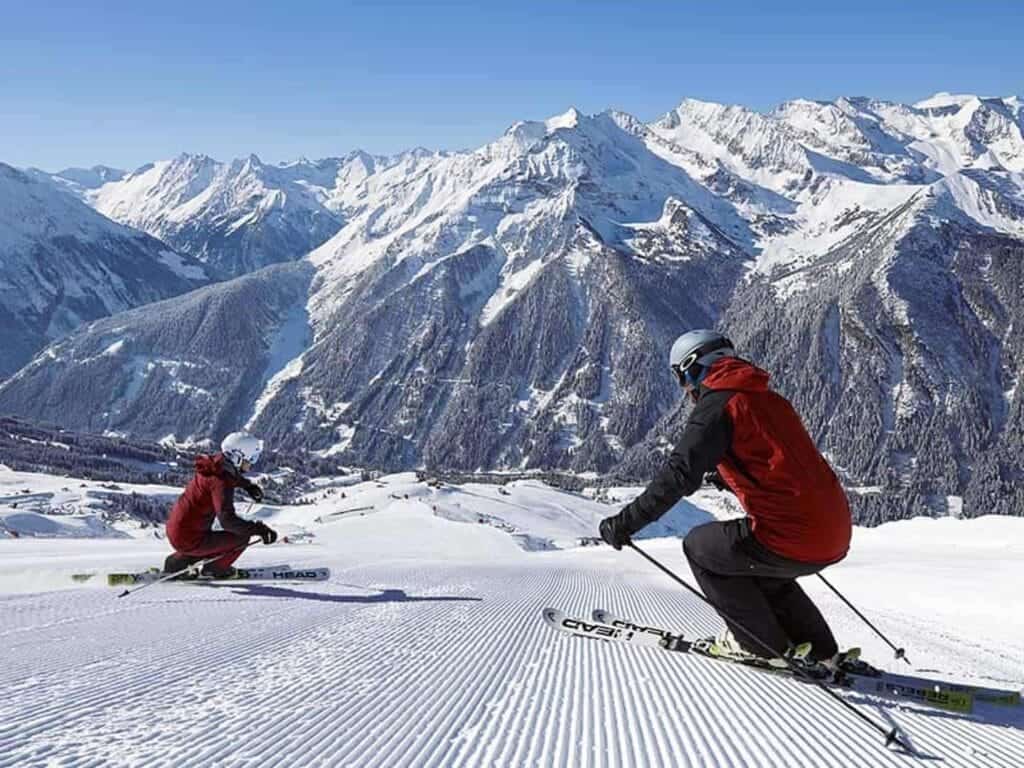
Mayrhofen is a gem of the Zillertal, with over 500 km of piste
Zillertal is the most versatile valley area. Here you’ll find not one but several large ski areas: Mayrhofen, Hintertux (with year-round glacier skiing), Hochzillertal-Hochfügen and several others. The Zillertal is ideal for families who want variety and good infrastructure.
The Zillertal breaks new ground: rent your own private piste?
Skicirkus Saalbach-Hinterglemm-Leogang-Fieberbrunn is a huge combined area with 270 kilometres of piste. It is perfect for skiers who don’t want to ride the same runs twice in one week.
| Ski area | Piste km | Altitude | Suits | Special features |
|---|---|---|---|---|
| Ischgl | 238 km | 1,400–2,872m | Après-ski lovers | Top of the Mountain concerts, Swiss link |
| St. Anton | 305 km | 1,304–2,811m | Advanced skiers | Off-piste mecca, birthplace of skiing |
| Kitzbühel | 230 km | 800–2,000m | Glamour seekers | Hahnenkamm race, historic town |
| Saalbach | 270 km | 1,003–2,096m | Families, groups | Versatile, good value for money |
| Zillertal | 544 km combined | 630–3,250m | All levels | Glacier skiing, plenty of choice |
| Sölden | 146 km | 1,350–3,340m | Those seeking snow certainty | Two glaciers, James Bond location |
More than skiing: the other faces of winter
Austria in winter is about far more than downhill runs on skis. Villages such as Zell am See offer ice climbing, paragliding over snowy landscapes and romantic horse-drawn sleigh rides along the frozen lake. Bad Gastein combines skiing with world-class spa facilities, where you can sit in steaming thermal baths with views of snow-covered mountains.
Ski touring and cross-country skiing have found their own audiences, and winter walking on marked “Winterwanderweg” trails has become enormously popular. These specially cleared paths take you through fairytale snowy landscapes without requiring skis or a snowboard. Many mountain inns along the routes serve hot mulled wine, homemade soup and traditional “Brettljause” – a platter of local cold cuts, cheese and bread.
Wellness and relaxation are integral to Austrian winter culture. Almost all the larger ski resorts have spa facilities, many with outdoor pools where you can bathe in 35-degree water while snowflakes fall around you. Places such as Alpentherme Gastein and Aqua Dome in Längenfeld are destinations in their own right.
For families with children, areas such as Serfaus-Fiss-Ladis offer purpose-designed ski schools, play areas in the snow and even an underground cable car designed especially for children. Kids’ slopes with figures, small jumps and fun features make it easy to introduce even the youngest to skiing.
A sustainable ski holiday? Austria has that covered too
Austria is a leader in sustainable winter sports. Many ski lifts run on 100% renewable energy, and areas such as Vorarlberg have made sustainability part of their identity. Travelling to Austria by train – either the Snälltåget from Denmark or the night train from Hamburg with the Austrian ÖBB – dramatically reduces your carbon footprint and gives a cosy travel experience in which the holiday begins in the sleeper compartment.
More about sustainable winter holidays in Austria
Summer in Austria: When the mountains turn green
Once the snow melts in April and May, Austria reveals its summer face – and it is every bit as impressive as its winter one. The same mountains that are white pistes in winter become green meadows filled with alpine flowers, climbing plants and crystal-clear mountain streams. Temperatures of 20-28 degrees in the valleys and 15-20 degrees at altitude make May to September the perfect time for an active holiday.
Summer holidays in Austria at their best
Mountain hiking: Austria’s second national sport
Austria has over 50,000 kilometres of marked hiking trails – from easy, family-friendly paths to demanding multi-day routes for experienced mountain walkers. The brilliant thing about Austrian hiking is the system: every trail is graded by difficulty, clearly marked with red-white-red markings on trees and rocks, and equipped with signs showing distances and estimated walking times.
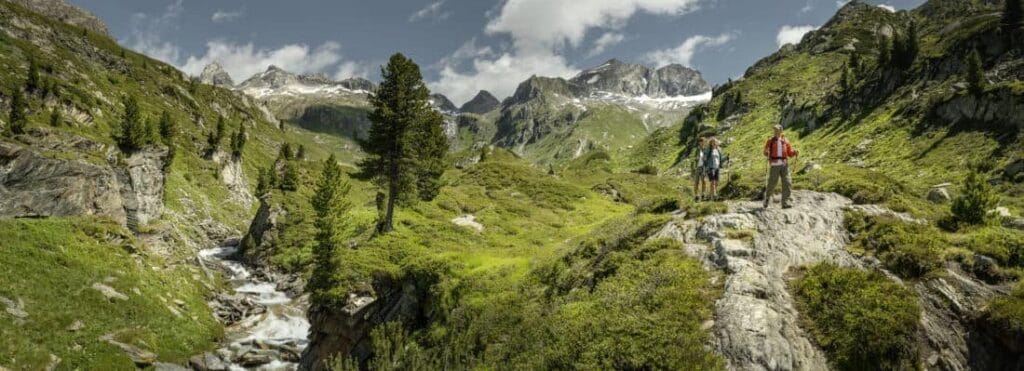
Hohe Tauern National Park, the largest nature reserve in Central Europe, gives access to glaciers, high-alpine lakes and the Großglockner, Austria’s highest mountain. The national park has over 4,300 kilometres of trails, and you can choose anything from 2-hour day walks to 8-day treks through untouched nature.
Hoch Tauern National Park is Austria’s largest national park
The Zillertal in summer is transformed from a ski mecca into a walkers’ paradise. Over 1,400 kilometres of trails cross the valley, and cable cars such as the Ahornbahn also run in summer to provide easy access to high-alpine starting points. Mayrhofen organises sunrise trips every Thursday in July and August, when the lift runs from 05.00 to 06.00, so you can watch the sun rise over the mountain ridges while enjoying a cup of tea on the Ahorn plateau at 2,000 metres.
Zillertal – active family holidays for young and old
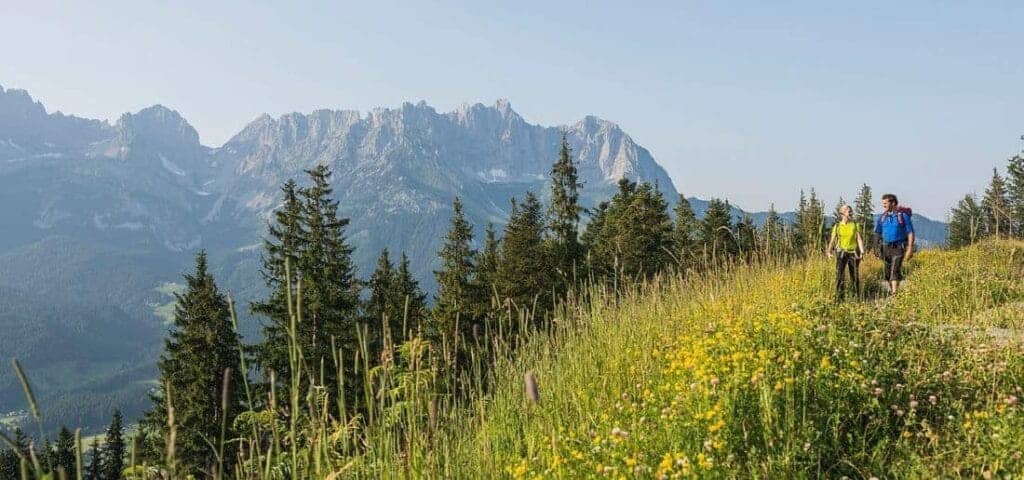
The Wilder Kaiser region in Tyrol has specialised in family-friendly mountain walking. Here you will find “pushchair trails” – easy, wide paths where even the youngest can join in, interactive nature trails where children learn about alpine plants and animals, and the “Hexenwasser” – a theme park focused on mountain water and nature.
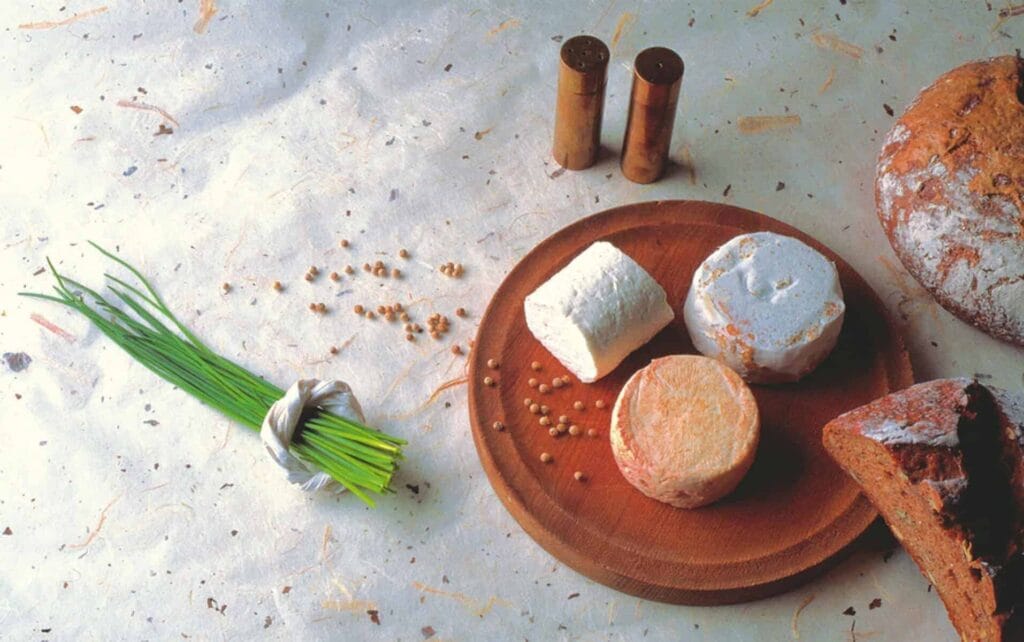
Mountain inns and “Almhütten” (alpine huts) along the trails serve local specialities. Here you will often meet the farmer himself, taste cheese made on site from cows grazing on alpine meadows, and be served “Kaiserschmarrn” (a kind of shredded pancake with raisins) or “Speckknödelsuppe” (soup with bacon dumplings).

Lakes, cycling and other summer activities
Austria’s lakes are a secret that many Danes do not know about. Carinthia in southern Austria is known as “Austria’s Caribbean” because of the turquoise water in lakes such as the Wörthersee, Millstätter See and Faaker See. Water temperatures reach 24-27 degrees in high summer – warmer than many Mediterranean destinations. Further north lie the Traunsee, the country’s deepest, and the Mondsee in the Salzkammergut; together, the Austrian mountain lakes form a summer land that most Danes drive straight past.
Lake Neusiedl on the Hungarian border is Central Europe’s only steppe lake and a paradise for windsurfers and sailors. The shallow area (average depth: 1 metre) creates perfect conditions for beginners, while constant winds make the region popular with experienced surfers.
Cycling in Austria ranges from relaxed family trips along the Danube (the Danube Cycle Route is one of Europe’s most popular) to demanding mountain bike routes in the Alps. Tyrol alone has over 5,000 kilometres of mountain bike trails, many of them accessible by cable car, so you can ride downhill instead of struggling up steep climbs.
Active summer holidays in Austria: from mountain hiking to cycling holidays
For thrill-seekers, areas such as AREA 47 in the Ötztal offer an outrageous mix of activities: wakeboarding, climbing, canyoning, rafting, bungee jumping and a 27-metre-high “Big Swing”. This is Europe’s ultimate outdoor activity park.
The smaller areas that often suit families best
The big names dominate the brochures, but many Danish families get more out of the medium-sized valleys, where the lift queues are shorter and prices lower. Wagrain and Kleinarl and the neighbouring village of Alpendorf are among the easiest places to travel with children, Flachau lies in the same ski region, and Wildschönau in the heart of the Kitzbühel Alps also offers snow outings. Further west, the Kleinwalsertal is a valley in its own right, accessible only from the German side, and in Tyrol lie the Alpbachtal and Brixental. If you want high altitude and reliable snow, Obertauern is the classic choice.
Austria region by region: Find your perfect area
Austria consists of nine federal states, each with its own character, advantages and specialities.
Tyrol: The heart of the Alps
Tyrol is what most people picture when they think of Austria: dramatic mountains, cosy villages with alpine architecture, cows with bells and views that could be from a postcard. Innsbruck, the capital, is a gem: surrounded by mountains on all sides, with a charming historic old town and modern facilities. From here there is a direct cable car to 2,300 metres.
Tyrol has Austria’s best infrastructure for both winter and summer activities, the most professional ski areas and some of the most beautiful valleys, such as the Ötztal, the Pitztal and, of course, the Zillertal.
Lärchenhof in Tyrol is a slice of paradise

Salzburger Land: Mozart, Nature and The Sound of Music
Salzburg city is a UNESCO World Heritage Site, the birthplace of Mozart and the filming location for “The Sound of Music” – in fact, daily “Sound of Music Tours” still visit the film’s locations. But Salzburger Land is much more than the city: the region includes parts of the Hohe Tauern National Park, the spectacular Großglockner Hochalpenstraße (one of Europe’s most beautiful panoramic roads) and ski areas such as Saalbach and Zell am See.
Family skiing and cosiness in the Salzburger Saalachtal
Vorarlberg: Austria’s Swiss Corner
Lying furthest west in Austria, bordering Switzerland and Liechtenstein, Vorarlberg is distinctly different. The dialect is closer to Swiss German, the architecture is modern and minimalist, and there is a strong focus on sustainability and quality. The Lech-Zürs ski area on the Arlberg is among the most exclusive in the Alps, while the Bregenzer Festspiele (an opera festival staged on a floating stage on Lake Constance) draws culture lovers every summer.
Carinthia: Lakes, Sun and a Southern Atmosphere
Lying furthest south in Austria, bordering Italy and Slovenia, the Mediterranean influence is felt. Carinthia has Austria’s warmest lakes, Italian-inspired gastronomy and a relaxed atmosphere. This is the place for those who want to combine mountain hiking with swimming in turquoise waters.
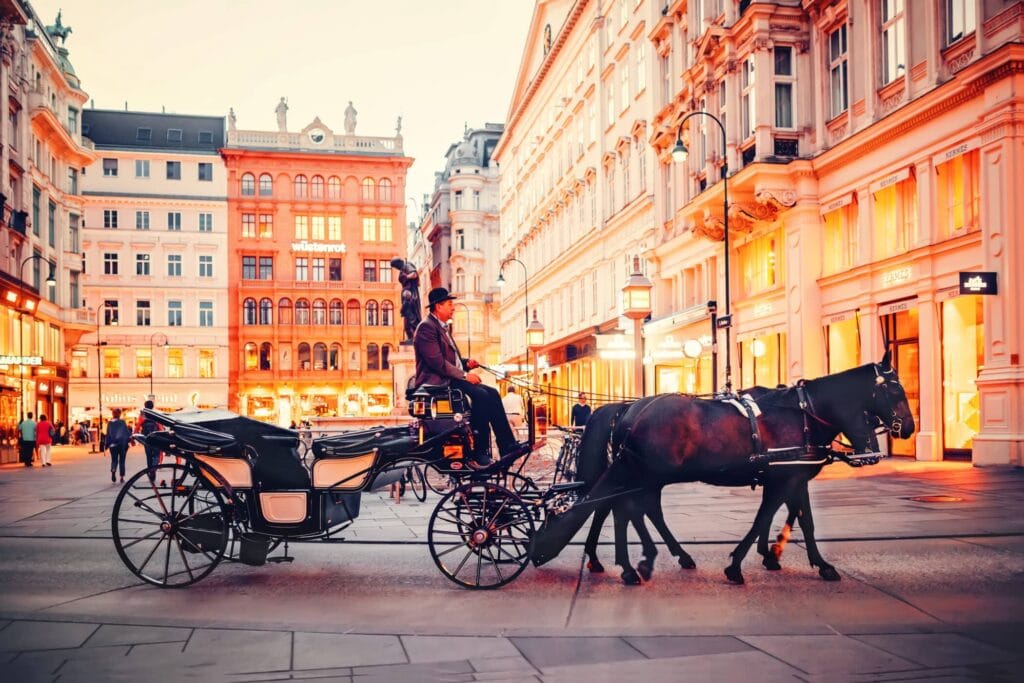
Vienna and Surroundings: Big City Meets Wine Country
The Austrian capital is in a class of its own – one of Europe’s most beautiful cities, with an unrivalled cultural offering. Yet few people realise that Vienna is surrounded by vineyards. The Wachau Valley, just north of the city, is a UNESCO World Heritage Site famous for its Riesling and Grüner Veltliner, and here you can combine a wine trip with a river cruise along the Danube.
Austria City by City: The Cities You Should Visit
Vienna: The Pulsing Heart of the Empire
Vienna consistently ranks among the world’s most liveable cities – and within just a few hours you’ll understand why. The heyday of the imperial era has left an incredible architectural legacy: Schönbrunn Palace, the Hofburg, the Belvedere, the State Opera and countless other magnificent buildings. But Vienna is no museum town – it is a lively metropolis with 1.9 million inhabitants, a vibrant art scene, innovative restaurants and a famous café culture.
The legendary Viennese cafés such as Café Central, Café Sacher and Café Hawelka are institutions where everyone from students to pensioners spends hours over coffee, cake and newspapers. The Sachertorte – the famous chocolate cake – was invented in Vienna and is still best enjoyed at the Hotel Sacher.
Vienna’s classical music tradition is alive and well. The State Opera stages 300 performances a year, the Vienna Philharmonic is among the world’s finest orchestras, and the summer’s free concerts in the city’s parks draw thousands. The New Year’s Concert from the Vienna Musikverein is broadcast to over 90 countries.
Salzburg: The Baroque Gem by the Alps
Salzburg is the birthplace of Mozart, the filming location of The Sound of Music and an architectural masterpiece. The old town, the “Altstadt”, is a Gesamtkunstwerk of Baroque architecture, dominated by the Hohensalzburg Fortress, which towers 120 metres above the city. Getreidegasse, the narrow shopping street where Mozart was born, has retained its medieval charm, with wrought-iron shop signs.
The Salzburg Festival in July and August is one of the world’s leading classical music festivals, but the city also offers the Mozarteum, where music lovers can immerse themselves in the composer’s life, and the Salzburger Dom with its impressive dome.
Innsbruck: Mountain Town with Olympic History
Innsbruck has hosted the Winter Olympics twice (1964, 1976), and the city still radiates an Olympic spirit. The historic old town, with the Goldenes Dachl (Golden Roof), is the setting for café life and shopping, while the Nordkette cable car takes you from the city centre to 2,256 metres in 20 minutes – few cities can match that combination.
Austrian Food and Wine: A Culinary Journey
Austrian cuisine is hearty, filling and surprisingly varied. Lying at the heart of Europe, Austria has for centuries absorbed culinary traditions from Germany, Italy, Hungary, the Czech Republic and the Balkans – and created its own distinctive food culture. The result ranges from Vienna’s new kitchens to culinary journeys through the wine valleys, and gastronomy follows the wine more closely here than anywhere else in the Alps.
Austrian wines and a wine route you have probably never heard of
Classic Dishes You Must Try
Wiener Schnitzel – the breaded veal escalope – is the number one national dish. An authentic Wiener Schnitzel should be thin, crisp and large enough to hang over the edge of the plate. Traditionally it is served with potato salad and a slice of lemon.
Wiener Schnitzel from Austria and the country’s classic dishes.
Tafelspitz is Emperor Franz Joseph’s favourite dish: boiled beef served with horseradish sauce, spinach and potatoes. Simple, but when done properly, it is sublime comfort food.
Kaiserschmarrn – “the emperor’s mess” – is a shredded pancake dessert with raisins and icing sugar, typically served with egg yolk compote. Legend has it that Emperor Franz Joseph loved it so much that the kitchen would make it “messy” (Schmarrn) rather than neat.
Sachertorte from Vienna is the world’s most famous chocolate cake – two layers of sponge with apricot jam and a dark chocolate glaze.
Alpine specialities such as Käsespätzle (small egg noodles with cheese), Tiroler Gröstl (a fried dish of potatoes and meat) and Brettljause (a cold cuts platter with local cheeses and sausages) are best found in mountain inns.
Austrian Wine – A Discovery
Austria produces excellent wine but exports relatively little – the Austrians drink most of it themselves. The Wachau Valley west of Vienna is the epicentre of Riesling and Grüner Veltliner, while Burgenland by the Neusiedler See specialises in robust red wines and world-class dessert wines.
Austrian wine is classified under the DAC system (Districtus Austriae Controllatus), which guarantees authenticity and regional character. The Heuriger – combined vineyards and taverns where winegrowers serve their own produce with cold food – is an Austrian institution, especially popular around Vienna.
Practical Information: Transport, Accommodation and Budget
How to Get to Austria
By air: SAS and Austrian Airlines fly daily from Copenhagen to Vienna (about 2 hours). Ryanair and other low-cost airlines serve Vienna, Salzburg, Innsbruck and Graz. Billund has direct connections to Vienna and Innsbruck in high season.
By car: From Copenhagen to Innsbruck is about 1,400 km via German motorways. The journey takes 12–14 hours, but most Danes split it with an overnight stop in northern Germany. Austria has excellent motorway infrastructure, and many use the country as a stopover on the way south, but note that you must buy a “Vignette” (motorway sticker) – a 10-day one costs around €10.
By train: The Snälltåget runs directly from Copenhagen, Odense and Kolding to the Austrian Alpine region (the Innsbruck area) with overnight services. ÖBB (the Austrian Federal Railways) also offers overnight connections from Hamburg to Innsbruck and Vienna.
Touring Austria: Austrian Federal Railways (ÖBB) has excellent connections between all major cities. In mountain areas, regular local buses run between valley towns and ski areas – often free with a “guest card” from your hotel.
Accommodation: Something for Every Taste
Austria offers excellent accommodation at every level, and the Austria Hotel Collection brings together some of the best properties in one place:
- Pensions and guesthouses: Family-run with a personal atmosphere. DKK 400–800 per night for a double room.
- 3–4 star hotels: Good standard, often with spa facilities. DKK 800–1,500 per night.
- Alpine huts and mountain hotels: A unique experience at 1,500–2,500 metres. DKK 600–1,200 per night.
- Luxury hotels: 5-star resorts in ski areas and cities. From DKK 2,000 per night.
- Holiday apartments: Popular with families and for longer stays. DKK 500–1,500 per night.
Budget: What Does an Austrian Holiday Cost?
| Expense | Budget | Mid-range | Luxury |
|---|---|---|---|
| Accommodation (per night) | DKK 400–700 | DKK 800–1,200 | DKK 2,000+ |
| Restaurant meal | DKK 100–150 | DKK 200–350 | DKK 500+ |
| Lift pass (1 day, winter) | DKK 350–450 | DKK 450–550 | – |
| Cable car (summer) | DKK 150–250 | DKK 250–400 | – |
| Daily budget per person | DKK 800–1,200 | DKK 1,500–2,500 | DKK 3,000+ |
When Should You Travel to Austria?
Winter (December–April): Perfect for skiing. Peak season is Christmas and New Year and weeks 7–9 (the Danish winter school holidays). Book well in advance – and see our guide to a skiing holiday in Austria 2026 and the cheapest ski trips for the season before you book. Low prices in December (before Christmas) and April (end of season).
Summer (June–September): Best for hiking and mountain activities. July and August are peak season, with warm weather and all facilities open. June and September offer fewer crowds and still good weather.
Spring (April–May): The “shoulder season” with lower prices. The high altitudes still have snow, while the valleys are in spring bloom. Ideal for those who want to avoid peak-season prices.
Autumn (October–November): “Almherbst” (alpine autumn) in October is beautiful with golden scenery. Many facilities close down, but Vienna, Salzburg and other cities are wonderful with fewer tourists.
Special Activities and Interests
Family Holidays in Austria
Austria is the number one family destination for many northern Europeans. The reasons are clear: safe conditions, professional childcare, age-appropriate activities and a general family-friendliness. Areas such as Serfaus-Fiss-Ladis have built entire ecosystems around families with children-friendly slopes, playgrounds, mountain kindergartens and even underground cable cars designed for children.
Many hotels offer “kinderbetreuung” (childcare) so parents can have a few hours to themselves. Austrian ski schools are world-famous for their teaching methods, which focus on play and fun rather than discipline.
Wellness and Spa
The tradition of thermal baths goes back centuries in Austria. Bad Gastein, Bad Hofgastein and Bad Kleinkirchheim offer healing waters from natural springs. Modern spa resorts such as the Aqua Dome in Längenfeld combine wellness with spectacular Alpine scenery – imagine lying in 34-degree water while gazing up at snow-covered peaks of 3,000 metres.
Cycling and Mountain Biking
From relaxed family trips along the Danube to adrenaline-pumping downhill rides in bike parks: Austria has it all. Arlberg has specialised in high-end mountain biking, with guides, challenging trails and bike park facilities. Saalbach hosts Europe’s largest mountain bike event, the “Bike Festival Saalbach-Hinterglemm”, in June, with demo bikes, instruction and 400 kilometres of trails.
Culture and Classical Music
Mozart, Strauss, Haydn, Schubert, Mahler – the list of Austrian composers reads like a Hall of Fame of music history. The Vienna State Opera, the Salzburg Festival, the Bregenz Festival and countless other events carry on the legacy. But Austria also has a lively jazz scene, electronic music (think Kruder & Dorfmeister) and modern art galleries.
How to Book Your Austria Trip
TravelTalk.dk has partnered with the Austrian National Tourist Office and offers Denmark’s most comprehensive collection of Austria travel tips. We work together with leading Danish travel agencies:
- Nortlander – Specialists in high-altitude ski areas with a wide choice of hotels and transport options (bus, air, train, self-drive).
- Danski – Denmark’s best ski travel agency (named in 2022), with its own Primo Hotels in Austria. A social ski culture with Danish hotel managers.
- Slopetrotter – For the independent skier, with a focus on quality and service.
You can book directly via TravelTalk.dk and BookDinRejse.dk, where you gain access to comparable prices, cancellation-protected trips and special offers.
Conclusion: Austria Awaits
Austria is Denmark’s perfect holiday country: close enough to be practical (12–14 hours by car, 2 hours by air), cheaper than Switzerland and Norway but of the same quality, versatile enough to offer everything from world-class skiing to city weekends, and with an infrastructure that makes everything easy.
1.6 million Danish overnight stays a year do not happen by chance – the country delivers: reliable snow conditions in winter, spectacular nature in summer, fantastic food all year round and a welcome that makes even reserved Scandinavians feel at home.
Whether you dream of skiing in the famous après-ski scene of Ischgl, hiking in the Hohe Tauern National Park with views of glaciers, enjoying a Sachertorte in a Viennese café or introducing your children to the magic of the mountains: Austria can deliver exactly the holiday you want.
Welcome to the pearl of the Alps. Welcome to Austria.
FAQ – Travel to Austria
When is the best time to travel to Austria?
Summer (May–September) is ideal for hiking, nature and city breaks. Winter (December–March) is perfect for a skiing holiday in the Alps.
Is Austria expensive to travel in?
Austria sits in the middle to upper end of the price range. Ski season and popular areas such as Tyrol and Salzburg are more expensive, while food and public transport are generally reasonably priced.
Do you need to hire a car in Austria?
Not necessarily. Austria has one of Europe’s best rail networks. A car is an advantage in mountain areas and smaller villages, however.
Which areas are best for first-time visitors?
Vienna, Salzburg, Tyrol and the Salzkammergut are obvious choices, as they combine culture, nature and easy access.
Is a holiday in Austria suitable for families? (leading question)
Yes. Austria is very family-friendly, with safe cities, well-organised ski resorts and plenty of activities for children.
Zillertal – an active family holiday for young and old
Is a trip to Austria only worthwhile in winter?
No. Summer offers hiking, cycling, lakes and cultural festivals – especially in the Alps and around Salzburg.
More articles about holidays in Austria?
Just search for “Austria” and around 100 travel articles and tips will appear: Skiing in Austria
Disclaimer: Leisure Media Group Ltd carefully researches and compiles all content, including data-driven research and analysis. However, information may contain errors, become outdated, or change without notice. We accept no responsibility for decisions, actions, or outcomes based on this content. Readers should independently verify information, especially regarding prices, availability, travel conditions, product specifications, and recommendations. Our research represents analysis of available data at time of publication and should not be considered professional advice.
© 2025 Leisure Media Group Ltd. All rights reserved. Unauthorised reproduction or distribution of this content is prohibited.
No posts