
From the traveltalk.dk family – started in Denmark in 2018
Read in: Dansk (original) · Italiano · Svenska
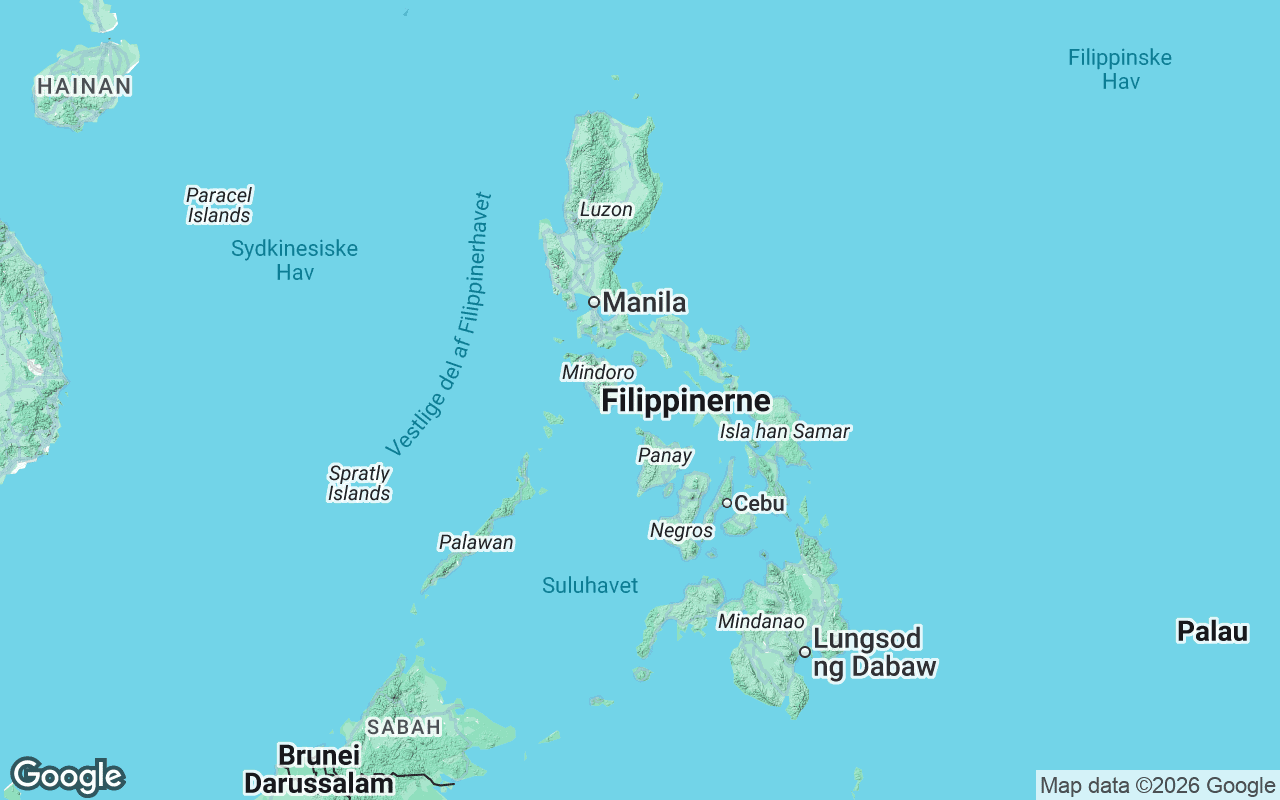
The Philippines is one of Asia’s most spectacular travel destinations — an archipelago of 7,641 islands scattered across the western Pacific. Here you will find chalk-white beaches, dramatic limestone cliffs, lush rainforests and some of the world’s richest marine life. The country is famous for its beaches, but it offers far more than postcard prettiness.
The Philippines stands apart in South-East Asia thanks to its blend of Asian and Western culture.
More than 300 years of Spanish colonial rule, followed by American influence, have left clear traces in its language, architecture and daily life. English is an official language and is used everywhere, and the atmosphere is often more relaxed than in neighbouring countries.

📄 Quick facts about the Philippines
- Location: South-East Asia, 7,641 islands in the western Pacific
- Capital: Manila
- Languages: Filipino (Tagalog) and English
- Currency: Philippine peso (PHP)
- Best time to travel: December–May (dry season)
- Travel time from Denmark: approx. 16–19 hours with one stop
- Hotels: from approx. DKK 450 per night for mid-range, beach resorts from approx. DKK 1,200
- Lunch: from approx. DKK 40 locally, approx. DKK 150 in tourist areas
- Top areas: Palawan • Boracay • Cebu • Bohol • Siargao • Manila
- ✈️ Departing from: Copenhagen Airport
💡 Traveltalk tip
Choose one island group at a time. It is the single decision that determines whether the trip turns out well. Almost all domestic routes run back through Manila or Cebu — there are only a few direct hops from island to island. Three island groups in ten days therefore means three days in airports.
Allow a buffer day before your flight home. Domestic flights are regularly cancelled in the rainy season, and a delayed morning flight can cost you the whole onward connection.
Hidden gems: Siquijor • Camiguin • Port Barton
🤝 Travel partner — the spot is free. Here we recommend travel partners: Who can deliver the trip or simply accommodation/transport? Do you arrange trips to the Philippines? The spot could be yours — write to us at hello@leisuretalk.net.
The Philippines is where Asia feels most free
The distances between the islands, the low price level and the welcoming population create a travel experience that feels more informal than in neighbouring countries. The nature is raw and the experiences are intense. The country particularly suits travellers who want to get away from mass tourism and large resorts — but still want comfort, safety and flexibility.
The beaches rank among the world’s best — and island-hopping is the very way to travel
Palawan, Boracay and Siargao regularly top international lists of the world’s best beaches. But it is island-hopping that makes the journey distinctly Filipino. Tours are sailed in a bangka — the traditional outrigger boat — and in El Nido the routes are so well established that they are simply called Tour A, B, C and D. Tour A takes in the famous lagoons, Tour C the dramatic cliffs and Hidden Beach.
Many people combine several islands on the same trip and experience great contrasts in a short time — from lively beach towns to almost deserted sandbanks. Palawan is for many the most beautiful holiday island in South-East Asia, while Boracay has been reborn after the clean-up in 2018, when the island was closed for six months and fitted with a sewage system.

The rice terraces of Banaue are 2,000 years old and still in use
Beyond the beaches, the Philippines offers some of South-East Asia’s most impressive landscapes. The rice terraces of Banaue and Batad in northern Luzon were carved into the mountainsides by the Ifugao people and have been cultivated for around two millennia. They are on UNESCO’s World Heritage List — and unlike many heritage sites, they remain a working agricultural landscape rather than a museum.
Further south lie the Chocolate Hills of Bohol: over 1,200 almost identical limestone hills that turn brown in the dry season. On the same island lives the tarsier, one of the world’s smallest primates, which you can see in the reserve at Corella. The Philippines’ endangered fauna and flora deserve a chapter of their own — the country is one of the planet’s most important biodiversity hotspots.

Diving here is among the very best in the world
The Philippines lies in the Coral Triangle, the world’s most species-rich marine area, and you can feel it beneath the surface. Tubbataha Reef in the Sulu Sea is a World Heritage Site and can only be reached by liveaboard during the short window from March to June. Coron has a cluster of Japanese wrecks from 1944 at a manageable depth. Malapascua is one of the few places in the world where thresher sharks are seen almost daily, and at Moalboal a sardine shoal gathers close to the beach all year round.
If you prefer something simpler, Apo Island is one of the best places to snorkel with sea turtles, which graze in shallow water just metres from the shore.

English everywhere makes the country easy to travel in
English is an official language and the medium of instruction, which makes the Philippines considerably easier to travel in than much of South-East Asia. Signs, menus, bus tickets and conversations work without any fuss. Combined with Filipinos’ warmth and humour, this is a particular advantage for first-time travellers in Asia.
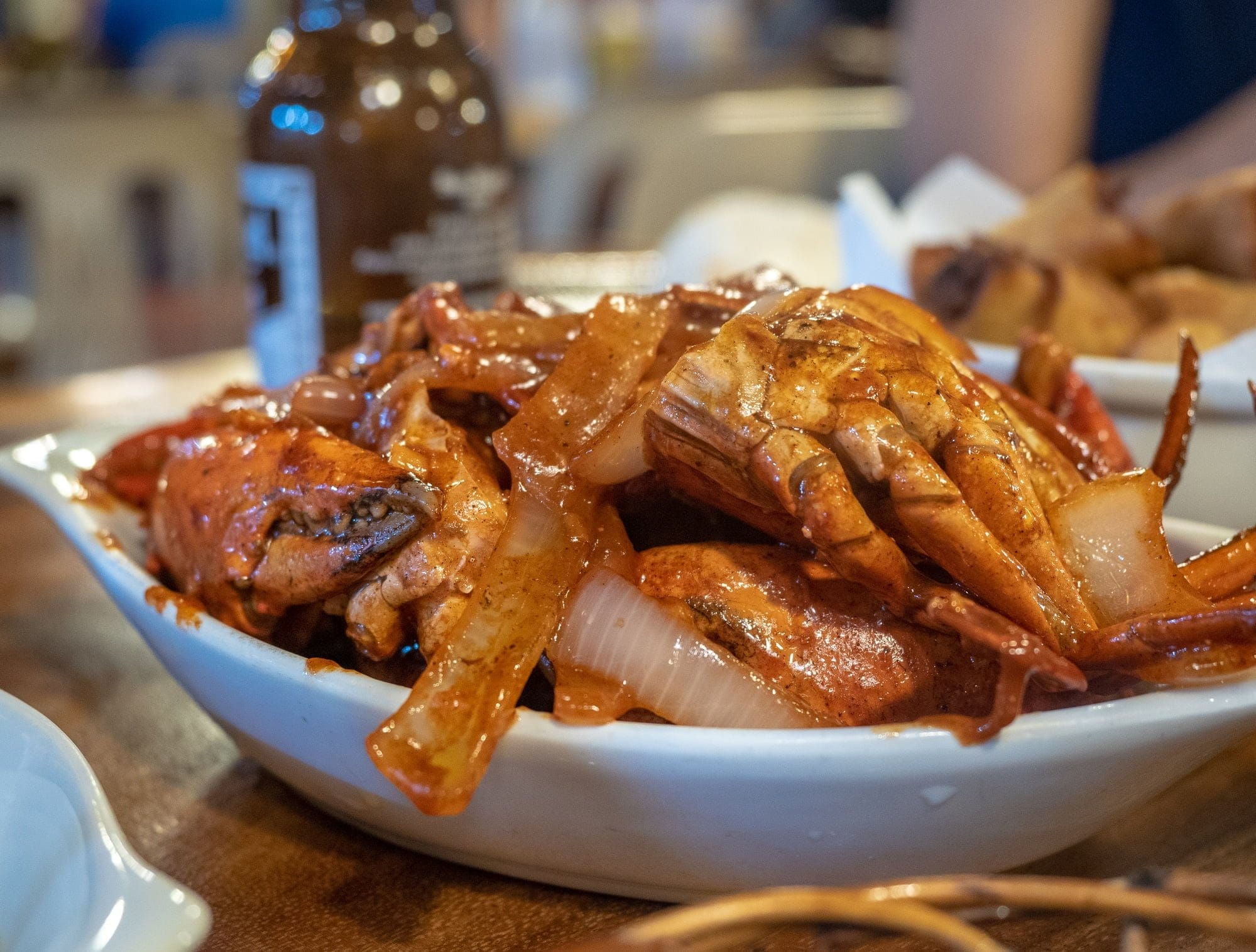
The cuisine is a fusion in its own right, drawing on Spanish, Chinese and Malay influences all at once. Filipino food is still underrated: adobo, sinigang and lechon are the places to start.
Food and drink: where to eat cheaply, and where you’ll pay more
Filipino food is a fusion cuisine with Spanish, Chinese and Malay threads. Adobo, a dish of chicken or pork braised in vinegar and soy sauce, is found almost everywhere, while sinigang is a sour soup flavoured with tamarind. Lechon, the whole roast pig, is one of the most famous festive dishes. Kinilaw is raw fish cured in vinegar and citrus, and pancit is a noodle dish served on many occasions.
The cheapest meals are found at local eateries, known as carinderia, where you point at the stewed dishes in the window, and at street stalls and markets. Here it is often grilled fish, chicken and rice that are both inexpensive and good. At the tourist spots along the coast, prices rise noticeably, particularly for fish and seafood at beachfront restaurants, and menus in English are often more expensive than the local versions.
For drinks, there is San Miguel beer and the local spirits, gin and rum, which are cheap in supermarkets. Coffee is strong and sweet, and fresh coconut is a good and safe drink when you are out and about. Bottled water is the safe option, and you should be a little wary of ice at smaller places.
Street food and hygiene
Street food is one of the best ways to eat in the Philippines, but it calls for a little care. Choose stalls where locals are queuing and where the food is cooked and served fresh, ideally over an open flame or in hot oil. It is a good sign when food goes straight from the pan to the plate, and a worse one when it sits around in the heat.
Be more cautious with raw and shellfish dishes, especially away from the coast and in the evening. Kinilaw, the cured raw fish, is a classic example. It is often excellent at well-regarded places, but your stomach may react, so start with small portions.
Drink bottled water, including when you brush your teeth. Avoid ice unless you know where it was made, and prefer drinks that are opened in front of you. Fresh coconut is a safe choice, because it comes straight from the nut.
Keep your hands clean, especially before eating with your fingers, as many people do. Bring hand sanitiser and a small supply of whatever you know agrees with you, in case your stomach is sensitive. Take the first meal of the day lightly, and bear in mind that this does not apply everywhere.
Where to stay in the main regions
Accommodation varies a great deal from area to area. On Palawan you will find everything from simple guesthouses in El Nido and Port Barton to large beach resorts. The cheapest options are often small family-run places with bamboo huts and shared bathrooms, a few minutes from the beach. Opting for a room with air conditioning and a private bathroom raises the price noticeably. In El Nido, choice is limited in high season, so it is wise to book well in advance.
Cebu has the widest range. Cebu City has hotels in every price bracket and is a natural base if you are continuing on by air. Moalboal and Kawasan are more relaxed, with small guesthouses and dive hotels that are often cheaper than city hotels.
On Bohol and Siquijor the choice is simpler. There are small beachside guesthouses at reasonable prices, while the largest resorts are on Panglao and are clearly more expensive.
As a rule of thumb, guesthouses and homestays are the cheapest option, mid-range hotels offer the most comfort for the money, and beach resorts are pricier but often more secluded. Read recent reviews, as standards can vary, and ask about air conditioning and hot water before you book.
When to travel, region by region
The Philippines has two main seasons, but they do not affect the whole country in the same way. The dry season from December to May is the obvious period for most places, and December to February is the most pleasant, as the heat and humidity are slightly lower. March to May is the hottest, and it becomes oppressive in many areas.
The rainy season from June to November is not uniform. Typhoons peak between July and October and hit the eastern Visayas and northern Luzon especially hard. Palawan lies further from the main typhoon tracks and is therefore often the safest choice if you are travelling in the shoulder season.
The mountain areas of Luzon, including Banaue and Sagada, can be cool at night during the dry months. Pack a warm layer, even if you are travelling in the heat of the coast.
The waterfalls on Cebu and Camiguin are at their most impressive just after the rains, while diving at Tubbataha is only possible in a short window in spring. Choose your month according to what you most want to experience, rather than the weather alone.
The regions, and what each has to offer
Palawan: lagoons, wrecks and an underground river
The long, narrow island to the west is the Philippines’ most sought-after destination. El Nido in the north is the starting point for the lagoons and limestone cliffs of Bacuit Bay. Coron to the north-east combines wreck diving with Kayangan Lake, often called the cleanest lake in the country. Near the provincial capital Puerto Princesa, an underground river runs for eight kilometres through a limestone massif — this too is on UNESCO’s World Heritage List.
Palawan is also the region where it pays to book ahead. Capacity in El Nido is limited, and in the high season from January to April the best places are fully booked weeks in advance.

Visayas: the easiest region to combine
The island group in the middle is the most accessible in the Philippines, because Cebu serves as a second air hub after Manila. Cebu gives access to the waterfalls at Kawasan and the sardine run at Moalboal. Bohol has the Chocolate Hills, the tarsiers and the beaches of Panglao. Negros is the gateway to Apo Island, and Siquijor — which Filipinos themselves associate with folk medicine and superstition — remains low-key and cheap.
This is where the Cebu + Bohol combination makes sense for a first trip: two very different islands, a short ferry crossing in between, and no extra domestic flights.
Luzon: the capital, the volcanoes and the mountains
The main island to the north holds Manila, where the Spanish quarter of Intramuros and Rizal Park tell the story of colonial history directly. Further north lie the rice terraces of Banaue and Batad, the mountain town of Sagada with its hanging coffins, and Vigan, an unusually well-preserved Spanish colonial town, which is also a World Heritage Site.
Luzon is also the island of volcanoes. Mayon in Bicol has the most perfect cone shape in the world, and Taal south of Manila sits as a volcano in a lake on an island in a lake — a day trip from the capital.

Mindanao: Siargao, surfing and the areas to avoid
The large southern island receives fewer visitors, and that is both a recommendation and a warning. Siargao is the country’s surfing island, home to the Cloud 9 wave, and today is one of the most popular destinations in the Philippines. Camiguin is a small volcanic island with hot springs and waterfalls, and Mount Apo near Davao is the country’s highest point at 2,954 metres.
On the other hand, the Danish Ministry of Foreign Affairs’ travel advice advises against travel to parts of western Mindanao and the Sulu archipelago. This does not apply to Siargao, Camiguin and Davao, but check the advice before departure — it changes.
How to plan the trip
The Philippines is not a country best experienced by staying in one place — but nor by trying to see too much. For first-time visitors, 2–3 destinations over two weeks works well. A classic combination is Manila + Palawan or Cebu + Bohol, where you get culture, beaches and nature without spending the trip in transit.
Transport: everything goes through Manila or Cebu
There are no direct flights from Denmark. The route typically goes via Doha, Dubai, Istanbul or Amsterdam to Manila, and the journey takes about 16–19 hours with one stop. Domestically, Philippine Airlines, Cebu Pacific and AirAsia fly an extensive network — but almost always with Manila or Cebu as the hub.
Two practical points that cost people money: domestic airlines enforce baggage limits strictly, often 7 kg of hand luggage, and checked bags must be bought in advance. And never schedule a domestic connection tight against your international flight home — better to book an overnight stay in Manila. Ferries link the nearby islands, and locally people travel by bangka.
Transport between and on the islands
Between islands, you typically travel by plane or ferry. Domestic flights are the fastest, but they almost always route via Manila or Cebu, so travelling from island to island can often mean a detour. Prices vary widely with booking time and season, and baggage is often the big expense, because budget tickets only include a little hand luggage.
Ferries link the nearby islands, for example between Cebu and Bohol, and are both cheaper and more relaxed than flying. You should expect waiting time, though, and weather can cancel sailings during the rainy season. Large ferries are generally safer than small boats in bad weather.
On the individual islands, the most characteristic means of transport are the bangka, the long outrigger boat that takes guests to lagoons and beaches, and the tuk-tuk, which makes short trips around towns. Bangka trips are usually negotiated before departure, and prices rise quickly in the high season. Tuk-tuk drivers often charge tourists higher fares, so it helps to ask locally what a trip normally costs and agree on the price before you climb in.
Routes between the islands in practice
The best connections almost always go via Manila or Cebu. If you fly between two island groups, expect a detour and an overnight stop along the way. Domestic flight prices vary widely with booking time and season, and baggage is often the big expense, because budget tickets only include a little hand luggage. Check the weight limits on your ticket yourself before you pack.
Ferries are the most obvious solution when islands lie close together. Cebu and Bohol are connected by ferries that are both cheaper and more relaxed than flying. Here, though, you should expect waiting time, and weather can cancel sailings during the rainy season. Large ferries are usually safer than small boats in bad weather.
On the islands, the bangka, the long outrigger boat, is the typical means of transport to lagoons and beaches. Trips are usually negotiated before departure, and prices rise in the high season. Ask locally what a trip normally costs, and agree on the price before you climb aboard. Tuk-tuks run short trips around towns, and here too it helps to know the price in advance.
Climate: dry season December–May, typhoons July–October
The dry season runs from December to May and is the obvious time to travel. March to May is the hottest, while December to February is the most comfortable. The rainy season lies from June to November, and the typhoon season peaks between July and October.

The typhoons strike unevenly: it is mainly the eastern Visayas and northern Luzon that lie in their path, while Palawan lies relatively sheltered and is therefore often the safest choice in the shoulder season.
If you travel during the rainy season, it is rarely raining constantly — but there is a constant risk of cancelled flights.
Visa and health: 30 days visa-free
Danish citizens may enter visa-free for up to 30 days and can extend on the spot. Your passport must be valid for at least six months after entry, and you must be able to show an onward ticket. Routine vaccinations should be up to date, and hepatitis A and typhoid are often recommended. Dengue occurs year-round — insect repellent is the practical answer. Malaria is not a problem in the usual tourist areas.
The Philippines compared with the rest of Southeast Asia
Compared with Thailand, Vietnam and Indonesia, the Philippines is more scattered and less polished. Where Thailand is efficient and Vietnam is culturally compact, the Philippines is raw and close to nature — the country most resembles Indonesia with its island life, but differs in its western orientation and widespread use of English.
In return, the infrastructure is less developed and transport takes longer. If Thailand is the most accessible country in the region, the Philippines is the most scenic and free-spirited. It is a trade-off: you pay in travel time and in return get beaches and diving that are not found to the same degree anywhere else.
Who is the Philippines suited to?
Beach and nature lovers will find some of the most beautiful landscapes in Southeast Asia here, and divers have few equals anywhere in the world.
Adventurous travellers get hiking, island-hopping, volcanoes and surfing — and the chance to reach areas where tourism is still light.
Families and travellers who need maximum comfort should plan the route tightly and choose fewer stops. The reward is experiences that feel personal rather than packaged.
Frequently asked questions about travelling to the Philippines
When is the best time to travel to the Philippines?
December to May, when the weather is dry and stable. December to February is the most comfortable period, while March to May is the hottest. The typhoon season typically runs from July to October.
Best time to travel in each region
The Philippines broadly has two seasons. The dry season from December to May is the obvious period for most regions, and December to February is the most pleasant, as the temperature is a little lower and the humidity less oppressive. March to May is the hottest period, and it becomes heavy in many areas.
The rainy season from June to November is not uniform across the country. The greatest typhoon risk lies between July and October, and it hits especially the eastern Visayas and northern Luzon. Palawan lies further from the main typhoon tracks and is therefore often the safest choice if you travel in the shoulder season.
The mountain areas of Luzon, including Banaue and Sagada, can be cold at night during the dry months, and it is worth packing a warm layer. The waterfalls on Cebu and Camiguin are most impressive just after the rainy season, while diving at Tubbataha is only possible in a short window in spring. Plan the trip around the places you most want to see.
Is the Philippines a good destination for first-time travellers in Asia?
Yes. English is spoken everywhere, the people are welcoming, and the price level is low. The only real challenge is transport between the islands, and it is solved by choosing fewer destinations.
Is the Philippines only for a beach holiday?
No. Beyond the beaches, the country offers 2,000-year-old rice terraces, volcanoes, mountain hiking, UNESCO World Heritage towns and some of the world’s best diving.
How much does a trip to the Philippines cost?
The flight there is the big expense. On the ground the level is low: a mid-range hotel from around DKK 450 a night, a local lunch from around DKK 40, and an island-hopping tour from around DKK 300. Beach resorts on Palawan and Boracay sit considerably higher.
Safety, health and help in an emergency
The usual tourist areas are generally safe, but you should be alert to petty theft and pickpocketing in busy areas and at markets. Keep your passport and larger sums of money secure, and only take licensed taxis or pre-arranged transport at night. Keep an eye on drinks at bars and parties, and do not drink anything you have not seen opened yourself. Avoid carrying more with you than you need.
Before the trip, routine vaccinations should be up to date, and it is worth speaking to your own doctor or a travel health clinic about hepatitis A and typhoid. Dengue occurs all year round, and insect repellent and long sleeves in the evening are the best defence. For water sports, sunscreen, plenty of water and safe life jackets are important, especially when snorkelling in strong currents.
In case of illness or accident, private clinics and hospitals in the larger cities, especially Manila and Cebu, are the best equipped. On smaller islands the facilities can be limited, and a serious injury may require transport to a larger city. Make sure you have travel insurance that covers repatriation, and keep all receipts. Always contact your insurer quickly, and take photos of any damage before you leave the site.
Safety assessment and travel health
Read the current travel advice from the Danish Ministry of Foreign Affairs before you travel, as assessments can change. The Ministry advises against travel to parts of western Mindanao and the Sulu archipelago. This does not apply to the islands and towns that are typically visited, but the advice should be checked before you book.
Before departure, check your vaccinations with your own doctor or a travel health clinic. Routine vaccinations should be up to date, and hepatitis A and typhoid are often recommended. The doctor can also advise you on dengue, which occurs all year round. There is no vaccine that covers everything, so insect repellent and long sleeves in the evening are the practical defence.
Take out travel insurance that covers doctors, hospital and repatriation. Keep receipts and your insurer’s contact details. Private clinics and hospitals in Manila and Cebu are the best equipped, and on smaller islands local help may be limited.
Is it safe to travel in the Philippines?
The usual tourist areas are considered safe. The exception is western Mindanao and the Sulu archipelago, to which the Danish Ministry of Foreign Affairs advises against travel. The Philippines is on the list of 100 “Safe Travel” destinations.
More about the Philippines
- Travelling to the Philippines from Boracay to Palawan
- Bohol in the Philippines / a destination that rivals the famous ones
- Boracay travel video and guide to the Philippines’ most beautiful beach
- Filipino food is a delicious and historic fusion cuisine
- Lagapsi in Bicol
- The Philippines on Wikipedia
🌎 Other media from Leisure Media Group
- traveltalk.travel — international travel site focusing on independent travellers
- winetalk.dk — Danish-language wine magazine with extensive coverage of wine and food
- worldsporttalk.com — elite sport from around the world only: football, golf, tennis, Formula 1
Travel inspiration for the Philippines
Where to stay
Accommodation options vary greatly from one area to another. On Palawan you’ll find everything from simple guesthouses in El Nido and Port Barton to large beach resorts. The cheapest places to stay are often small family-run spots with bamboo huts and shared bathrooms, usually just a few minutes from the beach. Prices rise when you choose a hotel room with air conditioning and a private pool, and in El Nido the choice is limited during peak season, so it’s wise to book well in advance.
On Cebu the choice is wider. Cebu City has many hotels across different price brackets, and it makes a good base if you’re flying onwards. Moalboal and Kawasan are more laid-back and offer small guesthouses and diving hotels. For a budget trip you can find rooms in the lower price brackets, while the largest coastal resorts sit noticeably higher.
As a rule of thumb, small guesthouses and homestays are the cheapest option, mid-range hotels offer the most comfort for your money, and beach resorts are pricier but often more secluded. It pays to read recent reviews, as standards can vary, and to ask about air conditioning and hot water before you book.