
From the traveltalk.dk family – started in Denmark in 2018
Read in: Dansk (original) · Deutsch
Botswana
The Republic of Botswana is a country in southern Africa, bordered on all sides by neighbours: South Africa, Zimbabwe and Namibia. It is one of the most prosperous countries in Africa, with an economy driven by robust tourism and large-scale diamond mining. It also has the longest unbroken democracy in the continent’s history. Botswana’s landscape is dominated by the vast Kalahari Desert, which for more than 20,000 years has been home to the indigenous San people, also known as Bushmen.
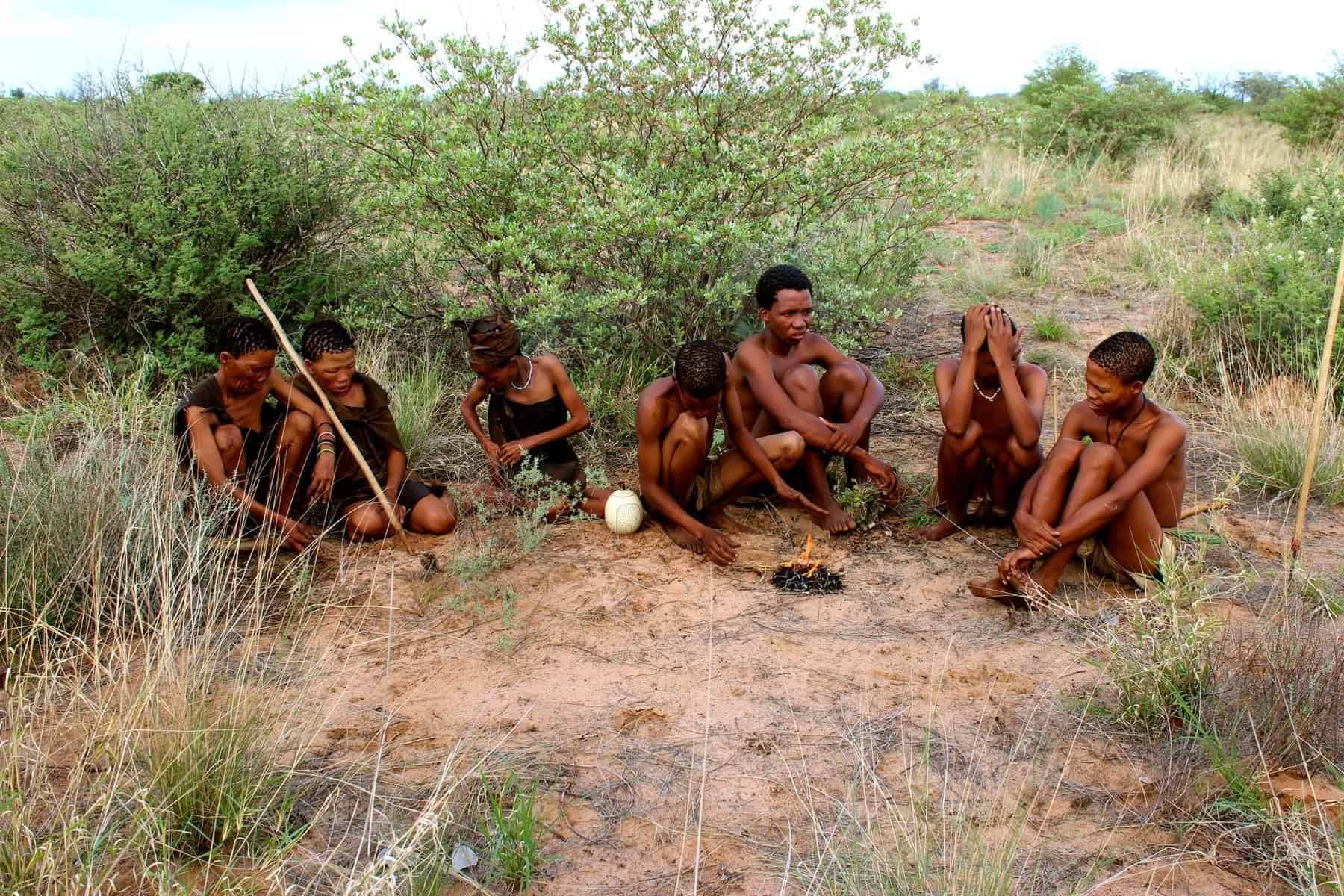
San Bushmen in the vast Kalahari Desert
The Bushmen are the South African indigenous peoples from the Kalahari Desert and the north-western Cape Province, who speak San languages. The Kalahari Desert is a huge dry to semi-arid, sandy area in southern Africa, covering approximately 500,000 km². The desert covers about 70% of Botswana and parts of Zimbabwe, Namibia and South Africa.

Diamonds from Botswana and safaris
Aside from being the world’s largest producer of diamonds (the country is known as The Gem of Africa), Botswana is also famous for its exquisite safaris. The country has several different areas of wildlife habitat. It is also home to the world’s largest inland river delta, the Okavango Delta, which is so vast that it can be seen from outer space. The main safari destinations for tourism are Moremi Game Reserve in the Okavango Delta and Chobe National Park.

The Okavango Delta environment supports many different animal populations, such as crocodile, elephant, hippo, giraffe, lion, leopard, cheetah, hyena, antelope, rhinoceros, buffalo and the endangered African wild dog, as well as other more common mammals and hundreds of bird species.
Destinations in Africa
First and foremost, have a look at our major guide to safaris in Africa. From there you can link to a range of safari-relevant countries in Africa. If you would rather search directly for an African country, here is the list of travel information for African countries. See also 20 travel suggestions in Africa. There are some solid surprises here. Get to know Africa in 10 minutes. Finally, see travel organisers who can deliver your dream trip to Africa under each travel destination and country.
- Angola
- Botswana
- Egypt
- Ethiopia
- Ghana
- Cape Verde
- Kenya
- Madagascar
- Morocco
- Mauritius
- Mozambique
- Namibia
- Nigeria
- Senegal
- Seychelles
- South Africa
- Tanzania
- Tunisia
- Uganda
- Zambia
- Zimbabwe
More articles about Botswana
When is the best time to travel
The dry season, which typically runs from autumn to early spring in the southern hemisphere, is the period when most people choose to travel to Botswana. Water recedes from the country’s lakes and channels, and animals gather around the few waterholes and rivers that still have water. This makes them easier to spot.
In the Okavango Delta, it is precisely during the dry period that you have the best chances of seeing elephants, buffalo and predators up close. Conversely, the wet season, which falls in the summer months, is greener and more lush. Heavy rain showers can occur here, and some roads and tracks in the parks become impassable. On the other hand, birdlife is often spectacular, and there are fewer visitors.
Be aware that temperatures in the dry season can be high during the day and cool at night, especially in the Kalahari. Bring layers of clothing for the evening and early morning, when safari drives typically take place.
How to get there
Most travellers fly to Botswana. The country’s largest airport is in the capital, Gaborone, and from there there are connections to the larger cities of southern Africa. Many international routes also pass through neighbouring countries, particularly Johannesburg in South Africa, which is one of the most important hubs in the region.
For safaris in the Okavango Delta, Maun is the typical gateway. It is a small town in northern Botswana, and from there you often continue by small charter aircraft to the lodges and camps located out in the delta. Flights cannot always be booked with great flexibility, so it is wise to plan your transport from the outset.
If you are coming from Europe, the journey usually requires at least one stopover. Check well in advance which connections actually operate on the dates you have in mind, as routes can vary between seasons.
How to get around
Distances in Botswana are great, and the road network outside the largest towns is limited. Many visitors therefore choose to fly between safari areas rather than drive. In the delta, small planes are the most common solution, and the flights are often the part of the trip that people remember best.
If you drive yourself, be prepared for gravel roads, sand and long stretches without services. This calls for a vehicle with good ground clearance and experience of off-road driving. Most lodges in the parks are not accessible to ordinary passenger cars, and you should never drive around the national parks without local guidance.
The safest and simplest way to see the wildlife is on a guided safari. Here you sit in a vehicle together with an experienced guide who knows the tracks and the animals’ behaviour. Many lodges also offer guided walks and boat trips in the delta, which give a completely different experience of the landscape.
Where to stay
Accommodation options in Botswana range from simple campsites to luxurious lodges with their own pools and private service. Most of the lodges and tented camps are found in the Okavango Delta, where they are typically tucked away on small islands or along the waterways. Many have only a handful of tents or cabins, which gives you plenty of space and a close connection with nature.
Prices are high compared with most other African destinations. A night at a luxury lodge often includes meals, guided activities and transfers to and from the airport, so the price reflects far more than just the room. Budget-friendly camps do exist, but they usually require your own transport and more independent planning.
In Chobe National Park, several lodges and campsites lie close to the river, where wildlife gathers during the dry season. Prices vary considerably, so it is a good idea to compare what is included before you book.
Practical matters before you travel
The local currency is the pula, and it is what you will need to pay with in most shops and at lodges, although larger lodges often accept payment in foreign currency or by card. It is worth carrying a little local currency for small expenses, as cash withdrawals can be limited outside the larger towns.
Visa requirements depend on your passport and they change from time to time. Always check the current rules with the official authorities before you book. The same applies to vaccination requirements. A yellow fever vaccination may be required if you are travelling on from a country where the disease is present, and a travel medicine consultation before departure is always a good idea.
Malaria prophylaxis is recommended in much of the country, particularly in the delta and the north, and it should be discussed with your doctor. Bring a good insect repellent, and consider insurance that covers long transfers and medical treatment in areas with limited access to healthcare.
Safety on safari
Wildlife in Botswana is not tame, and this is the biggest risk on a safari. Elephants, buffalo, hippos and predators can react unpredictably, especially if they are young, have calves or are disturbed. Always follow your guide’s instructions, and stay in the vehicle unless the guide has asked you to step out.
Never walk around alone outside the lodge area, and do not try to get closer to the animals than necessary. Many accidents happen because visitors want a better photo or want to follow an animal. Keep noise down, avoid sudden movements and respect the distances your guide indicates.
At night, always follow the lodge’s rules for moving from your tent or cabin to the communal area. Animals may be close by, and in many places you are required to get help getting around after dark.