
From the traveltalk.dk family – started in Denmark in 2018
Read in: Dansk (original) · Deutsch
Travel to Africa – 54 countries, and none of them quite alike
The continent is full of contrasts – from the Sahara’s sand dunes to the savannahs, the throbbing cities, the historic cultural towns of North Africa and the tropical islands of the Indian Ocean. Africa surprises, enriches and challenges, and it offers some of the most powerful travel experiences in the world.
54 countries, thousands of cultures and some of the planet’s most iconic landscapes. Here you will find wild animals in their own surroundings, civilisations thousands of years old, modern cities, white sandy beaches and nature that exists nowhere else on Earth. And one thing that holds true everywhere: Africa is planned by season, not by the calendar. The dry and wet seasons determine what you will see, and they fall at different times from region to region.
Destinations in Africa
East Africa – safari, migration and Zanzibar
Kenya and Tanzania offer the classic safari, and for good reason: this is where the great migration takes place. Some one and a half million wildebeest and a few hundred thousand zebras move in a circuit between Serengeti and Masai Mara, and the river crossings at the Mara River – the image everyone has seen – happen from late July to October. Nobody can promise a crossing on a particular day; the animals do not know it themselves. But if you travel in that period, your chances are real. After the safari, Zanzibar is an hour’s flight from Arusha, and that combination is what most Danish Africa trips are built around.
Uganda and Rwanda are the mountain gorillas. An hour with a gorilla family in Bwindi or Volcanoes National Park is the most expensive hour you can buy in Africa – the permit costs 800 dollars in Uganda and 1,500 in Rwanda (2026) – and those who have done it call it the best. Rwanda is the short, expensive, well-organised version; Uganda is cheaper, longer on the road, and comes with the Nile and savannah thrown in. Ethiopia is the Africa that resembles nothing else: the rock-hewn churches of Lalibela, its own calendar and its own coffee.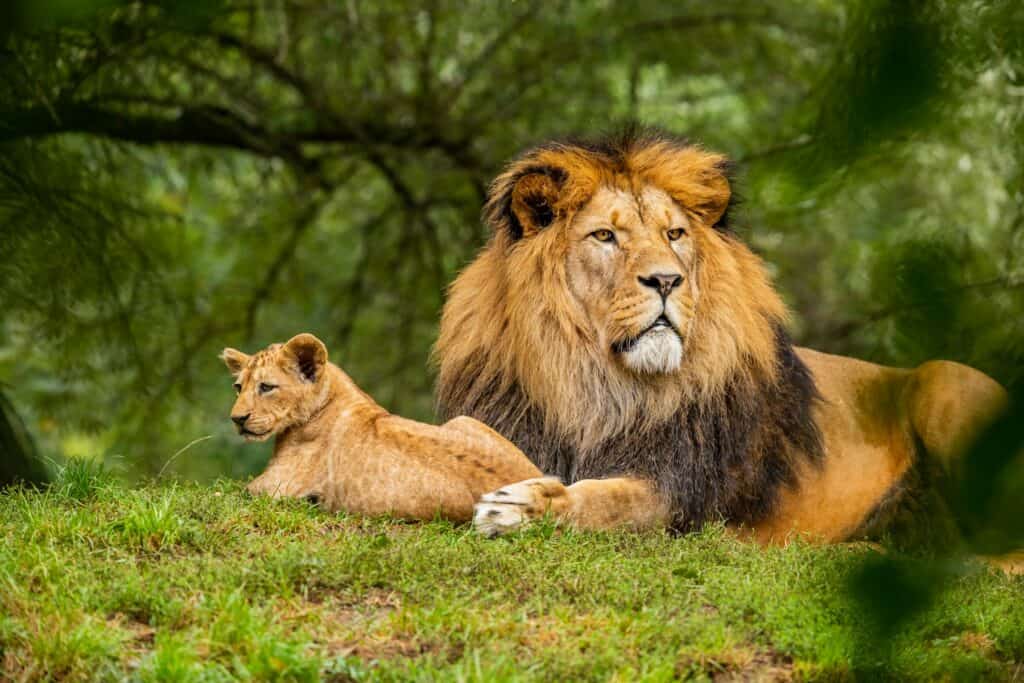
Southern Africa – Kruger, Okavango and Namibia’s desert
South Africa is the country where you can do it all yourself: hire a car in Johannesburg, drive to Kruger and see the Big Five from the driver’s seat, and a week later sit in the Cape Winelands. Best from June to September – it is winter, the bush is bare, and the animals gather at the water.
Botswana takes the opposite approach: few guests, a high price, and the Okavango Delta, where you watch elephants from a mokoro. Namibia is the drive-yourself country: the red dunes of Sossusvlei, the salt pan of Etosha, the Skeleton Coast, and roads where you can drive 200 kilometres without meeting another car. Zambia and Zimbabwe share Victoria Falls, and Mozambique has 2,500 kilometres of coastline that almost nobody has heard of.
Travel to South Africa, the adventurously large and beautiful country
North Africa – Morocco, Egypt and Tunisia
Morocco is the Africa that lies four hours’ flight from Copenhagen: the medina of Marrakech, the Atlas Mountains and Amazigh villages, the Sahara’s first dunes at Merzouga, and the Atlantic coast at Essaouira. Travel March to May or September to November; in July Marrakech is over 40 degrees. Egypt belongs geographically to Africa and, for travel purposes, to the Middle East, and has its own guide. Tunisia offers Mediterranean beaches, Roman ruins at Carthage and El Djem, and a price that sits below Morocco’s.

West Africa and the islands of the Indian Ocean
Ghana and Senegal are West Africa’s two easiest trips, both English- and French-speaking, both with coastline, music and a history that is not comfortable and is not meant to be: the slave forts at Cape Coast and on Gorée. Cape Verde is the island holiday six hours from Denmark, with dry warmth all year round and prices we have worked out.
Out in the Indian Ocean lie the three islands where a safari can end. The Seychelles are the granite boulders and the beaches that appear on every screensaver; Mauritius is the better organised, with hotels in every class and a Creole-Indian food culture that is a journey in itself; Madagascar is not a beach holiday but an expedition – lemurs, baobab trees and species found in one place on the planet.
How to travel in Africa
Three things apply almost everywhere south of the Sahara. Malaria: most safari areas lie in malaria zones, and preventive medication is not up for debate – speak to your own GP or a travel clinic six weeks before departure. Yellow fever: several countries require proof of vaccination on arrival, especially if you are coming from another African country. And the pace: pole pole, slowly, slowly, is what they say in East Africa, and it is not an excuse, it is a method. The safari starts before sunrise and takes a break in the midday heat, because the animals do the same. What a safari costs, we have worked out separately.

African food is the continent’s underrated way in: injera in Ethiopia, tagine in Morocco, braai in South Africa, and the spices of the Swahili coast, which arrived with the dhows from India and never went home again.
📄 Travel facts for a trip to Africa
- Countries: 54 – from Morocco four hours away to South Africa eleven hours away
- Best season: safari in East Africa June–October (the migration’s river crossings late July–October); southern Africa June–September; North Africa March–May and September–November; the Seychelles and Mauritius April–June and September–November
- Time difference: Morocco is on Danish time most of the year; East Africa two hours ahead in winter, one hour in summer; South Africa the same
- Languages: English in the east and south, French in the west and north, Arabic in the north, Portuguese in Mozambique and Angola – and Swahili, which opens doors from Kenya to Mozambique
- Currency: each country has its own; US dollars in cash are useful for safari permits and visas on arrival
- Entry: visa on arrival or e-visa in most safari countries; Kenya requires an electronic travel authorisation (eTA) before departure; South Africa and Morocco are visa-free for Danish passports. Always check the current rules
- Health: malaria prevention in most safari areas; yellow fever certificate required in several countries; travel clinic six weeks before departure
- Recommended trip length: 12–14 days for safari plus beach; 14–21 days for South Africa or Namibia with your own car
- Price level: mid-range safari lodge DKK 2,000–4,000 per person per night incl. meals and transfers (2026, our own estimates); beach and cultural trips significantly cheaper
- ✈️ Departing from: Copenhagen Airport (CPH) – Morocco and Cape Verde direct; East Africa and southern Africa with one stop in Addis Ababa, Doha, Dubai or Istanbul
Airlines to Africa (all Danish airlines departing from the country)

💡 Traveltalk tip
Combine safari with the beach – but in that order. Kenya or Tanzania first, Zanzibar last; South Africa first, Mauritius last. Safari means early mornings and dusty roads, and the beach is the reward. The other way round, the last week feels like work.
Insider tip: book the migration by the river, not by the month. Lodges on the Mara River in August–September are sold out a year ahead; a lodge an hour away has room, and the morning drive to the river is the same one your guide would have taken anyway.
🤝 Travel partner — the spot is open. Here we recommend travel partners: who can deliver the trip or simply accommodation/transport? Do you arrange trips to Africa? The spot could be yours — write to us at hello@leisuretalk.net.
Frequently asked questions about travel to Africa
Is Africa safe to travel in?
Safety varies from country to country. The classic safari countries, Morocco, Cape Verde and the islands of the Indian Ocean are well-established destinations; the Ministry of Foreign Affairs’ travel advice for each individual country is the source that counts.
When is the best time to go on safari?
The dry season: June to October in East Africa, June to September in southern Africa. The grass is low, water is scarce in places, and the animals are where the water is.
Do I need vaccinations?
Often, yes. A yellow fever certificate is required in several countries, and malaria prevention is recommended in most safari areas. The Danish Health Authority and travel clinics have the current recommendations for each country.
Can a safari be combined with a beach holiday?
It is by far the most common trip to Africa: Kenya or Tanzania with Zanzibar, South Africa with Mauritius, Uganda with the Seychelles via Nairobi.
Travel inspiration for Africa
More inspiration in English on vacation-talk.com