
From the traveltalk.dk family – started in Denmark in 2018
Read in: Dansk (original)
Armenia, an almost unknown, beautiful and peaceful destination
Armenia is a small country with great beauty and very little attention from most travellers. Questions such as where exactly this country is? Is it safe to travel there? What will you experience if you actually go? are the common and understandable questions. So let us answer them all. You will be surprised by what a gem it is today.
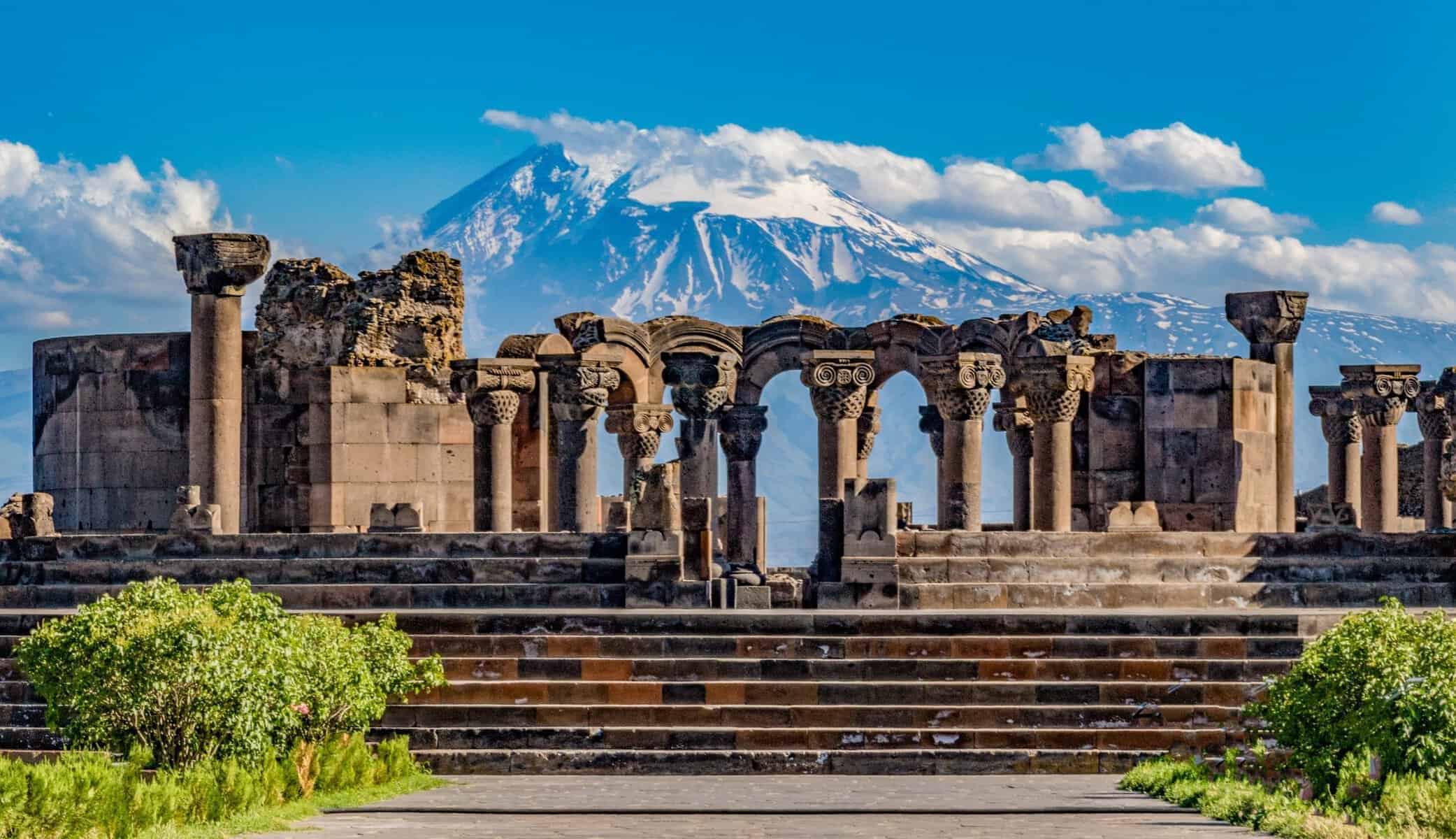
Armenia is a small country with the greatest history and the most beautiful nature
Armenia is a small country located in West Asia. It borders Turkey to the west, Georgia to the north, Azerbaijan to the east and Iran to the south. Armenia has a population of just over three million people and covers 11,484 square kilometres. It is a region full of mountains with impressive heights, with fast-flowing rivers and few forests, but the forests that exist are unspoilt, and the hunting is excellent. With an average elevation of 5,879 feet above sea level, Armenia is the 10th highest country in the world. Expect cold winters, but excellent skiing, and warm, sunny summers.
Armenia’s climate is considered a continental highland climate, which means it is relatively dry and has all four seasons. Summers are typically sunny, although temperatures can vary considerably between different parts of the country.
Read the story of Armenia, the world’s oldest wine country
Armenia’s history
Armenia’s history is long and dramatic, and it is no surprise that its strategic position between east and west, and as a country squeezed between much larger neighbours, has caused great problems for many thousands of years.
The history and population of the land that is today Armenia, in the Caucasus Mountains, goes back to the 8th century BC. At the end of the 6th century BC, Armenia was established. The Kingdom of Armenia was formed and reached its height as a nation under Tigranes the Great in the 1st century BC. Armenia became the first country in the world to adopt Christianity as its official religion in 301 AD.
Armenia’s importance as a link between Europe and Asia ultimately led to conflict in the region. Over the last many centuries Armenia has been controlled by various groups and empires, including the Romans, the Byzantines, the Arabs, the Persians and the Ottomans. The latter held Armenia until the early 20th century, when the Ottoman Empire began to collapse, and shortly afterwards the First World War began.
In our time, Armenia went through a terrible period during the First World War, when the Ottoman Empire, today’s Turkey, carried out a genocide against up to 1,500,000 Armenians. After the Second World War, Armenia became part of the Soviet Union until it became independent in 1991.
Armenia today faces challenges like most other countries in the region, but is generally considered safe to visit. However, conflicts in the south and the border with Azerbaijan are issues that should be considered. The country is otherwise growing slowly economically from a very low point, and an amazing travel experience awaits. This is the definition of a true adventure journey.
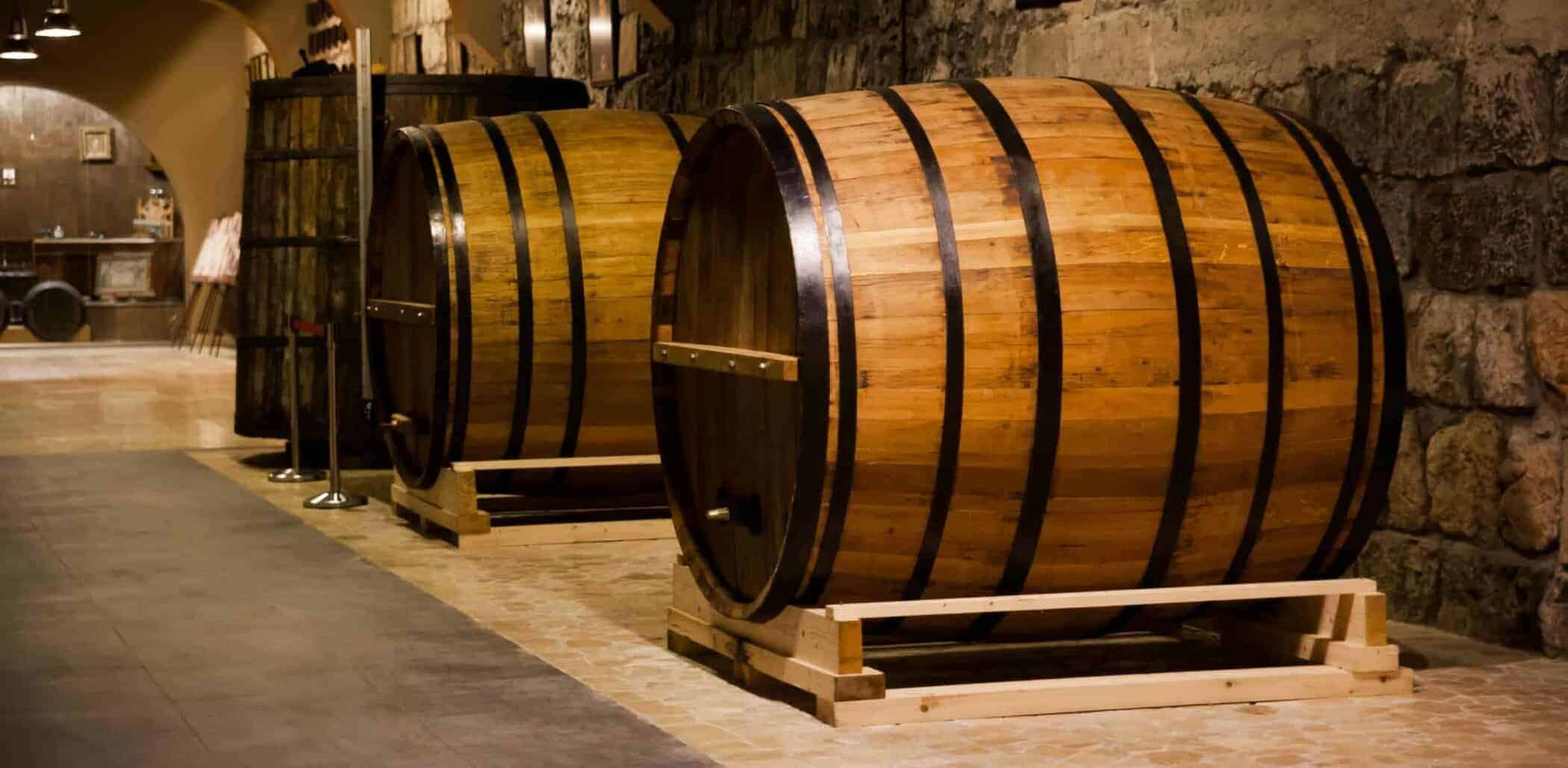
Food and drink
Armenian food culture is built on vegetables, herbs, yoghurt, lamb and bread, and you will encounter many dishes that are slow-cooked or grilled. Lavash, the thin bread, is often baked in a traditional tonir oven and is served with almost every meal. Many dishes have a mild, fresh flavour rather than strong spices.
Armenians often eat many small dishes to share, and a meal can stretch on for several hours with changing courses and conversation. It is normal to order for the table rather than for oneself. When toasts are made, it is part of the togetherness, and you will often be encouraged to raise a glass.
At the markets in Yerevan you can buy fresh vegetables, fruit, cheese, dried fruit and nuts. It is a good place to taste local produce and get a sense of what grows in the country. Restaurants range from simple eateries to more formal places, and price levels are generally low.
Where to stay
Yerevan has the widest choice of accommodation, from hostels and small guesthouses to hotels in the central districts. If you stay in the capital, you will have the easiest access to restaurants, museums and transport out into the country. This is also where you will find most of the local options for travellers on a smaller budget.
Outside the capital the choice is more limited. In many villages you will find guesthouses run by families. It is a good way to get close to local people and have meals made from home recipes. Standards vary, so read about the host and previous guests’ experiences before you book.
If you want to stay close to the vineyards or by the natural areas in the north and south, expect fewer options and longer distances to the towns. Plan your accommodation according to where you need to be the next day, not only according to how beautiful the place looks in photographs.
Practical information
The country’s currency is the Armenian dram, and it is a good idea to exchange some money in Yerevan or withdraw cash with a card in the towns. Many places accept cards, but outside the capital you may need cash, especially for smaller purchases and transport.
The official language is Armenian. Russian is widely spoken among older people, and English is spoken especially by younger people in the capital and in tourist areas. A few words of Armenian are very well received.
Danish citizens should check the current visa rules on the official authorities’ websites before travelling, as the rules can change. Prices for food, transport and accommodation vary widely, so check current levels as you go before planning your budget.
Use common sense about safety. Keep an eye on your belongings in crowds, and avoid the border areas with Azerbaijan and the southern parts, where conflicts have been active. Always check the travel advice from the Danish Ministry of Foreign Affairs before departure. Learn the emergency numbers, and save the contact details of the Danish embassy or the nearest consulate in your travel phone.
How to get there
The easiest route to Armenia normally goes via Yerevan, where the international airport is located close to the city. There are no direct flights from Denmark, so you should expect at least one connection. Which airlines and routes operate can change from season to season, so check closer to your trip.
Armenia borders Turkey, Georgia, Azerbaijan and Iran. The border with Turkey has been closed for long periods, and the border with Azerbaijan is closed, so you cannot count on crossing overland from those neighbouring countries. The most used land crossings are those to Georgia and Iran, and it is a good idea to check opening hours and current rules before planning a trip that involves one of them.
If you arrive overland, make sure your papers are in order and be prepared for checks. This can take time, particularly at borders with a lot of lorries.
Getting around the country
Armenia is a small country, but the mountain roads are often narrow and winding, and many journeys take longer than the map suggests. Plan with a good margin, especially if you want to head out to the villages or up to the monasteries in the highlands.
In Yerevan you can use a taxi, and it is one of the most common ways for tourists to get around. Agree the fare in advance, or use an app if it works in your area. Between towns and villages, the marshrutka buses run, small minibuses that leave when they are full and are cheap. They can be hard to find without local help, and the information online is not always up to date.
If you want flexibility, you can hire a car, but be prepared for road signage and driving conditions to vary. A guided tour is a good choice if you have only a few days and want to see several places without having to arrange transport yourself.
Best time to travel
Armenia has four distinct seasons, and it is worth choosing when to travel according to what you want to experience. It is a highland country, so the difference between the valley and the mountain areas can be large, and the temperature in Yerevan is not the same as in villages at higher altitude.
May, June and September are generally the most pleasant months for hiking and long excursions in nature. The blossom in spring and the clear days in early autumn make it easy to move around the mountains. July and August can be hot in the lowlands, but higher up to the north and east there are still cool nights.
Winter, from December to March, is cold, and there is snow in the mountains. It is a good period if you want to ski, but many of the smaller roads can be difficult to drive. The grape harvest takes place in autumn, typically in September and October, and that is when the vineyards and small producers are at their most lively.
Wine and cognac production in Armenia
It is a well-kept secret that Armenia has excellent wine production and cognac/brandy that rivals the very best in France. The French may well disagree a little, but the truth is that the local brandy is outstanding, and it was a favourite of Prime Minister Winston Churchill. And he knew what was good. Cognac was the main use of the grapes that were produced and sold to the Soviet Union, until independence in 1991.

The oldest wine-producing country in the world
Armenia is the oldest wine-producing nation in the world. In recent times the Armenian wine sector has recognised the importance of its indigenous grape varieties, many of which are unknown to the outside world. A major source for the future of viticulture. There is a new ambition to combine the excellent terroir and climate with their winemaking skills to produce a range of new wines, now genuinely world class. This is the state of the art in winemaking!
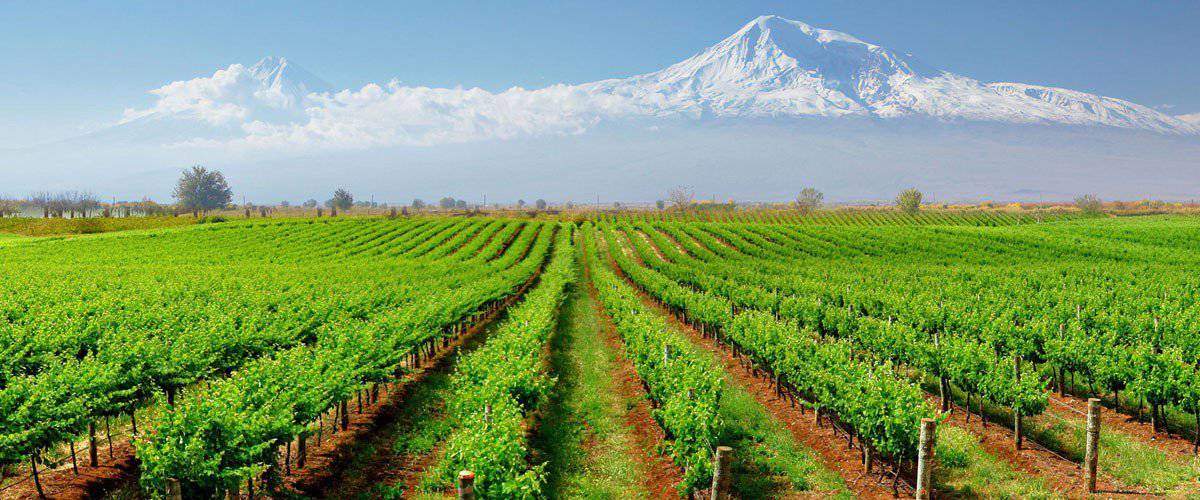
Did Noah’s Ark land here?
Armenia has a remarkable depth and diversity of cultural and natural landscapes. This variety and richness is evident in its music, cuisine, art and, increasingly, Armenia’s rapidly growing wine industry. In the picture above you can see the Koor vineyards, which lie beneath the peaks of Mount Ararat, the legendary landing place of Noah and his ark. What few people know is that he took not only animals with him, but also the seeds of winemaking! 🙂
In 2011, respected researchers discovered the oldest winemaking facility in the world, dating from around 4100 BCE. Armenian grape varieties such as Areni, Kakhet, Voskehat, Kangun, Kakhet and Haghtanak are still relatively unknown outside the region. Native to the area and separate from both the old European world and the new world varieties, these grapes are, as Vahe Keushguerian, doyen of the Armenian wine renaissance, puts it, grapes that “would confuse even a wine professor.”
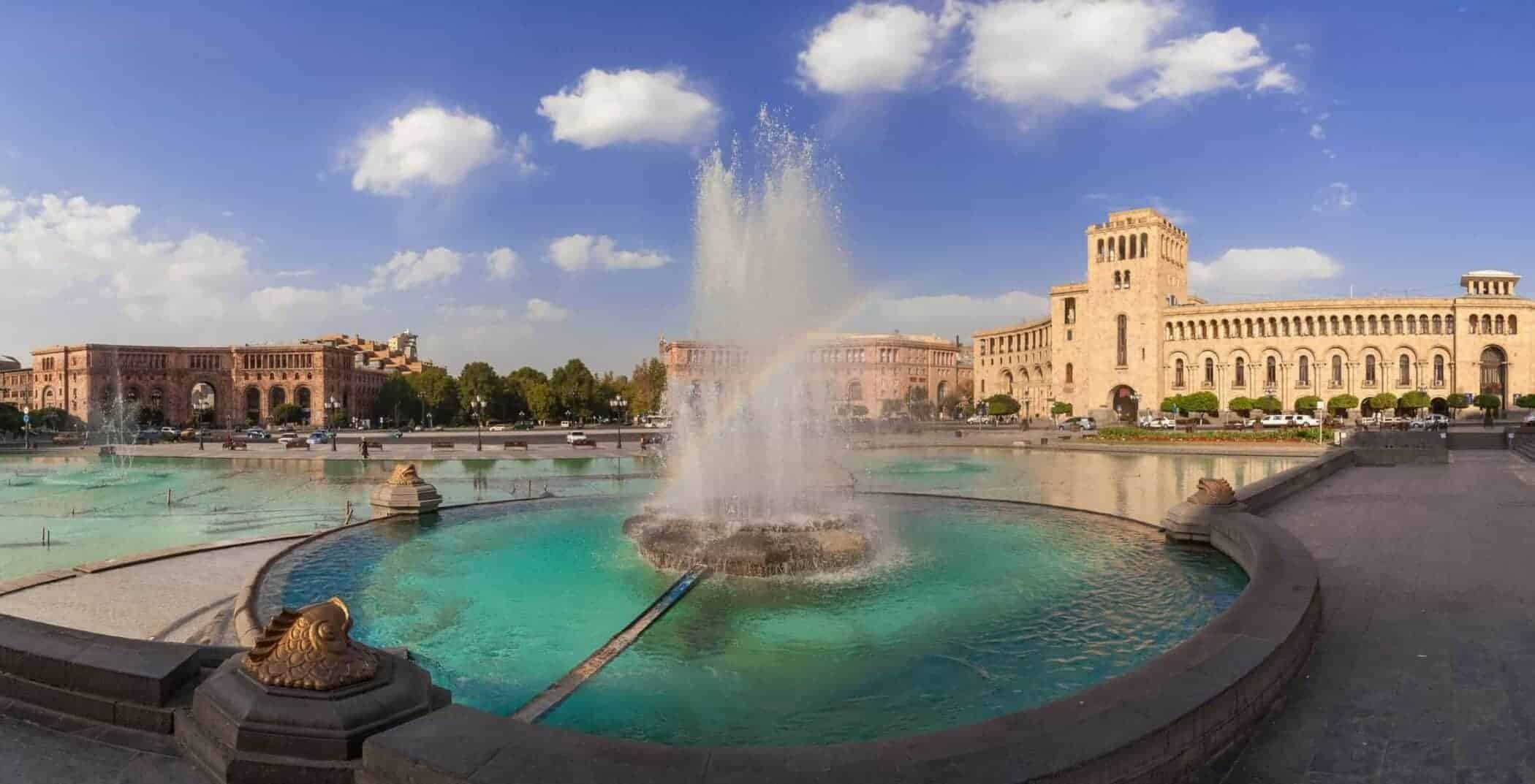
What to see in Armenia
- We have gathered here what to see in Armenia, from a huge, beautiful lake 1,900 metres up in the mountains, the oldest monasteries and modern vineyards in the charming capital
- Visit Armenia (coming soon)
- Travel from Europe
- Travel from the USA
- Tours from Asia
Travel in Asia
See the introduction to travel across Asia
More articles about Armenia
More about Armenia
Nearby
Indonesia
Indonesia is the world's largest archipelago, and with more than 17,000 islands it offers everything from…
Bhutan
Bhutan has historically been very isolated, yet remarkably forward-thinking when it comes to protecting its land.…
Malaysia
Malaysia is a country of many facets, geographically, culturally and religiously, not to mention its travel…


