
From the traveltalk.dk family – started in Denmark in 2018
Read in: Dansk (original) · Deutsch
Taiwan – a city-hopping adventure
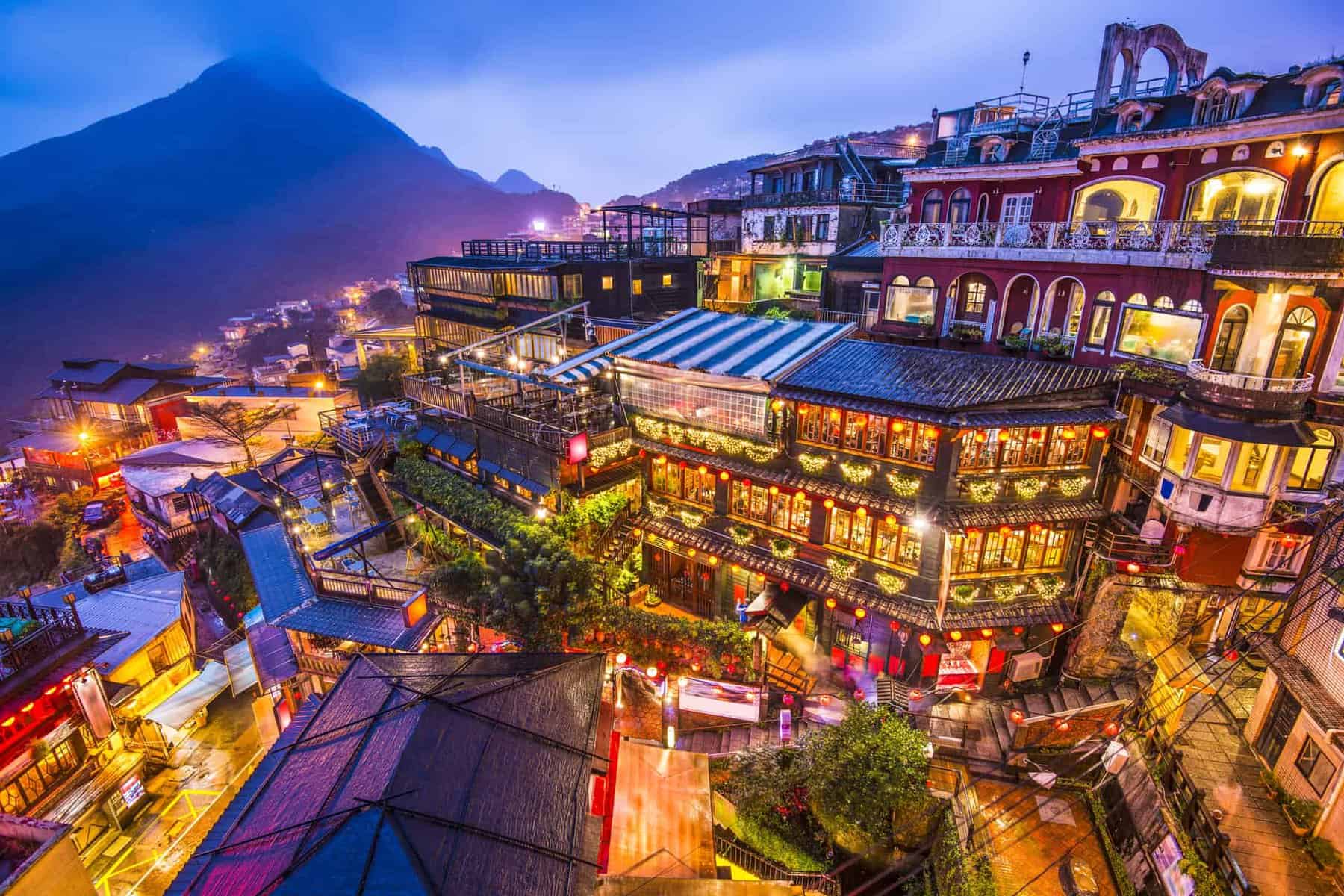
Most Taiwanese live in the island’s million-plus cities, which leaves vast stretches of unspoiled nature, and in truth there are plenty of natural attractions and cultural gems. The landscape varies enormously in this small country. The island’s interior is mountainous, with crystal-clear lakes, hidden waterfalls and great opportunities to lace up your walking boots and camp, while along the wind-battered east coast, cliffs rise above deserted sandy beaches.
Taiwan’s annual challenge: typhoon season
It is best to visit the island outside typhoon season. From mid-August to early October, large low-pressure systems over the ocean pose a significant risk of typhoons. Just before a typhoon hits land, the weather often turns sunny and clear, as the low pressure almost sucks all the clouds towards it. This unusually fine weather is known as typhoon weather.
Best time to travel
Typhoon season is the main reason to choose when to travel, but it is not the only one. Winter, roughly from December to February, is the most comfortable time in Taipei and on the western plains, where temperatures stay low but manageable and it is rarely truly cold. It is also the time when it is easiest to get around the mountains, as there is less fog on the high routes.
Spring and early autumn are good windows, but be prepared for rain that can arrive suddenly and last for long periods. Especially in the southern parts of the island and in the mountains, a great deal of rain falls during the summer months, and humidity can be oppressive from June onwards.
Avoid July, August and the beginning of September in particular if you want to hike or visit the east coast. Trails may be closed or change at short notice, and ferry and train services to remote areas can be suspended when severe weather is forecast. Check the official warnings before planning a hike in the high mountains, and be ready to change your plans on the day.
Taipei – the ultra-modern Taiwan
Taipei is hypermodern yet at the same time holds on to ancient Chinese traditions, which makes encountering this million-plus city very interesting. Traffic, crowds and a jungle of neon signs give the city a frantic atmosphere, which is softened by the growing number of cosy Western-style cafés and gleaming shopping malls with lift music.
Many of the statues of Chiang Kai-shek have been removed, but the bombastic Chiang Kai-shek Memorial Hall still stands. Here you can learn all about him and stroll through the immaculately kept park.
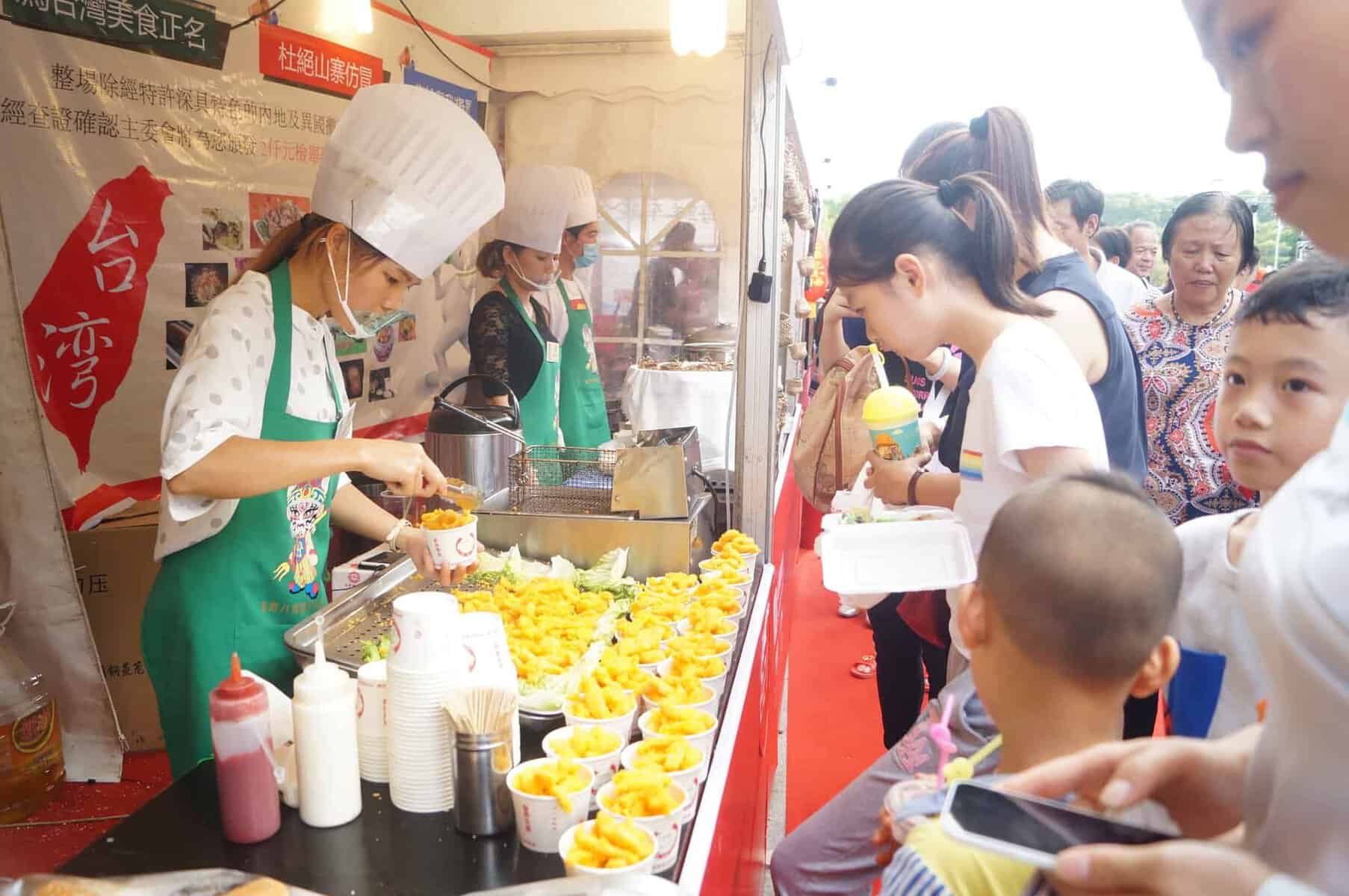
Taiwan is renowned for its outstanding cuisine, and at Taipei’s much-visited night markets you can eat some of the city’s best food at the lowest prices. Treat yourself to fresh fish at Keelung Miaokou night market, or try your luck with “stinky tofu” at the huge Shilin night market.
How to get there
Most international travellers arrive at Taoyuan International Airport, which lies some distance from Taipei and is the main gateway to the country. Direct flights to Taoyuan operate from many major airports across Asia, and a number of connections from Europe go via a hub city in the region. It is a good idea to check the length of the route and any stopovers before booking, as transfers can make the journey considerably longer than the flying time alone.
Before you travel, check the current entry requirements for your passport and nationality, including whether a visa or an electronic travel authorisation is required, and how long your passport must remain valid. Rules can change, so always check with the official authorities shortly before departure.
From the airport you can continue by high-speed train or by local train and bus to Taipei and other cities. Taxis are an option, but they can become expensive on longer journeys. If you want to head on to the island’s east coast or the mountains, allow for a little more travel time, as connections there are fewer and slower.
Visas and entry
Entry requirements depend on your passport and nationality, and they can change. Travellers should therefore always check the current rules with the official authorities shortly before departure, rather than relying on what applied the last time they went.
First, check whether your passport has the required validity beyond your return date, and whether a visa or an electronic travel authorisation is needed. This can be decisive in whether you get through passport control on arrival at all, so it is not a detail to leave until the last minute. Also keep your passport and any permits in your hand luggage, as they may be requested during your trip.
Official sources include your government’s travel advice for Taiwan and the Taiwanese authorities’ own pages on entry. Read them before you book, and again before you travel, as rules may have changed in the meantime. It is better to ask one question too many than one too few, especially if you are travelling via a stopover in another country, as the requirements there may be different.
Getting around the island
Taiwan has a well-developed network of high-speed trains running along the western coast and linking the major cities in a few hours. It is the fastest way to travel from north to south, and it is often both time-saving and comfortable. Tickets should be bought well in advance during peak season, and it helps to have a digital or contactless card ready, as this makes getting through the stations easier.
Local trains are slower but serve more smaller towns and villages, and they are cheaper. The bus network is extensive, especially in the cities, and most routes can be paid for with the same card you use on the Taipei metro. Bus routes and departure times can change, so always check current information before setting off.
Many people choose to hire a car to get around the mountains and the east coast, where public transport is sparser. Be aware that traffic in the cities can be heavy, that scooters are very common, and that mountain roads can be narrow and steep. Watch for reduced speed limits and signs about weather conditions. Transport costs vary widely depending on your choices and distance, so get a current estimate before you book.
Practical matters and safety
The official language is Mandarin, and many young people in the cities speak a little English, but in rural areas and smaller towns you may need to point at a map or use a translation app. Written Chinese characters are not the same everywhere, so it helps to have addresses and place names written in both Chinese and English.
The currency is the New Taiwan dollar. Cash is still widely used, especially at night markets and in small stalls, while cards and mobile payments are common in shops, on the metro and in the larger cities. It is a good idea to carry some cash when you venture away from the cities.
When it comes to health, the medical facilities in the cities are good, but the standard of service can vary outside them. Take travel insurance that covers medical treatment and repatriation, and read the advice from the official health authorities before you leave.
Taiwan sits in an active earthquake zone, and earthquakes can occur at short notice, so take note of emergency exits and evacuation signs in hotels. During typhoon season, follow official warnings, avoid unnecessary travel in severe weather and be aware that transport can stop suddenly.
Accommodation
In the big cities you will find everything from small hostels with shared dormitories to hotels in almost every price bracket. Hostels are good for meeting other travellers and are often close to the metro and the night markets. In Taipei, many of the cheapest options are in the older neighbourhoods, while the larger hotels cluster around the central station areas.
Mid-range hotels often offer clean, modern rooms with private bathrooms, and they are a good choice if you want comfort without paying too much. In the smaller coastal towns you will often find modest guesthouses, which can be charming and inexpensive but may have few facilities and limited English.
In the mountain areas the choice is more scattered. Here you can often stay at campsites or in simple cabins and mountain lodges close to the hiking trails. It is a good idea to book ahead, especially at weekends and during holiday periods, as places fill up quickly. Also remember to bring warm clothing, as temperatures can drop considerably at night at altitude.
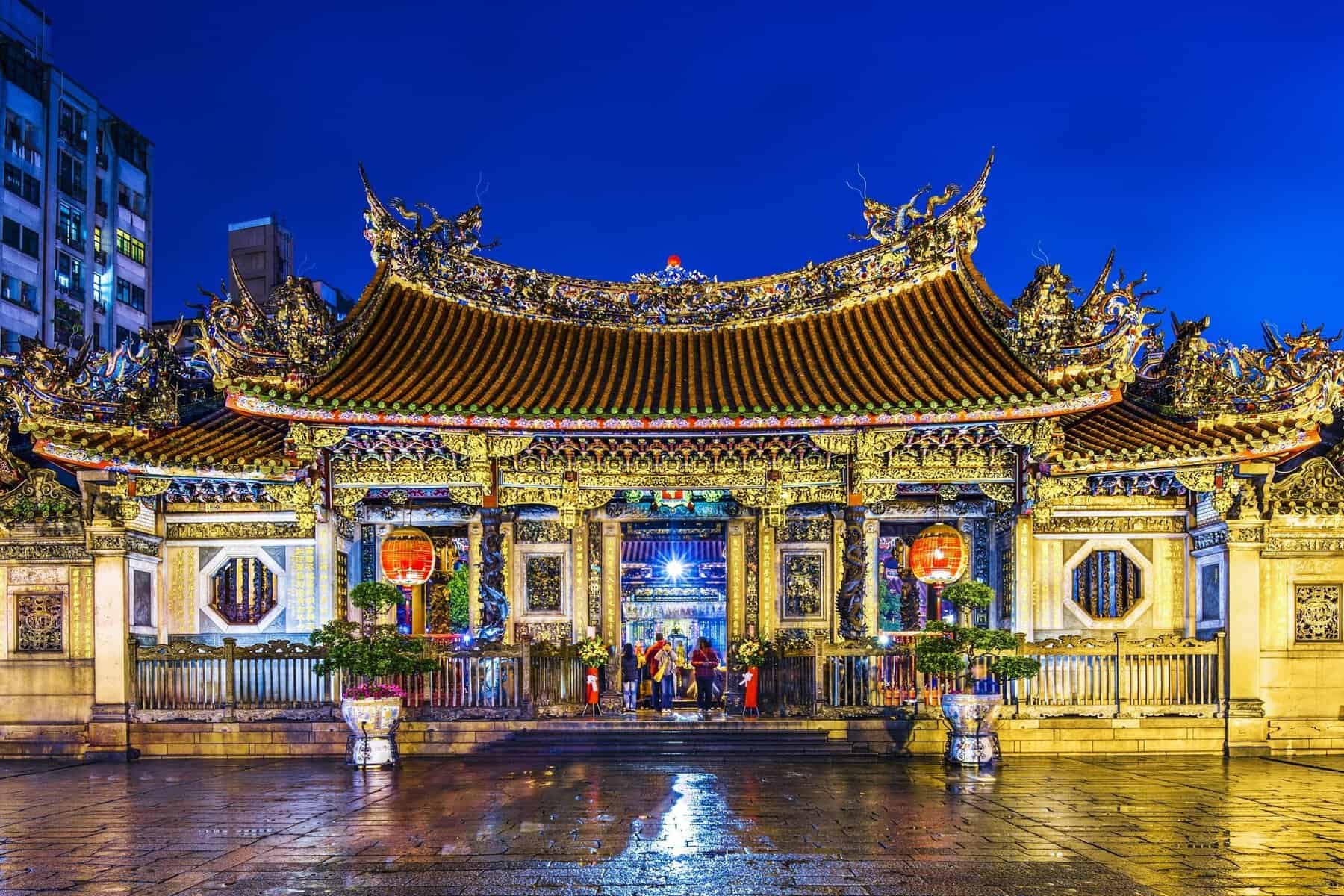
Longshan Temple in Taipei
Longshan Temple in Taipei is Taiwan’s equivalent of the Forbidden City in Beijing and a “must see” for any traveller visiting Taipei. Bangka Lungshan Temple is a very well-known Chinese temple in the capital, Taipei, Taiwan. The temple was built in Taipei in 1738 by settlers from Fujian (province) under the Qing government in honour of Guanyin. It served as a place of worship and a gathering point for the Chinese settlers
Travel with Kilroy
Why is Taiwan worth visiting?
People travel to Taiwan to practise Taoism, Buddhism or one of the many other religions found on the island. Others go because Taiwanese people are said to cook better Chinese food than the Chinese, and still others to buy the latest computer gadgets. Taiwan has not yet become a typical tourist destination, although the country offers everything tourists could wish for in terms of nature, culture and warm-hearted people.
Taiwan at a glance
Taiwan is a relatively large republic often forgotten in the shadow of much bigger China, but it is a fascinating, high-tech country.
Taiwan is a state in East Asia.
Capital: Taipei
Area: 36,193 km²
Population: 23.52 million (2016)
Currency: New Taiwan dollar
President: Tsai Ing-wen
Official language: Standard Mandarin
Getting to Taiwan
More articles about Taiwan
Prices and budget
Price levels in Taiwan are generally moderate compared with Denmark, but they vary a great deal between cities, mountains and the east coast. Food is the most affordable element, especially if you eat at the night markets and in small stalls, where a meal often costs a fraction of a restaurant visit. Hotel prices fluctuate the most and rise markedly at weekends and during holiday periods.
As a rough guide, the budget segment covers hostels and simple guesthouses with shared facilities, the mid-range covers hotels with private bathrooms and modern rooms, and the upper end covers the large international hotels in the central areas. Food and transport come on top, and high-speed trains are more expensive than local trains and buses. A rental car gives flexibility but adds the costs of hire, fuel and parking.
Get a current estimate of the exact prices you will pay before booking, as both hotel and transport prices can change. Build in a buffer for unexpected costs, and remember to carry cash when you move away from the cities, where cards may not always be accepted.
How long should you stay?
Taiwan is not large, but travel between cities and mountain areas takes time, so it is important to choose an itinerary that suits your days. The shortest route is one or two weeks in Taipei and the mountains around the city, where you can take in the city’s culture, the night markets and a day trip on the hiking trails. It gives a good taste, but you will not reach most of the island.
A trip of two to three weeks leaves room to combine Taipei with the western plains and part of the high mountains. Here, allow for the fact that journeys to remote areas and along narrow mountain roads can take longer than you would expect. If you want to see the island’s east coast and reach more mountain routes, plan for three weeks or more, or otherwise choose to focus on one area.
A circuit of the whole island requires time and planning, and it should not be squeezed into too few days. Think about the weather too, as typhoon season and rainy spells can close routes and delay your plans, so a slightly longer trip gives you room to adjust along the way.
Typhoons, earthquakes and weather warnings
Taiwan is exposed to typhoons, especially in late summer and early autumn, and these can cause major disruption to transport, schools, offices and hotels. As a typhoon approaches, trains, buses, ferries and flights can be cancelled at short notice, and mountain routes may be closed due to falling debris and landslides. It is therefore important that your plans can be changed and that you have not booked anything that cannot be cancelled.
Keep an eye on the official weather warnings issued by Taiwan’s meteorological authorities, and follow the advice and alerts relayed by local media and your hotel. Also read the Ministry of Foreign Affairs travel information, which is updated regularly. If a warning is issued, stay indoors, avoid mountain trips and coastal areas, keep your phone charged, and have water, food and medication to hand. Follow the instructions from the authorities, and keep away from water and loose objects outside.
Earthquakes can strike with little warning, so it is a good habit to take note of emergency exits and evacuation signs when you check in. In the event of a strong earthquake, seek cover away from windows and heavy furniture, and follow local instructions once the shaking has stopped. Save the official emergency numbers and your embassy’s contact details in your phone before you travel.
More about Taiwan
Nearby
Bhutan
Bhutan has historically been very isolated, yet remarkably forward-thinking when it comes to protecting its land.…
Sri Lanka
Sri Lanka is a state in the southern part of Asia, made up of a larger…
Bangladesh
Bangladesh is a country in South Asia. Before 1971 it was known as East Pakistan. Its…


