
From the traveltalk.dk family – started in Denmark in 2018
Read in: Dansk (original)
Travel to Montenegro: the Adriatic, the mountains and Kotor
Montenegro is relatively little known as a destination. Croatia, by contrast, has become an extremely popular destination in recent years, and many Europeans have already gotten to know it. Yet this small but fine gem lies not far away. “Montenegro” literally means “Black Mountain”, and the country has only been independent since it broke away from Serbia in a referendum in 2006. It is a republic in the Balkans bordering the Adriatic Sea, Croatia, Bosnia and Herzegovina, Serbia, Kosovo and Albania.
On 21 May 2006 the country held a referendum on dissolving its union with Serbia, and it became independent thereafter. In this article we will delve deeper into what makes this country on the Adriatic such a unique and attractive destination. This is why travelling to Montenegro has become a popular choice among travellers seeking scenic experiences and cultural gems.
Want to know the essentials about Montenegro in 30 seconds? See our travel facts here.
Also read the travel account from Montenegro of a Danish family who had a lovely holiday! “Montenegro” literally means “Black Mountain”, and the country has only been independent since it broke away from Serbia in a referendum in 2006. A young nation, and one that many people may best know as a handball country, where both coaches and players have a fiery temperament. We saw little of that temperament during the week we spent in Kotor…
Read more here about our trip to Montenegro
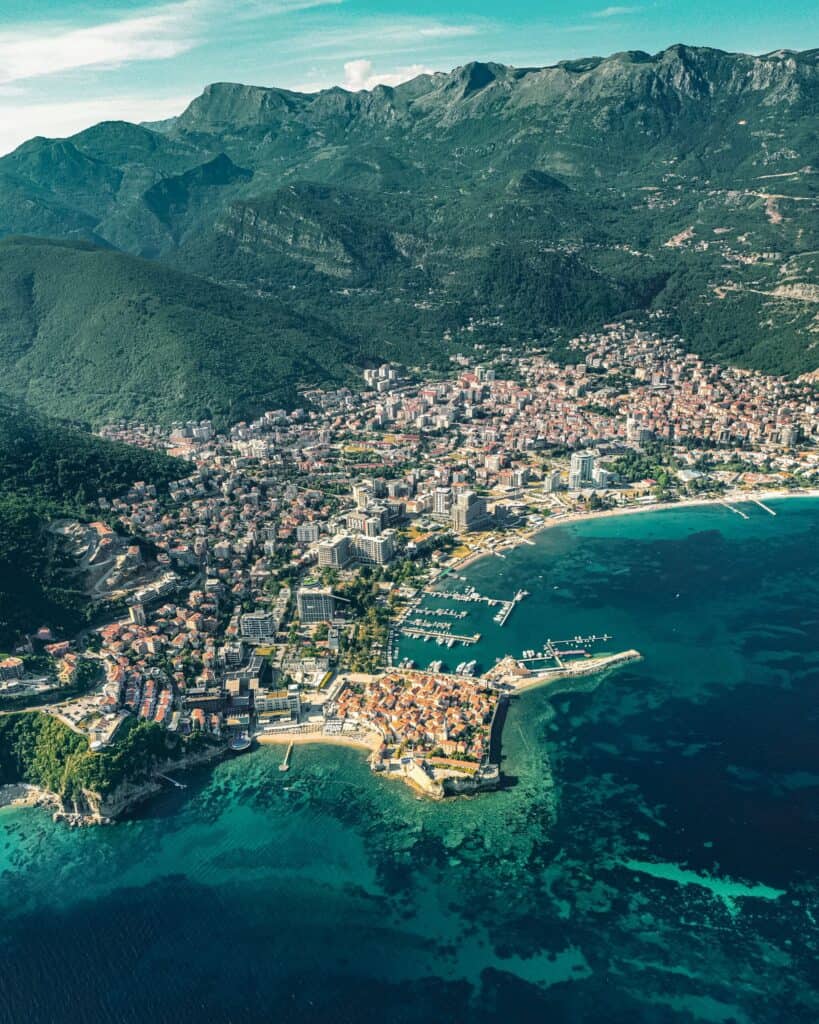
Distances within the country are short, and there is plenty to see and do. The best way to get to know the country is to travel around by bus and get off whenever you pass something interesting. We can especially recommend the medieval town of Kotor, whose impressive city walls wind up the dramatic mountain landscape behind the town, but do also visit the more exclusive resort of Porto Montenegro, where luxury yachts lie side by side in the harbour.
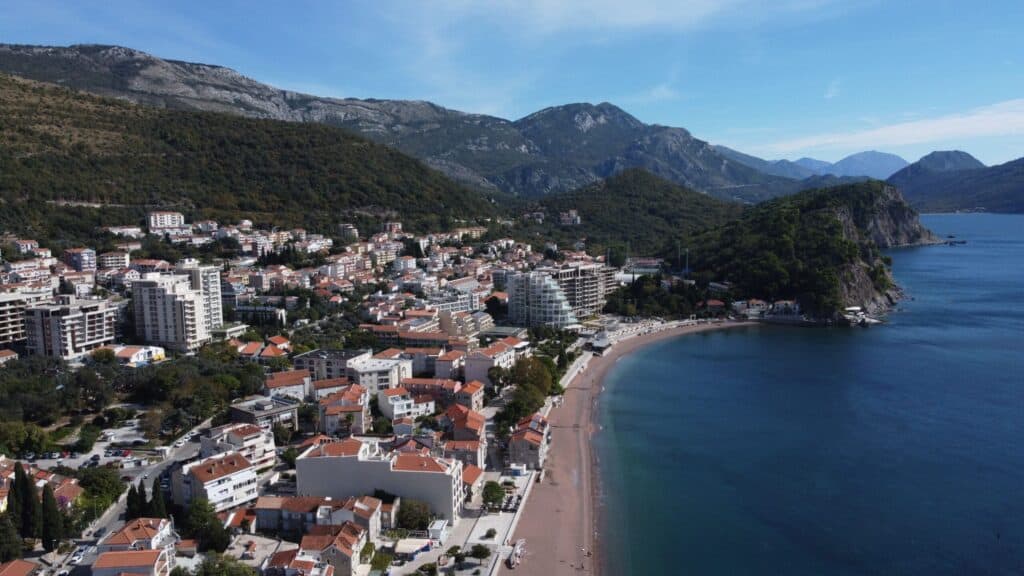
There are also many beaches, from small, intimate rocky coves to kilometre-long sandy beaches framed by lively and atmospheric seafront promenades. There are many beaches in Montenegro too. From small, intimate rocky coves to kilometre-long sandy beaches framed by lively and atmospheric seafront promenades, there is something to suit every taste. Budva is one of the most popular beach destinations, known for its lively nightlife, where you can dance all night. It is also worth visiting the beach at Sveti Stefan, famed for its beauty and luxury.
Signature trips in the new Southern Europe: from Croatia’s hidden coast to the enchanted Adriatic mountains https://www.traveltalk.dk/rejsetyper/signaturrejser/signaturrejser-i-det-nye-syd-europa/ When travelling around Montenegro, you will discover some of the most fantastic views in the world. For example, the famous Bay of Kotor, which is on the UNESCO World Heritage List, is surrounded by impressive mountains and picturesque villages. Here you can take boat trips or hikes to experience the magnificent nature. A trip to Perast and our visit to the small islands, St. George and Our Lady of the Rocks, was a special experience that we will never forget.

How to get around Montenegro
Distances in Montenegro are short, but the roads are not always quick. Mountain roads with many bends can take far longer than the map suggests, especially between the coast and the mountainous north. Expect to drive slowly and allow plenty of time, particularly in the summer months, when traffic around the coastal towns can grind to a complete halt.
The bus is the most widely used form of transport between the larger towns, and this is where you really get to know the country. The routes are convenient between Podgorica, Kotor, Budva and Cetinje, and you can get off along the way if something catches your eye. Bus departures vary with the season, so always check the times just before setting off.
Renting a car gives the greatest freedom, especially if you want to get out to Durmitor or the more remote villages. Choose a car with good grip and be prepared for narrow, steep roads without guard rails in some places. Taxis are available in the towns and are the easiest option for short journeys, but you should agree the fare in advance or make sure the meter is running. Ferries in the Bay of Kotor are not a proper transport network, but small boats and ferry services can be used to reach the small islands off Perast.
Where to stay in Montenegro?
The choice of accommodation depends mostly on what you want to do. Kotor is a good choice for those who want to stay in the heart of the old medieval town and take walks along the bay. The town is small, and the streets are narrow and cobbled, so there is no room for every car, and you should check parking before booking.
Budva is the liveliest coastal town, with beaches, nightlife and many hotels. It is an obvious base for those who want beach and company, but the town can be busy and noisy in peak season. Herceg Novi is quieter, with an old quarter and views over the bay, and is a good choice for those who want to stay by the water without a fast pace.
If you want to get away from the coast, the Durmitor area in the north is the best choice. There are small hotels, guesthouses and campsites in and around the national park, and they are typically noticeably cheaper than in the coastal towns. Hotel room prices on the coast are higher than what you find in the mountains, while apartments are often the cheapest option for longer stays. Camping is the cheapest of all, but the pitches are not always equipped with what you may be used to, so check the facilities in advance.
Travel facts
Capital: Podgorica Area: 13,812 km² Currency: Euro Population: 622,388 (2015) World Bank Continent: Europe Official language: Montenegrin The people of Montenegro are friendly and hospitable, which makes it a pleasant place to visit. The local food culture is also worth highlighting; dishes such as ‘njeguški pršut’ (air-dried ham) and ‘kačamak’ (a kind of cornmeal porridge) are local specialities that are well worth trying. Eating at local restaurants, where you can enjoy these dishes with a view of the clear blue water, is an experience in itself. The Baltic states, new and old destinations along the Baltic Sea Official website
How to get to Montenegro
Most Danish travellers fly to Montenegro via one of the three airports in the region: Podgorica, the country’s capital airport, Tivat on the Bay of Kotor, and Dubrovnik in Croatia. Tivat is closest to the coastal towns, while Podgorica is best if you are heading further inland. Dubrovnik is a good alternative if the flight schedules suit you better, but you will need to allow for a border crossing and a transfer across it, which can take time in the summer season.
You can also drive to Montenegro by car or travel by bus. There are border crossings from Croatia to the south and from Bosnia and Herzegovina and Serbia to the north and east. Queues at the border can be long in high season, particularly at the crossing from Croatia, so it is worth checking current conditions before setting off. If driving, make sure you have the necessary documents with you, and check your insurance before crossing the border.
From Denmark, the practical route is often a flight or bus transfer to one of the airports, as there are no direct trains to the country. The journey therefore typically takes a good number of hours, even if the flight itself is short. Plan the transfer well in advance, especially if you are continuing by bus from Podgorica or Tivat to your final accommodation.
Practical matters and safety in Montenegro
Danish citizens can travel to Montenegro with a valid passport. It is worth checking that your passport will be valid for the period you are travelling, and that it has sufficient validity beyond your return date. Entry requirements can change, so always check the current rules with the Danish Ministry of Foreign Affairs before you book.
The currency in practice is the euro, even though Montenegro is not a member of the EU. Cards are accepted in many places, but in smaller places, at markets and in the mountains, it is a good idea to carry cash. Cash machines are found in the larger towns. It is also wise to have travel insurance that covers illness, injury and repatriation, as healthcare for tourists can be expensive.
In terms of safety, Montenegro is generally calm for tourists. The biggest risk is traffic, particularly on mountain roads, so it is sensible to drive carefully and not to drink alcohol before getting behind the wheel. Also take care when hiking in the mountains, where the weather can change quickly, and always carry water and warm clothing. As for health, check your vaccinations well in advance and bring any medication you need, as the selection of specific preparations may be limited.
When is the best time to travel to Montenegro?
The season in Montenegro follows the rhythm of the Mediterranean, but it changes markedly as you move from the coast up into the mountains. On the coast, summers are hot and dry, with days when the mercury often passes 30 degrees in July and August. This is also where high season is concentrated, and Budva and Sveti Stefan in particular can be crowded in the middle of the day.
May and June offer the most pleasant conditions, when the sea is clear and the towns are not overcrowded. The same goes for September and early October, when the water is still warm and local restaurants are open without being packed. The coast is distinctly cheaper and quieter outside the summer months, but many of the small restaurants and beach spots close during the winter half of the year, so it is an advantage to check opening times in advance.
Winter is mild by the sea but rainy, and the mountains around Durmitor can have snow from the start of winter and well into spring. If you want to hike in the mountains, the summer half of the year is the time to go. Rain falls especially in autumn and early in winter, and sudden heavy downpours in the mountains can make trails slippery and dangerous.
How much does a holiday in Montenegro cost?
Montenegro is generally cheaper than most Western European destinations, but coastal towns can quickly become expensive in high season. Food prices vary greatly between the tourist restaurants by the harbour and the small places in the side streets, where you can often eat plenty and well for a modest price. Local specialities such as fish and grilled meat are generally reasonable, while international restaurants and wine bars in Kotor and Budva are noticeably higher.
Travel by bus is cheap, while car hire and taxi trips over longer distances are the biggest variable cost for many. The same applies to entry to national parks and museums, which are at a modest level but can still add up if you visit many places. Accommodation is the most expensive item, particularly on the coast in July and August, and this is where you have the greatest opportunity to save by choosing an apartment or booking outside high season.
It is a good idea to compare prices from day to day, as they can vary a great deal. If you do not have a fixed budget, expect a holiday on the coast to cost more in the summer months than in the shoulder season, and that the mountain areas in the north are cheaper both for accommodation and for eating out.
Travel to Eastern Europe
Eastern Europe offers so many beautiful and exciting destinations, including new ones. Despite its small size, the country has a great diversity of landscapes and experiences. From the busy towns such as Podgorica and Budva to the quieter villages and nature parks, you can find almost anything you could wish for. It is a destination that attracts both those seeking relaxation and those who want to explore and seek adventure.
In addition, Montenegro offers fantastic opportunities for outdoor activities. Hiking, cycling and water sports are just some of the activities you can enjoy. Durmitor National Park has some of the best hiking trails in Europe, while the Tara River Canyon is perfect for rafting and zip-lining. This makes Montenegro an ideal destination for adventurers.
- Albania
- Bulgaria
- Belarus
- Croatia
- Latvia
- Lithuania
- North Macedonia
- Moldova
- Montenegro
- Poland
- Romania
- Slovenia
- Czechia
- Ukraine
- Hungary
More on affordable destinations
The country is also a safe destination, which makes it an ideal choice for families. With a varied range of activities and attractions, there is something for every age. It is a destination where you can enjoy time together with your loved ones while creating memories for life. For those interested in history and culture, the larger towns also have plenty to offer.
Towns such as Kotor and Cetinje have a rich history dating back to the Middle Ages. Kotor is known for its well-preserved old buildings and labyrinth of narrow streets, while Cetinje, once the capital of Montenegro, is home to many museums and cultural institutions. Big Mac Index 2024: how to travel on a budget Finally, Montenegro has become a popular destination, and not without reason. The country offers a unique combination of natural beauty, culture, history and adventure.
Whether you are after relaxation on the beach, cultural experiences or outdoor adventures, you will find something to suit your tastes. Plan your trip and discover all the wonders Montenegro has to offer! To get the most out of your trip to Montenegro, it is a good idea to plan ahead. Consider renting a car to explore the more remote areas and take your time to enjoy the many scenic routes. There are also plenty of local guides who can help tailor your experience so you see the hidden gems.
For you preferring our English premium traveltalk. travel
📄 Quick facts about Montenegro
- Capital: Podgorica
- Language: Montenegrin
- Currency: Euro (although the country is not an EU member)
- Best time to visit: May-June or September (mild, outside peak-season crowds)
- Known for: the Bay of Kotor, Budva, the northern mountains
💡 Traveltalk tip
Insider tip: The Bay of Kotor is often compared to the Norwegian fjords — but with a Mediterranean climate and without the Norwegian price tag.
More about Montenegro
Nearby
Austria
Danes account for over 1.6 million overnight stays in Austria every year – and there is…
Latvia
Latvia, or Latvija, is one of the three so-called Baltic countries. Geographically it lies in Northern…
Malta
Malta enjoys some of the mildest weather around, which also makes it an excellent destination in…


