
From the traveltalk.dk family – started in Denmark in 2018
Read in: Dansk (original)
Travelling to Great Britain – four countries, two hours away
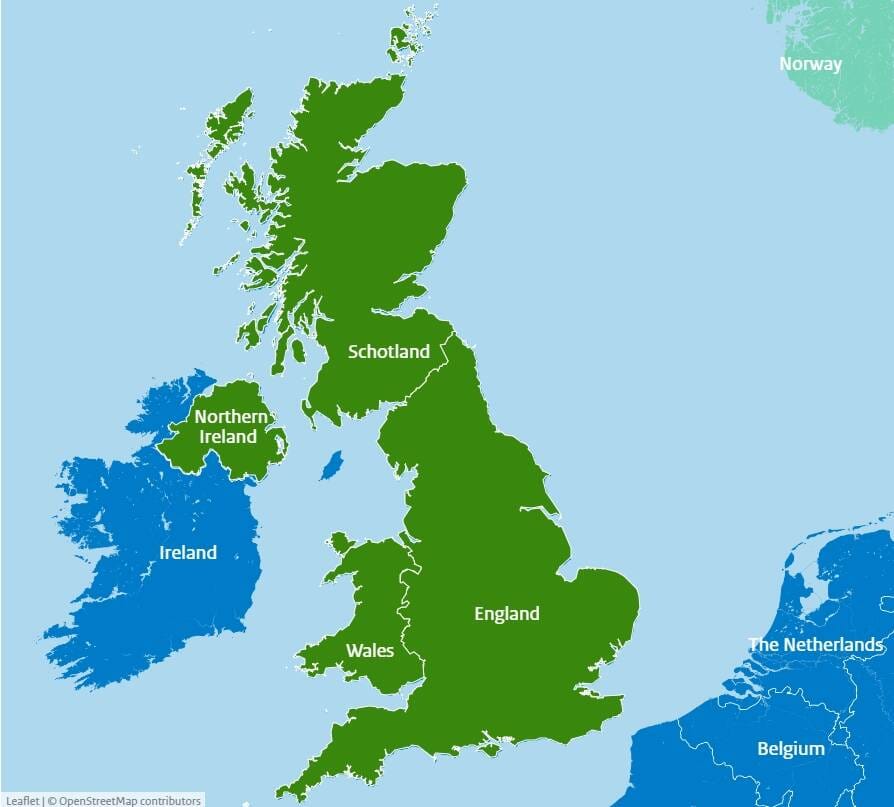
Less than two hours’ flying from Copenhagen lie four countries that share a language, a plug socket and a royal family, and not much else. England has the great cities, the country houses and a food scene nobody mocks any longer. Scotland has the Highlands, whisky and some of the finest golf courses in the world. Wales has mountains and a coastal path all the way round. Northern Ireland has the Giant’s Causeway and a coastline that film crews have been using for years. Treat them as four holidays, not one country.
One thing needs sorting first, and it is the mistake that most often derails a British trip today: since Brexit, entry requires a passport – the yellow health card and driving licence will not do – and visitors from Denmark must also obtain an ETA travel authorisation, applied for online before departure. Without it, the airline will not let you check in.
Where to stay
London has everything from hostels to historic hotels, and prices span a very wide range. Recent years’ price rises have made the city expensive to stay in, particularly in the summer months and during major events. Book early if you want to stay centrally.
Outside London there are several kinds of accommodation in Great Britain. In many parts of England and Scotland you will find bed and breakfasts that are simple and often very good. The country houses you can read about above sometimes have guest rooms, but that is the expensive end of the market.
In Scotland it is popular to stay in small villages near the Highlands or on the islands, and there may be only a few rooms. Book well in advance, especially in September and during the golf season.
In Wales and Northern Ireland you will find both small inns with rooms and larger hotels. The coastal roads of Northern Ireland have several places to stay, but outside the high season there can be long distances between them.
As a rule of thumb, the closer you travel to summer and the big events, the earlier you should book.
What does a trip cost?
The price varies considerably depending on where you go and when. Prices in pounds change constantly, so always check current figures before you plan.
Accommodation is the biggest item. In London a simple double room can cost markedly more than in the provinces, and in Edinburgh during the August festival prices rise sharply. Outside the big cities and outside the high season, there are typically far cheaper options.
Food can range from a cheap pub lunch to expensive restaurants. Many local pubs serve simple, good food at a reasonable price, and this is often where you will find the best British cooking.
Transport between cities is the next major expense. Train tickets can become expensive if you buy them close to departure, whereas tickets bought early can be considerably cheaper, as mentioned earlier. Local transport in London and the larger cities is expensive compared with most Danish towns, and there are various passes and fare structures you should familiarise yourself with.
Attraction tickets vary. The major national museums in London are free, while castles, country houses and special experiences charge admission. It can be a good idea to plan your budget around the attractions that matter most to you.
📄 Trip facts for travelling to Britain
- Location: North-western Europe – England, Scotland and Wales lie on the main island of Great Britain, Northern Ireland on the island of Ireland
- Capital: London – plus Edinburgh, Cardiff and Belfast as national capitals
- Language: English – Welsh in Wales and Scottish Gaelic in parts of Scotland
- Currency: pound sterling (GBP), not euros
- Four countries: England, Scotland, Wales and Northern Ireland – legally four countries within one kingdom
- ⚠️ Entry: a passport is required since Brexit; driving licences and health cards are not accepted. Visitors from Denmark must also obtain an ETA travel authorisation, applied for online before departure
- Best season: May to September. Scotland is at its most beautiful in September, when the heather is in bloom and the midges are gone
- Driving: on the left, and most rental cars are manual – book an automatic in advance if you want one
- ✈️ Departing from: Copenhagen Airport (CPH) – under two hours to London, Edinburgh and Manchester
Getting around between the countries
Britain is not large, but moving from one country to another takes time. The train is the most comfortable option between the major cities. There are often direct services between London and Cardiff, and between London and Edinburgh the journey takes around four to four and a half hours on the fast trains, if the timetable cooperates. Between Edinburgh and Glasgow it is only half an hour by train.
Belfast is further away. From mainland Britain you can take a ferry or fly, and it is worth noting that Northern Ireland has its own railway network, which is not directly connected to the rest of Britain without a detour.
The bus is cheaper than the train but takes longer, particularly on long journeys. It is good for smaller towns and rural areas where the train does not reach.
A car gives the greatest freedom, especially in Scotland, Wales and Northern Ireland, where public transport can be sparse outside the cities. Remember to drive on the left, and check that the rental car has an automatic gearbox if you are not comfortable with a manual.
Practical advice
Britain’s healthcare system is public and free for most people, but this does not apply to visitors from Denmark in the same way. It is important to have good travel insurance that covers doctors, hospitals and any repatriation. Check your insurance terms before you travel so you know what is covered.
Tipping is not compulsory to the same extent as in the United States, but it is customary to leave a small tip at restaurants if the service has been good. Many restaurants add a service charge to the bill, so check that first.
Driving on the left is the biggest adjustment for many visitors. Remember in particular to look the right way when crossing a road, and take extra care at roundabouts and at junctions in towns.
In the big cities it is wise to keep an eye on your belongings, especially on crowded public transport and at tourist attractions. Carry bags in front of you, and do not leave wallets visible in your back pocket. Pickpocketing is most common in the busy areas.
When should you travel?
May to September is the period most people choose, and it is a good starting point. Days are long in summer, and temperatures typically sit between about 15 and 20 degrees. But the weather in Britain does not follow the calendar. Rain can arrive at any time of year, and a wet summer’s evening in London can be cold enough to call for a light jacket.
Scotland is where the choice of month matters most. In September the heather is in bloom on the highlands, and the worst of the midges are gone. In summer, particularly June and July, the Hebrides and the west coast can be plagued by midges, and many Scottish travellers choose September for exactly that reason.
If you want to avoid the tourist crowds, April and October are a good alternative. It can still be cold and windy, but many attractions are open and there is less congestion. Winters are mild in the south, but the days are short, and the mountains of Wales and Scotland can be difficult to get around when there is snow on the ground.
Choose your month based on what you most want to experience. Coast and walking in summer light, heather and castles in autumn sunshine, or city and museums whatever the weather.
💡 Traveltalk tip
Sort out your passport and ETA before you book anything else. Your passport must be valid, and the ETA permission must be applied for and approved online before departure. It costs a little and usually takes a short time to come through — but it has to be in place, and the airline will not let you check in without it.
Insider tip: the price of a train ticket depends almost entirely on when you buy it. Advance tickets are typically released about twelve weeks before departure, and the same journey can cost three to four times as much bought on the platform that morning. Treat the four countries as four separate holidays — the Scottish Highlands and the Cornish coast have nothing in common beyond the language and the plug sockets.
🤝 Travel partner — the place is free. Here we recommend travel partners: Who can provide the trip or simply accommodation/transport? Do you arrange trips to Britain? The place could be yours — write to us at hello@leisuretalk.net.
England – London, the coast and the country houses
England is, for most visitors, synonymous with London, and the city lives up to it: a weekend is enough for the classics, the British Museum is free like all the major national museums, and the shopping has its own rules. If you want to stay somewhere with a history, there is a gin hotel in the city. The airports are a decision in themselves — six of them, and the distance into the centre varies from twenty minutes to an hour and a half: the guide to London’s airports and which one is best for you.
Beyond London begins the England that people keep coming back to. Cornwall has the Atlantic, surfing beaches and a cuisine built on shellfish — and there are direct flights from Copenhagen in season. Stonehenge on Salisbury Plain is five thousand years old and still unexplained. And an hour’s drive from London lies more than most people ever reach.
Country houses are England’s own genre. More than fifteen historic castles welcome guests, Downton Abbey was filmed at Highclere Castle, which can be visited, and The Crown used a whole range of them. English food, meanwhile, has moved from fish and chips to Michelin stars, and it is no longer a joke.

Scotland – the highlands, the castles and the home of golf
Scotland is the trip that surprises most people. The country north of the border has Edinburgh with its festival city in August, Glasgow with its music and darts, and Inverness on Loch Ness as the gateway to the highlands. Out west lie the Hebrides — rugged, empty, with beaches you would not think were Scottish until you see them. September is the month: the heather is out, and the midges are gone.
Two things belong to Scotland alone. The castles — several hundred of them, from ruin to inhabited home — and golf. The game was born here, and the courses from Carnoustie to St Andrews are public: The Old Course can be played by anyone who comes through the ballot. The best courses lie along the coast, and Muirfield is one of the oldest clubs in the world.

Wales – mountains, coast and adventure
Wales is the least visited of the four and the one that offers the most nature per pound. The journey there runs from snow-capped peaks in Eryri — Snowdonia — to a coastal path that circles the entire country, 1,400 kilometres in all. A nature holiday is one way in, adventure in North Wales the other: ziplining over an old slate quarry, surfing an inland wave, climbing in the mountains where the Everest teams trained. Welsh is a living language here, and the signs are in both.

Northern Ireland
Northern Ireland sits on the island of Ireland and shares a border to the south and west with the Republic of Ireland — a border you in practice drive across without noticing. Belfast has the shipyard where the Titanic was built, and a museum about it; the Causeway Coast to the north has the Giant’s Causeway, its forty thousand basalt columns, and a coast road that stands comparison with any in Europe. If you want to head further south, we have Ireland covered separately.
Across Britain
Some trips don’t choose just one of the four countries. Twenty-five reasons to set off is a good place to start, and perhaps Europe’s most varied destination explains why. Sport has its fixed dates: Wimbledon is played over two weeks from the end of June, and golf trips to England go to courses most golfers can get onto.
The train is the right way to see the country — and the Isle of Man in the middle of the Irish Sea has steam trains, heritage railways and a mountain railway that still runs. On two wheels there is the cycling holiday through five countries. And if your trip falls in October, Britain and Ireland are the homeland of Halloween — the festival came from here, not from America. Further away, but still British: diving in the British Virgin Islands.
More lifestyle sites from our travel family


