
From the traveltalk.dk family – started in Denmark in 2018
Read in: Dansk (original)
Macedonia: hot, southern and a new destination
The Republic of North Macedonia lies in the south-eastern part of Europe on the Balkan Peninsula. The country borders Greece to the south, Albania to the west, Bulgaria to the east and Kosovo and Serbia to the north. It was formerly part of Yugoslavia, but became independent following a referendum in 1991.
At the United Nations the country is listed under the name “The Former Yugoslav Republic of Macedonia”, as there has been a dispute with Greece over the country’s name, stemming from historical tensions between the Greeks and the Macedonians. The Macedonian economy is moving forward, and the country has applied for membership of the EU.
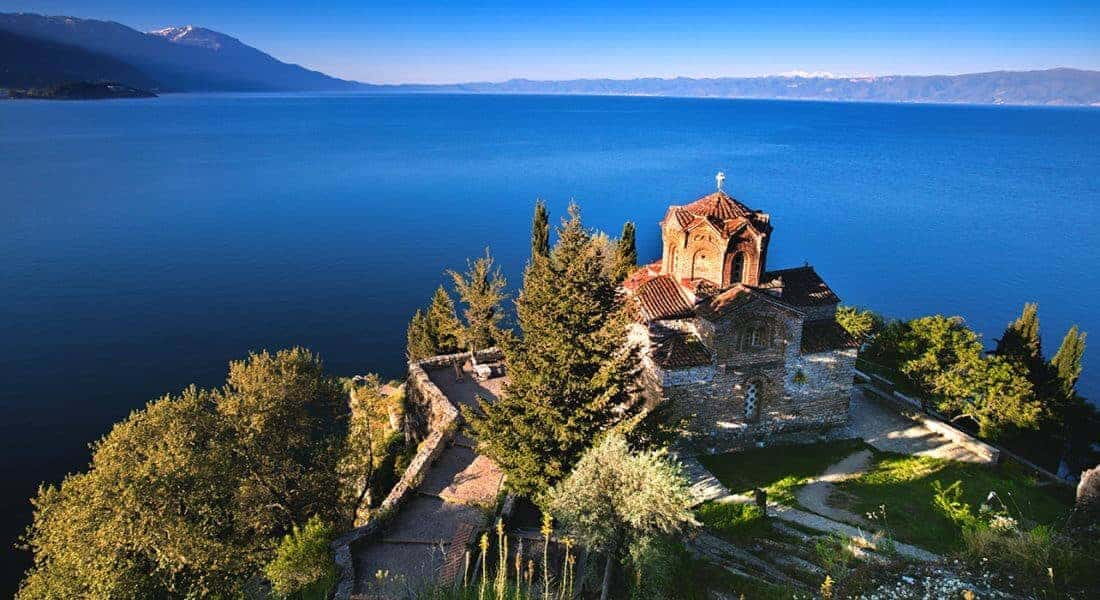
The country at a glance
The Former Yugoslav Republic of Macedonia is a very beautiful country in the south-eastern part of Europe on the Balkan Peninsula, bordering Greece to the south, Albania to the west, Bulgaria to the east and Kosovo and Serbia to the north.
Capital: Skopje
Currency: Macedonian denar
Population: 2.078 million
President: Gjorge Ivanov
Continent: Europe
Official language: Macedonian
When is the best time to visit Macedonia?
Spring and autumn are the most obvious times to visit Macedonia. In April, May, September and October the days are warm without being oppressive, and excursions to the mountains and lakes are easily accessible.
Summers can be very hot, particularly in the valleys around the capital Skopje, where temperatures are often high in the afternoon. It is a good idea to plan outdoor activities early in the day and to take a midday rest during the hottest hours.
Winters are cold, and snow falls in the mountains. The towns can be grey and damp, but on the plus side winter is a quiet period when you can experience the country without the big crowds. Many of the mountainous areas are not ideal to visit at this time, as the roads can be difficult to drive on.
Lake Ohrid and the southern parts of the country have a milder climate and can be pleasant even outside the classic travel months. The weather in the mountains changes quickly, so you should bring warm clothing even if you travel in the summer half of the year.
Travel to Eastern Europe
Eastern Europe offers so many lovely and exciting destinations, including new ones.
- Albania
- Bulgaria
- Belarus
- Croatia
- Latvia
- Lithuania
- Macedonia
- Moldova
- Montenegro
- Poland
- Romania
- Russia
- Slovenia
- Czechia
- Ukraine
- Hungary
How to get around the country
The bus is the most widespread way to travel between towns. Connections between the larger cities are generally good, but the smaller villages and mountain areas can be hard to reach without your own car. Buses can be crowded, and timetables are not always easy to make sense of the first time, so it is a good idea to ask locals about departure times.
The train is a slower alternative. The railway network covers only part of the country, and trains do not run as fast as the buses. On the other hand, the journey can be relaxed and scenic if you have time and want to enjoy the landscapes from the window.
Taxis are available in the larger cities, especially in Skopje and Ohrid. It is wise to agree on the fare in advance, or to ask for the meter to be used if there is one, before you get in. Taxi apps are also used in several places.
A car gives you the most freedom, especially if you want to visit the lakes, the small mountain villages and the monasteries in the less populated areas. Mountain roads can be narrow, and signposting is not always clear, so driving requires attention. You should have a navigation tool that works without an internet connection, as coverage can be patchy in several places.
How to get to Macedonia
Most travellers fly into the capital Skopje, which has an international airport with connections to several European cities. It is also possible to land in Ohrid, which is closer to the lake and the southern parts of the country. The choice of direct routes varies over time and from season to season, so it is wise to check flight schedules before booking.
From neighbouring countries you can take a bus into Macedonia. Bus connections run from Greece, Albania, Bulgaria, Serbia and Kosovo. The routes can be long and time-consuming, and border crossings can involve waiting, especially in the high season. It is an advantage to have a valid passport and to be prepared for checks at the border.
Car hire is a popular option if you want to move freely between towns, lakes and mountain villages. The roads are generally in reasonable condition on the main routes, but in mountain areas they can be narrow and winding. It is a good idea to familiarise yourself with the rules for car hire and insurance before setting off, and to read the terms carefully.
When you arrive, it is always worth checking which transport options run from the airport to the city centre, as connections can vary. It may be a good idea to ask your hotel for help or to have a plan for getting around in advance.
More articles about North Macedonia
Practical matters and safety
Price levels in North Macedonia are generally lower than in Denmark, especially for food, drink and transport within the cities. Hotel and restaurant prices vary widely depending on location and standard, so it is worth checking current prices before you travel, as they change over time.
The official language is Macedonian, which is written in the Cyrillic script. In tourist areas and among staff at hotels and restaurants, many people also speak English, while German and French can be useful in certain situations. It is a good idea to know a few basic polite phrases in Macedonian, as these are often appreciated.
Visa and entry requirements depend on your citizenship and how long you plan to stay. Always check official information with the relevant authorities before you travel, and make sure your passport is valid for the period you have planned.
North Macedonia is generally regarded as a calm and hospitable destination. As in other travel destinations, the usual precautions apply: keep an eye on your belongings in public places, avoid flashing large sums of money, and take care on the roads, especially in mountain areas. Carry a copy of your passport and good travel insurance, and let a relative know your route.
Where to stay and what to eat
Accommodation options in North Macedonia range from simple hostels and guesthouses to larger hotels, especially in Skopje and around Lake Ohrid. In the smaller towns and the countryside you will often find small family-run guesthouses, where you can experience a local atmosphere and a personal welcome from your hosts. It is a good idea to book ahead in high season, as the best places can fill up quickly.
Local food is characterised by vegetables, grilled meat, yoghurt, cheese and bread. One of the most typical dishes is tavče gravče, a bean stew seasoned with spices, served hot. Grilled meat skewers and sausages are popular across the country, and many places serve salads of tomato, cucumber and white cheese.
Dining culture is often relaxed and social, and a meal can stretch on for a long time. Cafés and small restaurants are meeting places, and it is common to linger for a long while over a cup of coffee. Wine and rakija, a strong fruit brandy, also feature in many meals.
In the cities you will find both small local eateries and more modern restaurants, so there is something for every budget. Asking your host or locals for recommendations often gives you the best tips for a good meal.


