
From the traveltalk.dk family – started in Denmark in 2018
Read in: Dansk (original)
The Faroe Islands and the 18 green islands of the North Atlantic
The Faroe Islands are a small group of 18 islands of volcanic origin in the northern part of the Atlantic, lying between Scotland, Iceland and Norway. The first settlement on the islands took place around the year 625, when Irish monks arrived and lived as hermits. It must have been quite lonely, and rather telling of where Christianity can lead.
What is worth experiencing on the islands
Hiking is one of the most obvious ways to experience the Faroe Islands. The trails climb over grassy fells, follow clifftops and descend to small fjords, and many of them take no more than a couple of hours. The weather is the big unknown, so it is a good idea to bring proper footwear and clothing, and to choose a route that suits the day’s weather and light.
Birdwatching is also part of what the islands are known for. The cliffs are home to many seabirds, and in summer it is possible to see large bird colonies on the mountains and cliffs. It is a quiet experience that suits a relaxed pace. Sea kayaking offers another angle on the coastline, and operators can be found in several of the larger towns, so you can see the islands’ cliffs from the water.
In Tórshavn, the old town is a natural starting point. The old timber houses with turf roofs stand close together and give a good impression of the town’s history. It is a fine way to begin or end a trip before heading out into the countryside.
Flying to the Faroe Islands
The adventure begins already on the journey there. Most people choose to fly, some despite it, and others precisely to experience the landing at the small Vágar Airport. The descent through the clouds and the navigation between the high mountains is known as a great experience in itself. Soon the travel adventure begins.
Where to stay
Accommodation options in the Faroe Islands are more varied than many expect, but they are limited in number. In Tórshavn you will find hotels of varying standards, and in the smaller towns there are often guesthouses run by families, which offer a closer look at local life. This is where you get the best conversations about the sea and fishing.
In many places you can rent cottages, some with their own views over the fjord or the sea. They are popular, especially during the summer months, and should be booked well in advance. Campsites are also available, and they suit those with their own tent or caravan who want to be close to nature.
It is a good idea to book as early as possible, especially if you are travelling in July and August or at weekends. Many small places have only a few rooms, so a single sold-out room can mean you have to find a new place to stay. When booking, also ask whether a car is available and whether there is access to hiking trails.
Food and places to eat
Faroese food culture is built on what the sea and the sheep have provided for centuries. Fish is the foundation, freshly caught and often prepared simply. Lamb is another central dish, and it is often cooked according to old tradition. Dried fish, particularly dried cod and coalfish, is a speciality that many locals enjoy, and it is a good way to taste something entirely different.
In Tórshavn there are restaurants serving modern interpretations of the traditional dishes, and cafés with home-baked bread. The town is small, so it is easy to find somewhere to eat, but you should book if you have specific wishes for the evening. In the countryside the choice is smaller, and in many places you will need to eat where you are staying, or in a small café in town.
Bear in mind that opening hours can be short outside the season, and small places do not always serve food all day. So it is worth taking a packed lunch with you when driving out into the countryside.
Getting around the islands
The Faroe Islands are connected by a network of ferries, tunnels and bridges, which makes it possible to travel between the islands without flying. The ferries sail between several of the largest islands, and many travellers use them as part of the experience. The tunnels have made the nearby islands easier to reach, but they are often narrow, and you should be prepared to drive long stretches in the dark.
Buses cover the main routes on the larger islands, but services are less frequent outside the summer months, so check the timetable well in advance. For many people, renting a car is the most flexible solution. It gives you the freedom to stop at small villages and viewpoints, but the roads are often winding, and you will quickly get further away than the map suggests.
Prices for ferries, buses and car hire vary widely, and it is best to check current rates with the operators before planning your trip. Cars should be booked early in the high season, as availability is limited.
Sailing from Hirtshals
It is also possible to sail from Hirtshals and north with Smyrilline, past Norway and onwards towards the Faroe Islands. The ships are fitted with excellent restaurants, a spa, a football pitch, a cinema and much more, so the 33 hours on board pass quickly with all manner of activities, and before you know it you are standing on deck enjoying the view of charming Tórshavn.
Traveltalk brings travel stories and tips from these beautiful, rain-heavy islands with their mild climate.
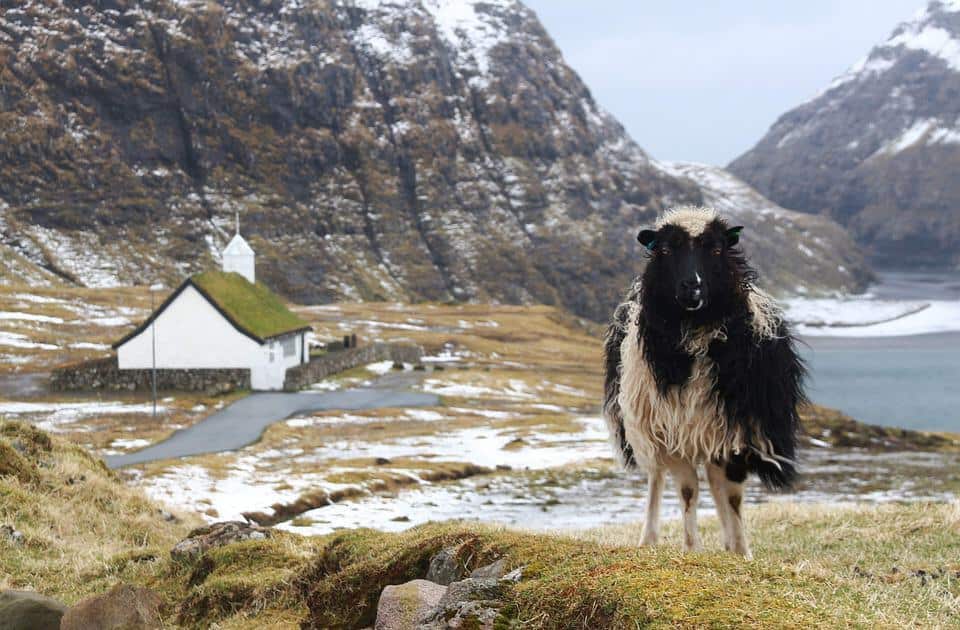
About the Faroe Islands at a glance
Capital: Tórshavn
Population: 48,199 (2015)
Currencies: Danish krone, Faroese krona
Official languages: Faroese, Danish
Practical information and costs
The Faroe Islands are more expensive than Denmark for most goods, particularly food, petrol and transport between the islands. A restaurant dinner typically costs more than Danish prices, so it is a good idea to allow an extra budget for this kind of thing. Ferry trips and car hire can also quickly become a major item in your accounts, so it is wise to plan early.
Card payment is widespread, and in many places you can pay with a Danish or international card. There are, however, areas where cash is still useful, especially in small villages. Mobile coverage is good in the towns and along the main roads, but it can be weak in the mountains and fjords, so you should carry a map or an offline app.
Opening hours in shops and restaurants are often shorter than in Denmark, especially on Sundays and outside the high season. Always check current times before planning your day. Many museums and sights also have limited opening hours, and some are only open in the summer.
Read about the Faroe Islands
The mild and fascinating country
You may also enjoy this story about a cruise in the North Atlantic in search of the charming puffins.
When to visit the Faroe Islands
The Faroe Islands are a destination for the whole year, but the experience changes character with the seasons. In summer the days are very long, and it is easy to go hiking late in the evening, as the light only fades long after midnight. This is also the period when the most visitors arrive, so accommodation and car hire can be in short supply, and it is a good idea to book early.
In winter it is dark for many hours, but on the other hand it is the best time for the northern lights when the sky is clear. It is also quieter in the small towns. The weather is generally changeable all year round, and rain, wind and fog can arrive in any season. It is therefore wise to pack windproof and waterproof clothing, whenever you travel.
If you plan to walk, bear in mind that the weather can turn quickly, even on days that began fine. Many locals choose to plan their outings around the forecast and are not afraid to postpone a trip to a more settled day.
Travelling to the Faroe Islands
MakeTravel, quality trips with experienced guides
Europe, our complete travel guide
More about The Faroe Islands
Nearby
Bulgaria
Whether you are keen on sea and sand, mountains, or even skiing and wide open green…
Georgia
Georgia is building a reputation in Europe as an exciting travel destination and has also taken…
Belgium
The relatively small European country of Belgium, with its 11 million inhabitants, can easily be overlooked…


