
From the traveltalk.dk family – started in Denmark in 2018
Read in: Dansk (original)
Brazil covers half of South America, and that shows in the travel plan
Brazil borders every South American country except Chile and Ecuador, and at the 2022 census the country was home to 203 million people. It is 2,850 kilometres from Rio de Janeiro to Manaus, roughly the distance from London to Casablanca, and it is still one country. A trip to Brazil therefore begins with a choice: the rainforest or the coast, the carnival or the wetlands. Try to fit it all into a fortnight and you will spend the holiday in the air.
Want the essentials about Brazil in 30 seconds? See our travel facts here.
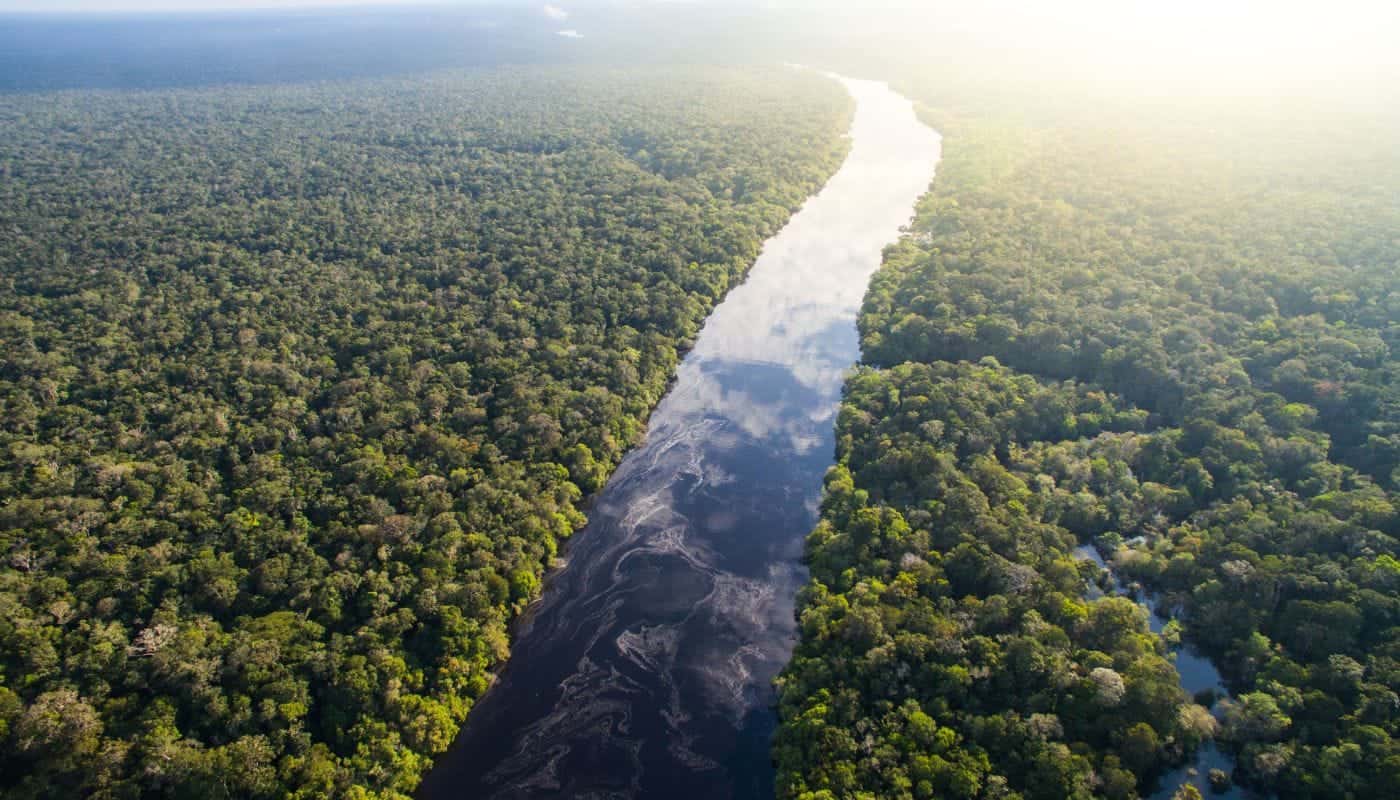
The Amazon begins where two rivers refuse to mix
At Manaus the Rio Negro meets the pale brown Solimões, and the two run side by side for six kilometres without mingling. The reason is physics: the Rio Negro is black with decayed plant matter, moves at about two kilometres an hour and sits at 28 degrees, while the Solimões carries sediment, flows at four to six kilometres an hour and is six degrees cooler. Further downstream the mixing wins, and from there the river is called the Amazon. It carries more water than any other river on Earth and runs through the rainforest that Brazil holds about 60 per cent of.
The opera house in Manaus was built from everything the jungle did not have
Manaus lies 1,500 kilometres from the sea and around 1900 was one of the richest cities in the world, because the rubber trees grew only here. The Teatro Amazonas opened in 1896, and its materials came by ship: marble from Italy, steel from England, furniture from Paris and roof tiles from Alsace. The dome is laid with 36,000 ceramic tiles in the colours of the Brazilian flag, and there is room for 700 spectators. The house still stages performances. You reach the city by plane or by boat.
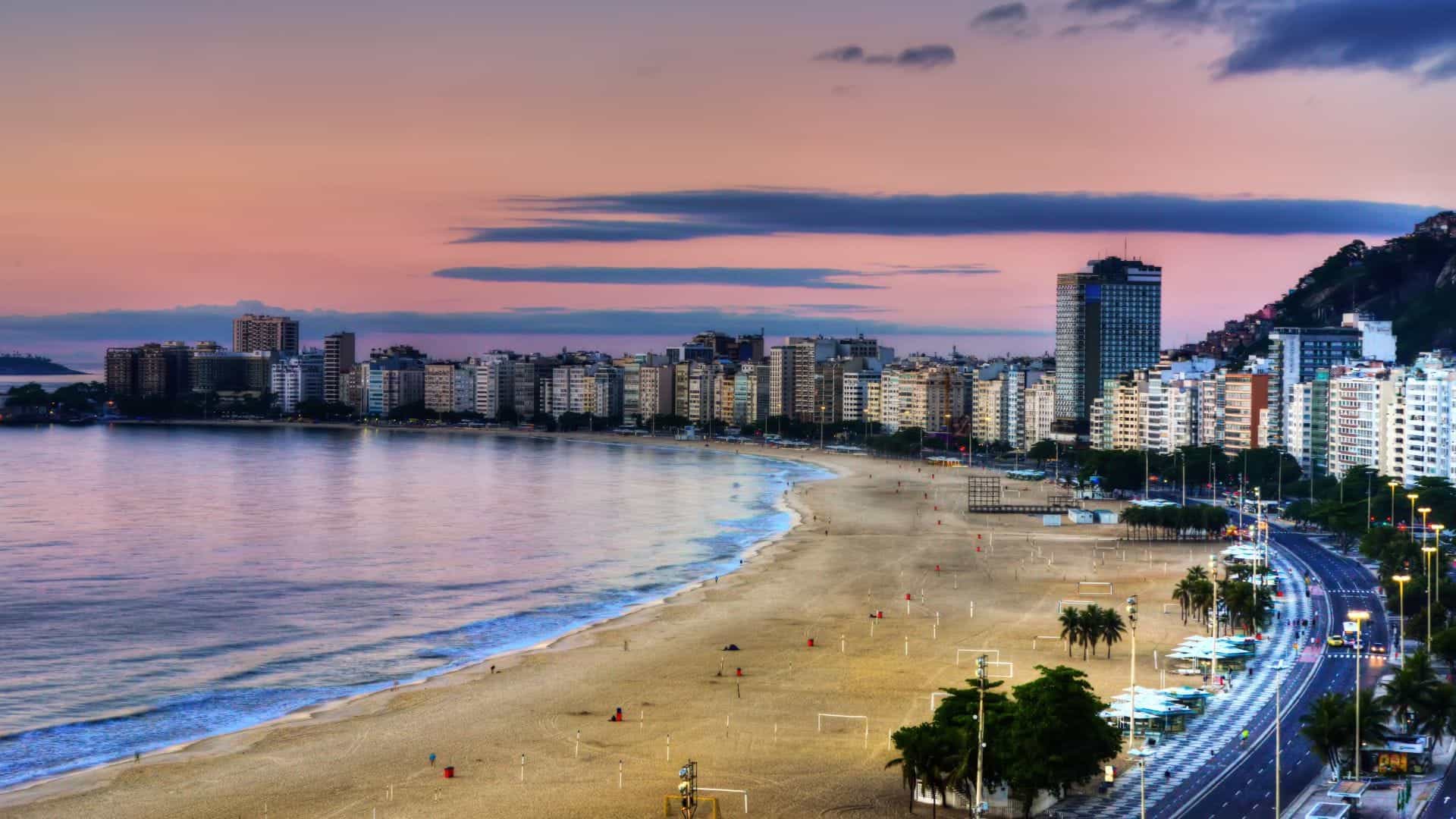
Rio de Janeiro sits between mountains, not on a plain
Corcovado rises 710 metres above the city, Sugarloaf 396, and the neighbourhoods are squeezed in between the cliffs and the water. That is why Rio de Janeiro is such a compact city to get around: there is no room for anything else. Christ the Redeemer on Corcovado is 30 metres tall and stands on an 8-metre pedestal. The statue was built between 1922 and 1931, but not in Brazil. The Frenchman Paul Landowski modelled the figure in Paris, the Romanian Gheorghe Leonida made the face, and the parts were shipped across the Atlantic and assembled on the mountain. The surface is soapstone from Minas Gerais.
The forest around the statue was planted by hand
In 1861 Rio’s drinking water was running short, because coffee plantations had cleared the hills around the city, and Emperor Pedro II ordered the slopes replanted. Major Manuel Gomes Archer and six enslaved workers put 100,000 seedlings into the ground over thirteen years. They were named Eleutério, Constantino, Manuel, Matheus, Leopoldo and Maria. The Tijuca Forest is the result, and it remains one of the largest urban forests in the world.
Copacabana takes its name from Bolivia
The beach neighbourhood is not named after anything Brazilian. The name comes from a small town on Lake Titicaca in Bolivia, where the Virgin of Copacabana is the country’s patron saint, and a chapel in Rio housing a copy of her image gave the district its name. The beach later took it over. The Maracanã lies half an hour’s drive away and is one of the stadiums that worldsporttalk.com has reviewed.
Carnival happens in more places than Rio
Oscar Niemeyer designed the Sambadrome in Rio, which opened in 1984, and it is here that the samba schools compete against each other against the clock, with marks for everything from the drum section to the costumes. This is the version television broadcasts, and tickets for it go on sale half a year in advance.
In Salvador there are neither grandstands nor tickets
The carnival unfolds in the streets behind the trios elétricos, trucks carrying a full orchestra and a sound system on the back, and these are what are usually called “dance trucks”. Salvador was the capital of Brazil for over 200 years before Rio took over, and the old Pelourinho quarter was added to UNESCO’s World Heritage List in 1985. Bahian cooking is West African at its root: moqueca cooked in coconut milk and dendê oil, and acarajé fried in palm oil and sold from street corners by women in white. Our sister site winetalk.dk goes in depth on Brazilian cuisine, on feijoada and on caipirinha. In Olinda, outside Recife, giant papier-mâché puppets are carried through the narrow streets instead.
Food and drink
The cooking of Bahia is the best known, and it is built on African tradition, with palm oil and coconut milk. Moqueca is a fish or shellfish dish cooked in coconut milk and dendê oil, and it is often served with rice and farofa. Acarajé is a bean fritter fried in palm oil and filled with vatapá and a dried shrimp seasoning, and it is sold from street corners by women in white, who are part of the townscape of Salvador. The best place to find it is in local stalls and at markets, where it is fresh.
In Rio and São Paulo you can eat the classic dishes in restaurants that serve buffets or pay-by-weight plates. Feijoada, a black bean stew with pork, is served especially on Saturdays and Sundays and is a heavy dish that many Brazilians associate with the weekend. Churrasco is grilled meat, and in the big cities you will find steakhouses where the meat is brought to the table.
In Amazonas fish is the central ingredient. Tambaqui and other river fish are often grilled or cooked in stews, and the best places are along the river or in the city’s local eateries. Fruit juice made from açaí and other local fruits is a good way to sample the regional range.
Drinking water should be bottled, and that includes water used for brushing your teeth. Caipirinha is the national drink, and it is at its strongest when made with cachaça, which can vary a great deal in quality from place to place.
Most of Brazil lies outside the big cities
The Iguaçu Falls sit where Brazil, Argentina and Paraguay meet: 275 waterfalls spread across just under three kilometres. The border divides them so thoroughly that UNESCO has listed the two national parks separately, the Brazilian one in 1986 and the Argentine one two years earlier. The Brazilian side offers the panorama, while the walkways out over the edge and the gorge itself, the Garganta do Diabo, lie in Argentina. If you want to see both, set aside two days and cross a border.
The Pantanal offers the best chance of seeing a jaguar, and the season is short
The Pantanal in the south-west is the world’s largest wetland. The season runs from July to October, when the water recedes and the animals gather around what is left of it. The World Heritage site covers only 1.3 per cent of the Pantanal. The rest is cattle country, and that is part of the reason the animals are there at all.
The dunes of the Lençóis Maranhenses hold lakes for part of the year
In Maranhão in the north-east lie 155,000 hectares of white dunes with rainwater lakes in between. The lakes fill from the rain between January and May, are at their clearest from July to September, and have evaporated again before Christmas. Arrive outside that window and you will see dunes and no water. UNESCO added the park to the World Heritage List on 26 July 2024.
Brasília was drawn before it was built
Brazil moved its capital from the coast to the empty highlands and built the city in just under four years. Lúcio Costa laid out the master plan, the Plano Piloto, which is often compared to a bird with outstretched wings, and Oscar Niemeyer designed the buildings. The city was inaugurated in 1960 and joined the World Heritage List in 1987, when it was 27 years old. Addresses in the residential neighbourhoods have no street names, but codes such as SQS 308: the letters tell you which side of the axis you are on, and the numbers how far out.
Brazil alone easily fills three weeks. If the trip is to cover more of the continent, Peru lies naturally further west, and the rest of South America is also within reach.
How to get there
There is no direct flight to Brazil from Denmark, and most routes go via a European hub such as Lisbon, Madrid or Frankfurt. Overall, the journey from Denmark takes around 12 to 14 hours with connections, and that time grows if you land in another country and have to continue. It is a good idea to check the connection well in advance, as short changeovers can cause baggage problems, especially if you have to check in several times along the way.
The main gateways to the country are São Paulo and Rio de Janeiro. From them there are connections to most of the larger cities in the country. Manaus, Salvador and Foz do Iguaçu all have airports that serve as local hubs for domestic flights, and these are often necessary, because the distances are so great.
It is worth considering where you want to start before choosing a flight route. If you are travelling to the Amazon and Iguaçu on the same trip, allow for at least one domestic flight along the way, and that can feel like more than the total flying time suggests once connections and check-in are included.
Costs and budget
Price levels in Brazil vary greatly between big cities, coastal towns and the jungle, which makes it hard to give a single figure that covers the whole country. As a rough guide, a cheap night in a simple guesthouse in a city sits at the low end, while a top-category hotel in Rio or on the major beaches is considerably more expensive. Lodges in the Amazon are often the biggest expense, because they are remote and the price includes transport and meals.
Food can be cheap if you eat at local restaurants and street food stalls, and an ordinary lunch in a local restaurant is usually much more affordable than lunch at a hotel. In the largest cities and at popular spots prices rise quickly, and a dinner at a good restaurant can cost more than a reasonable meal in Denmark.
Transport is a large part of the budget, as domestic flights can be the single biggest expense. Taxis in the cities are reasonable, but fares rise on long journeys and during rush hour. Tours and excursions should be budgeted separately, especially if they require special boats, guides or entrance tickets.
It is wise to build in a buffer and check current prices just before departure, as both exchange rates and the market can change. Treat the budget as a starting point rather than a fixed sum.
Where to stay
In Rio, Copacabana and Ipanema are the neighbourhoods most visitors choose, because they are close to the beach and have plenty of restaurants and hotels. Leblon is right next door and is often quiet and calm, while Santa Teresa on the hill has a more bohemian atmosphere but requires more attention to how you get around in the evening. The city centre is practical for business travellers, but feels empty outside working hours.
In Salvador, Pelourinho is the old quarter and a central base for experiencing music and culture, but the area can be crowded and needs attention, especially after dark. Barra by the sea is another choice, and many find it calmer and easier to manage.
Manaus serves mainly as the gateway to the Amazon, and most people stay centrally close to the port and the opera house, where you can find both hotels and tour operators. Many choose to spend the night in lodges deep in the jungle, which is an entirely different option.
Foz do Iguaçu has hotels close to the town and on the Brazilian side of the national park. Staying on the Argentine side is also possible, but it requires crossing the border and should be planned with that in mind.
📄 Quick facts about Brazil
- Capital: Brasília
- Language: Portuguese
- Currency: Brazilian real (BRL)
- Best time to visit: May to October (dry season) or February for the carnival itself
- Known for: the Amazon, carnival, Rio de Janeiro and São Paulo, long coastlines
💡 Traveltalk tip
Insider tip: Rio’s carnival is world-famous, but the regional versions in Salvador and Recife/Olinda offer just as much authentic atmosphere, with far fewer tourists.
Practical travel information for Brazil
🛂 Visas and entry
- Visa: Danish citizens can enter without a visa for up to 90 days (EU citizens remain visa-free, although in 2025 Brazil reintroduced visas for, among others, Americans).
- Passport: must be valid for at least 6 months; have an onward ticket.
💰 Currency and money
- Currency: Brazilian real (BRL).
- Cards: widely accepted in cities and hotels; carry cash for markets, beach vendors and smaller places.
- Tipping: a 10% service charge is often added to the bill; extra is appreciated.
🚗 Transport, time and health
- Flight time from Denmark: about 12–14 hours with a connection.
- Getting around: the country is enormous — domestic flights are necessary between regions (Rio, the Amazon, Iguazú).
- Best time to travel: spring and autumn in the southern hemisphere; Rio is hottest December–March.
- Time zone: Rio is 4 hours behind Danish winter time.
- Language: Portuguese; limited English outside tourist areas.
- Health: a yellow fever vaccination is strongly recommended for most of Brazil (including Rio and São Paulo); hepatitis A vaccination and insect repellent are advised, and malaria is present in the Amazon. Drink bottled water.
- Safety: watch out for pickpockets in cities, and be discreet with valuables — follow the Danish Ministry of Foreign Affairs’ travel advice.
Best time to visit by region
Brazil is so large that the weather in Rio and the weather in Manaus rarely have anything to do with each other. The Amazon rainforest has no real dry season, but river levels rise and fall markedly over the year, and that changes what you can see from the boat. The driest period is usually June to November, when trails are easier to walk and more places become accessible.
The Pantanal follows a different rhythm. Here the water is highest in the rainy season, and large areas turn into lakes, while the animals gather on the dry higher ground during the dry period. This is when your chances of seeing wildlife are greatest, but it is also when you should be prepared for access to change from one week to the next.
The northeast keeps its own schedule, and Lençóis Maranhenses is described above. South of Rio and São Paulo, winter is milder than in the rest of the country, but temperatures can still be low enough that a beach holiday is not the right choice.
Rio is hottest from December to March, and this is also when rain showers can arrive suddenly and quickly. Salvador is warm and humid all year round, and the best period for walking around the city is often the dry months from September to November. If you choose carnival, February is fixed, but the date follows the calendar and changes from year to year, so check it before you book.
Getting around the country
Domestic flights are the fastest way to travel between regions, and for a trip stretching from the Amazon to Iguaçu or from Rio to Salvador, they are almost always the only sensible option. Ticket prices can vary widely, and the earlier you buy, the better your chance of a reasonable fare. Prices in reais change, so check them close to your trip rather than assuming a fixed figure.
Night trains exist in some places, but the network is not as developed as you may know it from Europe, and departure times do not always suit a busy day. Long-distance buses are the most widespread overland option between cities, and they can be both cheap and long. A bus journey lasting several days is not unusual, so plan which routes are realistic.
Within the big cities, taxis and app-based services are the usual solution, and in Rio the metro is a practical alternative for the centre and certain beach stretches. Be aware of rush-hour traffic, which can turn even short distances into a long journey.
South America: The Complete Travel Guide

