
From the traveltalk.dk family – started in Denmark in 2018
Read in: Dansk (original)
Nepal, a journey to a completely different world
Nepal is far away, in kilometres and in spirit. But if you have a longing for the great travel experiences, Nepal is the obvious choice, and once you have been there, the image stays with you: the unfathomable mountain ranges and the resilient people’s kindness and hospitality. And on top of that, and there is more, you can do a lot of exciting things.
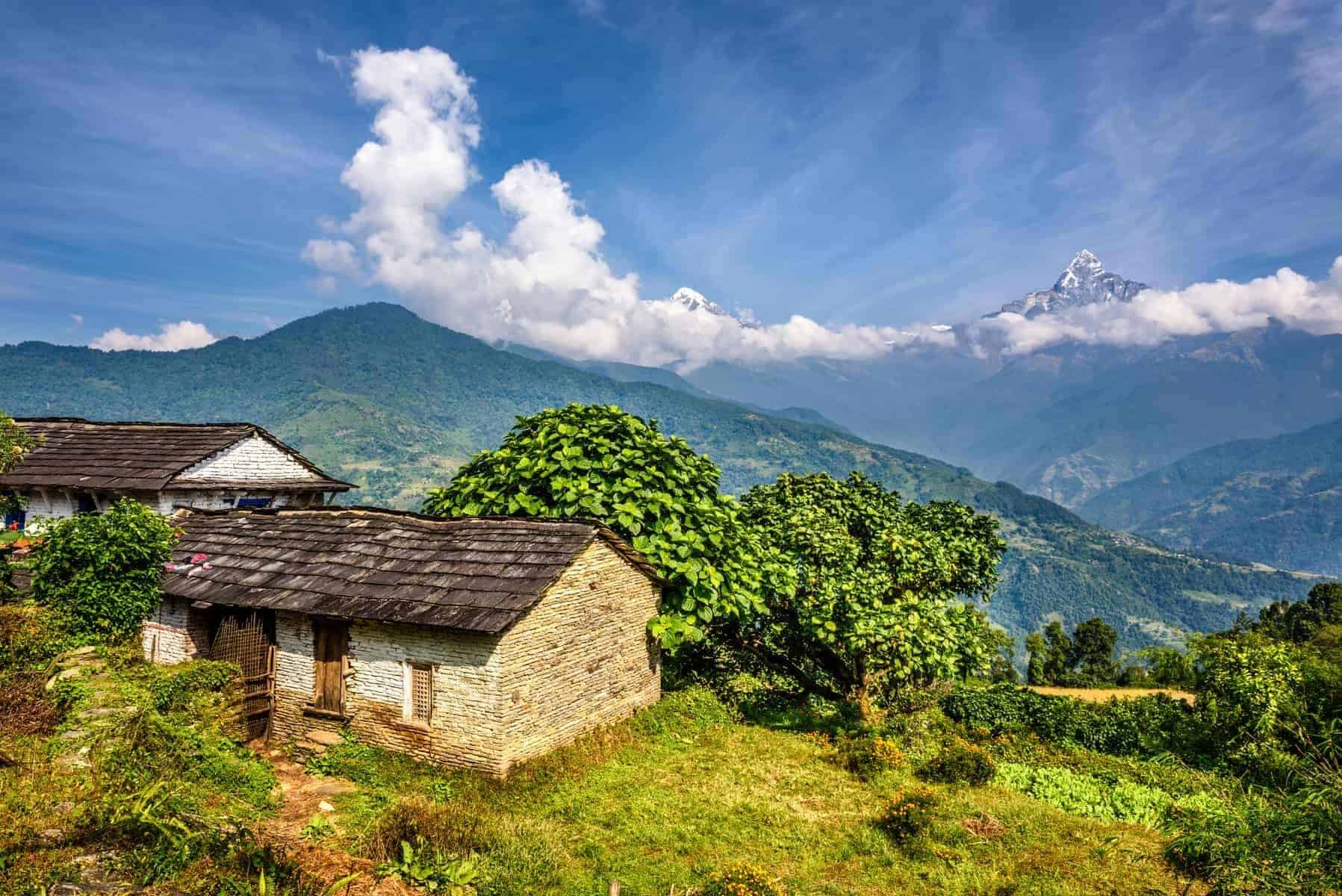
People travel there for many reasons: on a pilgrimage, to “climb mountains and play in the mountains with hang-gliding and so on, to walk through beautiful scenery, as a cultural experience and much more.
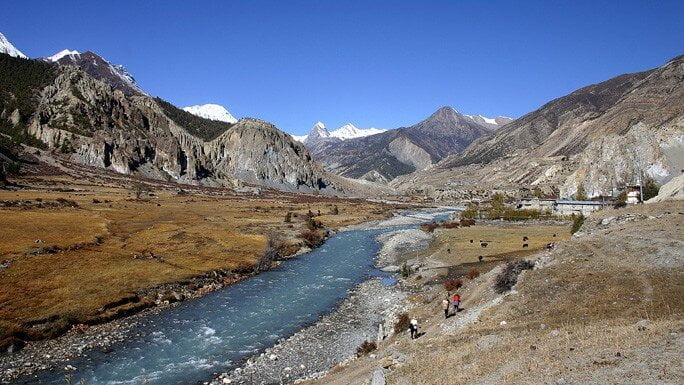
Annapurna
Annapurna is a mountain range, and Annapurna I is one of the world’s highest peaks at 8,000 m, an extremely demanding climbing objective. But in the area you can join fantastic guided trekking trips lasting from 3 days to 3 weeks. There is no better way to get to know Nepal.
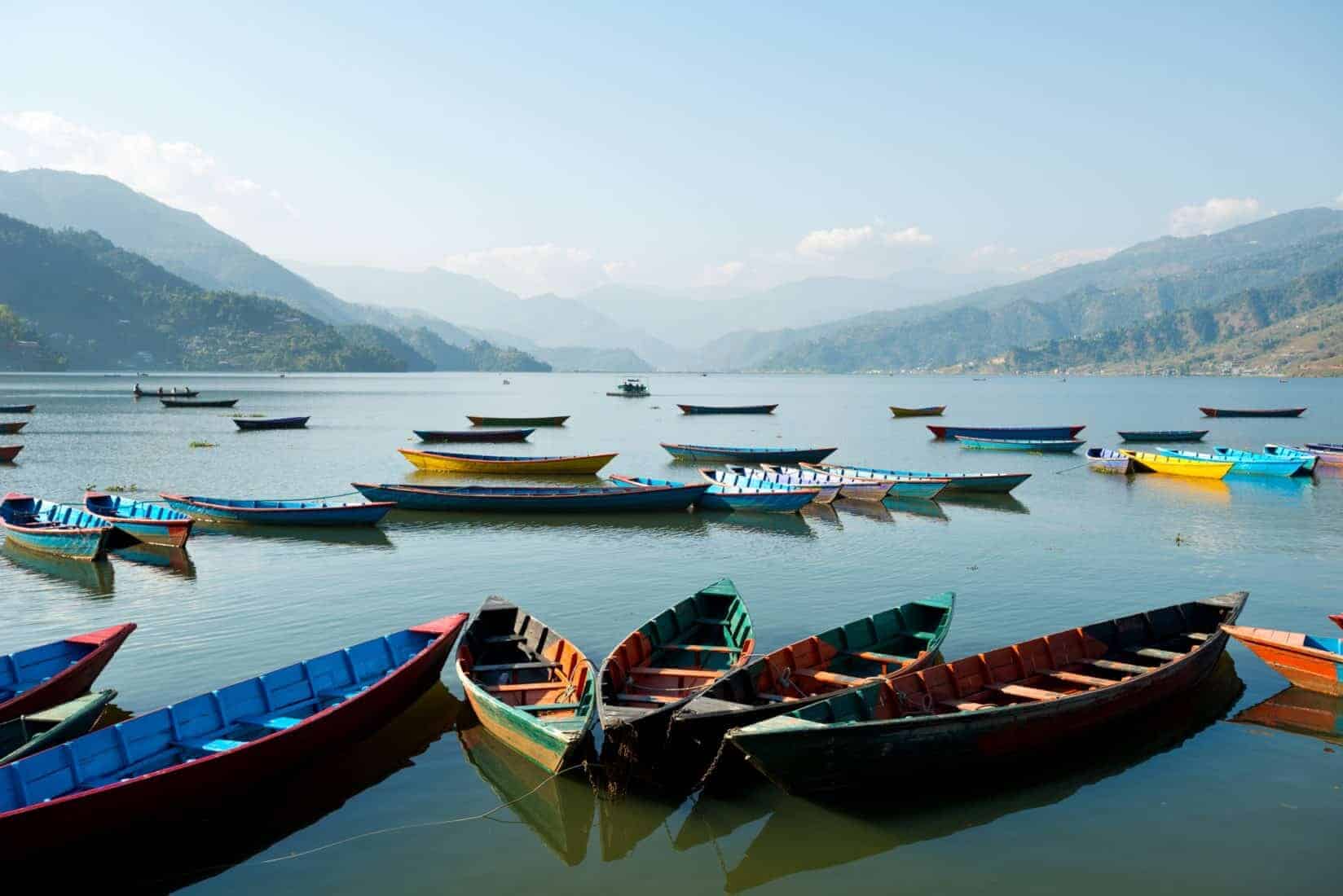
Pokhara
Pokhara is a city in central Nepal with a population of around 200,000. It is the district headquarters of Kaski and one of the most popular tourist towns in the country.
How to get around
Transport in Nepal is not fast, and it requires patience. Roads are often narrow, mountain roads are winding, and traffic in the towns can be chaotic. Allow for longer journey times than the map suggests, especially in the monsoon season, when landslides and road works can halt traffic for hours.
Local buses are cheap and part of everyday life in the country, but they are often overcrowded, and your luggage needs to be well secured. Tourist buses are more comfortable, but also more expensive. For taxis in Kathmandu, negotiate the price in advance or use an app if you can. Many taxis do not have meters.
On mountain roads, jeeps are the most widely used form of transport. They are sturdy, but it is a rough ride, and you should expect to sit close together. If you need to fly between towns, small aircraft are available, which are quick, but they depend on the weather and can be cancelled without notice.
A practical tip is to carry cash in rupees, as card payments are not always possible outside the larger towns and hotels.
How much does it cost to travel
Nepal is one of the most affordable destinations in Asia, but prices vary considerably depending on where you are and the standard you choose. It is a good idea to have a buffer, as unexpected costs such as extra transport or a visit to the doctor can easily arise.
Food in local eateries is cheap, and a traditional dal bhat is a good and filling choice. Restaurants in tourist areas cost more. Transport within towns is also relatively cheap, while longer journeys by jeep or plane cost more, especially in the mountains.
A guide or porter for trekking is one of the biggest expenses, and the price depends on the route and duration. Entrance tickets to national parks and temple and cultural sites vary, and you should check these before setting off.
Plan your budget according to your own travel style, and factor in accommodation, food, transport, any guides and permits. Also keep cash to hand, as card payment is not possible everywhere.
Where to stay
Accommodation in Nepal ranges from simple guesthouses on the trekking routes to comfortable hotels in Kathmandu. On the mountain trails, guesthouses are the usual option. They are simple, with shared bathrooms and a room with a bed and a blanket, but they almost always have a dining area where you can get a meal. The price is low, but it can vary from place to place, especially at higher altitudes, where everything has to be carried up.
In Kathmandu you will find everything from small guesthouses in Thamel to larger hotels with a higher standard. Thamel is popular with travellers because it has many restaurants and shops, but the area can be noisy. If you are looking for peace and quiet, a hotel a little way from the centre may be a better choice.
In Pokhara many hotels lie by the lake, and here the view of the mountains is often the greatest attraction. Price levels are low to moderate, and there is a wide selection.
When choosing accommodation, look for hot water, heating and good beds if you are travelling in the colder months. Read reviews carefully, and do book a room with a view if it matters to you.
The Kathmandu Valley
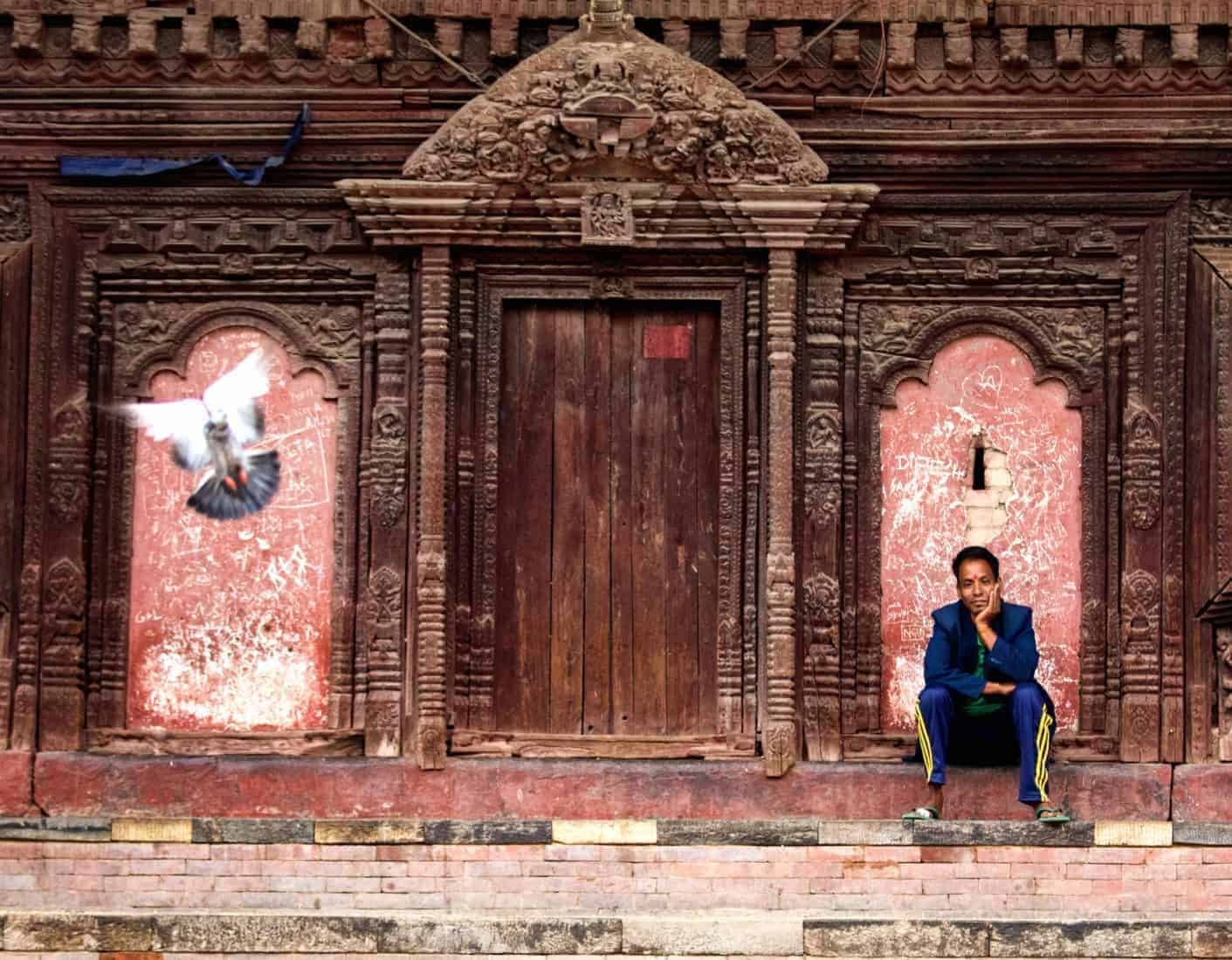
Discover the magnificent valley with three cities, Bhaktapur, Patan and Kathmandu, which house Hindu and Buddhist temples of great beauty. Get a glimpse of daily life in the country. Buy gifts and souvenirs to take home. Learn about local history and hear the beautiful myths of the country’s origins. Try the traditional Newari cuisine, cooked in large wood-fired ovens, and wander through the narrow lanes and side streets on an experience-led tour.
When is the best time to travel
Nepal has distinct seasons, and they determine both the temperature and the views. Spring, from March to May, is the busiest period. The days become warm, and at higher altitudes it can be cold at night. The air is often hazy, so the mountains do not always show themselves clearly from the first hour, but the flowering rhododendrons make the trekking routes beautiful.
Autumn, from October to November, is regarded by many as the best time. The monsoon rains are over, the leeches are gone, and the sky is usually clear. Daytime temperatures in the lower areas are pleasant, while nights at altitude become cold. This is when mountain views are at their sharpest.
The monsoon, from June to September, is the worst period for trekking. The rain is heavy and persistent, the paths become slippery, and the views are almost always hidden by cloud. There is also a risk of landslides and of routes being closed. On the other hand, the landscape is green, and the area is less visited.
Winter, from December to February, is dry and cold. At higher altitudes snow can fall, and some passes can be difficult. On the other hand, the air is clear, and the views of the mountains can be outstanding in the early morning hours. In the Kathmandu Valley it can be surprisingly cold in the evenings, and houses often have no heating, so pack clothes for low temperatures.
Jungle safari
Beyond visiting the Kathmandu Valley and experiencing the mountains in your own way through trekking, mountaineering, hang-gliding and so on, there is a fairly little-known option.
Picture riding through the quiet jungle on the back of an elephant. You can do that in the south and south-west of the country. It is only a half-hour flight from the capital.
Among others, the two national parks, Chitwan National Park and Bardiya National Park, host a remarkably rich wildlife, from mammals to reptiles and birds you are unlikely to have seen before.
Chitwan National Park is regarded as the national park in all of Asia with the greatest diversity of animal and plant life and the most unspoilt of all.
Travel to Nepal with Kipling
News from Nepal
- The highest mountains in Nepal
- Read more here about our trip to Kathmandu
- Nepal’s incredible spring festival, celebration and colour
- Paragliding in the Himalayas in Nepal
- The journey to Pokhara in Nepal
- See also the official tourism website for Nepal
More articles about Nepal
Health and safety
Before you travel, speak to your doctor or a travel health clinic about vaccinations. It may be relevant to be vaccinated against hepatitis A and typhoid, and there may be other recommendations depending on your trip. Check the current requirements yourself, as they can change.
The malaria risk is found mainly in the southern jungle belts, such as Chitwan and Bardiya. In the mountain areas and in Kathmandu the risk is usually low. Talk to your doctor about prevention if you are travelling to the jungle, and use a mosquito net and insect repellent.
Water and food require attention. Drink only bottled water or water that has been purified, and be careful with ice and salads. Many travellers suffer stomach trouble, so bring basic medicine and electrolytes.
Traffic in Nepal is dangerous, especially on mountain roads. Choose your transport carefully, and avoid travelling with drivers who seem inattentive or tired. Also check the Ministry of Foreign Affairs travel advice for Nepal before departure, as it contains the current safety information for the country.
Practical travel information for Nepal
📄 Visa on arrival
Visitors can obtain a visa on arrival at Kathmandu and at the land borders. The fee is paid in cash in USD: 30 USD (15 days), 50 USD (30 days) or 125 USD (90 days). Your passport must be valid for at least 6 months — bring a passport photo and preferably the exact amount in dollars.
💡 Trekking permits
Most routes require an area permit — for example the ACAP in Annapurna or the Sagarmatha National Park near Everest — often combined with a TIMS card. The permits are bought in Kathmandu or Pokhara before the trek.
🤝 Altitude & insurance
Much of the trekking lies above 3,000 metres. Take out travel insurance that covers altitude sickness and helicopter evacuation, and build acclimatisation days into your itinerary.
How to get there
Most travellers fly to Kathmandu, and there are several options with connections. Routes via Doha, Istanbul or Delhi are common, and the choice of route depends on price and how much time you have. Always check the timetables, as they can change and connections can be tight. The journey from Europe typically takes a full day with stopovers.
Kathmandu airport is small, and there can be queues at passport control. If you have bought a visa on arrival, expect the process to take time. From the airport you can take a taxi or a pre-booked transfer to your hotel.
Pokhara has its own airport, and there are flights from Kathmandu, but many people choose the bus. The journey is long and tiring, and the road winds through the mountains. The flight is shorter, but the weather can delay or cancel departures, especially during the monsoon, so plan with a buffer.
To reach the remote mountain areas, people often use a jeep, bus or plane, and in some places you have to walk the last stretch. Ask in advance how your area is connected, and bear in mind that transport in the mountains seldom runs to fixed timetables.
Travel Destinations: See all that we cover here
More about Nepal
Nearby
The Philippines
The Philippines is one of Asia's most spectacular travel destinations — an archipelago of 7,641 islands…
Armenia
Armenia is a small country with great beauty and very little attention from most travellers. Questions…
Laos
Laos is one of South-East Asia's most distinctive destinations. It is the only country in the…


