
From the traveltalk.dk family – started in Denmark in 2018
Read in: Dansk (original)
A Voyage to Namibia, the Other Africa
Namibia is a largely arid country, often breathtakingly beautiful in a raw sort of way. One of the emerging economies of the continent and well worth the journey.
The most vivid images of Namibia are those of a fascinating technicolour landscape made up of swirling orange dunes, shimmering mirages and fiery tumbleweed tumbling across the desert.
The seemingly barren landscape is deceptive, as it is home to a rich variety of plant and animal life, and humans too have adapted to this extraordinary environment. The country is almost perfectly designed for the active traveller and the adventure seeker. Timeless deserts, scrub-covered savannahs, desolate yet beautiful coastlines, majestic canyons, safari wildlife and sun-baked salt pans are the sights awaiting visitors.
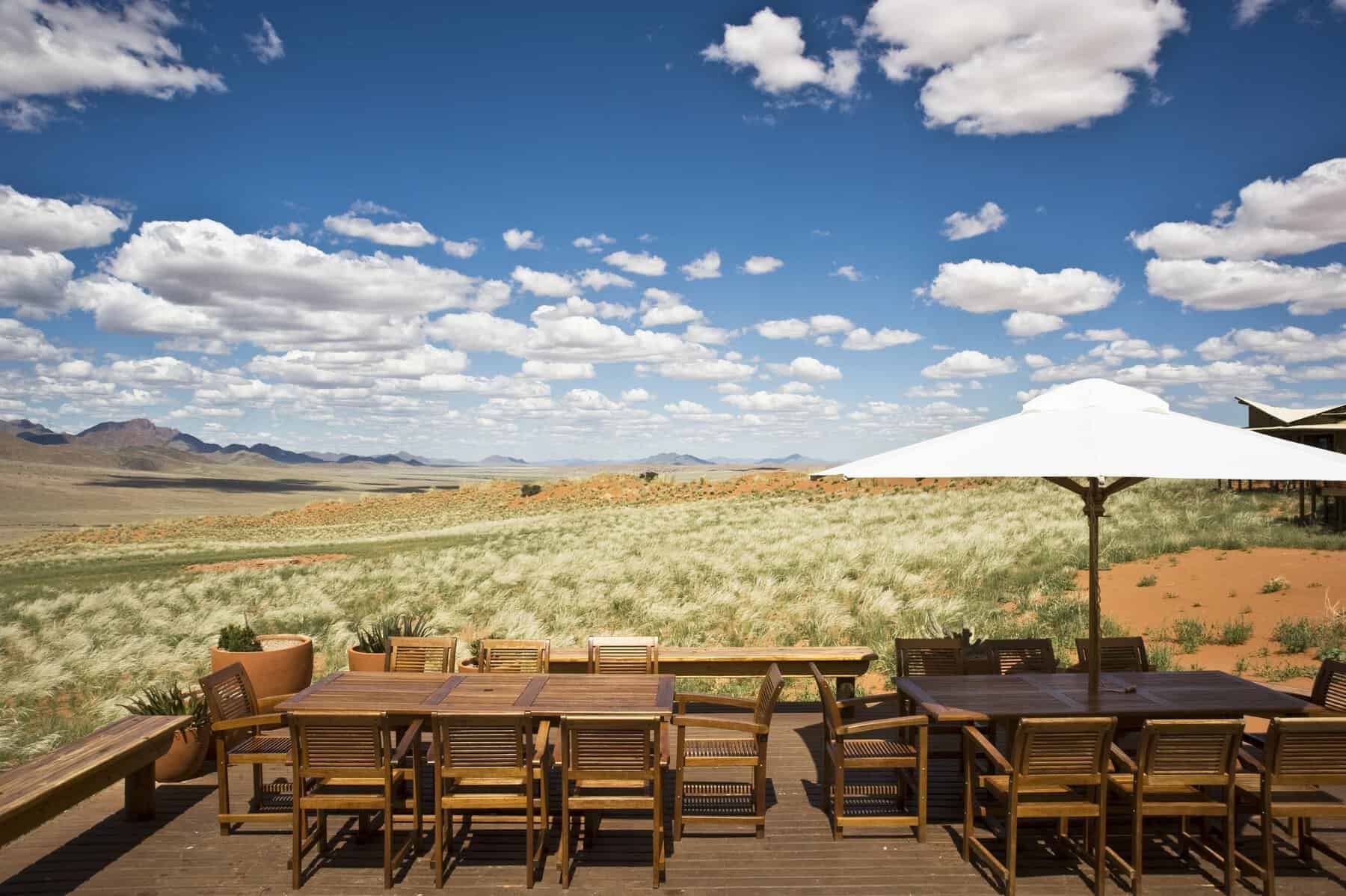
Safari in Namibia
On a safari in Namibia, the range of activities you can enjoy in this unparalleled setting is truly impressive. Ballooning over the desert, skydiving over land and sea, paragliding, white-water rafting and sandboarding along the coastal dunes are all good activities for beginners. Other exhilarating pursuits include abseiling, the most spectacular of rock sports, surf and freshwater fishing, camel trekking in the desert, diving, 4×4 desert driving, hiking and mountain climbing.
The Capital of Namibia Is Windhoek
The capital, Windhoek, is a good place to visit in Namibia and admire the historic buildings dating back to the German colonial period, while remaining a modern city.
Swakopmund is another town of German origin. It is a picturesque desert town with a old-world charm, complete with green lawns and palm trees.
Walvis Bay is a resort with excellent facilities for windsurfing and kayaking. It also offers the chance to see interesting dolphins, seals and seabirds while holidaying in Namibia.
Sesriem and Sossusvlei in Namibia
A fitting example of this vast country with its epic landscapes is Sossusvlei. The dunes, which at times look otherworldly, especially when the light strikes them near sunrise, are part of a 32,000 km² sea of sand covering much of the region. The dunes reach a height of 325 m and form part of one of the world’s oldest and driest ecosystems. The landscape is in constant flux: the wind is forever reshaping the dunes, while the colours shift with the changing light, peaking just after sunrise.
On a safari in Namibia, the range of activities you can enjoy in this unparalleled setting is truly impressive. Ballooning over the desert, skydiving over land and sea, paragliding, white-water rafting and sandboarding along the coastal dunes are all good activities for beginners. Other exhilarating pursuits include abseiling, the most spectacular of rock sports, surf and freshwater fishing, camel trekking in the desert, diving, 4×4 desert driving, hiking and mountain climbing.
Fish River Canyon in Namibia
In the arid southern part of the Namib Desert you will find the impressive Fish River Canyon. The canyon is the second largest after the Grand Canyon in North America, making it the largest canyon on the African continent. It is one of Namibia’s most popular tourist attractions, drawing visitors from around the world who come to marvel at its geological grandeur or to test their physical limits while hiking through the gorge.
Adventures in the area are largely based on exploring the canyon itself and the surrounding landscape, part of which is incorporated into the Gondwana Canyon private park. As well as enjoying the spectacular views over the canyon at sunset and sunrise, nature walks give you the chance to encounter wildlife adapted to the desert, while guided hikes and early-morning walks introduce you to the smallest details of the desert.
Twyfelfontein, a UNESCO World Heritage Site
Twyfelfontein is a UNESCO World Heritage Site located in the Kunene Region of northern Namibia. The area has been inhabited for more than 6,000 years and contains more than 2,500 unique rock engravings, reflecting the different groups of people who have lived in the region over millennia.
The Kalahari Desert in Namibia
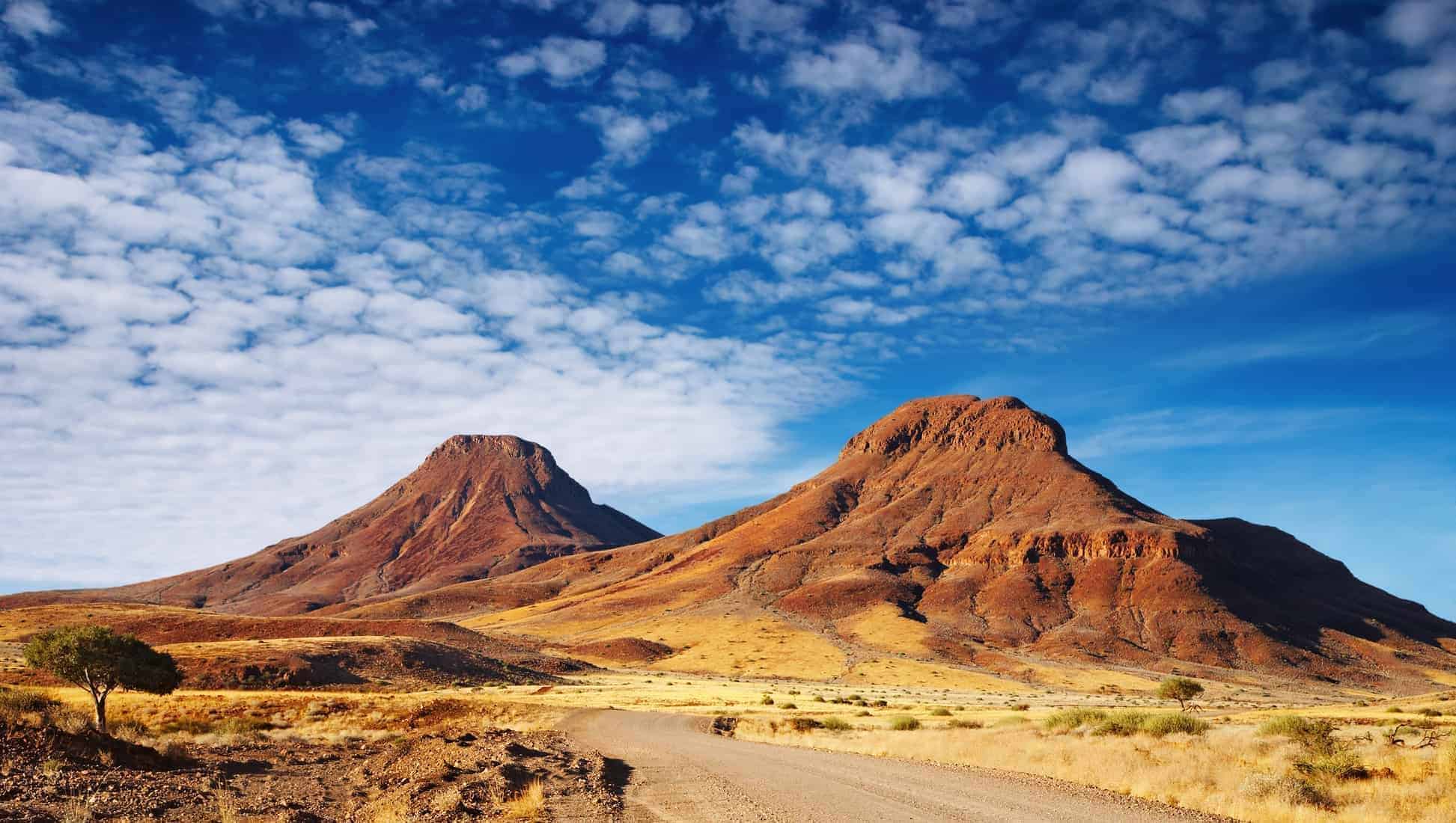
Everyone knows the Kalahari Desert. Namibia is an excellent destination if you want to visit the largest sand expanse in the world. There is not only sand, however, as there is a great deal of vegetation, including trees and shrubs. Spring brings an abundance of colourful flowers. It is also the home of the famous Bushmen, who live in the Bushveld.
Etosha
One of Etosha’s greatest attractions is the rare opportunity to see an abundance of animal species up close. It is not unusual to encounter eight different animal species gathered around the same waterhole, offering outstanding sightings. The park is also home to a healthy population of black rhinoceros, and sightings of lions, elephants, buffalo and cheetahs will provide lasting memories.
The largely flat and dry landscape of Etosha, as well as its relatively sparse vegetation, allows wild animals to be observed without obstruction and therefore offers superb photographic opportunities.
Namibia’s Almost Endless Safari Possibilities
On a safari in Namibia, the range of activities you can enjoy in this unparalleled setting is truly impressive. Hot-air ballooning over the desert, skydiving over land and sea, paragliding, white-water rafting and sandboarding along the coastal dunes are all good activities for beginners. Other exhilarating pursuits include abseiling, the most spectacular of rock sports, surf and freshwater fishing, camel trekking in the desert, diving, 4×4 desert driving, hiking and mountain climbing.
The capital, Windhoek, is a good place to visit in Namibia and admire the historic buildings that date back to the German colonial era, while remaining a modern city.
Swakopmund is another town of German origin. It is a picturesque desert town with a old-world charm, complete with green lawns and palm trees.
Walvis Bay is a resort with excellent facilities for windsurfing and kayaking. It also offers the chance to see interesting dolphins, seals and seabirds while you are holidaying in Namibia.
Travel to Namibia and Africa
- On safari in Namibia
- The great safari destinations in Africa
- The many travel countries in Africa
More articles about Namibia
Food and drink in Namibia
The most distinctive way to eat in Namibia is the braai, the South African-inspired barbecue, where meat is cooked over embers in the open air. Beef, lamb and game such as oryx and kudu are common, and it is often served with maize porridge and salad. A braai is not just food but also a social occasion, and many lodges and guest farms host barbecue evenings.
Biltong is dried, spiced meat and a classic snack during long days on the road. You will find it in almost every shop and petrol station. It is lean and dry, and it is easy to take along in the car.
In Swakopmund, the German colonial period shapes the cuisine. Here you will find bakeries with cakes and bread, sausages and German restaurants, and fish and seafood from the coast feature prominently on the menu. The town is also known for its cafés, where you can get coffee and cake in an otherwise desolate desert town.
Eating out is generally cheaper than in Denmark, especially in smaller towns and at local eateries. Restaurants in Windhoek and Swakopmund sit at a price level similar to a dinner menu in a provincial town in Denmark, while meals at lodges are often more expensive and included in the price. Tipping is customary in restaurants and for guides.
What travelling in Namibia costs
It is difficult to give precise figures, because prices vary widely between a campsite and a luxury lodge. It is nonetheless useful to think in categories when drawing up a budget.
The largest item is usually accommodation. A simple campsite is far cheaper than a city hotel, while lodges in the national parks are the most expensive option, often with meals and guided tours included. Hiring a 4×4 is the next major expense, and the price rises in peak season. Insurance and any extra daily charge for additional equipment should also be counted.
Fuel is an ongoing expense, and distances are large, so it can add up. Entry fees to the national parks are paid separately, and guided tours in the desert or to gorges cost extra. Tips for guides and staff should also be included in the budget.
Start by mapping out the fixed items, including accommodation, car and flights, and then set aside a buffer for food, fuel and activities. Check prices with individual lodges and rental companies, as they change, and put aside an extra amount for unforeseen expenses.
Driving and safety in Namibia
Driving yourself is the most flexible way to travel in Namibia, but it requires attention. Many main roads are tarred, but gravel roads dominate, especially in the north and east. The condition of gravel roads can vary with the weather, and after rain some stretches can be difficult to drive on. A 4×4 is useful on the worst stretches.
Animals on the roads are a real risk, especially at dusk and at night. Cattle, goats, donkeys and game such as kudu can appear without warning, and a collision can wreck the car and be dangerous for everyone inside. Avoid driving in the dark, and keep your speed low in the evening and early in the morning.
Petrol stations are often far apart, especially on the long stretches in the desert and the north. Never start a leg with a half-empty tank, and always carry a spare can if you are travelling off the beaten track. Also check whether stations accept cards, as this is not always possible.
With a hire car, it is wise to take out comprehensive insurance that covers damage to the car itself on gravel roads, and to check what is included in the excess. Read the insurance terms carefully, as certain damage may be excluded. The rental agreement should also specify how the car may be used on gravel roads.
Travel routes in Namibia
Namibia is big, and distances take longer than the map suggests. It is therefore useful to choose a route that does not try to cover too much. Here are two suggestions that combine the major attractions.
A ten-day route can start in Windhoek, where you land and spend a day in the city. From there you drive south towards Sesriem and Sossusvlei, where you spend two days among the dunes and the desert. Further south the journey goes to Fish River Canyon, which lies roughly a day’s drive from the desert area. From there you drive back towards Windhoek and finish in the capital. Etosha is left out of this route, as it requires a longer drive north.
A fourteen-day route allows you to include Etosha. Start in Windhoek and drive to Sesriem and Sossusvlei with two nights in the desert. Then drive to Fish River Canyon and on north towards Etosha, which requires several driving days. Etosha should have at least three days, so you can experience the park without rushing. The trip ends in Windhoek.
Driving times are approximate and depend on road conditions, fuel stops and wildlife along the way. Plan with a good margin, and avoid driving in the dark, as that is when animals are most active on the roads.
Practical travel information for Namibia
🛂 Visas and entry
- New since 1 April 2025: Danish citizens now need a visa for Namibia (previously visa-free). It costs about 1,600 NAD (around 82 EUR) and can be bought on arrival or applied for online as an e-visa. It is valid for 30 days with multiple entries.
- Passport: valid for at least 6 months; carry proof of onward travel and accommodation.
💰 Currency and money
- Currency: Namibian dollar (NAD), pegged 1:1 to the South African rand (ZAR) — and the rand is accepted everywhere in Namibia.
- Payment: cards are accepted at lodges and in towns; carry cash for tips, fuel and rural areas.
- Tipping guides and staff is customary.
🚗 Transport, time and health
- Flight time from Denmark: about 14 hours with connections (typically via Johannesburg or Frankfurt).
- Getting around: a hired 4×4 is the classic way to cope with the vast distances and gravel roads; small aircraft serve the remote lodges.
- Best time to travel: the dry season May–October for wildlife in Etosha; the desert is coolest in the winter months.
- Time zone: +1 hour compared with Danish winter time.
- Language: English (official); Afrikaans and German are also widely spoken.
- Health: malaria is present in the north (Etosha, Caprivi) — prophylaxis is recommended there; the coast and the central areas are malaria-free. Drink bottled water.
- Safety: follow the travel advice issued by the Danish Ministry of Foreign Affairs.
Where to stay in Namibia
Accommodation in Namibia ranges from simple campsites to luxurious lodges in the middle of nature. The choice is wider than most people expect, and price levels vary more than you might think.
Campsites are the cheapest option. Many lie in or near national parks, and most have showers and toilets, but you need to bring your own tent and equipment unless you hire it. Guest farms are something in between. Here you often stay in simple rooms or huts on a working farm, and meals are usually included. City hotels in Windhoek, Swakopmund and Walvis Bay offer the most typical hotel standard and are available in several price ranges.
Lodges are the most expensive and best-known type. Many are secluded in nature reserves, and the price often covers meals, guided tours and transfers from an airport or car park. The difference between a simple lodge and a luxury lodge can be considerable, so it is worth checking exactly what is included.
Book early if you travel in the dry season from May to October, when the popular lodges in Etosha and near Sossusvlei fill up quickly. This applies especially to pitches close to the park gates and to the few rooms in the smaller lodges. Campsites inside the national parks can also be sold out in peak season, and they are managed through the parks’ own booking systems.
Safari in Africa: How to fulfill your dream of an adventure in Africa
More about Namibia
Nearby
Mauritius
Mauritius is a breathtaking dream island with turquoise sea, beautiful beaches, excellent shopping and a distinctive…
Tanzania
Few destinations in Africa can match Tanzania's wealth of wildlife, cultures and sweeping landscapes, from savannah…
South Africa
South Africa has become the great African country that perhaps more than anywhere else on the…


