
From the traveltalk.dk family – started in Denmark in 2018
Read in: Dansk (original)
The Seychelles offer outstanding nature
The Seychelles are a fairly small group of islands off the coast of Africa in the Indian Ocean, and also an isolated tropical region. That means the 115 islands are home to some of the rarest wild animals in the world. That makes them all the more fascinating.
Want the essentials about the Seychelles in 30 seconds? See our travel facts here.
See trips to the Seychelles with travel providers
Where to stay
Mahé has the widest choice of accommodation, from simple guesthouses to large resorts with their own beach and spa. It is the best choice if you want access to the capital’s restaurants, markets and museums, and it is also where the largest international chains have their hotels.
Praslin and La Digue are smaller and quieter. Here you will find many small hotels and guesthouses, often with a personal atmosphere and close to the beaches. It suits those who want a more relaxed holiday, and it is a good option for travellers on a limited budget, as accommodation is often more affordable than at Mahé’s luxury hotels.
Luxury resorts are found on several of the islands, and they are typically chosen by couples who want peace and privacy. Self-catering and guesthouses are an option for those who want a little more freedom in their everyday life.
When choosing an area, think about how much you want to travel around. A place that lies far from the harbour or airport can mean long journeys and expensive taxis.
Prices and budget
The Seychelles are one of the more expensive destinations in the Indian Ocean, and prices are generally higher than at most other tropical destinations. This applies to accommodation, food and transport alike, and it is worth keeping in mind when you set a budget.
Accommodation is the biggest expense. Simple guesthouses are the cheapest option, while the large resorts can cost many times more per night. It is a good idea to compare prices on different islands, as Praslin and La Digue are often cheaper than Mahé.
Food can vary a great deal. Local eateries and small cafés are far cheaper than hotel restaurants, and in some cases you can eat well for a fraction of the price. Excursions, boat trips and diving are a big part of the experience, but they can add up quickly, so it is worth choosing with care.
Transport between the islands is not free, and ferries, planes and helicopters all have different prices. Remember also to set aside money for drinks, souvenirs and unexpected expenses.
Food and local culture
Seychellois cuisine is Creole and is built on fish, shellfish, coconut, rice and a range of spices with roots in Africa, India and France. Fish is often prepared in curry or fried with ginger and garlic, and eating the day’s catch with rice and vegetables is a classic.
You also often come across dishes with coconut milk, fruit such as breadfruit and bananas, and chilli sauce. It is a good idea to try the local markets and small eateries, where the food is prepared according to traditional recipes. In many places it is also possible to taste local specialities such as coconut cream and spiced vegetable dishes.
The language is a blend of Creole, English and French, and most people understand English when you meet them in the tourist areas. It is nonetheless a good idea to learn a few words of Creole, as they are always warmly received. The culture is marked by close family ties, music and celebrations, and on the smaller islands you can experience everyday local life up close.
How to get there
There are no direct flights from Denmark to the Seychelles. The journey usually goes via a major European airport or via one of the large hubs in the Middle East, Africa or Asia, so the total travel time is long. Expect several hours in the air and a stopover, and it may be a good idea to allow time for transit and waiting.
The Seychelles’ international airport is on Mahé, the largest island, and this is where almost all travellers arrive. From there, onward transport to the other islands is available, either by plane, ferry or helicopter, so it is a good idea to plan the onward journey before you land.
Please note that flight routes can change and that connections from Europe vary with the season. It is therefore wise to check the current routes and flight times when you book, rather than relying on past experience.
Island-hopping by helicopter and ferry
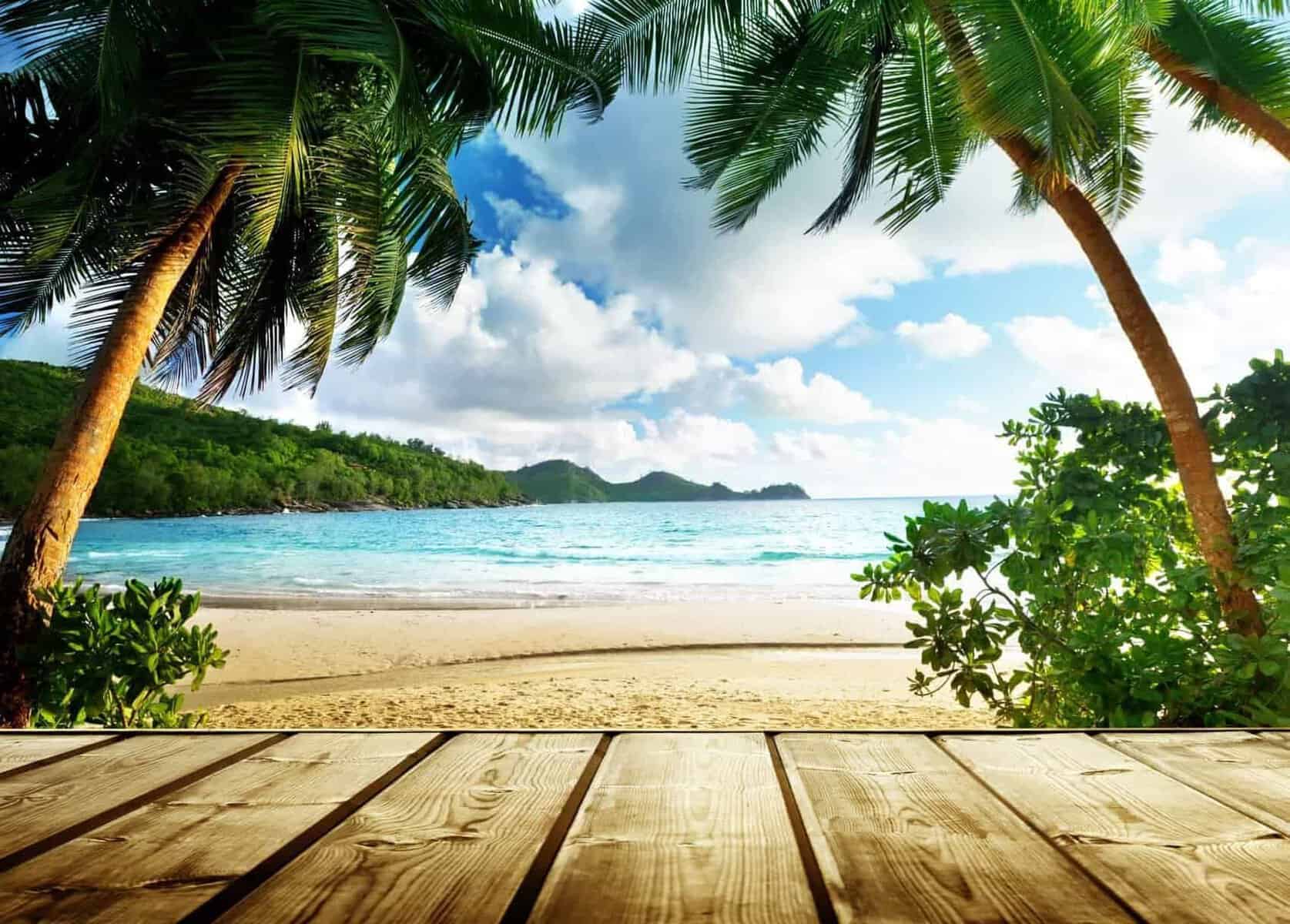
Unlike many other island groups in the Indian Ocean, the Seychelles are large enough to support a healthy population of many rare animals. As some islands lie quite far apart, getting around takes a real globetrotter’s spirit: small planes, ferries or helicopters are the way forward. If seeing the Seychelles’ rarest nature is your goal, private helicopter transfers between the islands are an expensive but breathtaking option.
Transport between the islands
Mahé is the hub for all journeys between the islands. From here the ferries run to Praslin and La Digue, and there are also small-plane connections to several of the other islands. Ferries are the most common option for most travellers, because they are cheaper than flights and give a good impression of the sea along the way. The journey by ferry is longer, however, and sailings can be affected by wind and weather, especially during the monsoon periods.
Small planes are faster, but also more expensive, and they fly with limited baggage weight. Helicopters are the most exclusive option and are mostly used by those who want to see the islands from the air or save time. It requires a good budget.
On Mahé and Praslin there are local buses, which are an inexpensive way to get around, but they do not always run to a fixed timetable. On La Digue, bicycles are the most common form of transport, and many people hire a bike for the day. It is a good idea to ask locally about current departures and fares, as these can change.
Best time to travel
The Seychelles have a fairly stable climate all year round. Temperatures typically sit around 30 degrees during the day, and the sea is warm enough for swimming for most of the year. The difference between the seasons lies first and foremost in rainfall and wind conditions.
The south-east monsoon sets in from May to October. The wind is stronger, the sea can be rougher, and it rains more, especially on the western and higher parts of the main island. It is a good time for those who prefer fewer tourists and lower prices, but you should expect that some ferry sailings and small-plane flights may be affected by the weather.
The north-west monsoon, from November to April, brings more humid air and periods of rain, but the rain often falls in shorter showers. This is when the tropical plants are at their most lush.
If you want the most stable weather and good conditions for both snorkelling and boat trips, the shoulder periods of April-May and October-November are typically the best choices. These are also the months when most travellers choose to visit.
Victoria Island
On the main island, Victoria, there are markets selling local art and crafts, museums with details that bear witness to the region’s rich French heritage, five-star restaurants serving exquisite local cuisine, and even a golf course. Many hotels and resorts in the Seychelles are interesting destinations in their own right. On some of the smaller islands it is possible to book a local guide for a hike or a boat trip around the island.
On these nature excursions, a glimpse of the all-too-rare giant tortoise is not unusual. The islands are also characterised by lush green jungles inhabited by local birds. In fact, the Christian version of paradise is, according to several sources, located in the Vallée de Mai on Praslin Island. So there you have it. Be sure to visit this beautiful place. Protecting wildlife as a natural resource is so important to the culture of these islands that many have been designated as protected areas.

Enjoy the Incredible Indian Ocean
There are many nature-based activities to enjoy in the Seychelles. . Most of these islands were formed by the natural development of coral reefs; emergence, growth and change: the surrounding waters are full of reef fish and beautiful living corals. This environment offers an ideal spot for divers and snorkellers. Many resorts offer diving courses and equipment rental so you can immerse yourself in the incredible world of the coastal coral reef.
To enjoy more of the Indian Ocean at its best, windsurfing and paragliding are available at many hotels and resorts in the Seychelles. In addition, if you want to go sailing yourself or with a guide, there is a yacht club in the capital, and many resorts have sailing boats available to hire by the hour. It is a unique opportunity to navigate the beautiful clear water and the gentle breeze that surrounds these magnificent islands.
Discover Paradise Islands with Traveltalk
- Boracay in the Philippines, in the top 10 of the world’s most beautiful tropical islands
- Palawan, an unspoilt island group in the Philippines
- Cape Verde
- Fiji, where Tom Hanks hangs out in Oceania
- Madagascar
- The Maldives, diving with sea turtles?
- Mauritius, a pearl dropped into the Indian Ocean
- Zanzibar, the seaside of Tanzania
More articles about the Seychelles
📄 Quick facts about the Seychelles
- Capital: Victoria
- Languages: Seychellois Creole, English and French (all official)
- Currency: Seychellois rupee (SCR)
- Best time to visit: April-May or October-November (between the monsoons)
- Known for: Granite beaches, the coco de mer palm, Aldabra giant tortoises
💡 Traveltalk tip
Insider tip: Praslin and La Digue are far more affordable than Mahé’s luxury hotels, and offer beaches just as stunning as the famous Anse Source d’Argent.
More about The Seychelles
Nearby
Mauritius
Mauritius is a breathtaking dream island with turquoise sea, beautiful beaches, excellent shopping and a distinctive…
Senegal
Senegal is regarded as the “gateway to Africa”, sitting on the westernmost point of the continent…
Ethiopia
With a beauty that is almost otherworldly, its many deep and lovely gorges framed by high,…


