
From the traveltalk.dk family – started in Denmark in 2018
Read in: Dansk (original)
Ethiopia
With a beauty that is almost otherworldly, its many deep and lovely gorges framed by high, handsome mountains, chains of lakes and majestic rivers, interrupted by scorching deserts that begin at its highlands, Ethiopia remains a country of incomparable beauty. Yet there is more to see than the country’s geographical and physical splendour, for the Nile has carved out one of the largest and most impressive gorges in the world.
Ethiopia’s ancient and medieval monuments, its proud and colourful cultures and its varied and often unique fauna set it apart from other African countries.
Ethiopia, cut through the middle by the geological scar of the Great Rift Valley, is as old as our age. It is a country that lays claim to a history going back to the Old Testament.
Ethiopia, a Christian country before Denmark
This is the land of Sheba, Axum and Lalibela – a country that was Christian before much of Europe and yet unknown to Europe until 1000 years or so later. A country that has lived in limbo, forgotten by the world, as it never forgot itself. It was here that Noah’s Ark is said to have been found. A country that was plagued by famine and mass death, but has risen again and now bids you welcome.
From the shores of Lake Tana, the source of the Blue Nile in the northern highlands, to the relics of Aksum, seat of the legendary Sheba empire, across the scorching heat of the Danakil lowlands, one of the lowest places on earth. From the beautiful Simien and Bale mountains to the wild expanses of the southern desert. This is an overlooked and magnificent country.
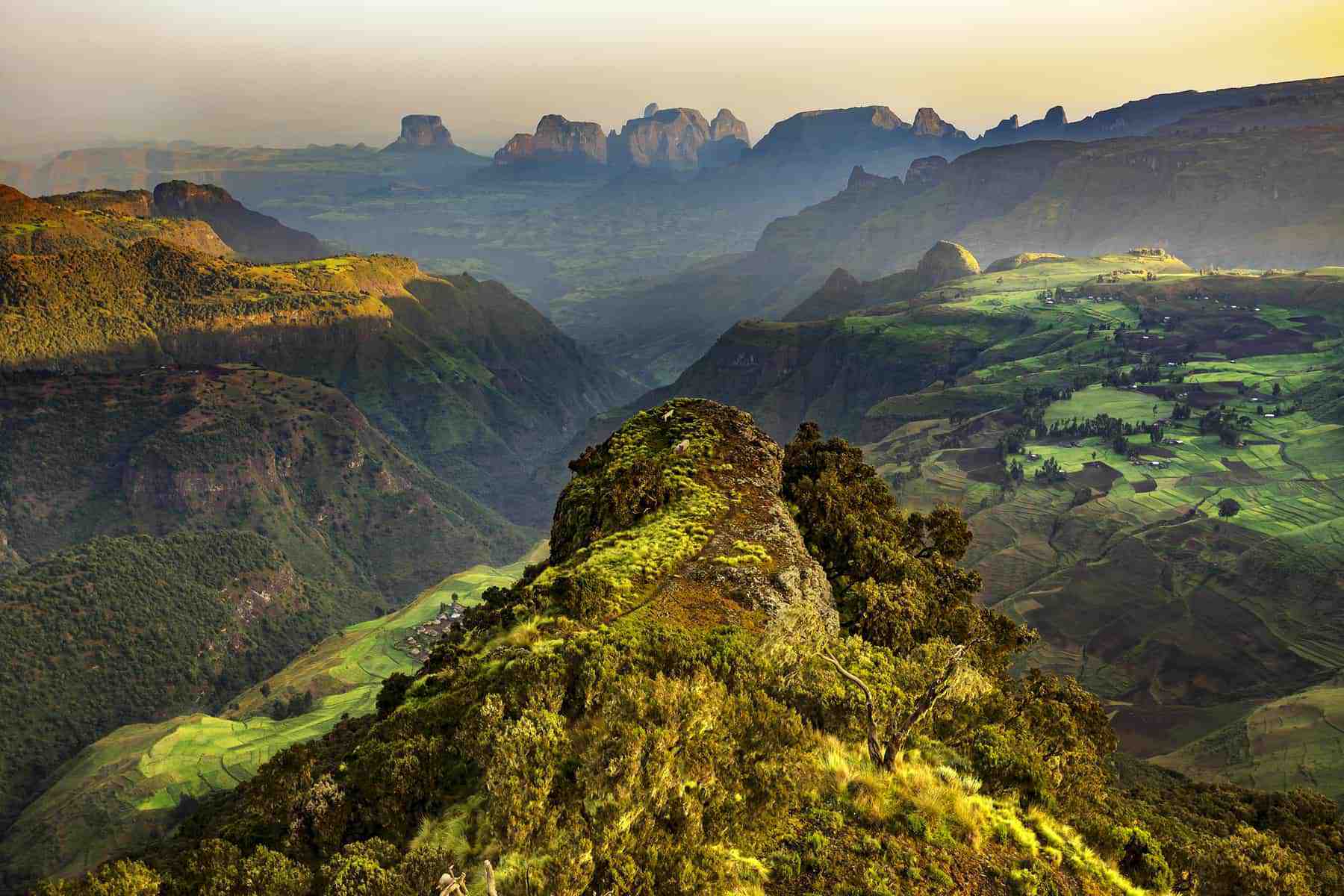
The Ethiopian Highlands
The Ethiopian Highlands, with their temperate climate and breathtaking scenery, offer excellent hiking opportunities. The main well-established trekking areas are in the Simien and Bale Mountains National Parks. More recent development of tourist activities lies in the isolated highlands to the south-west, east and west of the Omo Valley, where vivid and colourful crops complement the fertile landscape, flora and fauna.
Local excursions along the shores of the Rift Valley lakes or hiking areas near Addis Ababa, such as a stroll through the Ambo vineyards, are less strenuous and more relaxing.
When is the best time to travel?
Ethiopia does not have one tourist season but two main rainy periods, and they do not follow the same pattern at every altitude. In the highlands the heaviest rainfall falls in the summer months of June to September, and this is when the roads become slippery, some routes in the Simien Mountains become difficult to pass, and mist lies thick over the mountains in the morning.
The best time for walking and mountain trips in the highlands is therefore typically after the rains, from October into December, as well as during the dry period from January to February. The days are clear, and the nights can be cold. You should expect temperatures below freezing in the high areas after sunset, and a good windproof jacket and warm clothing are never superfluous.
The lowlands are a completely different story. In the Danakil Depression and across the Afar desert areas it can exceed 40 degrees in the hottest months, and even in the cooler season the heat is intense during the daytime. Many therefore choose to visit the lowlands in the winter half of the year, when getting around is less exhausting.
Whenever you travel, be prepared for the weather in the mountains to change quickly. A clear morning can turn to rain before midday, and this can affect both your schedule and access to certain sites.
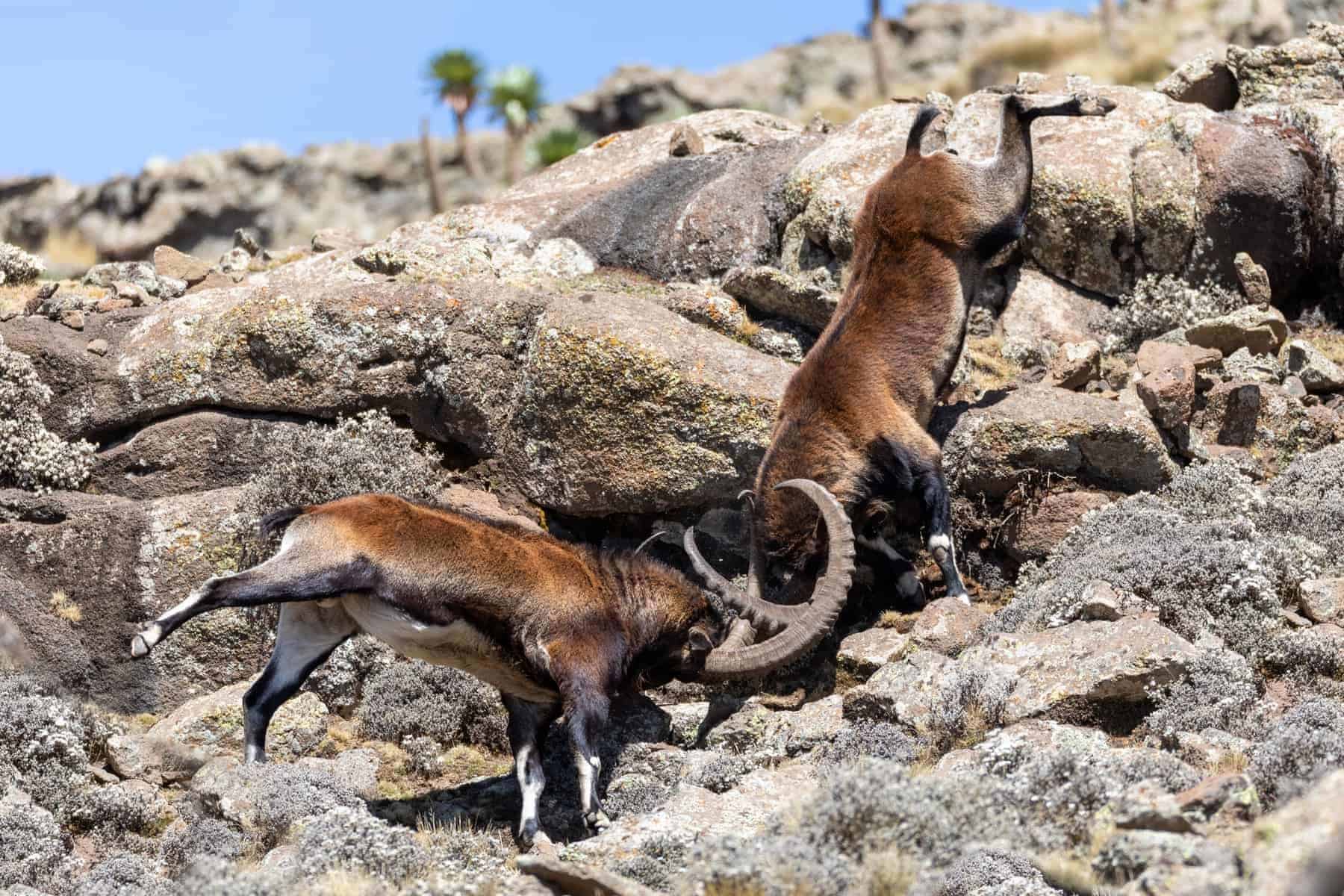
See 3 animals found only here in the Simien
The rewards of a hike in the Simien Mountains include spectacular views over the northern region, with the chance to see the three endemic mammals (“found only here”) – the Walia ibex, the Gelada baboon and the Simien fox – as well as Ras Dashen, the highest peak in the country at 4,620 metres.
Bale has a less populated and richer mosaic of mountain plateaus, heathland and dense juniper forest, near the Nyala Mountains and the Simien fox, as well as remarkable birds, many of which are endemic.
Riding and trekking in Ethiopia
In such a harsh environment, horses and mules play an important role in transporting people and goods. It is therefore not surprising that riding can be enjoyed in most parts of Ethiopia. A ride in the Simien Mountains on a barefoot pony gives visitors access to areas that even 4×4 vehicles find difficult to reach.
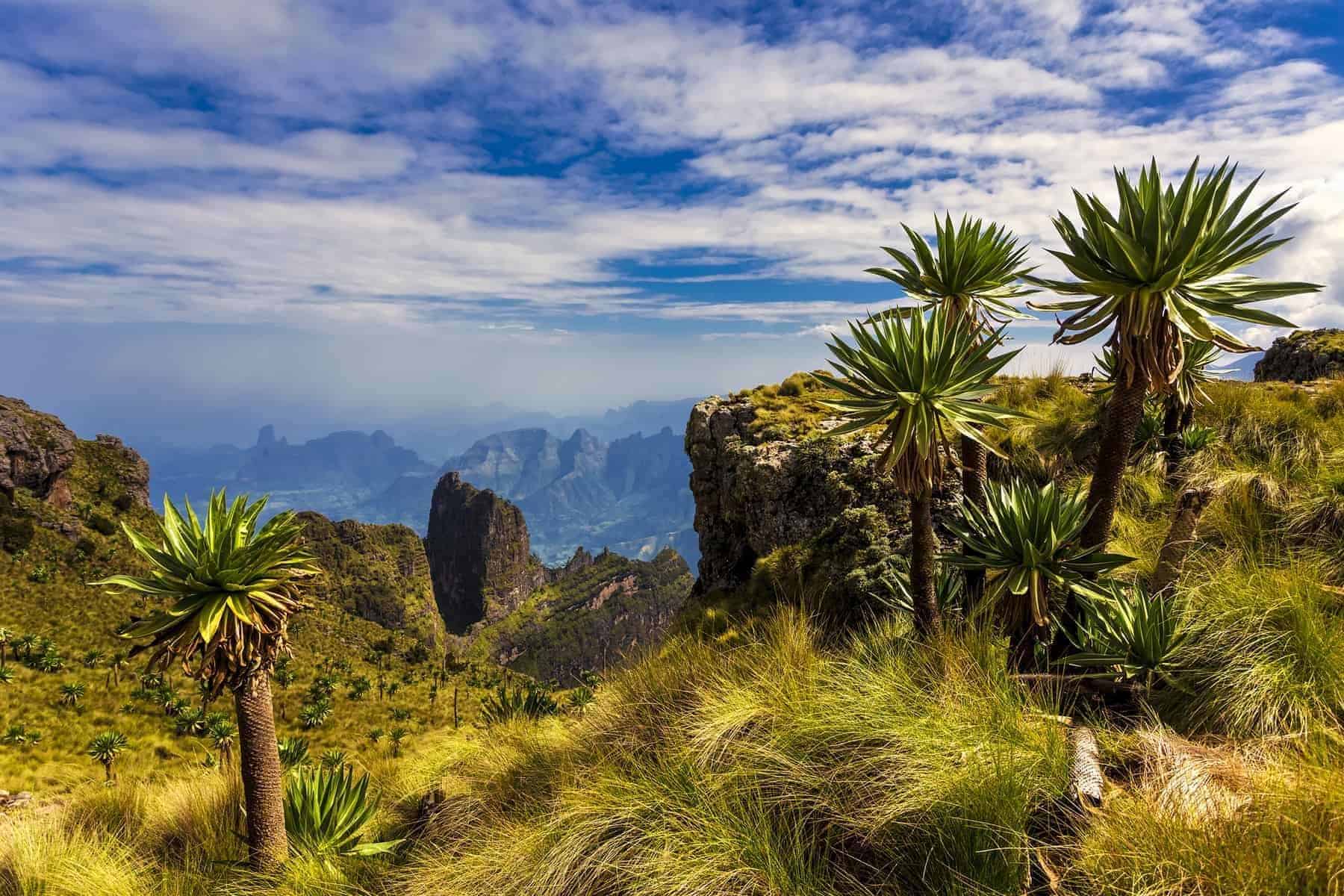
Climbing in the mountains of Ethiopia
Much of Ethiopia is rugged highland country, and the opportunities to tackle demanding peaks and cliffs are almost endless. The Simien Mountains and many other areas offer excellent routes. Equipment is rarely available locally, so you will need to bring your own.
Practical matters and safety
The currency in Ethiopia is the birr. It is wise to carry some local money for everyday expenses, but cash should be handled with care. Credit cards are accepted in only a few places, and cash machines are found mainly in the larger towns. Expect to change money at official outlets and to keep your receipts.
The official language is Amharic, and in many regions local languages such as Tigrinya and Oromo are spoken. English is often understood in tourist areas and at hotels, but it helps to know a few basic words and to have a guide when travelling beyond the towns.
Malaria occurs in large parts of the country, particularly in the lowlands and in certain lower-lying areas. You should speak to your doctor or a travel health clinic well before departure about preventive medication and vaccinations, including the recommendations that apply to Africa in general, such as hepatitis A and typhoid. A mosquito net, long-sleeved clothing and insect repellent are a simple precaution.
The security situation varies considerably between regions. Parts of the country have seen conflict and unrest, including in certain areas in the north and west, and travel advice changes regularly. You should check the current advice from the Danish Ministry of Foreign Affairs before planning a trip, and avoid areas where warnings are in place. It is also wise to stay informed along the way and to follow local instructions.
Travel destinations in Africa
If you are interested in safari travel, see the introduction to around 8 African countries relevant to safaris, or go directly to the African countries Traveltalk covers:
- Angola
- Botswana
- Cape Verde
- Egypt
- Ethiopia
- Kenya
- Madagascar
- Morocco
- Mauritius
- Namibia
- The Seychelles
- South Africa
- Tanzania
- Tunisia
- Uganda
- Zambia
Getting to Ethiopia
Most travellers arrive in Ethiopia via Addis Ababa, the capital, and Bole airport is the country’s largest and busiest international hub. There are direct flights to the city from a number of European airports, but routes and airlines change over time, so it is a good idea to check current connections before booking.
The flight from Europe typically takes a full day, and you may land late at night or early in the morning depending on the departure. Many travellers plan a night in Addis Ababa before continuing by domestic flight or road to the northern or southern regions.
For most nationalities, including Danish citizens, entry requires a visa. This can usually be applied for online in advance through the official Ethiopian authorities, and you should check the requirements and validity period on the official website well before departure. Your passport should have a certain amount of validity remaining and blank pages, and it is wise to keep digital copies of your passport and visa.
On arrival, be prepared for checks and questions, and it helps to have your hotel booking and return ticket ready. Entry rules can change, so you should always confirm the current requirements shortly before your trip.
Getting around the country
Ethiopia is large, and the distances between regions are greater than the map suggests. Roads are in poor condition in many places, and driving on the country roads is slow. As a result, many travellers choose to fly between the major destinations and use a car with a driver for the final stretches.
Domestic flights from Addis Ababa serve several larger towns and some of the important historical and natural sites in the north and south. This is the quickest way to cover long distances, but flights can be delayed or cancelled, so luggage and timetables should be planned with a good margin.
Buses are cheaper and more widespread for local and regional travel, but the journey is long and slow, and it suits those with time who want to experience the country up close. For most hiking and nature areas, however, it is sensible to have a car with a driver.
Many visitors choose to hire a car with a driver and guide. The driver knows the roads and local conditions, and the guide can explain what you see along the way. This is often the most practical solution in the mountains and desert areas, where there are rarely signs or petrol stations nearby. It is a good idea to agree the route, price and timetable in writing before the journey begins.
Accommodation and food
Accommodation in Ethiopia ranges from simple guesthouses and local hotels to large international hotels in Addis Ababa. Outside the capital the choice is more limited, and standards vary widely. In the national parks there are basic lodges, where you should expect cold water in the shower and a strong need to bring extra layers of clothing for the night.
In the larger towns you will find good restaurants serving both local food and European cuisine. In rural areas the menu is often limited, so it helps to eat whenever the opportunity arises and to carry some snacks and water on longer journeys.
The typical Ethiopian meal is served on injera, a sour, spongy flatbread made from teff flour. The bread serves as both plate and utensil, and you eat with your right hand. The dishes are often wot, a spiced stew that can be made with meat or lentils, and they are served on large platters so that several people can share.
The coffee ceremony is a central part of everyday life. The coffee beans are roasted in front of the guests, ground and brewed in a clay pot called a jebena, and the coffee is served in small cups, often in three rounds. It is a long and social ritual, and a fine way to meet local people.