
From the traveltalk.dk family – started in Denmark in 2018
Read in: Dansk (original)
Mexico — 35 World Heritage Sites, and that’s not even the best part of the country
Mexico is among the ten most visited countries in the world, with over 40 million foreign guests a year, and the vast majority of them see a stretch of coastline and fly home again. It’s an understandable mistake. The country is almost 45 times larger than Denmark, stretches from desert to rainforest, and has 35 sites on UNESCO’s World Heritage List — more than any other country in the Americas and the seventh-most in the world.
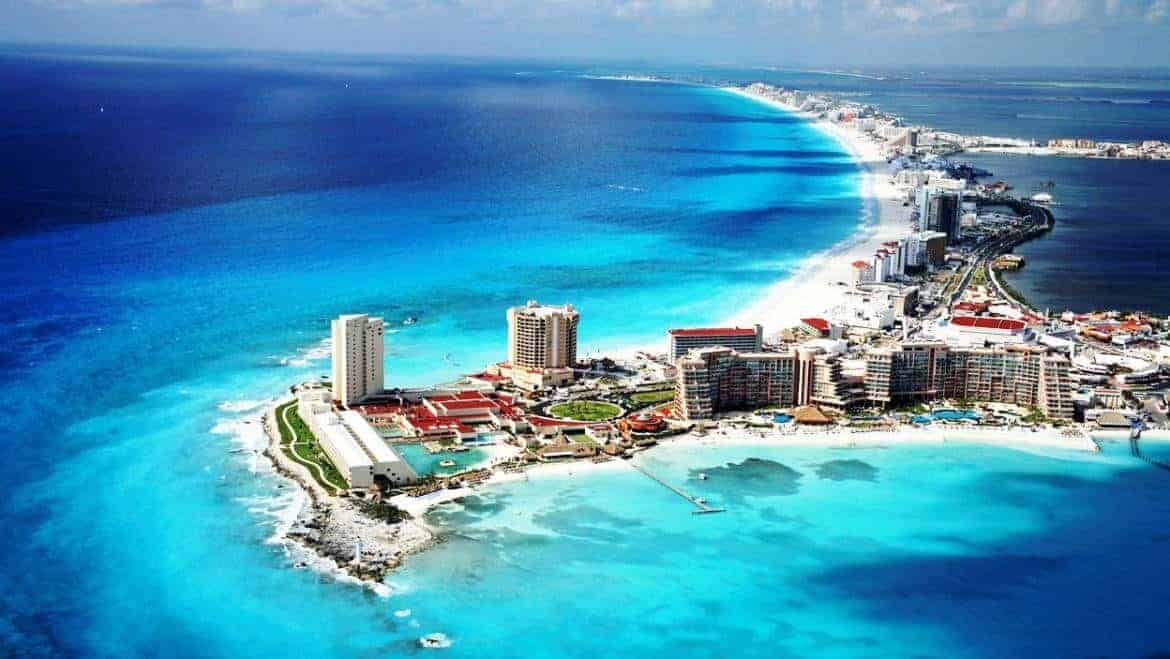
If you begin in Cancún, it’s worth knowing what you’re actually standing on. The Yucatán Peninsula has no rivers. Rainwater instead seeps down through the limestone and has carved out thousands of cenotes — vertical sinkholes down to clear groundwater, which the Maya regarded as entrances to the underworld. They are not scattered at random. The largest of them form an arc, and that arc follows the rim of the Chicxulub crater, struck by the asteroid 66 million years ago — the one that wiped out the dinosaurs. You are, quite literally, swimming on the edge of the impact.
The capital is sinking half a metre a year
Mexico City sits 2,240 metres above sea level in a bowl of mountains, built on top of a drained lake. The Aztecs founded Tenochtitlán on an island in Lake Texcoco; the Spanish drained the lake and built on the clay. The city has been pumping up groundwater ever since, and the result is visible to the naked eye: the cathedral leans, street surfaces slide, and the worst-hit neighbourhoods are sinking by up to half a metre a year. It is one of the world’s great cities, slowly settling into its own foundations.
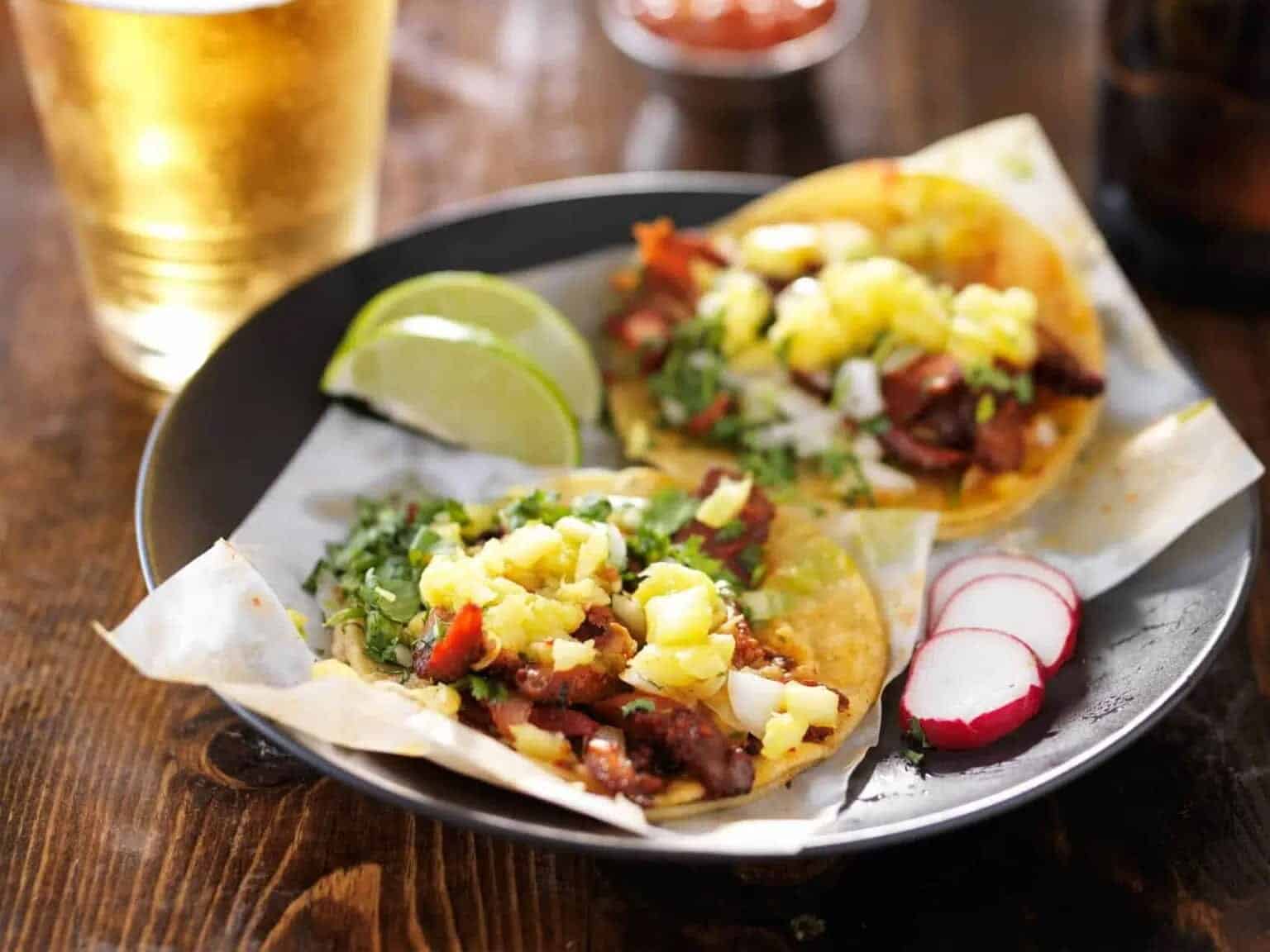
It’s also an outstanding city to eat in. Mexican cuisine was inscribed on UNESCO’s list of intangible cultural heritage in 2010 — one of the very first cuisines to be so recognised — and what was honoured was not the dishes but the system behind them: maize treated with lime, chilli, beans, and a household practice thousands of years old. Our guide to Mexican food goes into more detail.
Tequila is a place, not just a bottle
Tequila may only be called tequila if it comes from Jalisco and a few neighbouring municipalities — the same principle as champagne. The blue agave landscape around the town of Tequila has been on the World Heritage List since 2006, and the fields are blue, not green. An agave must stand for six to eight years before it can be harvested, and it is harvested by a jimador with a flat blade on a long handle. It is farming with a very long patience built into it.
The monarch butterflies, and when to come
Every autumn, monarch butterflies fly up to 4,000 kilometres from Canada and the United States down to a few mountain forests in Michoacán. They gather in clusters so dense that the branches bend, and from November to March the forest turns orange. No single butterfly completes the whole journey — it takes several generations to head north again, and yet the great-grandchildren find their way back to the same trees. The reserve is on the World Heritage List.
This says something general about travelling in Mexico: timing matters more than place. Grey whales calve in the lagoons of Baja California from January to April. Día de Muertos falls fixed on 1–2 November and is not a sombre affair but a homecoming — families hold meals at the graves. The dry season runs November to April, and the hurricane season in the Caribbean June to November.
The history is older than most people think
The Olmecs are the oldest known civilisation on the American continent, with finds from around 3,500 years ago in what is now Veracruz. They were followed by Teotihuacán, whose pyramids already stood abandoned and ancient when the Aztecs found them and gave them their names. The Maya built on in the south, and the Aztecs enjoyed their golden age until Hernán Cortés landed in 1519.
The war of independence against Spain began in 1810 and lasted eleven years. Mexico became independent in 1821 — not in 1810, as the date is often given, because 16 September, the day the uprising broke out, is the one celebrated as national day.
If you want to venture beyond the coast, 68 recognised indigenous languages are still spoken, and the Copper Canyon in Chihuahua is both wider and deeper than the Grand Canyon. The train through it, El Chepe, is one of the last genuine passenger routes in the country.
More about Mexico
- Cozumel — beaches and some of the Caribbean’s most respected diving
- Cancún and the beaches to the east
- Mexican food from A to Z
- Panamericana — the legendary bike race
Practical travel information for Mexico
🛂 Visas and entry
- Visa: Danish citizens do not need a visa — you receive an FMM tourist card on arrival, allowing a stay of up to 180 days. Note: from 2026, border control sets the number of days itself based on your itinerary, so you may be granted fewer than 180.
- Visitor tax: if you travel to Quintana Roo (Cancún, Riviera Maya), a tourist fee is charged — pay online before departure.
- Passport: should be valid for at least 6 months.
💰 Currency and money
- Currency: Mexican peso (MXN); in tourist areas US dollars are accepted in some places.
- Cards: accepted at hotels and in towns; carry cash for markets, street food stalls and taxis.
- Tipping: 10–15% at restaurants is the norm; also tip guides and staff.
🚗 Transport, time and health
- Flight time from Denmark: approx. 11–13 hours with a connection (direct to Cancún in season).
- Getting around: domestic flights for long distances; ADO buses are comfortable between towns.
- Best time to travel: the dry season November–April; avoid the hurricane season (June–November) in the Caribbean.
- Time zone: central Mexico is −7 hours relative to Danish winter time.
- Language: Spanish; English in tourist areas.
- Health: no mandatory vaccinations, but hepatitis A and typhoid are recommended; be careful with food and water — drink bottled water. Mosquito protection in the tropics.
- Safety: travel mainly in tourist areas and follow the Danish Ministry of Foreign Affairs’ travel advice.