
From the traveltalk.dk family – started in Denmark in 2018
Read in: Dansk (original)
Spain: Your Complete Guide to Experiences, Regions and Holiday Destinations
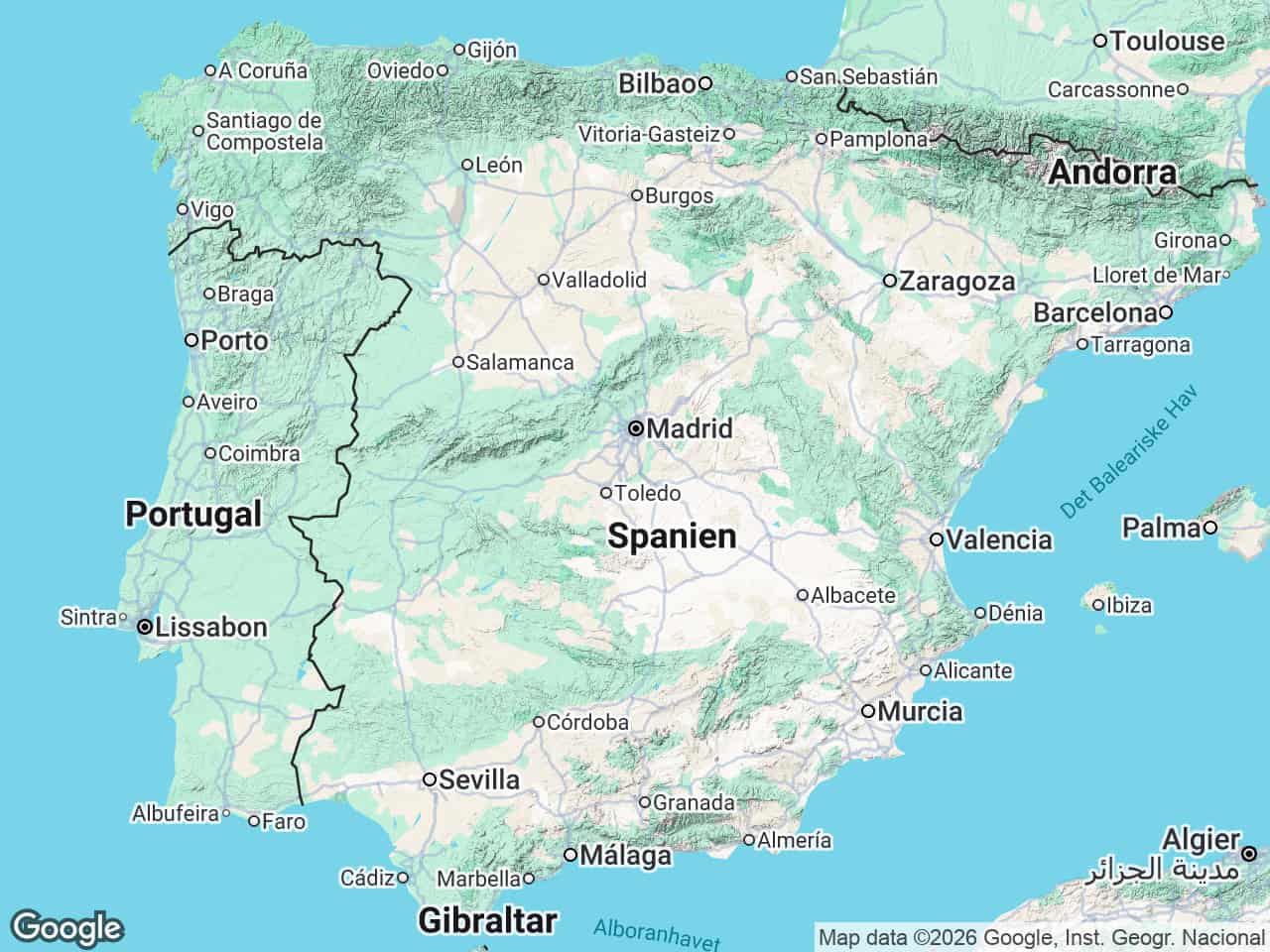
More than 1 million Danes visit Spain every year – and with good reason. This wonderful country on the Iberian Peninsula combines sunny beaches, fascinating history, world-famous gastronomy and a culture that invites relaxation and enjoyment of life. From Barcelona’s modernist architecture to Andalusia’s Moorish palaces, from the beaches of the Costa del Sol to the mountains of the Pyrenees – Spain is so much more than a sun holiday destination. According to the World Economic Forum, Spain ranks among the top of the world’s best travel countries, especially when it comes to culture, heritage, entertainment and gastronomy. With over 46 million visitors from around the world each year, Spain is not only Europe’s but also the Danes’ absolute favourite holiday destination.
📄 Travel facts for your trip to Spain
- Location: The Iberian Peninsula – plus the Balearic Islands in the Mediterranean and the Canary Islands off the coast of Africa
- Capital: Madrid
- Languages: Spanish (Castilian) – plus Catalan, Basque and Galician as official languages in their own regions
- Currency: Euro (EUR)
- Regions: 17 autonomous regions, and the differences between them are greater than most people expect
- Best season: April to June and September to October on the mainland. The Canary Islands work all year round
- Recommended length of stay: 5-7 days per region
- ✈️ Departing from: Copenhagen Airport (CPH) – direct to Madrid, Barcelona, Málaga, Alicante, Valencia, Palma, Tenerife and Gran Canaria
💡 Traveltalk tip
Spaniards eat late, and that changes your whole day. Lunch falls between 2 and 3.30pm, and kitchens rarely open for dinner before 9pm. Book a table at 7pm and you will be sitting alone in an empty room, served the food that is made for tourists. Instead, make the day’s main meal the middle of the day: the menú del día is three courses with wine for €12-18, and it is the best value meal Spain has to offer.
Insider tip: The AVE train makes the country feel smaller than the map suggests – Madrid to Barcelona and Madrid to Seville both take around two and a half hours, door to door faster than flying. And most major museums have fixed free time slots, typically late in the afternoon or on Sundays; it is no secret, but it is rarely mentioned on the front page.
🤝 Travel partner – the spot is free. This is where we recommend travel partners: Who can provide the trip or simply accommodation/transport? Do you arrange trips to Spain? The spot could be yours – write to us at hello@leisuretalk.net.
Topic areas:
Why Travel to Spain?
Spain is enormous, both geographically and in terms of experiences. From Barcelona in the north to Gibraltar in the south, the country stretches over thousands of kilometres with remarkable variety in landscape, culture and climate. Here are some of the strongest reasons to choose Spain as your next destination:Climate and Weather
Spain enjoys a Mediterranean climate, with over 300 sunny days a year in many regions. The Costa del Sol lives up to its name as the “Sun Coast”, with mild weather all year round. Even in January you can enjoy your morning coffee on the beach at 20 degrees, while the snow-capped peaks of the Sierra Nevada are only a few hours’ drive away. These fascinating contrasts are what make Spain unique.Culture and History
Few countries can match Spain’s cultural richness. From Roman times through Moorish influence to the Spanish Golden Age, the country has a history that lives on in every street, every palace and every church. UNESCO has recognised numerous Spanish sites as World Heritage, and the country houses some of the world’s finest art museums, including the Prado in Madrid and the Guggenheim in Bilbao.World-Class Gastronomy
Spanish food culture is an experience in itself. From tapas culture in Andalusia to pintxos in the Basque Country, from paella in Valencia to jamón ibérico everywhere, Spain has revolutionised world gastronomy. The country has more Michelin stars than most other European countries, and wine production surpassed only by Italy and France.Beaches and Nature
With coastlines on both the Atlantic and the Mediterranean, as well as the Balearics and the Canary Islands, Spain offers some of Europe’s best beaches. From wild cliff coasts in Galicia to sandy beaches on the Costa del Sol, there is a beach for every taste.Spain’s Regions: Diversity at Its Finest
Spain consists of 17 autonomous regions, each with its own identity, language and traditions. Here are the most popular among Danish travellers:Andalusia: Heart of the Authentic Spain
Andalusia is perhaps the most “Spanish” of all regions, with flamenco, bullfighting, white villages and Moorish heritage. Here you will find wonderful cities such as Seville (Spain’s fourth-largest city and the capital of Andalusia), Granada (home of the spectacular Alhambra palace), Córdoba (with the famous Mezquita) and Málaga (Picasso’s birthplace). The Costa del Sol, stretching along Andalusia’s coast, is one of the Danes’ absolute favourite holiday areas, with towns such as Marbella, Fuengirola, Torremolinos and the charming Mijas.Catalonia: Innovation and Tradition
With Barcelona as its crown jewel, Catalonia is a region that combines avant-garde architecture (Gaudí!), a strong cultural identity and fantastic food culture. The Costa Brava north of Barcelona offers dramatic cliff coasts and charming fishing villages, while the Penedès wine region produces cava, Spain’s answer to champagne. Catalonia has its own language (Catalan) and a proud cultural heritage that makes the region unique within Spain.The Madrid Region: Heart of Spain
Spain’s capital Madrid lies centrally and offers world-class art (the Prado, Reina Sofía, Thyssen-Bornemisza), royal history, fantastic nightlife and a food scene that only keeps getting better. Just an hour’s drive from Madrid lie historic towns such as Toledo and Segovia.The Valencia Region: Home of Paella
Valencia is Spain’s third-largest city and the home of the original paella valenciana. The city combines futuristic architecture (the City of Arts and Sciences) with historic charm, fantastic beaches and the annual Las Fallas festival, one of Europe’s wildest firework displays.The Basque Country: Gastronomic Mecca
The Basque Country (Euskadi) in northern Spain has its own culture and language. Bilbao, with the Guggenheim Museum, and San Sebastián, with the world’s highest concentration of Michelin stars per capita, are the absolute strongholds of cuisine. Pintxos (Basque tapas) are an art form here.Galicia: Celtic Spain
Galicia in the north-west is Spain’s greenest region, with a rainy climate, Celtic heritage and fantastic shellfish. Santiago de Compostela, the end point of the Camino de Santiago pilgrimage route, is the region’s spiritual centre.The Canary Islands
Tenerife, Gran Canaria, Lanzarote, Fuerteventura and the other Canary Islands lie off the west coast of Africa but belong to Spain. With a subtropical climate all year round, they are perfect for winter holidays, with volcanic landscapes and black and golden beaches.The Balearics
Mallorca, Menorca, Ibiza and Formentera in the Mediterranean offer everything from nightlife to family-friendly beaches and charming mountain villages.Asturias: The Hidden Gem
Asturias in northern Spain is one of Spain’s best-kept secrets, with green mountains, a dramatic coastline, sidra (apple cider) and a relaxed atmosphere far from mass tourism.The Most Interesting Cities in Spain
Barcelona: Gaudí’s Masterpiece
Barcelona is unique. Gaudí’s Sagrada Família, Park Güell and Casa Batlló define the city’s skyline. Las Ramblas pulses with life, the Gothic Quarter holds centuries of history, and Barceloneta beach is only minutes from the centre. Barcelona is also food, design, football (FC Barcelona!) and a city that never sleeps.Madrid: Art and Life
Madrid is the heart of Spain, both geographically and culturally. The Prado Museum holds the world’s finest collection of Spanish art, the Royal Palace is Europe’s largest, and Retiro Park is the city’s green lung. Madrid’s food scene is explosive, and its nightlife is legendary. Here you will also find churros con chocolate, Spain’s best breakfast.Seville: Flamenco and Passion
Seville is the soul of Andalusia. The cathedral (the world’s third-largest) with the Giralda tower, the Moorish Alcázar palace and the historic Santa Cruz quarter make Seville a must-visit. Here you can experience authentic flamenco, Holy Week (Semana Santa) and the April Fair, Spain’s most colourful traditions.Granada: The Alhambra and More
Granada is home to the Alhambra, one of the world’s most visited monuments. This Moorish palace complex with the Generalife gardens is simply magical. But Granada is also the Albaicín quarter (a UNESCO World Heritage Site), tapas culture (free tapas with every drink!) and proximity to the Sierra Nevada.Valencia: Future and Tradition
Valencia combines the best of two worlds: the futuristic City of Arts and Sciences designed by Santiago Calatrava and historic charm in the old town. Paella was invented here, and the annual Las Fallas festival in March is spectacular.Málaga: Picasso’s Birthplace
Málaga is much more than the Costa del Sol’s airport. The Picasso Museum, the Alcazaba fortress, a charming old town and fantastic beaches make Málaga a city worth exploring. The modern harbourfront with restaurants and the new Centre Pompidou attract art lovers.Bilbao: The City of the Guggenheim
Bilbao was transformed by Frank Gehry’s Guggenheim Museum. This Basque city combines industrial heritage with modern art, pintxos bars and a lively atmosphere. Casco Viejo (the old town) is full of life and authentic Basque culture.San Sebastián: Capital of Gastronomy
San Sebastián (Donostia in Basque) is Europe’s gastronomic epicentre with the most Michelin stars per capita. La Concha bay is considered one of the world’s most beautiful city beaches, and the pintxos bars in the Parte Vieja (old town) are legendary.Santiago de Compostela: The Pilgrimage Destination
Santiago de Compostela is the end point of the Camino de Santiago, a pilgrimage route that has drawn millions over the centuries. The cathedral, where the apostle Saint James is reputedly buried, is a masterpiece, and the city’s old streets brim with history.Córdoba: The City of the Mezquita
Córdoba was once Europe’s most populous city under Moorish rule. The Mezquita-Cathedral, originally a mosque, is an architectural wonder with its 856 columns. The Jewish Quarter (Judería) and flower-filled patios make Córdoba unforgettable.Toledo: City of Three Cultures
Toledo, a few kilometres from Madrid, is “the city of three cultures” where Christian, Jewish and Muslim traditions met. The old town is a UNESCO World Heritage Site, and the art of El Greco is found everywhere. Toledo is like stepping into a medieval painting.Ronda: Dramatic Setting
Ronda lies spectacularly on a cliff edge, with the Puente Nuevo bridge connecting the two parts of the town across a 120-metre-deep gorge. Spain’s oldest bullring and the view over the El Tajo gorge are iconic.Marbella: Luxury on the Costa del Sol
Marbella is the crown jewel of the Costa del Sol: glamorous, luxurious and surprisingly authentic in the old town. Puerto Banús with its superyachts and designer shops, the charming Plaza de los Naranjos and the Golden Mile make Marbella a unique destination.Culture and Unique Experiences
Flamenco: The Soul of Spain
Flamenco is not just dance – it is emotional expression, storytelling and an art form. Originating in Andalusia, particularly from Romani culture, flamenco combines song (cante), guitar (toque) and dance (baile) in intense performance. The best places to experience authentic flamenco are Seville (the Triana quarter), Granada (the Sacromonte cave dwellings), Jerez de la Frontera (the origin of flamenco) and Madrid (professional tablaos). Avoid tourist traps on La Rambla and seek out local recommendations. A proper flamenco experience starts late in the evening and involves tapas and sherry. Peñas (flamenco clubs) offer the most authentic experience, but often require local knowledge to gain entry.Spanish Festivals
Spain celebrates life with passion, and every region, city and village has its own festivals. La Tomatina in Buñol (August) is the world’s largest tomato fight. San Fermín in Pamplona (July) is known for the bull runs. Las Fallas in Valencia (March) culminates in the burning of giant figures. The Feria de Abril in Seville (April) is a week-long celebration of Andalusian culture. Semana Santa (Easter) is celebrated intensely throughout Spain, with the most impressive processions in Seville and Málaga. San Juan (23 June) is marked with bonfires and fireworks on the beach. La Mercè in Barcelona (September) features human towers and dragon-eating. Plan your trip around these festivals for unique experiences, but book accommodation well in advance.Tapas Culture
Tapas is not just food – it is social tradition and a way of life. The concept originates in Andalusia, where small dishes were served free with drinks. In Granada you still get free tapas with your beer or wine. Going on a tapas crawl (ir de tapas) means visiting several bars, enjoying one tapa and one drink at each, while chatting with friends. The best tapas neighbourhoods: La Latina in Madrid, El Born in Barcelona, Triana in Seville, Albaicín in Granada. Classic tapas include patatas bravas, jamón ibérico, gambas al ajillo, tortilla española and croquetas. Pintxos in the Basque Country are more elaborate versions, almost miniature works of art on bread. Never arrive before 8 pm – before that the bars are empty.Spanish Gastronomy and Wine
Spain is a culinary powerhouse with a regional diversity that matches the country’s geographical variation. From the Mediterranean diet to northern Spanish cider culture, from molecular gastronomy to rural family restaurants – Spain offers every flavour.Regional Specialities
Valencia is the home of paella, and the authentic version (paella valenciana) is made with rabbit, chicken, beans and saffron – not shellfish. The Basque Country is the gastronomic epicentre with San Sebastián as the Michelin capital; try pintxos, bacalao pil-pil and idiazabal cheese. Galicia is a seafood paradise with pulpo a la gallega (octopus), percebes (goose barnacles) and white Albariño wine. Catalonia offers crema catalana, pan con tomate and calçots with romesco sauce. Andalusia is known for gazpacho, salmorejo, pescaíto frito and of course jamón ibérico from Jabugo. Asturias serves fabada (bean stew), sidra (cider) and Cabrales blue cheese. Castile gives you cochinillo (suckling pig), cordero asado (roast lamb) and manchego cheese.Spain’s Wine Regions
Spain is the world’s third-largest wine producer and home to some of the world’s finest wines. Rioja is the flagship, with Tempranillo-based red wines matured in American oak barrels into complex, vanilla-scented wines. Ribera del Duero produces powerful, age-worthy red wines. Priorat in Catalonia makes intense, mineral wines from steep slopes. Rías Baixas in Galicia is known for fresh Albariño white wines. Jerez (the sherry triangle) produces fortified wines from bone-dry fino to sweet Pedro Ximénez. Cava, Spain’s sparkling wine mainly from Penedès near Barcelona, is excellent value compared with Champagne. Visit bodegas for winery tours and tastings – many accept walk-ins, but booking is recommended in high season. Wine hotels (enoturismo) combine luxury accommodation with vineyard experiences.Michelin and Haute Cuisine
Spain has the third-highest number of Michelin stars in Europe, after France and Italy. El Bulli revolutionised molecular gastronomy (now closed, but its legacy lives on). Arzak, Mugaritz and Akelarre in San Sebastián hold three-star standards. DiverXO in Madrid is Spain’s only three-star restaurant with Asian fusion. Tickets and Enigma in Barcelona (Albert Adrià) push boundaries. For those who want to try star dining without breaking the budget, many restaurants offer lunch menus at a fraction of the evening price. Book months in advance for the most popular ones. Alternatively, visit their casual spin-offs or sister restaurants. In short, Spain offers a wealth of experiences – from culture and gastronomy to nature and active holidays. Here are some of the best experiences in Spain, gathered in one place:Cultural Experiences
- Art museums: The Prado, Reina Sofía and Thyssen-Bornemisza in Madrid, the Guggenheim in Bilbao, the Picasso Museum in Málaga
- Flamenco: Authentic performances in Seville, Granada and Madrid
- Architecture: Gaudí’s works in Barcelona, Moorish heritage in Andalusia, modern masterpieces in Valencia and Bilbao
- Festivals: La Tomatina, San Fermín (bull running in Pamplona), Las Fallas, Semana Santa
Food and Wine
- Tapas tours: Explore local tapas bars in every city
- Wine regions: Rioja, Ribera del Duero, Priorat, Penedès – Spanish wines are world class
- Culinary experiences: Michelin-starred restaurants in San Sebastián, paella courses in Valencia, jamón ibérico tastings
- Markets: La Boqueria in Barcelona, Mercado de San Miguel in Madrid
Nature and Adventure
- Hiking: Camino de Santiago (775 km pilgrimage route), Picos de Europa, the Pyrenees
- Skiing: Sierra Nevada (Europe’s southernmost ski resort), the Pyrenees
- Beaches: Costa del Sol, Costa Brava, the Balearics, the Canary Islands
- Golf: Costa del Sol has over 70 golf courses
- Cycling: The Camino de Santiago by bike, the mountains of Mallorca
History and Heritage
- UNESCO World Heritage: Alhambra, Sagrada Família, Santiago de Compostela, Toledo, Córdoba, Segovia
- Moorish heritage: The Alhambra in Granada, the Mezquita in Córdoba, the Alcázar in Seville
- Roman ruins: Segovia (aqueduct), Mérida, Tarragona
Spanish Food and Gastronomy
Spanish food culture is world-famous, and with good reason. It is not just the food – it is the whole social experience surrounding meals. Spaniards eat late (lunch at 2–3 pm, dinner at 9–10 pm) and take their time.Must-Try Spanish Dishes
Tapas: Spain’s Signature
Tapas is not just food – it is a way of life. Small portions of food, shared between friends, accompanied by wine or beer. From simple olives and manchego cheese to advanced culinary creations. Each region has its specialities:- Andalusia: Gazpacho, pescaíto frito (fried fish), jamón ibérico
- The Basque Country: Pintxos (Basque tapas) – small works of art on bread
- Madrid: Cocido madrileño, callos (tripe), patatas bravas
- Galicia: Pulpo a la gallega (octopus), percebes (goose barnacles)
Paella: Valencia’s Gift to the World
Authentic paella comes from Valencia and is traditionally made with chicken, rabbit and green beans – not shellfish! Paella de mariscos (with seafood) is also popular, but it is not the original version.Jamón Ibérico: Spain’s Gold
Air-dried ham from Iberian pigs that graze freely and eat acorns. Jamón ibérico de bellota (from pigs that eat only acorns) is the finest quality and can cost thousands of kroner per leg.Regional Specialities
- Gazpacho: Cold tomato soup from Andalusia – perfect in the heat
- Pimientos de Padrón: Small green peppers – “some are hot, some are not”
- Churros con chocolate: Fried dough dipped in thick hot chocolate – the perfect breakfast
- Tortilla española: Spanish potato omelette
- Croquetas: Fried béchamel with ham, chicken or fish
- Pulpo a la gallega: Octopus with paprika and olive oil
Spanish Wines
Spanish wine is the world’s third-largest producer after Italy and France. With over 600 grape varieties and innovative winemakers, Spain is revolutionising the wine world.Key Wine Regions:
- Rioja: Spain’s best-known wine region, with elegant red wines based on the Tempranillo grape
- Ribera del Duero: Powerful, modern red wines
- Priorat: Intense, mineral wines from steep slopes in Catalonia
- Rías Baixas: Albariño – fresh, aromatic white wine from Galicia
- Jerez: Sherry from Andalusia – from dry fino to sweet Pedro Ximénez
- Cava: Spain’s answer to champagne from Penedès
Practical Information About Spain
When Should You Travel?
Best time overall: Spring (April–June) and autumn (September–October) – pleasant weather, fewer tourists, lower prices. Summer (July–August): Hot and busy – the Costa del Sol can reach 35–40 degrees. Perfect for beach holidays, though Copenhagen can actually be just as hot! Madrid and the interior can be unbearably hot. Winter (November–March): Mild in southern Spain, cold in the interior. Perfect for city breaks in Madrid, Barcelona or Andalusia. The Sierra Nevada offers skiing with sea views – unique! The Canary Islands: Subtropical climate all year round – perfect for winter holidays with 20–25 degrees even in January.Transport in Spain
Spain has excellent infrastructure, which makes getting around easy and comfortable. The AVE high-speed trains connect major cities at speeds of up to 310 km/h – Madrid–Barcelona in 2 hours 45 minutes, Madrid–Seville in 2 hours 30 minutes. Book early on Renfe.com for the best prices; tickets are released 60 days in advance. Regional trains (Avant, Alvia) and buses (ALSA) serve smaller towns. Domestic flights between cities (Vueling, Iberia, Ryanair) are often cheaper and faster than trains for longer distances. Car hire gives you the freedom to explore smaller towns, white villages and wine regions, but parking in large cities can be challenging and expensive. The major cities have good metro systems (Madrid, Barcelona, Valencia, Seville, Bilbao). Taxis are relatively cheap compared with Northern Europe, but use official taxis or apps such as Uber, Cabify or FREE NOW. In practice, it is easy to get around Spain, whether you are travelling between big cities or exploring smaller destinations. Here are the main forms of transport at a quick glance:- Flights: Numerous direct connections from Copenhagen to Madrid, Barcelona, Málaga, Alicante, Valencia, Palma, Tenerife, Gran Canaria
- AVE (high-speed train): Connects Madrid with Barcelona (2.5 hours), Seville (2.5 hours), Valencia, Málaga and several other cities
- Car: Excellent motorway network, but allow for toll roads (peajes). Ideal for the Costa del Sol, Andalusia and village trips
- Public transport: Metro in Madrid, Barcelona, Valencia, Seville, Bilbao – efficient and cheap
Budget and Prices
Spain offers excellent value compared with Northern Europe, but prices vary considerably between regions and seasons. Barcelona and Madrid are the most expensive, while smaller towns and rural areas are considerably cheaper. A backpacker budget (hostel, street food, public transport) requires €40–50 per day. A mid-range budget (three-star hotel, restaurant meals, some activities) comes to €100–150 per day per person. A luxury budget starts at €250–300+ per day. The menú del día (daily menu) at lunchtime is fantastic value – a three-course meal with wine for €12–18. Free museums: many museums have free admission at certain times, typically Sunday afternoons or Wednesday evenings. Supermarkets are cheap for picnic shopping. Tipping is not obligatory, but rounding up or leaving 5–10% is appreciated for good service.Language
Spanish (castellano) is the official language, but the regions have their own languages:- Catalonia: Catalan (though everyone also speaks Spanish)
- The Basque Country: Basque (euskara) – a unique non-Indo-European language
- Galicia: Galician – similar to Portuguese
- Valencia: Valencian (a variety of Catalan)
Culture and Traditions
- Siesta: Many shops close from 2 to 5 pm – though this is less widespread in the big cities today
- Meal times: Lunch 2–3 pm, dinner 9–10 pm – restaurants open late
- Sundays: Many shops are closed – use Sundays for museums and restaurants
- Tipping: Not obligatory, but 5–10% is appreciated in restaurants
All Our Spain Articles A-Z
Explore our comprehensive collection of travel guides and articles about Spain. Whether you are planning a city break, a beach stay or a culinary trip, you will find inspiration and practical advice here:📍 Cities and Destinations
- Madrid – Spain’s Capital: Art, Food and Nightlife
- 20 Best Destinations in Spain
- Marbella – Luxury and Glamour on the Costa del Sol
- Mijas – Charming White Village in the Costa del Sol Hinterland
- Barcelona – Gaudí, Tapas and Mediterranean Living
- Seville – Flamenco and Moorish Heritage
- Granada and the Alhambra – A Moorish Palace of Splendour
- Valencia – Home of Paella
🏖️ Regions and Areas
- Costa del Sol – The Sun Coast with Beaches and Golf Courses
- Costa Brava – Catalonia’s Wild Coast
- Costa Blanca – White Beaches and Alicante (coming soon)
- Andalusia – Ronda and the Authentic Spain
- The Basque Country – San Sebastián and Gastronomy · Bilbao
- Galicia – The Camino, 775 km on Foot to Santiago
🍷 Food, Wine and Gastronomy
- Spanish Wine Regions – A Guide to Spain’s Wine Areas
- Tapas – from the Basque Country to Seville · Tapas from Seville
- Paella – How They Make It Authentically
- Jamón Ibérico – A Guide to Spain’s Finest Ham (coming soon)
🎭 Culture and Experiences
- Camino de Santiago – The Pilgrimage Route to Santiago de Compostela
- Flamenco – Where to Experience Authentic Flamenco? (coming soon)
- Gaudí and Modernism – Architecture in Barcelona (coming soon)
- Moorish Heritage – The Alhambra, Mezquita and Alcázar (coming soon)
- Spanish Festivals – Tomatina, San Fermín and More (coming soon)
🏝️ The Islands
- Mallorca – The Pearl of the Balearics
- Ibiza – Parties, Beaches and Sunsets
- Tenerife – The Largest Canary Island (coming soon)
- Gran Canaria – A Miniature Continent (coming soon)
- Lanzarote – The Volcanic Island (coming soon)
⛷️ Sport and Activities
- Golf in Spain – The Best Courses on the Costa del Sol
- Skiing in the Sierra Nevada – Europe’s Southernmost Ski Resort (coming soon)
- Hiking in Spain – From the Camino to the Picos de Europa (coming soon)
🏛️ History and Heritage
- The Iberian Peninsula – Spain and Portugal
- UNESCO World Heritage in Spain – A Complete Guide (coming soon)
- Roman Spain – Aqueducts, Theatres and Ruins (coming soon)
🏡 Property and Practical
- Buying property in Spain – holiday homes as an investment, Marbella, Mallorca, Málaga, Benahavís, Estepona, Sotogrande and Fuengirola
- Property agents and projects – Lomborg Properties, Engel & Völkers Mallorca, Buy a Home Mallorca, Valley Collection Higuerón, new villas on the Costa del Sol, a dream apartment in Mallorca and Santa Catalina
Spain from Coast to Coast — Food, Sport, Islands and Seasons
Food is the easiest way in
Spanish cuisine is not one cuisine but one per region. Tapas means something different in the Basque Country, Madrid, Seville and Barcelona — in Seville you stand at the bar and move on to the next one. Paella comes from Valencia, is made with rabbit and beans in its original form and is eaten at lunch, never in the evening — if you order it at nine o’clock at night, you are in a tourist restaurant. San Sebastián has more Michelin stars per inhabitant than any other city in the world, and Bilbao is an hour away, with the Guggenheim.
Sport and active holidays
The golf courses on the Costa del Sol are played all year round. La Vuelta runs in August and September, once the Tour de France is over, and the stages can be watched free of charge from the roadside. Club La Santa on Lanzarote is a training camp for everyone except professionals. Sierra Nevada is Europe’s southernmost ski resort, and it is an hour and a half’s drive from the slopes to the Mediterranean — you can do both on the same day. On foot, the Camino covers 775 kilometres to Santiago.
The islands
The Balearics are Mallorca, Menorca, Ibiza and Formentera. Mallorca alone has Palma, the Serra de Tramuntana with its UNESCO terraces, and El Molinar, the old fishing quarter of Palma. The Canary Islands are another world, and they have summer in January: Fuerteventura for the wind and the beaches, Meloneras on Gran Canaria for a quieter pace. The comparison with the Azores and Madeira is covered in incredible islands.
The coasts, the interior and the seasons
Costa Brava, north of Barcelona, is rocky coastline and small coves. On the Costa del Sol lie Benalmádena, Torremolinos, Mijas Costa and Fuengirola in a row — and the best beaches are not necessarily where most people stay. The interior is the other holiday: Ronda perched above the gorge, Granada with the Alhambra, the Sierra de las Nieves national park and the caves. A spring holiday and spring in Madrid catch the country before the heat and the crowds arrive; Christmas is the other sunny low season. Glamping is available everywhere, Valencia lies between the coast and the rice paddies, the Prado belongs on every visit to Madrid, and The Ritz is worth a drink even if you are staying somewhere else. The official tourist office for Danes is based here.
FAQ – Spain
When is the best time to travel to Spain?
For culture and cities, April–June and September–October are ideal. For a beach holiday, June–September is best. Winter is perfect for the Canary Islands.Is Spain expensive?
Spain has a low to medium price level. Andalusia, Valencia and Galicia are cheaper than Barcelona and the Balearics.Which areas should first-time visitors go to?
Barcelona, Madrid, Valencia, Andalusia and Mallorca are good starting destinations. For nature, the Canary Islands are recommended.How do you get around Spain?
Spain has a good rail network, especially high-speed trains between the major cities. On the islands a car is recommended. Cheap domestic flights make it easy to travel between regions.Is Spain family-friendly?
Yes — beaches, hotels and activities are very child-friendly, especially on Mallorca, the Costa del Sol and the Canary Islands.What should you eat in Spain?
Tapas, paella, pintxos, fresh fish, ibérico ham and local dishes such as pulpo in Galicia and gazpacho in Andalusia. The food is regional and varies greatly.
More Articles About Spain

Practical Travel Information for Spain
🛂 Visa and Entry
- Visa: no visa for Danish citizens — Spain is an EU country in the Schengen Area. Enter on a valid passport or national ID card.
- No border control within Schengen when arriving from Denmark.
💰 Currency and Money
- Currency: euro (EUR).
- Cards: accepted almost everywhere; carry some cash for small bars, markets and taxis.
- Tipping: not required — round up or leave a few per cent.
🚗 Transport, Time and Practical Matters
- Flight time from Denmark: approx. 3–3.5 hours (direct flights to the mainland and the islands).
- Getting around: high-speed trains (AVE) link the major cities; ferries and flights to the Balearics and the Canary Islands.
- Time zone: same time as Denmark (Canary Islands −1 hour).
- Language: Spanish; regionally also Catalan, Basque and Galician. English is spoken in tourist areas.
- Electricity: type C/F plugs — as in Denmark.
- Tap water: drinkable in most towns.