
From the traveltalk.dk family – started in Denmark in 2018
Read in: Dansk (original) · Deutsch · Svenska · Norsk
In Ernest Hemingway’s Footsteps – Bulls, Bullfighting and Caribbean Isolation
For Ernest Hemingway (1899–1961), travel was never simply a pleasant holiday or an escape from everyday life. It was an existential necessity, a quest for raw authenticity and an indispensable fuel for his writing. Hemingway lived by the principle that one must experience life first-hand before one can write about it. He sought out places where existence was at its most intense: the dusty bullrings of Spain, the African savannah, the boxing rings of Chicago and Paris, and the open, unforgiving Caribbean sea.
His distinctive prose style – the so-called “Iceberg Theory”, in which seven-eighths of a story’s weight lies hidden beneath the surface – was honed on his many journeys. Through a life in constant motion, he transformed his personal travel experiences into some of the greatest literary classics of the twentieth century. Today, his spiritual and physical footprints remain thriving across three continents.
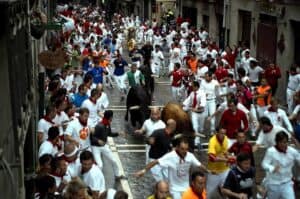
Spain: San Fermín, Running of the Bulls and Madrid’s Historic Cellars
It was in the 1920s that a young Hemingway first became acquainted with Spain. He arrived as part of the “Lost Generation” of American expatriates in Paris, but it was south of the Pyrenees that he found his spiritual home. For Hemingway, Spain was a country of deep passion, immediate joie de vivre and a stark confrontation with death through la fiesta and bullfighting (corrida).
Pamplona and the Myth of San Fermín
When Hemingway visited the Basque city of Pamplona during the San Fermín festival, which has its roots in traditions dating back to the 1800s and early 1900s, he was instantly captivated. The chaotic spectacle of the running of the bulls through the city’s narrow cobbled streets formed the backdrop for his breakthrough novel The Sun Also Rises (1926).
The novel did more than make Hemingway famous overnight; it transformed Pamplona from a provincial Spanish town into an international travel destination. Hemingway was fascinated by the matador’s courage – what he called “grace under pressure” – a quality he strove to embody both in his writing and in his own life.
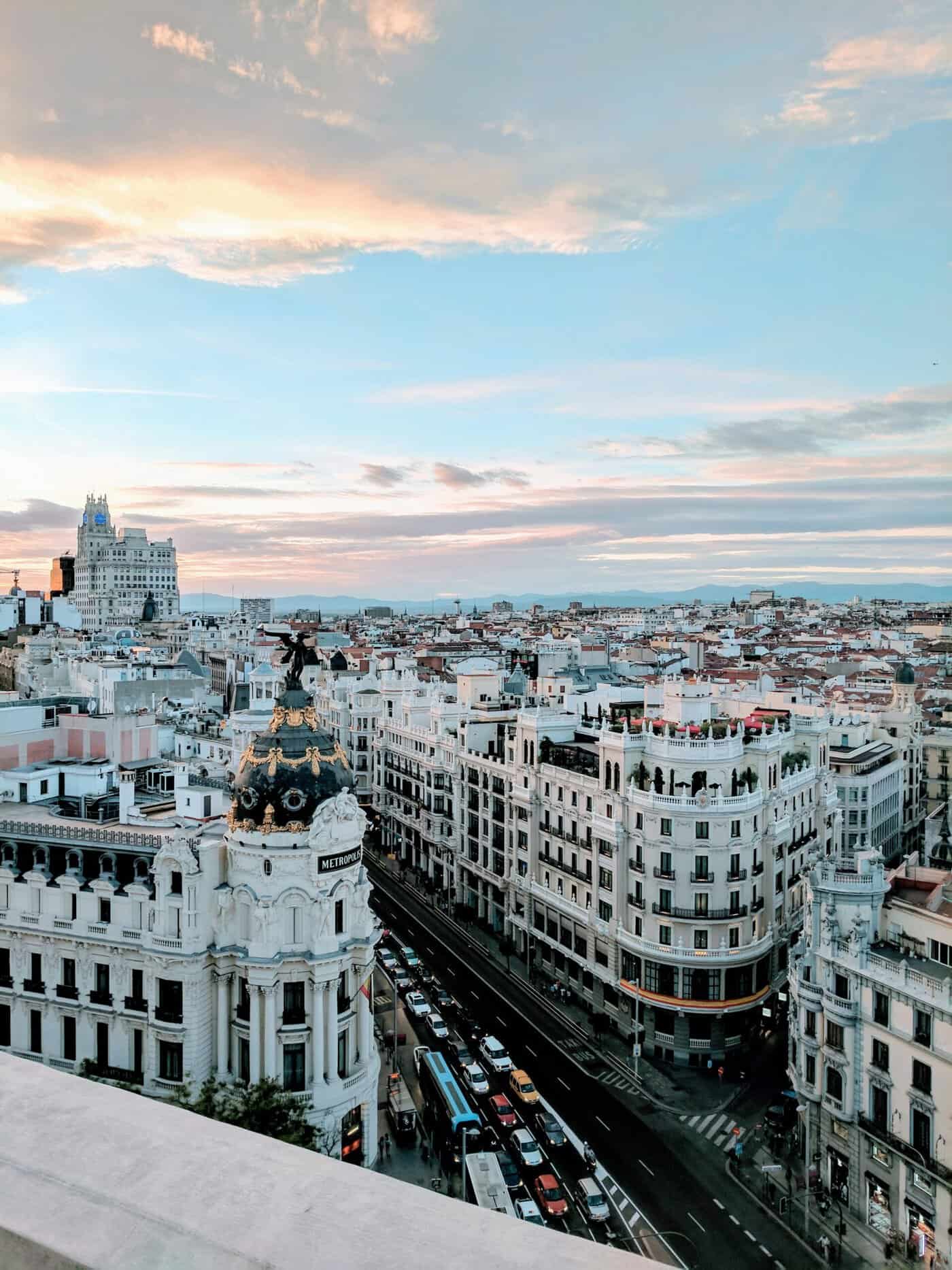
Madrid’s Bohemian Life and Restaurants
When Ernest Hemingway was not in Pamplona, he spent weeks in the Spanish capital, Madrid. He regarded Madrid as the most Spanish of all cities. During the Spanish Civil War in the 1930s, he reported on the conflict as a correspondent from the legendary Hotel Florida, while bombs fell on the city.

When to travel
San Fermín in Pamplona falls in July, and that is the week most people think of when Hemingway and The Sun Also Rises are mentioned. The city is then packed to bursting. The bull run is the best-known event, but the festivities last for days, and the streets are quiet only early in the morning before they fill up again. If you want to see the city without the crowds, spring or early autumn is the better choice.
Madrid is a year-round destination, but summers are hot, and many locals leave the city in August. Spring and autumn offer the best weather for wandering the city’s neighbourhoods and sitting out on the terraces.
Key West and Havana can both be visited all year round, but the humid summer weather in the Caribbean carries a real risk of hurricanes, which are typically most active from late August to October. It is worth following the weather forecasts before you book, and having flexible travel insurance. In Havana, winter is the most pleasant season, with milder temperatures and fewer visitors than in the high season. In Key West, it is also the dry period, which is the most agreeable time to be there.
The Caribbean: Key West, Havana and the open sea
After his years in Europe, Hemingway sought out more southerly and tropical climes. In the Caribbean he found the calm – and the wildness – he needed to write in his mature years.
Key West: the Florida key to his writing
In 1928, Hemingway arrived in Key West, Florida. The town was then a secluded, rough fishing community at the end of the American island chain. Here he moved into a handsome Spanish colonial house on Whitehead Street. It was in the writing studio above the garage in Key West that he worked in the early mornings on works such as To Have and Have Not and For Whom the Bell Tolls. It was also in Key West that he cultivated his passion for deep-sea fishing aboard his beloved wooden boat, Pilar.
Cuba
Havana: Cuba and the struggle with the sea
In 1939, Hemingway moved to Cuba permanently, buying the country estate Finca Vigía in San Francisco de Paula, just outside Havana. Cuba became his home for more than 20 years. From Finca Vigía he often travelled down to the small fishing village of Cojímar to head out into the Gulf Stream. The encounters with local Cuban fishermen and the eternal struggle against the forces of nature inspired his late masterpiece, The Old Man and the Sea (1952), which earned him the Nobel Prize in Literature in 1954.
Practical matters in Cuba
US citizens need a valid reason to travel to Cuba, and they should be aware of the applicable rules from the United States, which may change. European travellers typically need a tourist card, which is bought or issued before entry, and they need a passport valid for a certain period after the return journey. Always check the current requirements with the official authorities before travelling.
The local currency is the Cuban peso, but there has been a dual currency system, and credit cards from American banks often do not work. It is a good idea to bring cash in a currency that can be exchanged, and to check the exchange rates. In many places, only cash payment is accepted.
Internet access is limited and expensive. There are public hotspots, and you typically buy an access card. The connection can be slow and unstable. Supplies such as medicine, water and certain foodstuffs can be hard to find in many places, so it is wise to bring what you need from the outset.
Accommodation and costs
In Pamplona there are both small, simple guesthouses and the historic hotels in the centre. During San Fermín, prices rise sharply and rooms sell out quickly, so they should be booked well in advance. Outside the festival it is cheaper, and affordable rooms can be found outside the old town.
Madrid has everything from budget hostels to luxury hotels, and prices vary considerably by neighbourhood and season. Tapas and set menus of the day are generally good value, while the traditional restaurants in the old town are more expensive. Tickets for bullfights and museums are an expense to plan for.
Key West is an expensive island, and accommodation in the high season is often considerably more costly than elsewhere in Florida. There are also guesthouses and smaller B&B places in town. Food and drink in the bars on Duval Street are not cheap, but you can find more affordable eateries away from the main street.
In Havana you will find both privately owned casas particulares, a widespread and reasonable form of accommodation, and larger hotels in the modern districts. Prices for food and drink in the famous bars of Old Havana are higher than in the local eateries. It is a good idea to have cash with you, and to check current prices, as they change.
Getting around
Pamplona and most of central Madrid are small enough to walk. The old town of Pamplona is within walking distance of virtually everything, and the bull-run route is on foot. In Madrid the distances are greater, but the metro covers the city well, and many of the historic sights are close together in the area around Plaza Mayor.
In Havana, distances within Old Havana are manageable on foot, but if you want to go further afield it becomes more awkward. There are taxis, and you can negotiate the price or use an official taxi with a meter, if one is available. The bus system is accessible, but it can be hard for a visitor to make sense of. Many people use a taxi or a private driver for excursions.
In Key West the town is small and pleasant to walk around, but many people cycle, and bicycles are a widespread way of getting around the narrow streets. To travel between the islands of the Florida Keys, a car is the most practical solution. There is no airport or train connection there, so you should plan on having a car if you want to see more than the town itself.
Experience Hemingway’s world today
For the modern traveller, it is remarkably easy to step straight into Hemingway’s settings. Many of the establishments he frequented remain almost unchanged.
1. Pamplona, Spain
Café Iruña: Located at Plaza del Castillo 44. This was Hemingway’s regular haunt in Pamplona. Take a seat in the opulent 19th-century hall or on the terrace, and order a coffee or a glass of dry sherry. In the corner stands a lifelike bronze statue of the writer leaning against the bar.
Gran Hotel La Perla: The luxurious hotel where Hemingway always stayed in room 201 (then room 217), because it had a direct view of the bull-run route on Calle Estafeta. The room is preserved today as a historic museum room that can be booked.
2. Madrid, Spain
Sobrino de Botín: Located at Calle Cuchilleros 17. Botín is officially recognised by the Guinness World Records as the oldest continuously operating restaurant in the world (founded 1725). Hemingway loved the cellar dining room and mentions the restaurant at the end of The Sun Also Rises. His favourite dish was cochinillo asado (roast suckling pig).
Cervecería Alemana: At Plaza Santa Ana 6. A classic beer hall from 1904, where Hemingway sat beneath the marble tables and discussed the matadors’ performances with local experts.
3. Key West, Florida, USA
The Ernest Hemingway Home and Museum: (907 Whitehead St). Take a guided tour of his historic home and see the famous six-toed cats (polydactyl cats), which are direct descendants of Hemingway’s own cat, Snow White.
Sloppy Joe’s Bar: (201 Duval St). The original bar run by his close friend Joe Russell. Although the bar moved address in 1937, the Hemingway spirit lives on here with live music, cold beer and the annual “Hemingway Look-Alike Contest”.
4. Havana, Cuba
Finca Vigía: Hemingway’s home today stands as an untouched museum. You can peer through the windows and see his vast book collection (over 9,000 books), his typewriter, gramophone records and personal belongings, arranged exactly as they were when he left the house in 1960.
La Bodeguita del Medio & El Floridita: In Old Havana (Habana Vieja) lie the two most famous bars. At Bodeguita del Medio you drink your mojito (said to have been invented here), and at El Floridita you order a Papa Doble – a sugar-free frozen daiquiri with double rum and grapefruit juice, named after Hemingway himself.
All English Travel Inspiration plus German, Spanish, French and more
How to get there
Madrid has a large international airport with direct connections from a wide range of European cities, so it is the easiest gateway to Spain. Pamplona has a smaller airport with fewer routes, and it is therefore often easier to fly to Madrid or Bilbao and continue by train or bus. The journey from Madrid to Pamplona by train takes a few hours, while the bus is a little longer. Always check current departures, as they vary, especially during festival week.
Havana can be reached by direct flights from several European airports, but the routes are not so numerous, and they can change. The American traveller must be aware of the applicable rules for travel to Cuba before purchasing.
Key West is an island at the end of the Florida Keys. Most people fly to Miami and drive from there down the Overseas Highway, a journey of several hours. Key West also has a small airport with connections to Miami and a few other towns. It is a beautiful stretch, but the time spent driving should be factored into the plan.