
From the traveltalk.dk family – started in Denmark in 2018
Read in: Dansk (original)
Botswana has made a deliberate choice that few countries have dared to follow: keep visitor numbers low, quality high and nature protected almost at any cost. The result is one of the most unspoiled wilderness areas in Africa, where a safari can feel less like a tour and more like a genuine encounter with the continent.
This guide takes you through the country’s standout landscapes, from the shimmering channels of the Okavango Delta to the elephant-filled banks of Chobe and the enormous silence of the Central Kalahari. It also explains when to travel and how to plan a journey worth the investment.
Where to Find the Real Africa?
Everyone talks about Africa. Few know where to actually find it. Decades ago, Botswana made a decision that few countries have had the courage to follow: to keep visitor numbers low, quality high and nature protected almost at any cost. The result is a country with some of the highest natural and conservation standards in Africa – and, at the same time, one of the lowest tourism densities in the world. You don’t travel here to watch wildlife from a bus alongside forty other tourists. You come because you want to experience the real Africa – and because you are willing to pay for it.
The Okavango Delta – Nature’s Own Masterpiece
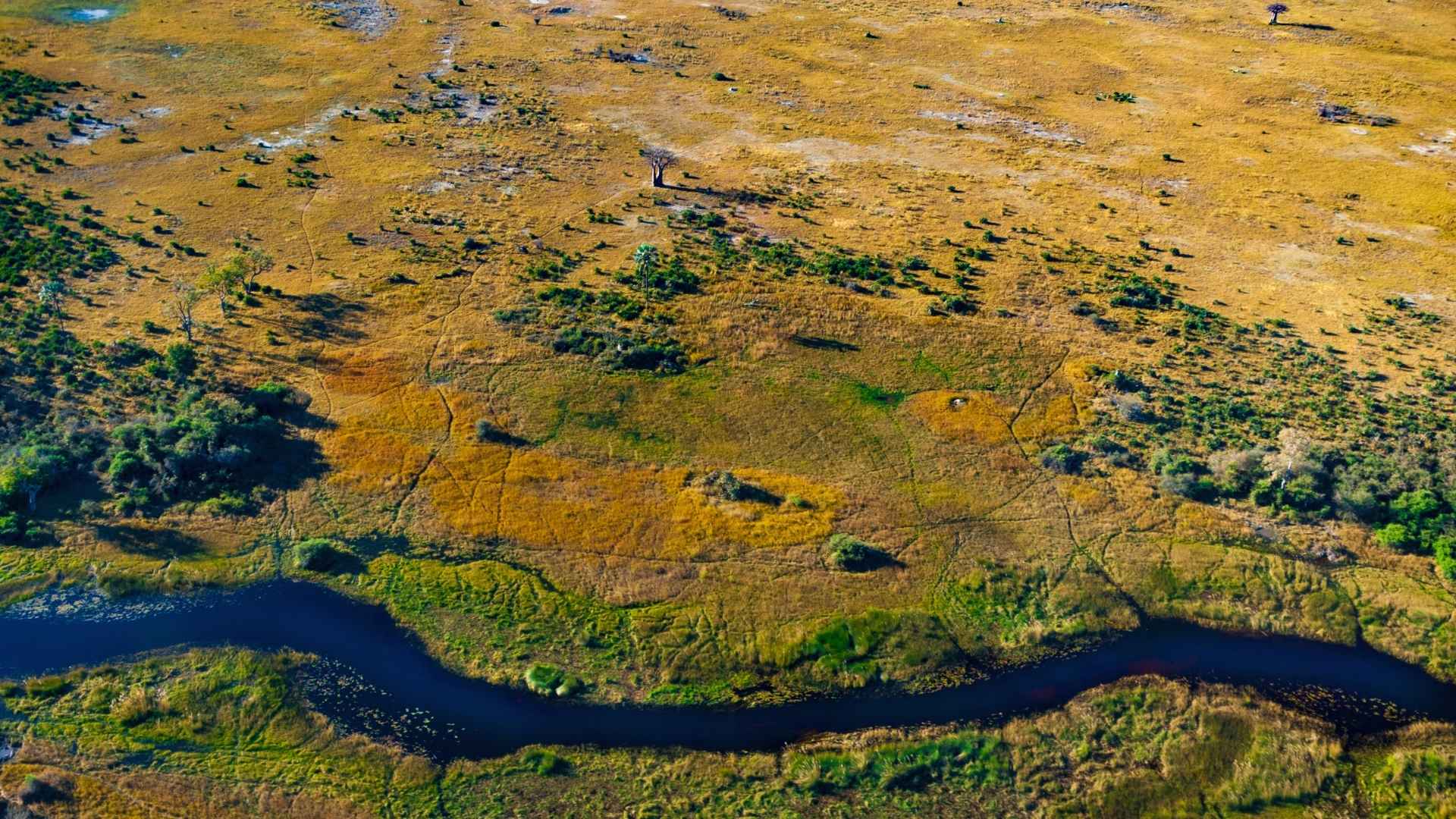
There is simply nothing like it anywhere else in the world. The Okavango River flows in from Angola, spreads out across the Kalahari Desert and creates a vast, shimmering network of channels, islands and flooded plains that change with the seasons. The area is on UNESCO’s World Heritage List, a sanctuary for extraordinary biodiversity – and, if you choose the right camp at the right time, one of the most peaceful places a person can ever stay.
How to Experience the Delta Properly
The key is to head for the private concessions. The Okavango Delta is so large that your experience depends heavily on where you stay. In a private concession, it is often just your own vehicle on the game drive. Your guide knows the area and its animals in detail, and the pace is your own. You stop when you like, stay as long as the light allows, and return to camp with the feeling of having truly been somewhere – not just having seen it.
Chobe and Northern Botswana
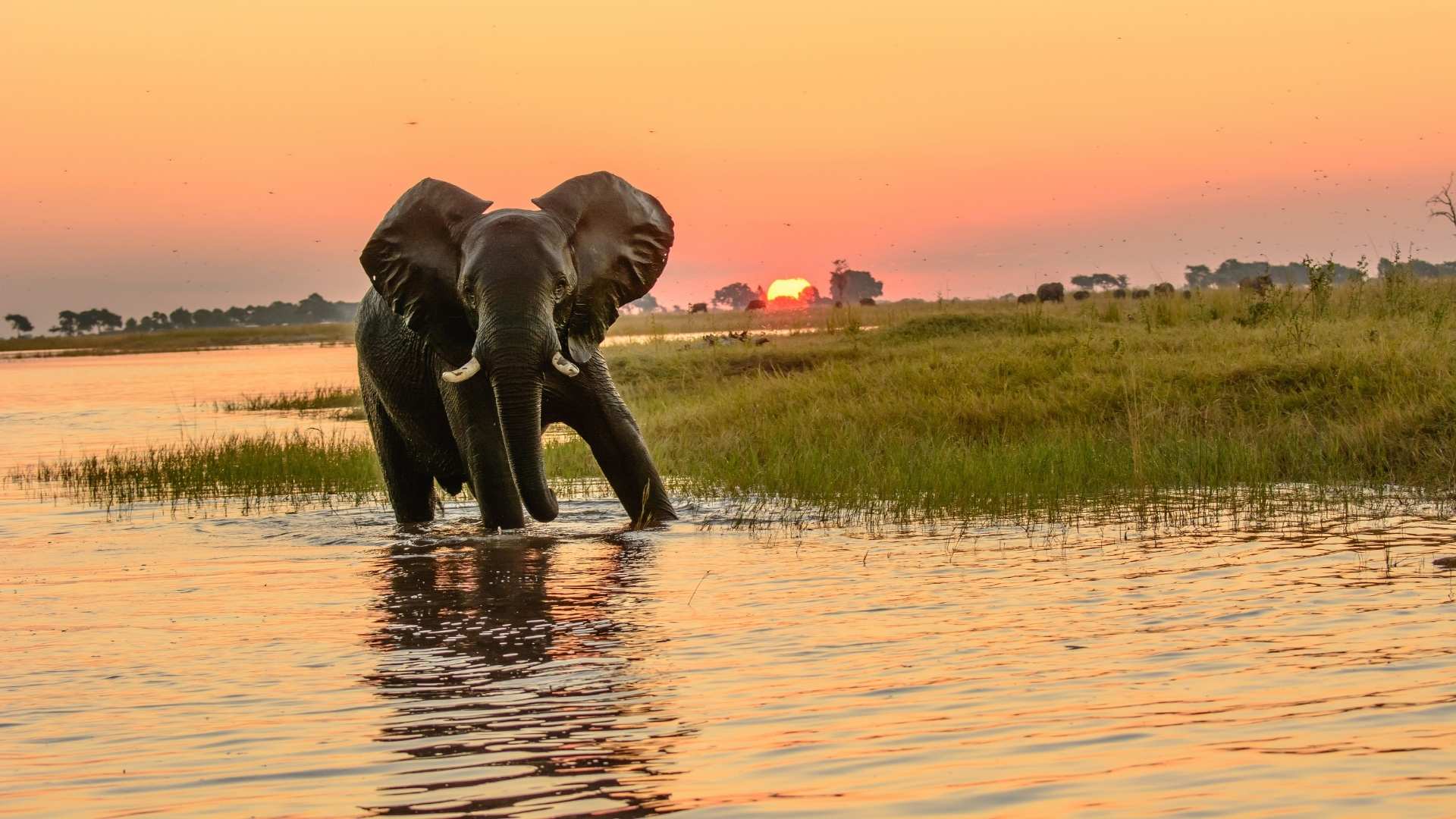
Chobe National Park holds the largest concentration of elephants in Africa – with estimates of up to 130,000 animals. In the dry season, they gather along the river in late afternoon in numbers that are hard to fully comprehend. It is not a subtle wildlife experience – it is raw, intense and deeply fascinating.
Exploring Chobe from the Water
The riverbank along the Chobe is best experienced from a boat. Here you glide close enough to see elephants swimming between the banks, hippos surfacing and disappearing again, and fish eagles plunging towards the water with a precision that makes it all feel almost choreographed. These are moments when nature is not just observed – but felt.
Central Kalahari – The Silence You Won’t Find Elsewhere
For those who want to go even further away from it all, the Central Kalahari Game Reserve is one of the world’s largest wildlife reserves – and at the same time one of the least visited. Here you will find black-maned lions, curious meerkats and herds of springbok moving across the open landscape. But what really stays with you is the silence. A silence so complete that it takes a day or two to stop waiting for something to break it. This is the antidote to overtourism. And it has no antidote of its own.
When Should You Travel to Botswana?
The dry season – from May to October – is the classic time for safari in Botswana. Waterholes become fewer, animals gather around rivers and lakes, and the vegetation opens up, making wildlife far easier to spot. July and August in particular offer cool nights, warm days and some of the finest safari experiences on the continent. The green season – from November to April – brings fewer visitors, dramatic skies and a landscape that feels more alive. At the same time, migratory birds arrive in impressive numbers, and the scenery transforms into a paradise for both photographers and nature lovers.
More Safari and Africa Trips
- Serengeti safari, see the magnificent Africa
- Safari in South Africa, Kruger and Imfolozi
- Sahara + Rome on the same trip: 14-day North Africa–Italy combined journey
- Travel to South Africa, the adventurously vast and beautiful country
Other Media from Leisure Media Group
- traveltalk.travel – international travel site, focused on independent travellers
- winetalk.dk – Danish-language wine magazine with very comprehensive coverage of wine and food
- worldsporttalk.com – elite sport from around the world only, football, golf, tennis, Formula 1 etc
Also Read
- The Great Animal Migration on the African Savannah (wildebeest migration)
- Fiji as a Workplace on Survivor, the American top reality TV series
How to Plan Your Trip Properly
A trip to Botswana rewards good planning. The best camps in the Okavango Delta are often booked 12 to 18 months in advance, and putting together the right route takes careful thought. A well-planned journey typically combines two or three areas – such as the Okavango Delta, Chobe and perhaps Linyanti or the Kalahari – each with its own ecosystem, wildlife and pace. Transfers between camps are often made by small aircraft that fly low over the landscape at sunrise. It is not merely transport – it is an experience in its own right and, for many, one of the absolute highlights of the trip.Get the Right Advice
Botswana is not a destination to book through a generalist. The combination of camps, timing and areas requires insight and up-to-date local knowledge. Choose a specialist who knows the country and has been there recently – and get the right advice before you book.
Flight connections from Norway: Oslo Gardermoen to Johannesburg (O.R. Tambo) with South African Airways, Lufthansa via Frankfurt or British Airways via London. Total flight time approx. 11–13 hours. From Johannesburg onwards to Maun or Kasane with Airlink or Proflight Zambia — typically 2–3 hours extra.
Best time from Norway: July and August fall during the Norwegian summer holidays and are also peak safari season in Botswana. Book well in advance — the best camps fill up 12–18 months ahead.
Combination tip: Consider adding Victoria Falls on the Zimbabwe or Zambia side — a 3–4 hour drive from Chobe, and a natural highlight on the way home.
[/nordic] As a Norwegian traveller, you are well equipped for Botswana. The stillness, the respect for nature and the emphasis on quality over quantity are values that run deep – and which Botswana’s travel philosophy shares wholeheartedly. This is not a trip you show off. It is a trip you take home with you. [/nordic]