
From the traveltalk.dk family – started in Denmark in 2018
Read in: Dansk (original) · Deutsch · Svenska
Ireland is the greenest island on earth
Ireland (Irland) is the green island and a country in north-western Europe, as is well known a neighbour of England, but with a thoroughly distinct and turbulent history of its own. The Republic covers the greater part of the island, which in 1921 was divided between the Republic of Ireland and Northern Ireland. As a travel destination it has no shortage of attractions. The temperate climate is milder than in Denmark, and that is also one reason the island is so green. It is a very beautiful island which, on the whole, lives up to the claims about the finest golf courses, the best oysters, the best pub singers and the best road trips.
When is the best time to travel?
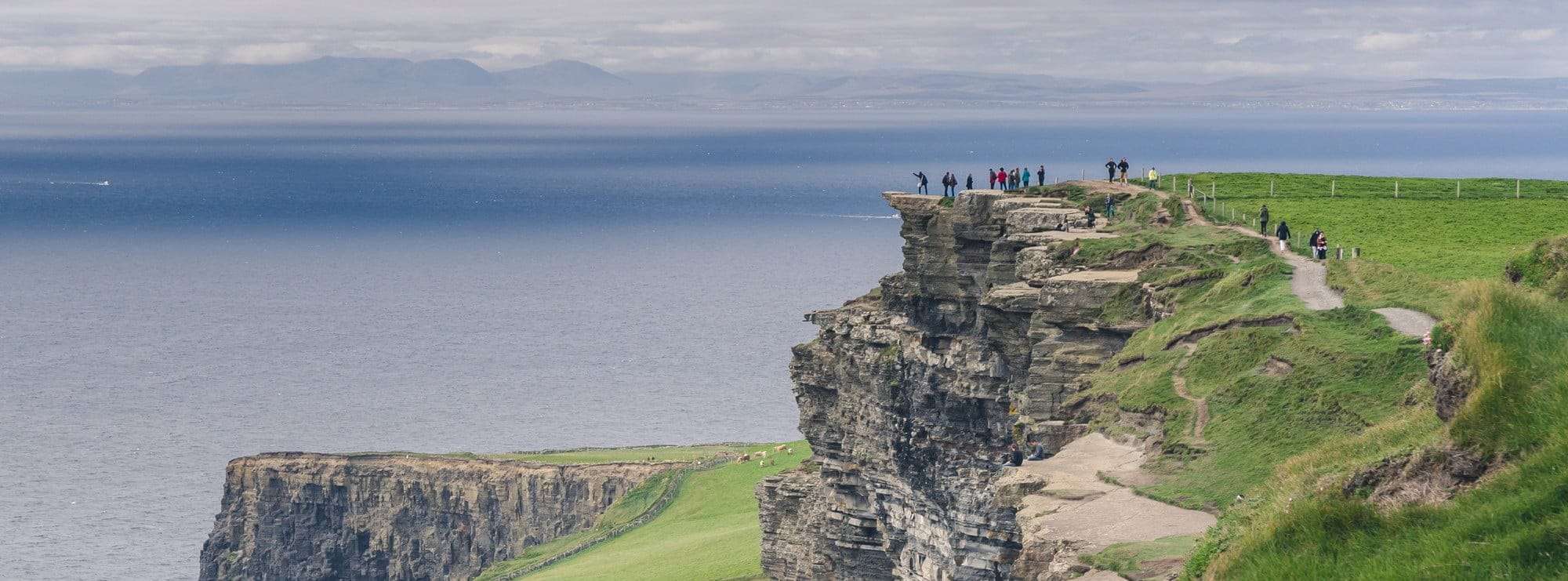
Ireland is a place where the weather never quite sticks to the plan. The mild, damp coastal climate brings rain all year round, and even in July a morning can be sunny and the afternoon grey and wet. That is part of the charm, but it should be factored into your planning.
Spring and early summer, from April to June, are often the most pleasant months. The days grow longer, the landscape is changing colour, and there are fewer visitors than in summer. Autumn, from September to October, is also good, particularly for anyone who wants to walk or drive along the coast without fighting for space.
July and August are high season. This is when most Irish holiday resorts are at their liveliest, but also when accommodation and car hire prices are at their highest, so you should book well in advance. Winter is mild compared with Denmark, but darkness falls early, and a good number of small towns and attractions have shorter opening hours or close at weekends outside the season.
If budget matters most, the shoulder season in May or September is the best choice. You get much of the green landscape without paying summer prices.
Going back 100 years, this is how Ireland looked
Let us dig a little deeper and go back roughly 100 years, to 1922, when Ireland was split into the division that exists today, in which a smaller part of Ireland to the north (Northern Ireland) still belongs to the United Kingdom. The country consists of 32 counties, six of which lie in Northern Ireland. The island was settled by the Celts in the 4th century BC. For over 100 years the Celts defended themselves against Vikings, especially from Denmark, who were driven out in 1014 by King Brian Boru.
We apologise on the nation’s behalf, and can report that Danes are very welcome today.
How to get there and get around
Most Danes fly to Ireland. There are direct connections from several Danish airports to Dublin and a few other Irish cities, but the choice varies from season to season, so it is wise to check the routes when planning your trip. The flight is short, so it is nothing to dread for anyone who likes to get going quickly.
You can also take the ferry. Ferries sail from Denmark to Britain, from where you can continue by ferry to Ireland. It takes longer, but it lets you bring your car, which is an advantage if you want to see a lot of the country on your own.
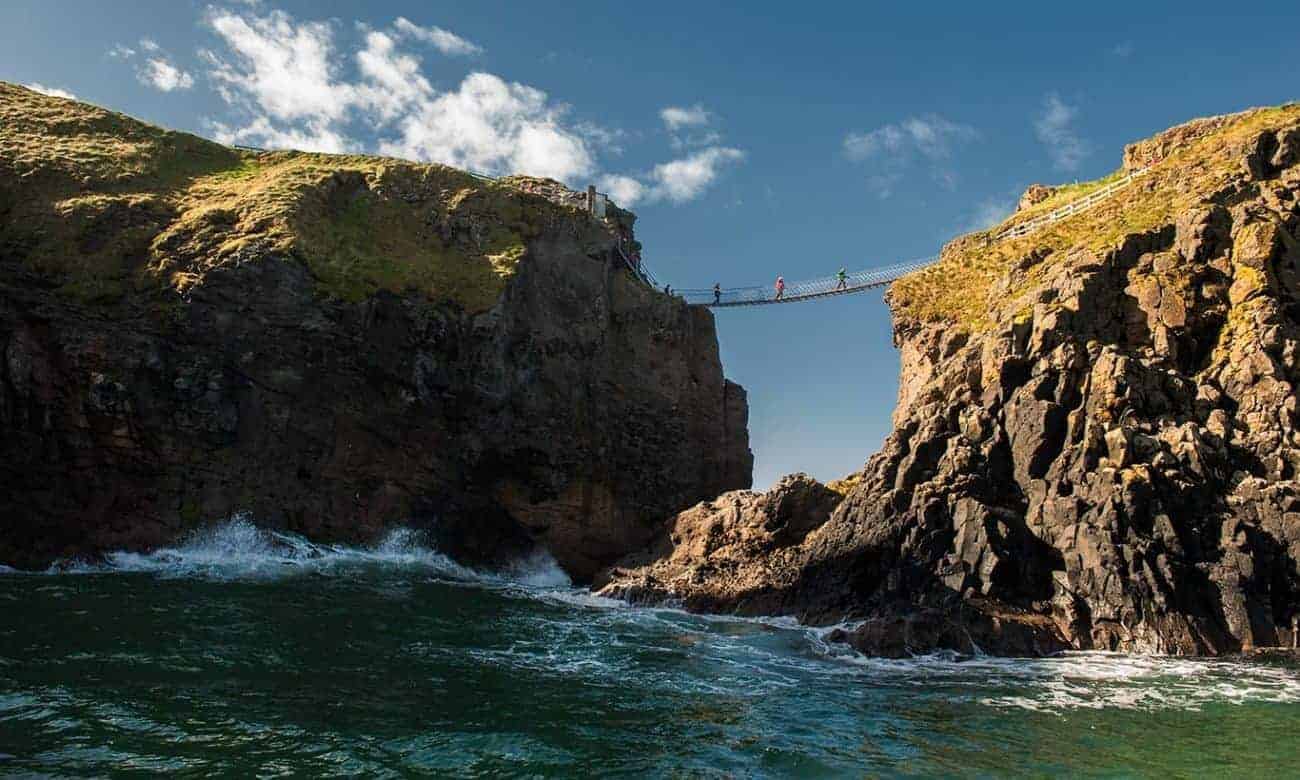
Within the country, the car is the most flexible option. Many of the smaller roads are narrow, winding and often have no hard shoulder, and you drive on the left, which takes a few hours to get used to. The steering wheel is also on the opposite side of the car. Anyone who feels unsure should consider having a driver or using the public transport links between the largest towns.
Buses and trains cover the main routes, but they do not run everywhere. For the small villages and coastal areas, your own transport is almost always necessary.
Ireland in brief
Ireland is a country in north-western Europe.
Capital: Dublin
Currency: Euro
Population: 4.773 million (2016)
More to come
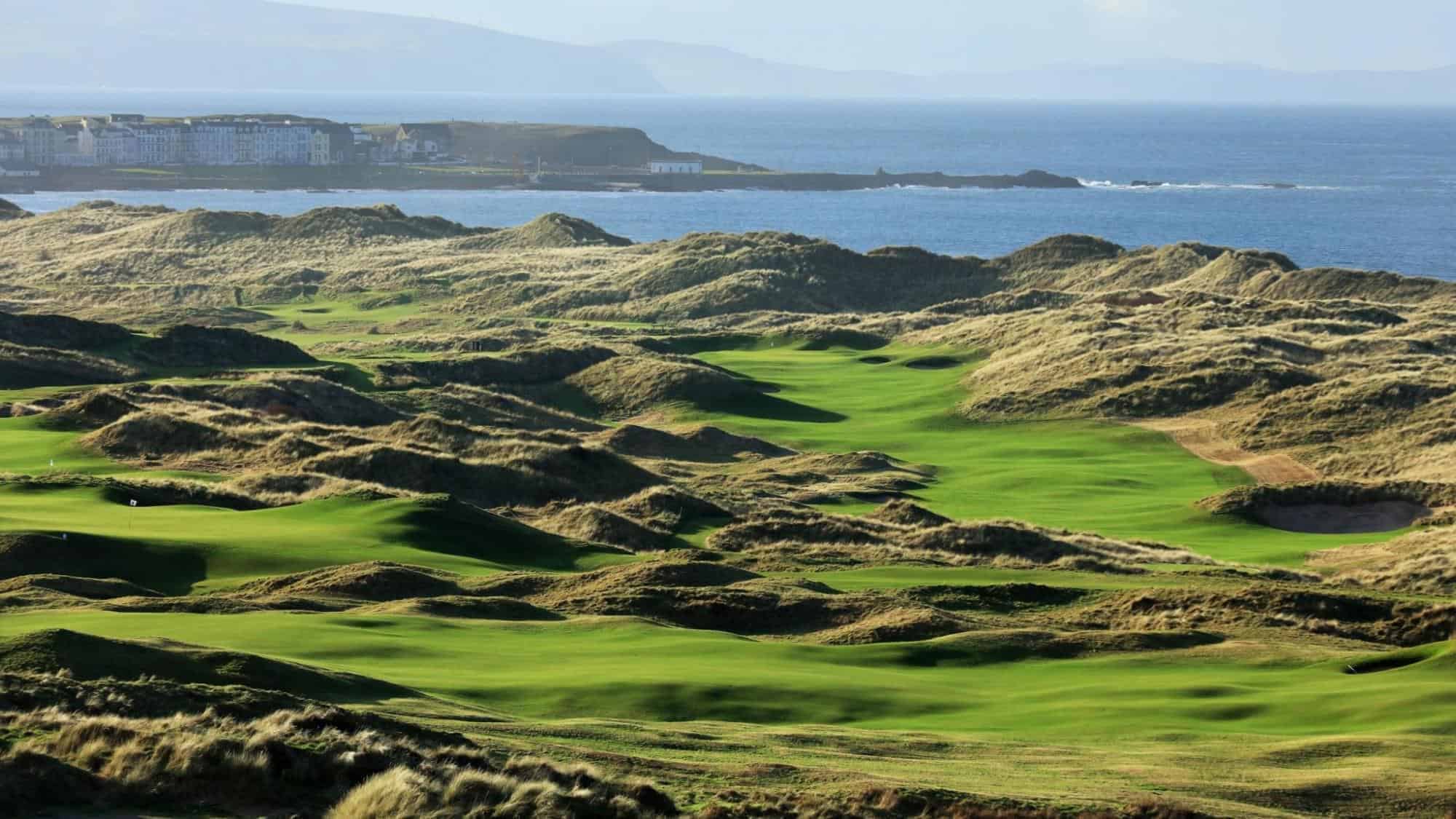
On traveltalk.dk we write a great deal more about the country, its history, sights, pubs, golf, food and gastronomy, road trips and travel tips. Among other things, an introduction to the 10 best golf courses is on its way, including The K Club just outside Dublin. They are famous for their high quality and atmosphere, and make an obvious destination.
See Ireland’s official travel website
Travel to Ireland
- Europe’s greenest island is Ireland
- Getting to Ireland
- Golf trips to Ireland
- Christmas around the world, also available as video
- Watch the Ireland video on YouTube
More articles about Ireland
Where to stay
Ireland offers a wide range of accommodation, and this is reflected in the prices. Large hotels are found in Dublin and the bigger cities, while the countryside is often dominated by smaller family-run places. This is where you will often find the best service.
Bed and breakfast is the classic Irish option. It is typically a private home with a few rooms, a breakfast of fried bacon, eggs and sausages, and a host who is happy to offer good advice about the area. The rooms are often simple but clean and homely. It is one of the best ways to get close to local life.
Many pubs also have rooms on the first floor or in an annexe. This is handy if you want to stay in small villages where there are few other options, and you can often eat and drink in the bar in the evening. Noise from the bar can carry late, however, so anyone sensitive to sound should ask about the room when booking.
Price levels are generally higher than many people from Denmark are used to, particularly in Dublin and the larger tourist towns. A simple B&B outside the peak season is cheaper than a hotel in the centre, and there are good deals to be found outside the high season. It is wise to book well ahead in summer.
Food and drink
Irish food is simpler than most people expect, and it is built on produce from the sea, the fields and the meadows. The best way to experience it is in a pub, where the dishes are often homemade and suited to what is in season.
Irish stew is a classic dish of lamb or mutton, potatoes, carrots and onions, slowly simmered until tender. Boxty are potato pancakes, served both as a main course and as an accompaniment. Fish and shellfish are also strong, especially along the coast, where mussels, prawns and crabs are found in many varieties. It is an obvious choice to eat them at a restaurant close to the sea.
As for drinks, Guinness belongs in almost every pub, but Irish whiskey is also worth tasting. Irish whiskey is typically distilled three times, which gives it a smoother flavour than many Scotch varieties. Many distilleries offer tours where you can sample different vintages. It is a good idea to book in advance.
The best experiences are found in pubs in smaller towns, where live music is often played at weekends. This is where the tradition truly lives, and where there are fewer tourists.
What it costs, and what you need to know
Prices in Ireland vary a great deal, and they are generally higher than in Denmark, particularly in Dublin and other tourist towns. A meal in a pub is often reasonable, while a restaurant with a set menu can quickly become expensive. It is a good idea to check the menus before sitting down.
Transport is also a significant expense. Car hire, petrol and parking can add up quickly, and tolls apply in several places. Public transport is cheaper, but it does not cover every area. Accommodation, as mentioned earlier, varies a great deal by season and location.
The official language is English, and almost everyone speaks it. Irish Gaelic is used particularly in some areas on the west coast, and signs are often bilingual. In the republic you pay in euro, and cards are accepted almost everywhere. Smaller places may still be cash only, so it is handy to carry some.
Ireland is generally a safe country to travel in. As everywhere, however, you should keep an eye on your belongings in larger cities and take ordinary precautions, especially at night. The weather can also be a challenge for hiking and coastal walks, so it is wise to pack suitable clothing.