
From the traveltalk.dk family – started in Denmark in 2018
Read in: Dansk (original)
Discover beautiful Ghana
Ghana is a country in West Africa. The capital of this large African nation is Accra. The country borders Ivory Coast to the west, Burkina Faso to the north, Togo to the east and the Atlantic Ocean to the south. Before the colonial era, the land was made up of a number of kingdoms. Denmark had a colony here and profited from gold mining for many years, and from the slave trade as it did in the West Indies. Today the country is democratic, progressive and peaceful, with a great deal to see.
How to get there
Accra’s international airport is Ghana’s main gateway for most travellers. There are direct connections from several European airports, while other travellers typically fly via a hub in Europe, the Middle East or West Africa. Check route maps with the airlines, as connections change.
The price of a flight varies considerably by season, booking time and travel class, so it makes no sense to give a fixed sum here. Compare several dates, and be aware that tickets in peak season and around public holidays often rise markedly.
As a Dane, you need a valid passport that has at least six months’ validity from the date of entry and contains at least two blank pages. Make sure you obtain a visa before departure, and as rules and procedures can change, check the current arrangements with Ghana’s representation or the Danish Ministry of Foreign Affairs before you book.
Also bring copies of your documents and keep digital versions, so you have them to hand during your trip.
When is the best time to travel?
Ghana lies close to the equator, so the temperature varies only slightly over the year. It is humidity and rainfall that determine when it is comfortable to be there.
The main rainy season typically falls in spring and early spring, while there is also a shorter rainy period in autumn. Many travellers prefer the drier period from November to March, when dust from the Sahara can give a hazy sky in the north, but rain is less frequent. The coast and Accra are hot and humid all year round, and the northern parts of the country are drier.
Rain often comes in heavy downpours that can make roads in the lower-lying areas difficult to get along. It is therefore wise to allow a good margin if you travel during the rainy season.
Ghana has several traditional harvest festivals held by local peoples, and they are a good time to experience the culture up close. Dates vary from area to area and from year to year, so check them locally before building a trip around them.
What can you experience?
See Africa’s tallest waterfall. (360 degree video tour) Our own in-depth guide to African food. Explore more than 20 travel destinations in Africa Visit Ghana, official travel guide
How to get around
Ghana has a fairly well-developed network of buses, and they are the most widespread way to travel between towns. The large bus companies run on fixed routes between Accra and the bigger cities, while smaller buses and minibuses, known as trotros, cover shorter stretches and leave once they are full. It is cheap, but it can be time-consuming and cramped, and you should expect departure times to be seldom precise.
Taxis are available in all the larger towns. Many are not fitted with a meter, so agree on the fare before you get in. In Accra it is also common to use ride-hailing apps, which can make it easier to agree on a price and route in advance.
Hiring a car can give you great freedom, but driving is challenging. Traffic in the towns is dense and unpredictable, many roads are in poor condition, and there are often roadblocks and pedestrians at the roadside. Choose a car with good ground clearance, and consider hiring a local driver if you have no experience of driving in West Africa.
There is a train service, but it is limited and not a reliable choice for most travellers. Plan your transport with a margin, especially when you need to continue to the more remote areas.
15 days across West Africa
Quote from the website: “The three West African countries are a treasure trove of experiences. Especially for Danes, because Denmark held colonies from 1659 to 1850 and extracted gold, ivory and, later, slaves. The West African coast was – very aptly – called the Gold Coast.
The old Christiansborg fort
The old Christiansborg fort is now called Osu Castle, and we are on a tour of Osu with Professor Wellington, who is an expert in history and grew up in Osu and therefore knows all the district’s original families, buildings, shortcuts and tales of robbers. The sweep of history becomes vivid for us when we visit the former palaces of two of the most famous and notorious kings of the kingdom of Dahomey in Abomey. In Europe Dahomey was feared as a bloodthirsty kingdom, while in present-day Benin it is admired for its resistance to invading colonial powers.
Destinations in Africa
- Angola
- Botswana
- Cape Verde
- Egypt
- Ethiopia
- Kenya
- Madagascar
- Morocco
- Mauritius
- Namibia
- Seychelles
- South Africa
- Tanzania
- Tunisia
- Uganda
- Zambia
Where to stay and prices
In Accra you will find everything from simple guesthouses and small hotels to large international hotels with pools and restaurants. The cheapest accommodation is typically in districts close to the markets and local bus stations, while the expensive hotels are in the quieter neighbourhoods by the coast and in the newer business districts. On the coast there are also beach hotels and lodges that are popular with travellers wanting to unwind.
Outside the capital the choice is smaller, and in the smaller towns and villages there may be simple guesthouses and pensions. In areas with natural attractions and near historic sites you will often find small lodges and eco-lodges with a more personal style.
Prices for food in local restaurants and at street stalls are generally low, while international restaurants in Accra cost markedly more. Transport by bus is cheap, while taxis and hire cars are more expensive, especially if you hire with a driver. Experiences such as guided tours of historic sites vary in price and can often be negotiated or agreed directly with the guide.
It is sensible to use local currency for small purchases and to carry cash, as card payment is not always possible outside the larger places. For larger sums, it is a good idea to check the payment options in advance.
Safety, health and practical advice
Ghana is generally regarded as one of the more stable and peaceful countries in West Africa, but as in most big cities, petty theft and pickpocketing are a real risk, especially at markets, bus stations and in crowds. Keep an eye on your bags and phone, and avoid displaying large sums of money. Always check the current travel advice from the Danish Ministry of Foreign Affairs before you travel, as conditions can change.
Before departure, you should speak to your doctor or a travel vaccination clinic about recommended vaccinations. Yellow fever is a special case, as proof of vaccination may be required on entry, so check the current rules. Malaria is widespread in the country, and you should talk to your doctor about preventive medication and protection against mosquitoes, including a mosquito net, insect repellent and long-sleeved clothing in the evening.
The local currency is the Ghanaian cedi. English is the official language and is widely used in business, while many local languages are spoken. A few words in the local language are often received with a smile.
When it comes to etiquette, a polite greeting is important, and it is considered rude to get straight to the point without first asking after family and wellbeing. Use your right hand when giving or receiving things, and be aware that you should ask permission before photographing people.
Food and drink
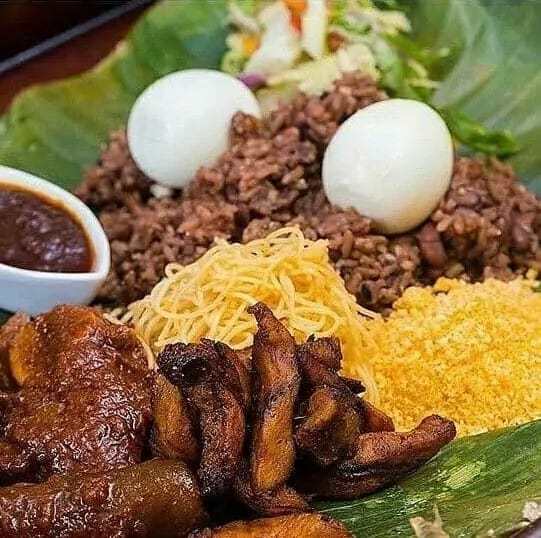
Local food is built around rice, vegetables, fish and meat, and it is often heavily spiced. Jollof rice is one of the best-known dishes. It is cooked in a large pot with tomato, pepper and onion, and it is often served with chicken, fish or beef. Fufu is a starchy staple made from cassava and plantain, which is often eaten with a rich soup. Kelewele is ripe bananas, cut into cubes and fried with ginger, chilli and spices. It is typically sold as street food and makes a good starting point.
You will find the best local dishes at the large markets and in small eateries, known as chop bars, where you eat at simple tables. Here the food is prepared for the day’s customers and is often freshly cooked. This is also where locals eat, which is a good sign. Avoid food that has been standing out in the heat without being kept warm, and be cautious with raw vegetables and salads if you are not sure where the water came from.
Do not drink the tap water, and do not use it to brush your teeth if your stomach is sensitive. Buy bottled water with an intact seal, or use water that has been boiled or filtered. Ice in drinks is not always made from clean water, so ask before you order. Wash your hands often, and use hand sanitiser when soap and water are not to hand.
A travel route through southern Ghana
A good first route starts in Accra, where you can spend a few days exploring the city’s markets, museums and historic coastline. From Accra it is a shorter drive to Cape Coast, which typically takes a couple of hours, depending on traffic and road conditions. In Cape Coast you visit the castles that tell the story of the slave trade and the European trading forts along the coast. These are heavy experiences, and they are part of Ghana’s history, to which many Danes have a particular connection.
From Cape Coast the journey typically heads north to Kakum National Park, where the rainforest has canopy walkways that run high above the treetops. The drive there usually takes a few hours, though it depends on traffic and roads. Many choose to stay nearby so they can walk early in the morning, when both the wildlife and the views are at their best.
The final leg of the route takes you inland to Kumasi, the capital of the Ashanti Region. It is a longer journey, which can take a full day by bus or car. Plan with a good margin, and allow for the fact that rain and road blockages can extend the trip. Kumasi has a lively market, and the city is the centre of traditional Ashanti culture.
What it costs per day
Prices in Ghana vary greatly depending on where you are and which standard you choose. This makes it difficult to give fixed amounts, but it is possible to get a basis for your budget. Expect a simple overnight stay in Accra and the larger cities to cost somewhat more than in rural areas, and international hotels with a pool and restaurant to cost considerably more than guesthouses. Always check prices for the option you are considering, as they change quickly, and the price may be quoted in both cedi and euros.
Food in local eateries and at street food stalls is cheap compared with Denmark, and a good local portion can often be bought for a small fraction of a European dinner. International restaurants in Accra are more expensive, and the same goes for hotel restaurants. Bottled drinking water is a fixed expense that you should budget for every day.
Travelling by bus and minibus is the cheapest way to get around, while taxis and rental cars are more expensive, especially with a driver. Agree the taxi fare in advance, and ask whether it is a total price for the journey. Guided tours of historic sites vary in price, and these can often be arranged directly with the guide. Carry cedi in cash for smaller purchases, as card payments do not always work outside the larger cities.
Water, heat and illness
Water is the biggest daily risk, and you should only drink water that you are certain is clean. Use bottled water with an intact seal, or boil water and let it cool before drinking. A water filter can be a good investment if you are travelling for a long time. Also use clean water to brush your teeth and to rinse fruit and vegetables that you do not peel.
The sun is strong all year round, and even when it is cloudy you can get sunburnt. Use high-factor sunscreen, a hat and clothing that covers you, especially in the middle of the day. Drink plenty, and eat salt with your food when you are sweating heavily. Take a break in the shade, and avoid exerting yourself hard during the hottest hours. Heatstroke is serious, and signs such as dizziness, nausea, confusion or high fever should be taken seriously.
Outside the capital, medical help may be further away, and the equipment is not always of a high standard. Take a basic travel first-aid kit with painkillers, stomach medicine and wound cleaner, and keep your own medication in its original packaging. In the event of illness or accident, contact your travel insurance promptly and arrange transport to a larger city or to Accra if the condition requires it. Get in touch with the Danish embassy or the Danish Ministry of Foreign Affairs if you need support, and always keep your insurance documents saved digitally.