
From the traveltalk.dk family – started in Denmark in 2018
Read in: Dansk (original)
The whole island sits inside a huge coral reef — and there is no time difference from Denmark
Mauritius is a breathtaking dream island with turquoise sea, beautiful beaches, excellent shopping and a distinctive local culture. It offers both beach and sun and plenty of experiences on a sizeable island with a fascinating history and plenty to see. And it is relatively easy to reach, with no time zone change.
How to get there
There is no direct flight from Denmark to Mauritius, so most travellers connect at least once. The journey from Denmark typically takes around 12 to 16 hours, depending on the connection and waiting time. It is a long day, and you should expect to arrive during the night.
The airport is in the south of the island, and the transfer to hotels in the north usually takes an hour or more, depending on where you are going. Many hotels offer transfers for a fee, which is the most convenient option after a long journey. You can also take a taxi, but the fare should be agreed in advance.
It is worth checking whether your travel package includes a transfer, as this can vary considerably. And remember that there is a time difference of several hours from Denmark, although the island itself does not change clocks in line with Danish summer time over the same period. You should check this yourself when booking.
Where is Mauritius?
Mauritius is an island nation lying 900 km east of Madagascar. The island, which is considered part of Africa, has an area of approx. 1,900 km². For comparison, Lolland, Denmark’s fourth-largest island, covers 1,243 km².
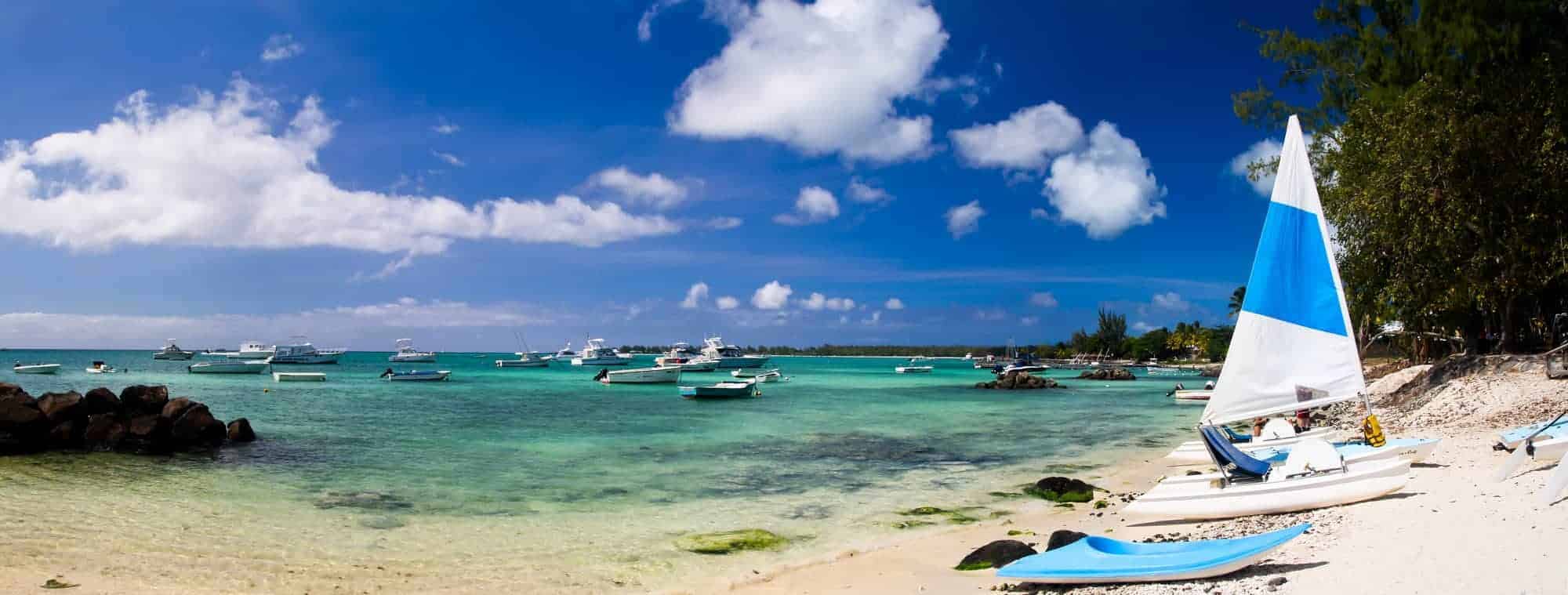
Large parts of the island are covered by green sugar cane plantations set in ochre-red soil. The capital and largest city is Port Louis.
The island sits inside a huge coral reef
The island lies off the coast of Africa within a vast coral reef and remains a fairly unspoilt holiday destination. Although the Portuguese discovered the island, the first to settle it were the Dutch, in 1598. The French then held power over the island until 1810, when the British drove them out.
Want the essentials about Mauritius in 30 seconds? See our travel facts here.
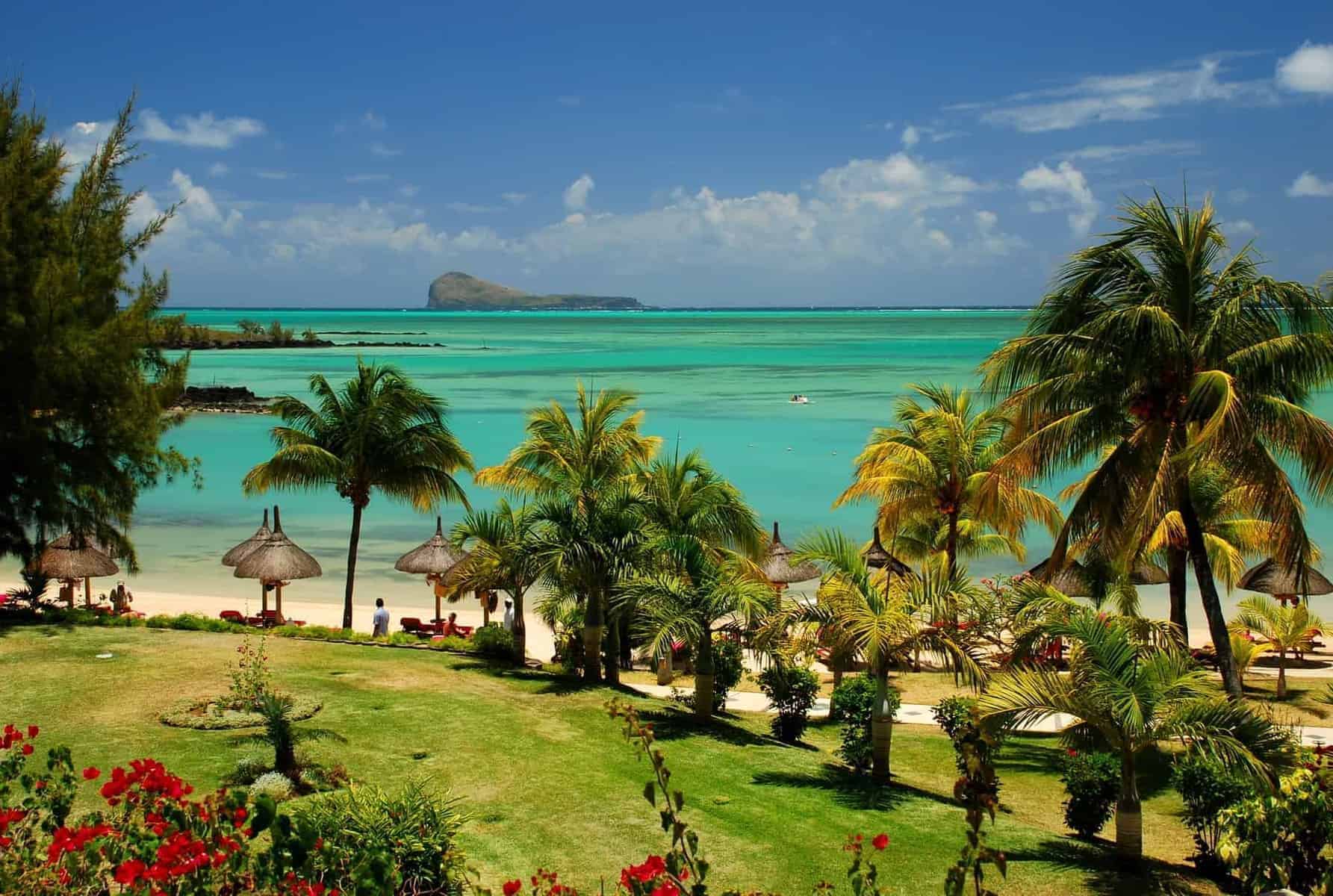
What can you experience when travelling to Mauritius?
Large parts of the island are covered by green sugar cane plantations set in ochre-red soil. The capital and largest city of Mauritius is Port Louis.
The island lies off the coast of Africa within a vast coral reef and remains a fairly unspoilt holiday destination. Although the Portuguese discovered the island, the first to settle it were the Dutch, in 1598. The French then held power over the island until 1810, when the British drove them out.
Travel to Mauritius with Lords Travel
The northern part of the island and the capital Port Louis
The northern part of the island allows you to explore this large part of the island and also to visit Port Louis (the busy capital of Mauritius) and the Pamplemousses Botanical Garden, where you can see the wonderful exotic flora of the atoll, including the famous giant water lilies. The northern part of the island also gives you the chance to see Grand Baie and to explore the exotic marine flora and fauna.
How to get around
Mauritius is large enough that you will not get very far on foot if you want to see more than your own hotel area. Most locals use buses, which are cheap and run between the larger towns, but they can be crowded and slow, and it takes a little patience to work out the routes.
Taxis are widespread and a good option for short trips, but you should always agree the price before getting in. Many tourists choose to hire a car, which gives great freedom to explore the island’s south coast and interior. Remember that traffic drives on the left, and that roads in the mountainous areas can be narrow and winding. It is a good idea to have experience of driving on the left before you set off.
Guided tours are a more relaxed way to get around, especially if you want to see several attractions in one day. They cost more, but you avoid having to navigate yourself and usually gain local knowledge into the bargain. The choice depends largely on how much you want to plan yourself.
Prices and budget
Prices in Mauritius vary widely depending on where you stay and what you choose to buy. Accommodation is the biggest expense. A simple guesthouse costs far less than a large resort, and prices rise markedly in high season. It is a good idea to compare several options and check what is included in the price.
Food can be inexpensive if you eat at local street food stalls and small eateries, whereas the large restaurants at the hotels and in Grand Baie are more expensive. Excursions and transport also vary a great deal. Guided day trips are often the largest outlay after accommodation.
The currency is the Mauritian rupee, which you can withdraw from cash machines and exchange at banks and hotels. It is wise to carry some cash for the smaller places, where card payment is not always possible. Exchange rates can change, so check them before departure if you want a precise budget in euros or kroner.
Health and safety
Tap water is not recommended for drinking, and it is best to buy bottled water, including for brushing your teeth. Most hotels provide filtered water or bottled water for guests. Also be wary of ice and unfiltered drinks from small stalls.
The sun is strong on the island, even though it is cloudy for part of the time. Use sunscreen with a high protection factor and seek shade during the hottest hours in the middle of the day. Mosquitoes may be present, especially near water and in the evening, so a good insect repellent is worth bringing. It is also a good idea to check the current vaccination recommendations with your doctor or a travel clinic before departure.
Mauritius is generally a safe destination, but ordinary caution is advisable. Do not leave valuables lying about on the beach, and use the hotel safe. Be aware of the sea currents, particularly when there are waves, and follow local guidance when swimming. Keep an eye on the advice of the local authorities if forecasts call for severe storms.
Where to stay
Mauritius has several quite different areas, and the choice of location affects your holiday more than you might think. Grand Baie on the north coast is the liveliest beach town, with restaurants, shops and an active nightlife. It is easy to get around on foot here, but there is also more traffic and noise than in other parts of the island.
The south and west coasts are calmer and more spread out. Here you will find many of the large resorts with their own beaches and long, quiet days. The west coast is known for beautiful sunsets, while the south has dramatic cliffs and a wilder character. However, you will need a car or a transfer to reach town if you plan to spend time there.
Accommodation options range from small guesthouses and guest houses to large all-inclusive luxury hotels. There are good choices at every price level, but the best hotels and popular areas should be booked well in advance, especially during high season.
Food and dining culture
Mauritian cuisine is a blend in which Indian, Chinese, African and French influences meet. Creole cooking is characterised by strong spices, fresh fish and vegetables, and many dishes are stews served with rice or bread. Be prepared for food that can be quite spicy.
One of the best-known local dishes is dhal puri, a thin, stuffed pancake with yellow split peas, sold on the street and in small stalls. It is cheap, filling and a good way to taste the local cooking. Other popular dishes include various fish and shellfish prepared in Creole sauces, as well as curries with chicken, lamb or vegetables.
Street food stalls and markets are the best place to experience authentic cooking, while the restaurants at the hotels and in Grand Baie offer a more refined version. Choose places with plenty of local customers and where the food is cooked fresh in front of you.
Grand Baie, Mauritius’s largest beach town
Grand Baie is clearly Mauritius’s largest beach town. This is where you should stay if you want good beaches, street life, shopping, nightlife and restaurants from around the world. Grand-Baie is a coastal village in Mauritius located in Rivière du Rempart District, with its western part also falling within Pamplemousses District.
Prefer the south of Mauritius?
Surfing or windsurfing on the south of Mauritius is a fantastic experience for anyone who loves the sea. In the southern part of Mauritius you can see Trou aux Cerfs (a huge natural volcanic crater). Other attractions during a holiday on the southern part of the island include the incredible scenery of Grand Bassin, a sacred lake located high up near the island’s mountain peaks. You will visit a number of temples, the magnificent Chamarel waterfall and the seven-coloured earth. (This is a captivating natural example of the results of volcanic eruptions.)
Are you into diving and surfing?
If you enjoy water sports and the sea, this island holiday has plenty to offer. Remember to stop at the harbour front for a short boat trip to the wonderful unspoilt island of Ile aux Cerfs. Here you can enjoy a range of water sports and surfing activities such as parasailing, banana boat rides, speedboat trips and more.
Experience Domaine Les Pailles and the original Mauritius
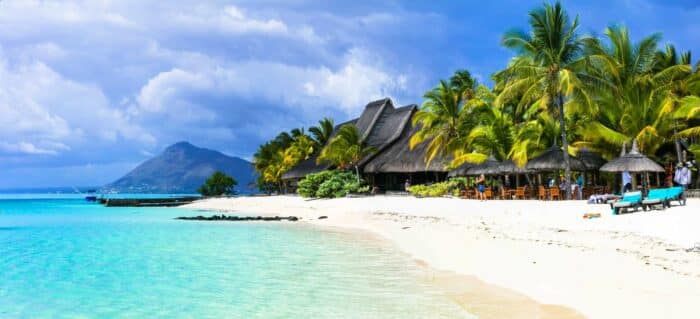
During your Mauritius holiday, spend some time visiting Domaine Les Pailles, where you can revive the island’s old ways of life in the most beautiful surroundings. You can explore this lovely island at your own pace and relax. With the sea on every side, you need not miss out on seafood, prawns, oysters, and fish and prawns served with sauce rouge during your island holiday in Mauritius.
Travel to Mauritius
- Travel to Mauritius – Explains why the island is so exceptional
- Why travel to Mauritius? – Here you get a quick overview of what to see and where to stay
- Golf holidays – Here you will find the most beautiful golf courses, enough for an entire golf trip
- Street food from Mauritius – Discover the distinctive street food with influences from Africa, Asia and India in particular
- Tour operators to Mauritius – Suggestions for tour operators
Other beautiful destinations with incredible beaches, sea and sun
- Boracay, Philippines
- Palawan, Philippines
- The Seychelles
- Thailand (Phuket, Chiang Mai)
- Cape Verde
- The Caribbean, with more than 20 islands and travel options
winetalk.dk with food from around the world
More articles about Mauritius
📄 Quick facts about Mauritius
- Capital: Port Louis
- Languages: English (official), French and Mauritian Creole in practice
- Currency: Mauritian rupee (MUR)
- Best time to visit: May to December (drier, lower cyclone risk)
- Known for: Beaches, the home of the extinct dodo, a multilingual culture
💡 Traveltalk tip
Insider tip: Avoid January to March, when the cyclone risk is highest — May to December offers the most stable conditions.
Practical travel information for Mauritius
📄 Entry & visas
Visa-free for Danish citizens for up to 90 days. Your passport must be valid for at least 3 months after your departure date. Proof of accommodation and a return ticket may be requested on arrival.
💡 Good to know
The best weather is from May to December; January to March is the humid cyclone season. Driving is on the left, and both English and French are widely used on the island.
More about Mauritius
Nearby
Nigeria
Nigeria is a religiously observant society, where Islam is widespread in the northern parts of the…
Tanzania
Few destinations in Africa can match Tanzania's wealth of wildlife, cultures and sweeping landscapes, from savannah…
Tunisia
Tunisia is the ideal place to visit for a holiday or a leisure break and enjoy…


