
From the traveltalk.dk family – started in Denmark in 2018
Read in: Dansk (original)
Zambia has often been branded as ‘Real Africa’ or ‘Rough Diamond’ on the dark continent, as Zambia’s beauty is unmatched in this world. It is a country that holds the African bush, but also boasts some of the most spectacular water resources; a resource that is incredibly rare and precious in the southern African region.
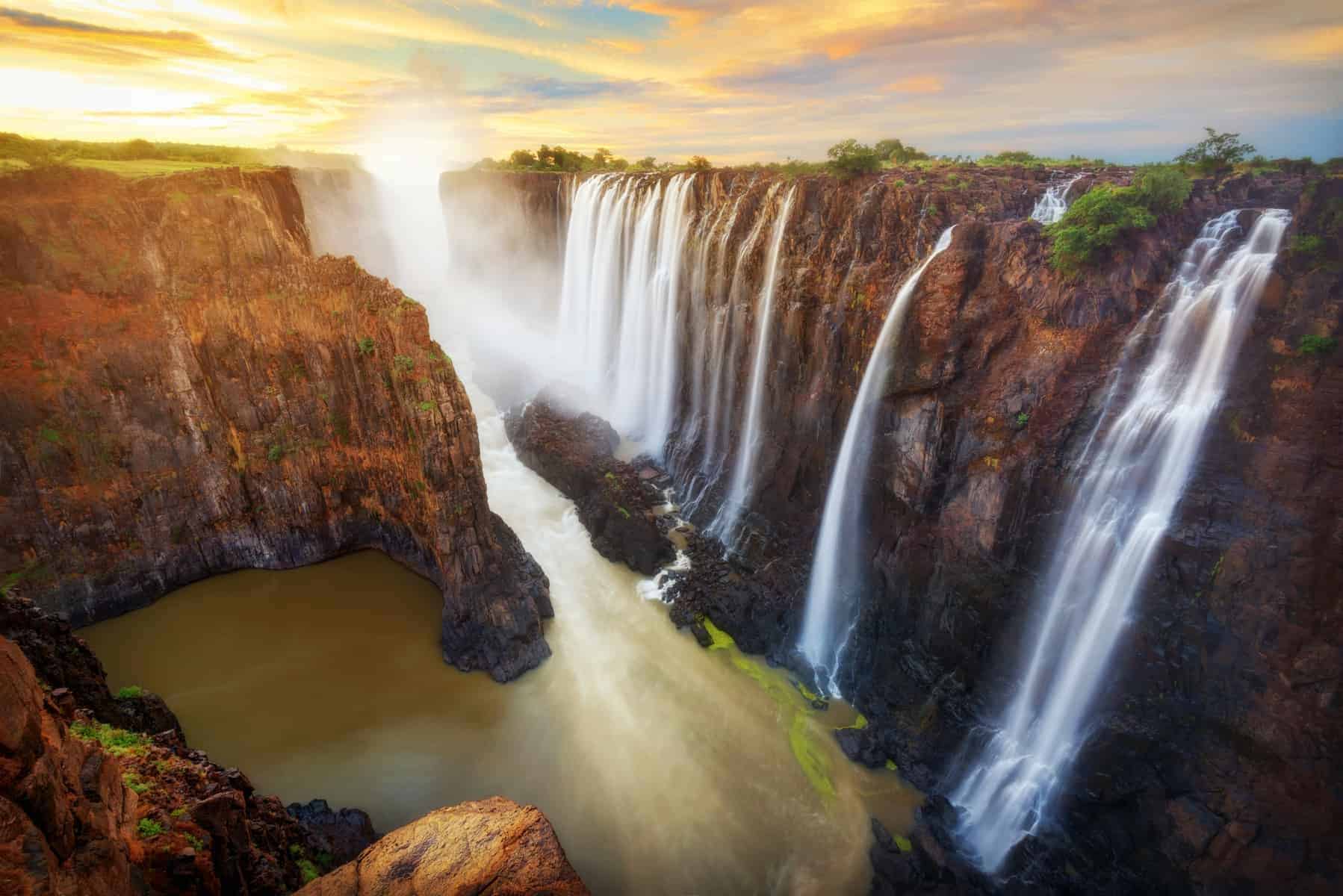
Water from Victoria Falls to Kariba Dam
Beyond the unrivalled grandeur of Victoria Falls, there are dozens of equally impressive cascades throughout this wild country, as well as a lavish collection of lakes and wetlands, the principal of which is the man-made Kariba Dam. Some safari specialists even offer (at the traveller’s own risk) dedicated tours for ‘waterfall junkies’ – visitors who simply cannot get enough of the crystal-clear water plunging hundreds of metres down.
Zambia’s white, wild waters are attractive not only to people but also to a staggering spectrum of more than 700 different bird species, and are the ‘lifeblood’ of large herds of animals still roaming the wilderness. A Zambia safari will quite literally be packed with gems – those you can look at and those you can take part in. Activities range from the legendary ‘deep bush’ walking safari to some of the wildest whitewater experiences on the turbulent Zambezi River, but it is undoubtedly the fishing that gets most visitors hooked.
Thrilling Wild Fishing
Zambia boasts some of the most exhilarating and hard-fought wild fishing in the world, with the powerful and rather muddy tigerfish as its headline act. Remote villages in Zambia still offer visitors a brief glimpse of the local inhabitants’ traditional way of life, making it the ‘real deal’ among African safaris, with the added attraction of being regarded as one of the safest countries in the world to visit today.
With the Line in Wild Africa: Tigerfish Fishing on the Zambezi River
Zambia Safari and Other Travel Experiences
Tour operators can tailor the perfect trip for visitors to this wild and beautiful corner of Africa, where some of the suggested highlights are:
- Bungee jumping into the deep, dark gorge below Victoria Falls.
- The Chimfunshi Chimpanzee Sanctuary and animal orphanage near the town of Chingola.
- Safari in South Luangwa National Park, one of the largest natural wildlife reserves in the world.
- Discover Livingstone Town, named after the famous Victorian explorer David Livingstone.
- Enjoy a close encounter with your favourite elephant and other giants on the savannah
- On horseback with Kafue Horse Safaris.
Safari in Zambia
Safari, the Big Five in the great national parks Official tourism website for Zambia
In the Footsteps of Dr Livingstone‘s Footsteps in Zambia and Zimbabwe
Livingstone is still world-famous for his explorations of Africa’s deepest interior. An impressive feat that you can read about here, starting from Victoria Falls, Africa’s most famous waterfall, which is shared by Zimbabwe and Zambia.
See also Zimbabwe
Zimbabwe is less well known than Zambia, but no less interesting.
Best Time to Travel
Zambia has two distinct seasons. The dry season, running from May to October, is the most popular time for safari, because the vegetation is low and animals gather around waterholes and rivers. It is also the driest and coldest period, and at night the temperature can drop noticeably, especially in the highlands and in the open safari areas.
The rainy season typically arrives in November and lasts until around March. The rain makes many park roads difficult to travel, and several lodges close or open fewer days during the wettest months. In return, the landscape is green, birdlife is abundant, and there are fewer tourists. If you travel during this period, expect that some routes may be cut off.
The water level at Victoria Falls varies greatly through the year. When the river is at its highest during and after the rainy season, the waterfall is at its most powerful, and the misty spray rising above the gorge is at its most visible. In the dry months, by contrast, you can see more of the cliff and the path along the edge, but the volume of water is clearly lower. It is a trade-off to weigh before deciding on the month.
Accommodation and Travel Style
Accommodation options in Zambia range widely. In the national parks you will find in particular lodges that sit close to the wildlife, often overlooking a river or a waterhole. Tented camps offer a more intimate and simple experience, where the sounds of the animals are clear at night. Here you should be prepared for simpler standards and basic bathing and toilet facilities, but the atmosphere is one of the biggest draws.
In the towns and near Victoria Falls there is a broad selection of hotels and guesthouses, from simple rooms to more luxurious places with a pool and restaurant. Budget options are well available, but they are typically further from the parks, so you spend more time on transport.
The choice of area should reflect your travel style. If wildlife is the priority, the parks with many predators and elephants are the most obvious choice. If you would rather have relaxed days with water, nature and local culture, the area around Victoria Falls and Livingstone may be a better base. Many people combine the two, so the trip includes both wilderness and town life.
How to get there
Most travellers from Denmark fly via one of the major hubs in Africa or the Middle East and land in Lusaka, the capital’s international airport. From there, you can continue by domestic flight to Livingstone, the closest town to Victoria Falls, or to other airports near the national parks. Connections change over time, so it is wise to check routes and departure times close to your trip.
Overland connections also exist, and the border crossing at Victoria Falls between Zambia and Zimbabwe is one of the most used. Here, expect queues and administrative procedures, and it can take longer than you anticipate. If you travel with a safari operator, they will often arrange transport and border formalities, which makes the process far easier.
Visa rules for Danish citizens can change, and they also depend on how long you stay and whether you visit several countries on the same trip. Therefore, check the current requirements with the Danish Ministry of Foreign Affairs and the Zambian embassy before you book. Also make sure your passport has the necessary validity period and blank pages.
Practical matters and safety
The currency in Zambia is the kwacha. Credit cards are accepted in most places in the cities and by larger operators, but in remote areas cash is often essential. Therefore, carry a suitable amount of local currency, and be aware that exchange rates and payment options can vary. Always check the current situation before your trip.
Arrange your vaccinations well in advance, ideally several weeks before departure. A yellow fever vaccination may be required on entry depending on where you are coming from and which countries you have visited previously, so contact a travel health clinic. Malaria is widespread in large parts of the country, and prevention with medication and mosquito protection is recommended. Talk to your doctor about the right treatment for you.
In general, most safari trips proceed calmly, but you should be mindful of the usual precautions in Africa: follow your guide’s instructions in the parks, avoid walking alone in the wilderness after dark and keep an eye on your valuables in the towns. The Danish Ministry of Foreign Affairs’ travel information provides the latest recommendations and is worth reading before you travel.
Getting around the country
Distances in Zambia are large, and the roads between the national parks can be uneven and slow. Many travellers therefore choose to combine different forms of transport. Domestic flights are the quickest way to get from the cities to the remote parks, while driving is more flexible, especially if you wish to stop along the way.
By car, you often travel with a driver who knows the terrain and local conditions. This is the most common solution for visitors who want to see several areas on one trip. Public buses run between larger towns, but they are time-consuming and somewhat unpredictable, and they are rarely a practical choice between the national parks.
Private safari transport is the most comfortable solution, but also the most expensive. The price depends on distance, vehicle type and whether a guide and overnight accommodation are included. Always ask the operator exactly what is included before you book, so that no surprises arise along the way.
More about Zambia
Nearby
The Seychelles
The Seychelles are a fairly small group of islands off the coast of Africa in the…
Mozambique
Mozambique is one of Africa's most overlooked destinations – and it really shouldn't be. With more…
South Africa
South Africa has become the great African country that perhaps more than anywhere else on the…


