
From the traveltalk.dk family – started in Denmark in 2018
Read in: Dansk (original)
Chile stretches 4,270 kilometres. You have to choose a slice of it
Chile runs 4,270 kilometres down the western edge of South America and is, on average, just over 175 kilometres wide. For comparison, it is roughly 4,300 kilometres from Copenhagen to Gran Canaria. The country packs snow-capped peaks, glaciers, volcanoes, rainforest and the driest desert outside the polar regions onto one and the same passport, which is why the first decision you face is not when to travel but which third of the country to travel to. The rest of the continent is gathered on the South America introduction page.
Santiago, Maipo, and the grape that was declared extinct
The central region is the most densely populated. Here lies the capital, Santiago de Chile, where around seven million people live in the metropolitan area, with the Andes as a backdrop to the east and wine valleys within an hour’s drive to the south and west.
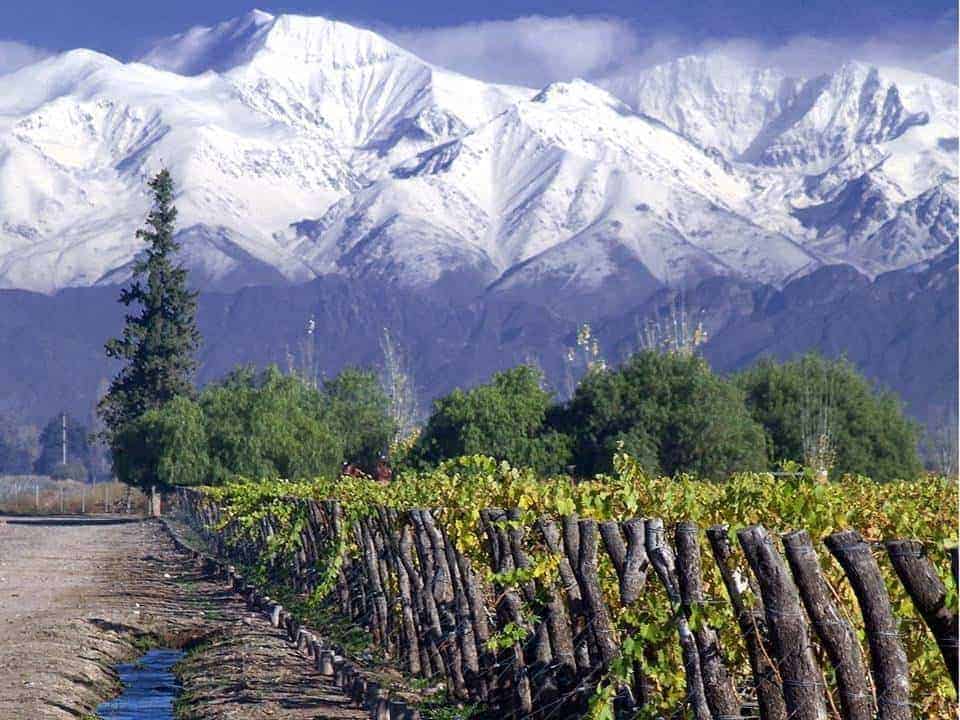
And here lies one of the finest stories in the wine world. Carménère came from Bordeaux, was wiped out there by the phylloxera louse in the 1800s and was considered extinct. But the louse never reached Chile. The vine stood all along in Chilean fields, where it was simply harvested and sold as merlot for almost 150 years, because nobody knew any better. In 1994, the French ampelographer Jean-Michel Boursiquot looked at a merlot field in the Maipo Valley and saw that the stamens were wrong. Chile recognised Carménère as a distinct grape in 1998. The picture below is from that very valley. We have covered the whole wine country on winetalk.dk’s page on Chilean wine.
There is one more thing Chile has more of than any other country. It is coming shortly.
North: Atacama, and the sky we promised
North of Santiago lies the Atacama Desert, rich in copper and minerals and so dry that there are measuring stations that have never recorded rain. The base is San Pedro de Atacama, a small clay-brown town at 2,400 metres above sea level, from which tours head out to the Valle de la Luna. The Moon Valley is not a national park, as is often written, but part of the Reserva Nacional Los Flamencos nature reserve, which matters in practice because access and opening times are managed from there.
And then there is the sky. The dry air, the altitude and the clear nights mean that Chile today hosts around 40 per cent of the world’s total astronomical observing capacity, and with the telescopes now being built, the country will pass 60 per cent by 2030. The ALMA radio telescope array stands on the Chajnantor plateau at 5,000 metres, and on Cerro Armazones the ESO Extremely Large Telescope is rising, with a 39-metre primary mirror. Several observatories welcome visitors, but they require booking well in advance; it is not something you simply drop in on.
South: Patagonia, Torres del Paine and the penguins with a season
Heading south, the landscape turns green and wet, the volcanoes stand in a line, and eventually everything dissolves into fjords and islands. Torres del Paine is the national park against which everything else is measured: the three granite towers, the Grey glacier and the W and O hiking routes, which take four to five and seven to nine days respectively. We have described the whole region, on both sides of the border, in our article on the nature and wildlife of Patagonia in Chile and Argentina, and the neighbouring country has its own page, Argentina as a destination.
Furthest south, 35 kilometres north-east of Punta Arenas, lies Monumento Natural Los Pingüinos on Isla Magdalena in the Strait of Magellan. Around 60,000 breeding pairs of Magellanic penguins come here, and the island can only be reached by boat. It is worth noting before you plan: the penguins are there during the southern spring and summer season, and the ferries operate in practice from December to February. If you come in June, there are no penguins and no boat.
Where to stay
In Santiago you will find everything from simple hostels to hotels in the central districts such as Providencia and Bellavista. Smaller guesthouses are often the best choice for a shorter stay, as you live close to the metro and the major museums.
San Pedro de Atacama is a small town, and accommodation here is first and foremost a mix of budget hostels, guesthouses with courtyard gardens and a few pricier boutique hotels. Many choose to stay in town and drive out to the desert sights early in the morning, when the temperature is pleasant.
In Puerto Natales, the gateway to Torres del Paine, there are most hostels and small hotels in the town centre. Further out in the national park you will find lodges and rustic cabins, which can often only be reached with your own transport or a pre-arranged tour. Here it pays to book early, as capacity is limited.
Wherever you stay, remember that distances are large. You should therefore choose your accommodation according to where you need to be in the coming days, not just on price.
Easter Island lies almost 3,800 kilometres out in the Pacific
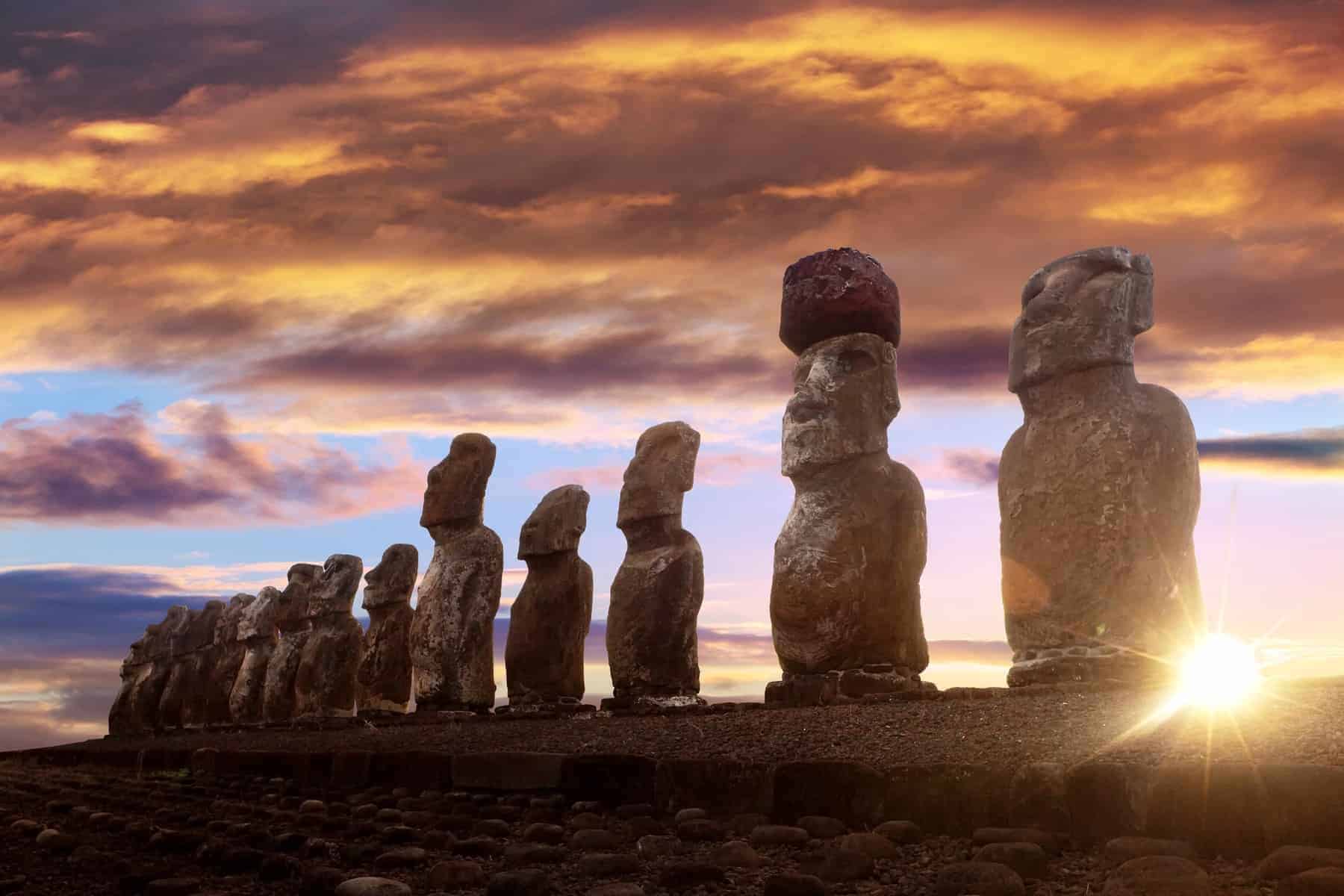
Calling it off the coast of Chile is an understatement. Easter Island, Rapa Nui, lies just under 3,800 kilometres by air from Santiago and is one of the most remote inhabited places on Earth. The roughly 900 moai statues and the Rano Raraku quarry where they were carved have been a World Heritage Site since 1995.
The trip requires preparation that no other part of Chile demands. Since 1 August 2018, Chilean law 21.070 has set a 30-day limit for visitors, and it is checked on arrival: you must have a return ticket within the 30 days and a confirmed booking at an accommodation registered with the tourism authority SERNATUR. The law came about because waste, water supply and pressure on the small town of Hanga Roa had grown beyond what the island could bear.
Food and drink: from empanadas to pisco sour
Chilean food is simpler than you might think, and it makes the most of the few ingredients the country has in abundance. Empanadas are the most widespread: a baked or fried pastry filled with beef, onion, raisins and a chopped olive, or with cheese. Pastel de choclo is a gratin of sweetcorn and meat filling, which belongs in homes across central Chile. Cazuela is a slow-cooked soup of meat, squash and corn, eaten especially in the cold months.
In Santiago, you should also try the small restaurants serving sandwiches such as the completo, with sausage, avocado and tomato. It is everyday food rather than tourist fare, and it is cheap.
For drinks, the pisco sour is the best known. It is made with pisco, lemon juice, sugar and egg white, and it is slightly tart and frothy on top. Chilean wine is equally worth tasting, particularly the red wines from Maipo and Colchagua.
Further south, the sea plays a bigger role. In Patagonia you will often be served lamb and fish, and in the coastal towns you should try the local shellfish. Further north in the Atacama, the most obvious thing to try is the local dishes of chicken and vegetables, which you will find in the small eateries of San Pedro.
Prices and budget
Chile is more expensive than most other places in South America, but cheaper than Europe, especially when it comes to food and local transport. It is a good idea to expect that cities such as Santiago are the cheapest places to stay, while the remote areas of the Atacama and Patagonia quickly add up in price, because everything has to be transported there.
Accommodation varies the most. Budget hostels and simple guesthouses can be found everywhere, but in the high season in Torres del Paine and San Pedro de Atacama prices rise sharply, so you should book well in advance. Meals at local restaurants are cheap, while dinner at the better restaurants costs more.
Transport is the biggest expense on a trip, because the country is so long. Domestic flights are cheapest when booked months ahead, and buses are a good alternative between towns in central Chile. Activities in nature, such as guided tours and entry to national parks, are often the most expensive part of the budget.
It is therefore better to budget for a few activities rather than too many. This makes for a more relaxed trip, and you avoid running out of money in the middle of it all.
Safety, weather and the right gear
The big cities, especially Santiago, are generally safe for visitors, but you should keep an eye on your belongings on the metro and in busy areas, as you would in any big city. With the usual precautions known from other cities, the trip goes without major problems.
The weather varies dramatically from north to south. The Atacama is dry and sunny during the day, but the temperature can drop sharply at night, and in the high-altitude areas above 4,000 metres it can be cold and the sun is strong. It is therefore important to bring warm clothing, sunscreen and sunglasses, even if you arrive during what appears to be a warm period.
In Patagonia the weather changes quickly, and it can rain, blow and be cold on the same day. Layered clothing with a wind- and waterproof outer layer is the best choice, and you should bring good hiking boots.
In other words, pack for all seasons. It is better to have too much warm clothing than too little, and a small first-aid kit is a good idea when you venture away from the towns.
How to get around
The length is not a curiosity, it is a budget item. From Santiago to Punta Arenas in the south is a good three and a half hours’ flying time, and to Calama near the Atacama it is one and a half. Domestic flights are therefore the rule, not the exception, and the three airlines on the routes — LATAM, Sky Airline and JetSMART — are cheapest when booked months ahead.
If you want to drive, the Carretera Austral through northern Patagonia is 1,240 kilometres of gravel and asphalt with ferry crossings along the way, and it cannot be done in a week. Allow for two domestic flights on a three-week round trip, and choose two regions rather than three. If you want to combine Chile with travel further up the continent, the routes are on the main page for the whole of the Americas.
When to travel to Chile
The best time to travel depends on which part of the country you want to visit. The Atacama can be visited all year round, and this is one of the advantages of travelling north, because the weather is stable. You should be aware, however, that it is dry and hot during the day and cold at night.
Patagonia has its busiest and most stable period in the southern summer, from November to March. Here the days are long, the hiking trails are open, and the ferries and buses run as normal. This is the time most people travel there.
Winter, that is June to August, has a marked effect on access. Many hiking trails and secondary roads in Patagonia close or are difficult to get through, and some accommodation has shut. You can still visit the areas, but it requires more planning, and you should check what is open at the time you travel.
Choose the season according to what you want to experience. If you want to hike in Torres del Paine, summer is the right choice. If you want to experience the dry desert and the starry sky, you can go almost all year round.
Practical travel information for Chile
🛂 Visas and entry
- Visa: Danish citizens can enter without a visa for up to 90 days.
- Passport: valid for at least 6 months.
💰 Currency and money
- Currency: Chilean peso (CLP).
- Cards are widely accepted; carry cash for rural areas.
- Tipping: around 10%.
🚗 Transport, time and health
- Flying time from Denmark: around 16–18 hours with connections.
- Getting around: the country is extremely long — domestic flights between the Atacama, Santiago and Patagonia.
- Best time to travel: Patagonia November–March; the Atacama all year round.
- Time zone: 4 to 5 hours behind Danish winter time.
- Language: Spanish.
- Health: no mandatory vaccinations; tap water is drinkable in the towns.
- Safety: follow the Danish Ministry of Foreign Affairs’ travel advice.

