
From the traveltalk.dk family – started in Denmark in 2018
Read in: Dansk (original)
New Zealand: Sometimes you have to travel far for the ultimate experience
New Zealand is quite its own world and calls for a taste for long-haul travel, really long-haul, though if you have the time you could break the journey and see another country on the way. If you want to travel to the far end of the world (and back again), and at the same time see one of the most remarkable countries on the planet, New Zealand is an excellent choice.
You genuinely cannot get any further from Europe on this globe, and you can experience unique nature on two very different islands: the North Island bursts with volcanoes and geysers and enjoys a mild climate. Here lies Wellington, which has been the capital and political centre of New Zealand since 1865. Wellington is not huge, with its 167,000 inhabitants out of the country’s total of roughly 14 million.
The capital of New Zealand is Auckland.
The largest city, and a little bigger than Copenhagen, is Auckland (1.5 million inhabitants), which sits right up in the north of the North Island and, like all three of New Zealand’s major cities, lies on the sea.
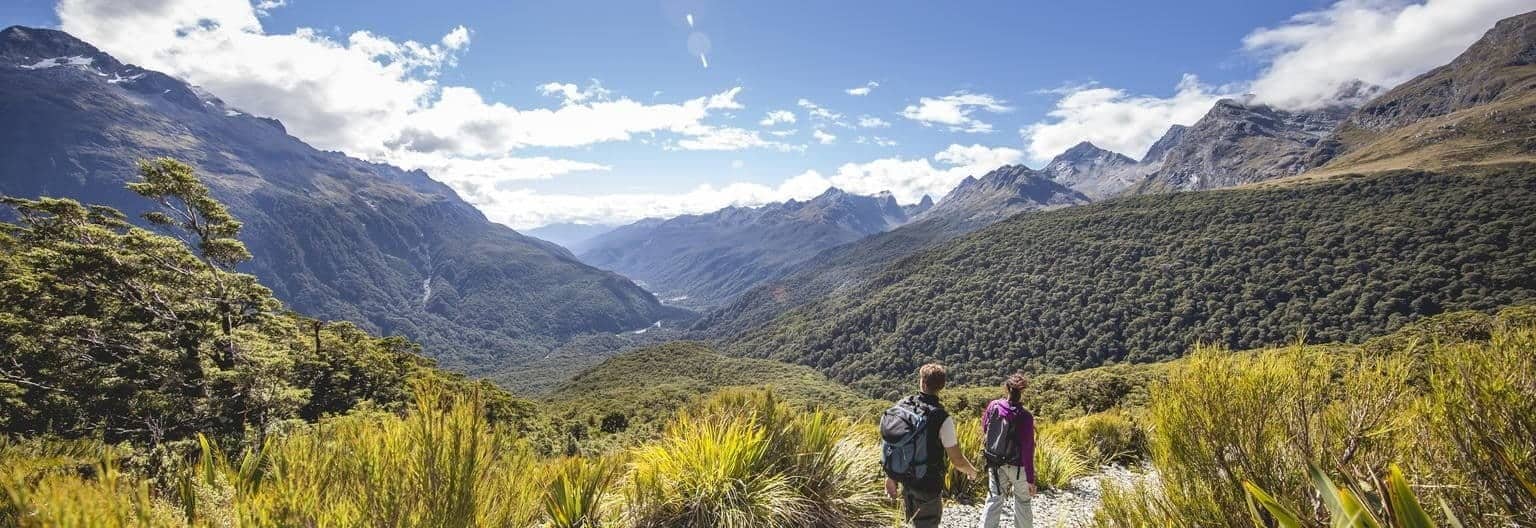
The South Island is dramatically different, with high mountains and mountain valleys, yet still with a subtropical climate. Here you will find a remarkable and enormous national park, one of 13 in total. This is also where you find the charming city of Christchurch, with 372,600 inhabitants. The city is the largest on the South Island and the second largest in the country after Wellington. The city takes its name from Christ Church College at the University of Oxford, England. Now you know.
Sights and activities:
It is almost impossible to list them all, but a recurring theme is that here are some of the best conditions for an active holiday ever: New Zealand is always in the world’s top 10 when diving spots are ranked.
There are, for example, the 144 islands of the Bay of Islands, which draw divers from all over the world. (Read more when the post about it is published.)
A good tip for seeing New Zealand is to rent a campervan and drive the country from north to south. It is affordable. Or take the next step: go trekking, hiking, or fly out as a bungy jump pilot in the original style. Bungy jumping, after all, is a New Zealand invention.
Safety and nature
New Zealand’s nature is impressive, but it can also be unpredictable. The weather can change quickly, especially in the mountains, where heavy rain showers, strong winds and cold temperatures can arrive even when it is summer in the lowlands. Always check the weather forecast before setting out on a walk, and adjust your plans accordingly.
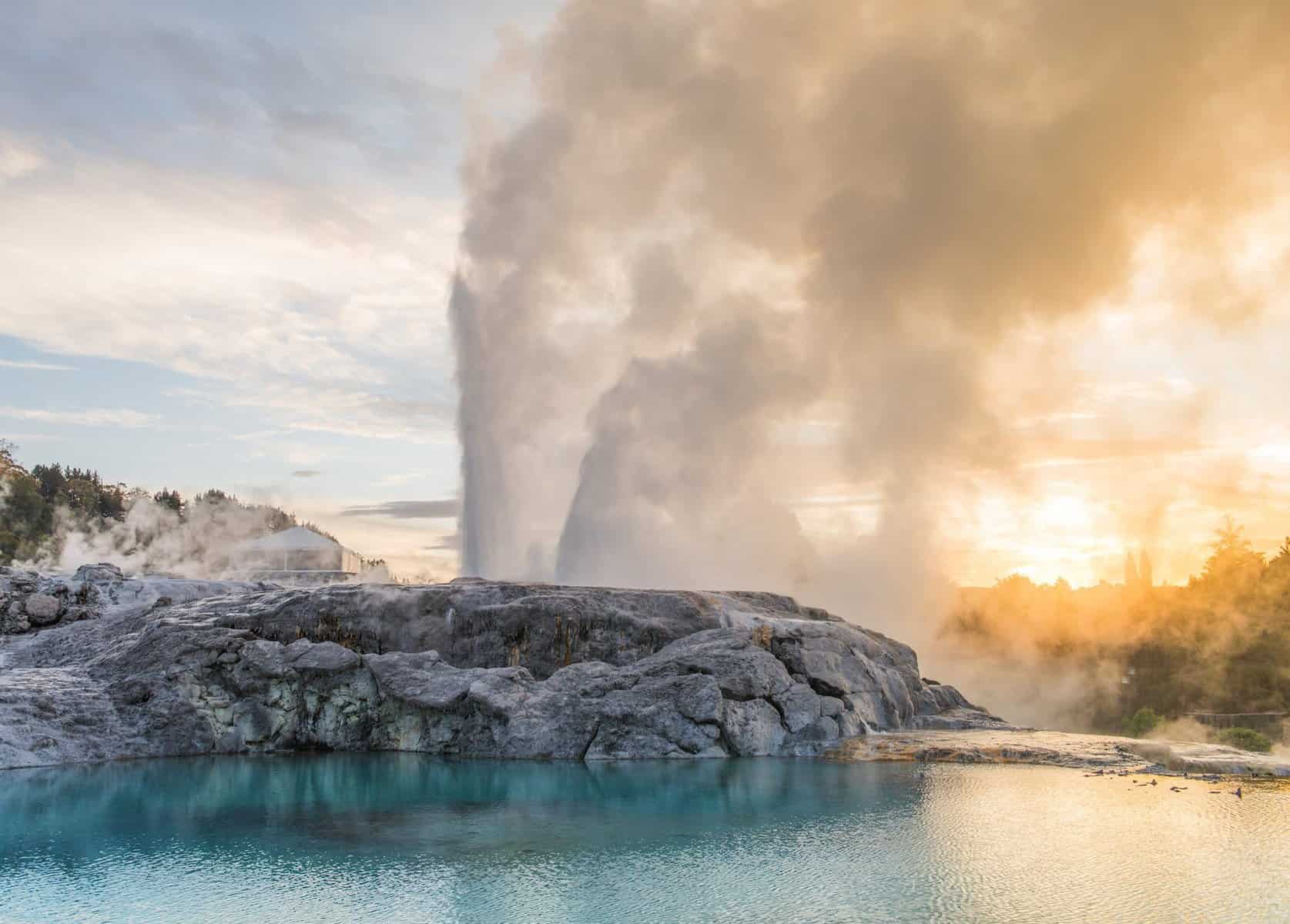
The country lies in an area of volcanic activity. Some areas, for example around Rotorua and the volcanic zones of the North Island, may have geothermal activity and sulphurous gases. Always follow the signage and the instructions issued by the authorities, and keep to marked paths only.
The sun is very strong because of the thin ozone layer over the region, and UV radiation can cause sunburn quickly. Use a high-factor sunscreen, a sun hat and sunglasses, and avoid being in the sun in the middle of the day.
On walking routes there may be closed tracks or special precautions, for example due to weather, maintenance or nature conservation. Therefore check the official notices from DOC (Department of Conservation) and read the signs at the starting point before you begin. It is also a good idea to tell someone where you are going when you walk alone.
Food and drink
New Zealand’s food culture is shaped by fresh seafood, lamb and a great fondness for local produce. Fish dishes in particular, for example fish and shellfish from the coastal towns, are popular, and there are many cafés serving light brunch and lunch dishes made with fresh ingredients.
The traditional Māori dish hāngi is prepared by placing food in an underground oven heated by stones. The dishes can vary, but meat, potatoes and vegetables are classics. You can typically experience hāngi at cultural centres and in tourist areas that offer Māori culture.
Wine also plays a major role. There are several wine regions, especially on the North Island and the South Island, and Sauvignon Blanc from the Marlborough region is world famous. Many vineyards offer tastings, which are a good alternative to an expensive dinner out.
Café culture is strong in the big cities, and the coffee is generally good. Prices for restaurant and café experiences tend to sit above Danish levels, while shopping at supermarkets and cooking for yourself is cheaper.
Prices and budget
New Zealand is not cheap, and most travellers find that the cost of transport, food and accommodation is higher than what they know from many European countries. It is therefore a good idea to draw up a budget before you set off, and to factor in the great distances between attractions.
For backpackers, the most realistic approach is to plan on a fairly low daily budget if you stay in hostels or campsites and cook for yourself. The biggest expense will often be transport, especially if you hire a car or a campervan, which also requires fuel and possibly insurance.
Mid-range travellers will typically spend more on motel or B&B accommodation and on eating out. Luxury travellers can expect to pay considerably more for hotels, guided experiences and flights between the islands or to remote locations.
Activities such as guided walks, diving, bungy jumping and helicopter flights can quickly become expensive, so include them in your budget in advance. It is also a good idea to check what is included in the prices, for example equipment and transport to and from the starting point.
Accommodation and campervans
Accommodation in New Zealand depends a great deal on where you are. In the cities there are hotels, motels and a good number of hostels, while B&B guesthouses are widespread in the countryside and in the smaller towns. Many of the small places have limited choice, so it is wise to book ahead, especially in the summer season.
Campsites are the most common form of accommodation for those travelling by campervan. There are both simple sites without facilities and larger sites with showers, kitchens and electricity. The price is generally low compared with a hotel, but it varies quite a lot from place to place.
It is important to know that sleeping in a campervan is not permitted everywhere. Many towns and natural areas have rules about where you may park and sleep in your vehicle, and in several places it is only allowed at designated sites. Breaches can result in fines, so check the local rules before you park for the night.
If you want to save money, you can use freedom camping areas where these are permitted, but remember to leave the site clean and to use toilets and dump stations where they are available.
New Zealand’s National Parks
It is almost impossible to list them all, but a recurring theme is probably that here are the best conditions for an active holiday “ever”: New Zealand is always in the top 10 in the world when it comes to diving sites. There are, among others, the 144 islands of the Bay of Islands, which draw divers from all over the world. (Read more once the post on this is published.)
A good tip for seeing New Zealand is to rent a campervan and drive the country from north to south. It is affordable. Or take the next step: go trekking, hiking, or fly out as a bungy jump pilot, even in the original style. Bungy jumping, after all, is a New Zealand invention.
Round-trip routes
A two-week round trip gives you the chance to see the highlights of the North Island, but it is hard to cover both islands. So choose either one of the islands or a shorter route, where you prioritise a few areas rather than driving the whole time.
Four weeks is a good length for a round trip that takes in both the North Island and the South Island. For example, start in Auckland and drive north to the Bay of Islands, then south towards Rotorua and Wellington. From there, take the ferry across to the South Island and continue towards Christchurch and the southern national parks.
Six weeks allows for a more relaxed trip with time for walks and detours. Here you can add a longer stop in Fiordland or at Abel Tasman, and include the smaller islands if the weather and time allow.
The ferry between the North and South Islands is an important part of the plan. It sails between Wellington and Picton, and the crossing takes several hours. It is worth booking ahead, especially if you are travelling by car or campervan in the high season.
A brief look at New Zealand’s nature and history
It is a country located in the Pacific Ocean in the Southern Hemisphere, named after the Dutch province of Zeeland. Polynesian settlers arrived in Zealand around 1280 and established Māori culture. The Māori named New Zealand “Aotearoa”, which is translated as “Land of the long white cloud”. Source: Wikipedia.
Language: English.
Time difference: 12 hours.
Getting started on your New Zealand journey
Traveltalk has several travel articles and travel tips.
The ultimate trip could be a cruise from Australia. It is possible and relatively affordable.
See here: Cruise to New Zealand
New Zealand’s beauty, an incredible flight over the islands
The little-known New Zealand islands, the Chatham Islands
Or read about the fantastic New Zealand glowworms that light up an entire cave.
Best time to travel
New Zealand lies in the Southern Hemisphere, so the seasons are the reverse of those in Europe. Summer falls from December to February, and it is peak season, both for air travel and for campervans. It is also the time when the days are longest and the weather is most often stable, but for that very reason campsites and popular walking routes can fill up well in advance.
Spring, from September to November, brings milder temperatures and fewer tourists, and it is a good period if you want to drive around in peaceful surroundings. The weather can change quickly, however, and on the South Island there can be heavy rain and cold winds, especially in the mountains.
Winter, from June to August, is cool, and on the South Island the mountains are often snow-covered. The high-country scenery is then particularly beautiful, but some roads and routes may be closed, and the days are short. Autumn, from March to May, is a good compromise, when it is still possible to see almost everything.
The North Island has a milder climate than the South Island, but it often rains all year round, whatever the season. So always pack waterproofs and a warm layer in your rucksack, no matter when you travel.
Practical travel information for New Zealand
🛂 Visas and entry
- Visa: Danish citizens need an NZeTA (electronic travel authority), including for short stays of up to 90 days. It costs approx. NZD 17–23, is valid for 2 years with multiple entries, and is applied for online or via the app before departure.
- Levy: in addition, there is a tourist and nature levy (IVL) of NZD 100.
- Passport: must be valid for at least 3 months after departure.
- Biosecurity: strict — declare food, hiking gear and natural products on arrival.
💰 Currency and money
- Currency: New Zealand dollars (NZD).
- Cards: contactless payment is used almost everywhere; cash is rarely necessary.
- Tipping: no set custom.
🚗 Transport, time and health
- Flight time from Denmark: approx. 24–30 hours with two or more stops — one of the most distant destinations in the world.
- Getting around: a rental car or campervan is the classic way to see both islands; ferry between the North and South Islands.
- Best time to travel: New Zealand summer December–February; spring and autumn are quieter.
- Time zone: +11–12 hours compared with Denmark.
- Languages: English and Māori.
- Health: no mandatory vaccinations; tap water is drinkable.
- Safety: very safe — follow the Danish Ministry of Foreign Affairs’ travel advice.

