
From the traveltalk.dk family – started in Denmark in 2018
Read in: Dansk (original)
Beautiful Bolivia with the vast Lake Titicaca
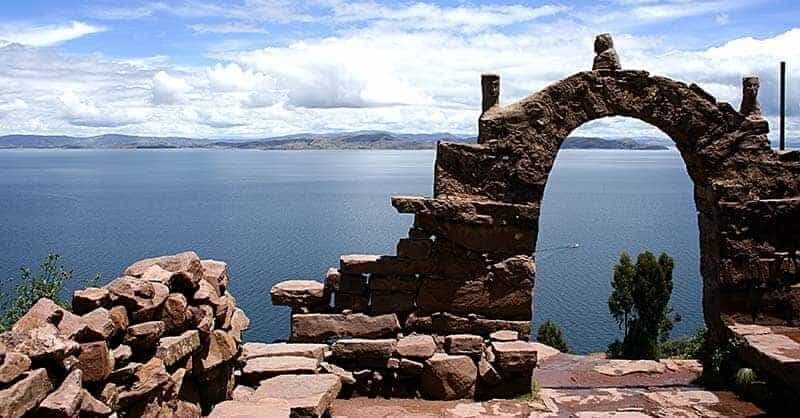
Along with Paraguay, Bolivia is the only country in South America without a coastline on either the Pacific or the Atlantic. Although the continent’s largest lake, Lake Titicaca, lies on the border between Bolivia and Peru, it is not an obvious substitute for the sandy beaches along South America’s coasts. The lake is made up of meltwater from the glaciers of the Andes.
As if that were not enough, at 3,812 metres above sea level it is the highest commercially navigable lake in the world, which gives the water a distinctly chilly bite. But if Lake Titicaca’s impressive geographical credentials are not enough to make up for the lack of swimmable beaches in Bolivia, there is the Inca empire, here called Tiwanaku, which is well worth the journey.
When is the best time to travel to Bolivia
Bolivia does not have one ideal time to visit but several, and the choice depends largely on where you want to go. The dry season from around May to October is the most common recommendation, because it rarely rains in the highlands and around the Salar de Uyuni during those months. The skies are clear, and the views are what most people come for.
The rainy season typically falls in the summer half of the year, that is, the hottest months in the southern hemisphere. This does not mean it rains all the time, but bus routes and roads in remote areas can become impassable after heavy downpours. It can also disrupt planned trips in unexpected ways, so it is worth leaving some time in reserve.
The Salar de Uyuni is a special case. When the salt flat is covered by a thin layer of water in the rainy season, it creates the famous mirror-like reflections, but the same water makes driving heavy going and some routes impassable. In the dry period the salt is hard and drivable, but that is also when the nights become very cold at altitude.
Santa Cruz and the lower-lying parts of the country are warm all year round, and here the difference between the seasons is more a matter of humidity and rain than of temperature. In the highlands, by contrast, the cold is felt sharply at night whatever the season, so pack warm clothing, even in the months when the days are pleasant.
What was in Bolivia before the Inca empire?
A good place to start is the same place as Bolivia itself: the Tiwanaku civilisation. About two hours from the capital, La Paz, lies Tiwanaku. Village excavations in the area are believed to date back to 1,500 BC, long before the better-known Inca empire emerged. Today, a guided tour through the village takes in the Gate of the Sun and other ancient ruins, while the story of Bolivia’s cultural origins is told. The cradle of the Bolivian people is also a UNESCO World Heritage Site and holds many fascinating historical and archaeological treasures for those who are interested.
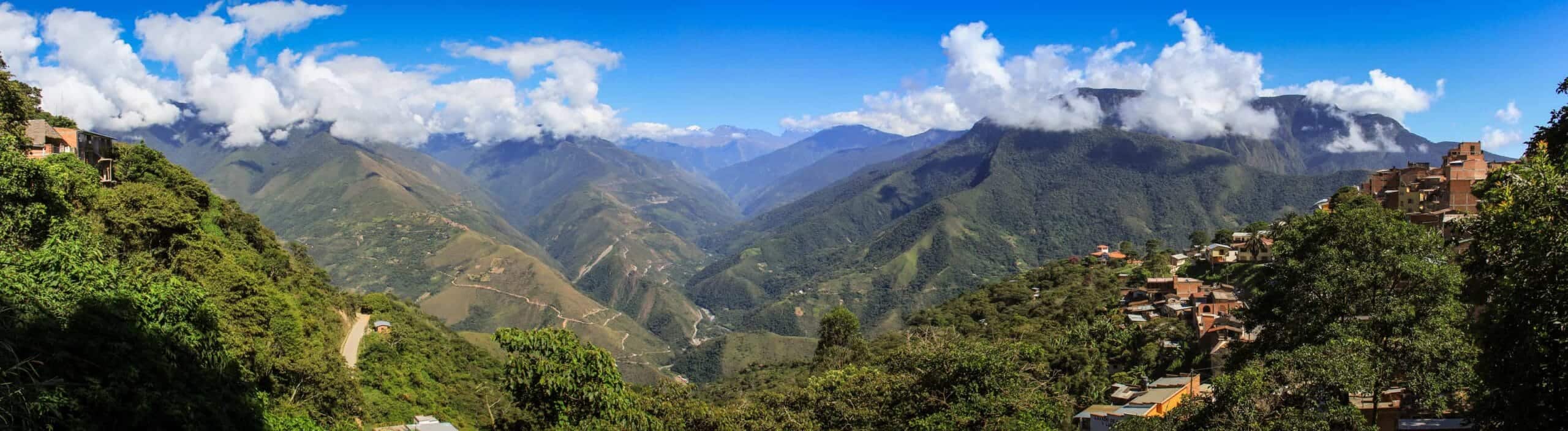
Bolivia’s many big cities
If what you are after is city life and shops rather than tales of origins, you can skip Tiwanaku and instead visit one of Bolivia’s big cities. If you have already seen historic La Paz and Tiwanaku, it is worth heading to Santa Cruz in central Bolivia. Santa Cruz is the country’s largest city and one of the fastest-growing cities in the world by population. In short, this is where things are happening in Bolivia at the moment in terms of business, culture, food and more.
Midway between Santa Cruz and La Paz you can also explore the city of Cochabamba, where you can see the statue of Christo de la Concordia (Christ of Concord), which stands about 40 metres tall, 10 metres taller than its more famous sibling statue in Rio!
Travelling to Bolivia
Although Bolivia may seem remote and daunting (the country is larger than France), there are a number of airports across the country that tie it together. The biggest are, of course, in La Paz and Santa Cruz. So do not be put off: there are plenty of options for getting to and from (or onward from!) this fascinating country.
Where to stay and eat
Accommodation in Bolivia ranges from simple guesthouses and pensions to international-standard hotels. In La Paz there are many small hotels in the central neighbourhoods, where for a modest price you get a clean room and hot water, although the rooms can be cold and have limited heating. In the more upmarket areas you will find boutique hotels with views over the city.
In Santa Cruz the choice is broader, and here you will find several larger hotels and modern apartments in the newer districts. Many of the mid-range hotels have a pool and a restaurant, which makes them practical for families and business travellers.
Local food is one of the best reasons to visit La Paz. At the markets and in the small eateries you will be served salteñas, a filled pastry with meat and spices, and they are often full of juicy broth. Sopa de maní, a peanut soup, and chairo, a soup of meat and potatoes, are typical dishes of the highlands. Fresh juice and coffee from the region are easy to find.
In Santa Cruz the dishes are more influenced by the lowlands, and grilled meat is often eaten with sides such as yuca and corn. At the markets you can taste fruit that is not found in Europe. It is wise to eat at places that are busy with local customers, as the food is then more likely to be fresh.
Getting around Bolivia
Bolivia is big, and the distances between the main places can be longer than the map suggests. Flying is the quickest way to travel between the big cities and the larger towns, and there is a network of domestic flights linking La Paz, Santa Cruz and Cochabamba. Flights are not always on time, so it is wise not to plan a tight connection right after an important appointment.
Buses are the most widely used form of transport for ordinary travellers. They run between most towns and are cheap, but journey times are long, and the roads in the mountains are narrow and winding. Many people choose night buses to save a night’s accommodation, but this requires patience and good sleep in a seat that is not always comfortable.
Renting a car gives you freedom, especially if you want to head out to the Salar de Uyuni or the more remote lagoons. Many roads away from the main routes are unpaved, and some are demanding even for experienced drivers. The altitude makes engines sluggish, so it is a good idea to choose a vehicle with good ground clearance and to check the route carefully before setting off.
Prices vary widely by mode of transport and distance, and they change over time. It is therefore best to ask locally or with a provider about current fares, rather than relying on figures from older sources.
Good to know about Bolivia
Weather: El Alto and La Paz have a subtropical highland climate; both cities sit several kilometres above sea level, so it is not all sunshine and 30 degrees. Both Santa Cruz and Cochabamba are considerably warmer throughout the year, with summer conditions even during the winter months.
Currency: Boliviano (BOB)
Capital: La Paz
Population: 10.72 million (2015)
Language: Spanish
Safety and travel advice
Bolivia is a country where most trips pass without problems, but there are conditions worth knowing about. In the cities, petty theft and pickpocketing are the most widespread problems, especially at busy markets, on buses and around tourist areas. Keep bags in front of you, and do not leave valuables visible in the car.
It is also wise to be careful about walking alone on dark streets in La Paz and Santa Cruz. Many people choose to take a licensed taxi rather than walk, especially in the evening. This is no guarantee, but it reduces the risk.
On the country roads, traffic and the condition of the roads are the greatest risk. Accidents happen, and many mountain roads are narrow and without guardrails. Therefore choose to drive in daylight and avoid driving on routes you do not know during the rainy season. Roadblocks and demonstrations also occur, and they can disrupt travel plans at short notice.
Before departure, you should check the current travel advice for Bolivia issued by the Danish Ministry of Foreign Affairs, as it is updated continuously. It gives the latest assessment of the security situation and recommendations for the places you plan to visit.
Practicalities before departure
Many travellers can visit Bolivia with a valid passport, but it is wise to check the current entry requirements with the official authorities before buying a ticket. The rules can change, and it is not something you want to discover for the first time at the airport.
The local currency is the boliviano, and it is an advantage to have local money for small purchases, especially outside the cities. Credit cards are not accepted everywhere, and cash may be necessary in smaller towns and for transport. It is also wise to carry a fair amount of cash, as cash machines do not always work.
The price level is generally low compared with Denmark, but this applies especially to food, local transport and simple accommodation. Excursions, guided tours and special hotels can be more expensive, and prices vary a great deal between providers.
Altitude sickness is the most common challenge for most people. La Paz and El Alto lie so high that many people feel it on the first day, with headache, tiredness and nausea. It helps to take things easy the first few days, drink plenty of water and avoid alcohol. In case of serious symptoms, seek a doctor. It is wise to speak with your own GP before departure about vaccinations, which depend on the individual’s itinerary, and about medication for altitude sickness.
Worth visiting in Bolivia
Tiwanuka
Christo de la Concordia
Salar de Uyuni
Laguna Colorada
Laguna Verde/Licancabur
Fly to Bolivia
Air Europa
Iberia
LATAM Chile
TAP Portugal
Travel agencies
Kipling travel
Jysk-rejsebureau
Hannibal
Albatros-travel
See also: Argentina as a destination
Read more about South America here
More articles about Bolivia
More about Bolivia
Nearby
Chile
Chile runs 4,270 kilometres down the western edge of South America and is, on average, just…
Uruguay
Uruguay has by now distinguished itself so much that we can confidently call the country the…
Brazil
Brazil borders every South American country except Chile and Ecuador, and at the 2022 census the…


