
Ask a first-time visitor what they expect from Scandinavia and you tend to get the same three words back: cold, expensive, orderly. All three are technically true and all three miss the point.
Understanding the five small nordic countries can greatly enhance your travel experience, as each country has its own identity and charm.
They are not interchangeable. A Dane and a Norwegian will tell you so, at length, usually over a drink neither can quite afford at home.
When visiting the five small nordic countries, you’ll discover that each has its own unique customs and traditions that contribute to the region’s rich culture.
The region, precisely
“Nordic” gets used loosely, so worth being precise: five sovereign countries, plus three autonomous territories that belong to two of them.
Traveling through the five small nordic countries allows you to appreciate their beautiful landscapes and vibrant cultures.
Exploring the unique cultures and landscapes of the five small nordic countries reveals the rich diversity and individuality that often gets overlooked. The five small nordic countries each offer distinct experiences that highlight their unique characteristics.
The five countries:
The three autonomous territories:
- Greenland (part of Denmark)
- The Faroe Islands (part of Denmark)
- Åland (part of Finland)
Each territory runs its own government for most domestic matters, while defence and foreign policy stay with Copenhagen or Helsinki. Each is also genuinely distinct from the country it belongs to, not a miniature version of it.

Greenland is the world’s largest island and barely feels like an extension of Denmark at all — 80% ice sheet, a population under 60,000, and a culture rooted in Inuit tradition rather than Scandinavian design. Travel here means dog sledding, icebergs the size of buildings, and towns only reachable by boat or plane.
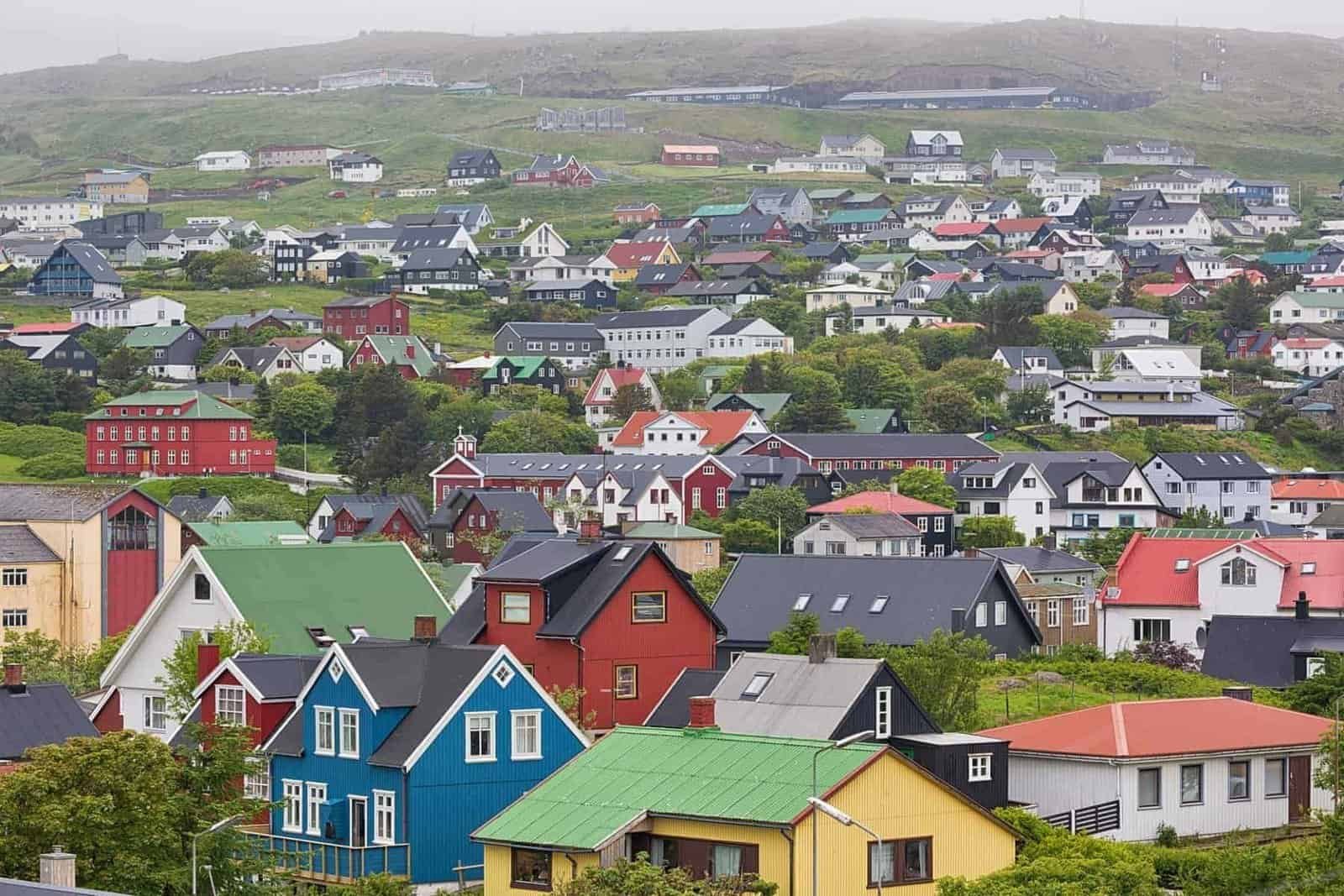
The Faroe Islands, 18 volcanic islands halfway between Norway and Iceland, run on sheep, seabirds, and some of the most dramatic sea cliffs in the North Atlantic — villages like Saksun and Gásadalur look almost designed for a film set, minus the design.

Åland is the odd one out administratively — an archipelago of over 6,500 islands between Sweden and Finland that legally belongs to Finland, but is entirely Swedish-speaking and self-governing enough to feel like a country of its own, up to a point: Helsinki still holds foreign policy and defence, and the islands have been demilitarized by international treaty since the 19th century. Expect sailing, cycling between islands on causeways and ferries, and a pace closer to rural Sweden than to Helsinki.
Four countries, four different relationships with nature
Each of the five small nordic countries has a unique approach to relationship with nature, offering various outdoor adventures.
The easiest way to understand the region is to understand that each country made a different peace with its landscape.
Norway went the opposite direction. Here the land refused to be tamed, so the culture organized itself around respecting rather than conquering it — fjords too steep to farm, coastlines too broken to build continuous roads, a population so thin in the north that entire municipalities share one doctor.
Sweden sits between the two, geographically and temperamentally — big enough to contain both a capital as cosmopolitan as Stockholm and an archipelago of 30,000 mostly empty islands within an hour of it.
What actually justifies the price
The “expensive” reputation is earned and worth addressing directly, because it scares off travelers who’d otherwise book.
The high prices associated with traveling to the five small nordic countries are often justified by the quality of experiences you receive.
The season question
Timing here matters more than almost anywhere else in Europe. Summer brings the region’s signature trick — near-endless daylight, with parts of northern Norway and Finland seeing the sun not set at all for weeks — and turns the Norwegian fjords and Swedish archipelago into some of the most rewarding hiking and sailing terrain on the continent. Winter flips the offer entirely: short days become the backdrop for the aurora borealis, for husky sledding across Finnish Lapland, for the particular hush of a Nordic city under snow. There is very little “shoulder season” disappointment here — the region simply becomes a different destination twice a year, and both versions are worth the trip.
Certain times of the year are particularly magical in the five small nordic countries, making them ideal for exploration and adventure.
Where to start
Copenhagen remains the most efficient introduction: a compact, walkable capital where design, food, and Nordic modernity are all on display within a single afternoon.
Starting your journey in one of the five small nordic countries can provide a deeper understanding of their unique offerings.
Go deeper
Each of these countries deserves its own visit rather than a stop on a checklist — start with Denmark, Norway’s fjords, Sweden’s archipelago, or Finland’s lakes and sauna culture, or Iceland’s active volcanic landscape.
To fully immerse yourself in the culture and beauty of the five small nordic countries, plan your itinerary carefully.
It’s essential to dedicate enough time to each of the five small nordic countries to fully immerse yourself in their culture.
365 ways to travel the world
Travel the world through our films — a new place every week.
Boracay — Shangri-La of the Philippines
Japan beyond Tokyo, Osaka & Kyoto
Provence — the Mediterranean dream
7 Unknown Beaches in the Philippines
Jungle holidays — wilder, greener
Cruising the open water
Eight sites, one family — travel, wine, sport and sharper thinking. Explore the rest of the universe.