
From the traveltalk.dk family – started in Denmark in 2018
Read in: Dansk (original)
A trip to Cuba will cost you the right to fly to the USA on ESTA
Cuba still delivers the picture the island is known for. Turquoise and yellow 1950s Chevrolets, hand-rolled cigars, colonnades with flaking paint, and music spilling through open doors in Havana. The Buena Vista Social Club sold that atmosphere to the whole world in 1997, and it is still there.
But the trip has come with a price that isn’t in any brochure. On 12 January 2021 the USA put Cuba back on its list of state sponsors of terrorism, and the consequences hit European travellers. If you have been to Cuba on or after that date, you can no longer enter the USA on an ESTA. Denmark is part of the visa waiver scheme, the rule applies, and it has been fully enforced since 6 July 2023. An ESTA that has already been approved will be revoked if the Cuba trip is discovered.
You are not barred from the USA. You will need to apply for a standard tourist visa at the embassy instead, and that means a waiting time and a fee, not a no. But the order of things determines how much of a hassle it is: New York in spring and Havana in autumn is easier than the reverse plan. There is one more thing to plan around, and we will come back to it.
How to get there
Most European travellers fly into Havana, to Aeropuerto Internacional José Martí, the country’s largest airport. Direct flights operate from several European airports, but routes change from season to season, and some run only seasonally. Flights from Denmark usually require a connection, and the price varies a great deal with the time of booking and the travel period. Search well in advance, and be aware that Havana routes are often best booked up during the high season in the winter months.
Entry requires a valid passport with at least six months’ validity beyond your return date, and a tourist card, which is usually issued by the airline or the travel agency you use. The tourist card is a small piece of paper, but it is important that you have it and that you check it is in your passport or on your booking confirmation. Many travellers forget that the tourist card is a requirement for entering the country.
Travel insurance should cover medical treatment, repatriation and evacuation, and it should be valid in Cuba. Standard policies do not always provide the cover you need, so read the terms before departure. On arrival it is important to bring cash in euros, because cards do not always work, and currency exchange takes place at banks and exchange offices, while there are also rules on when and how you may exchange money.
Havana, two million people and a World Heritage Site under restoration
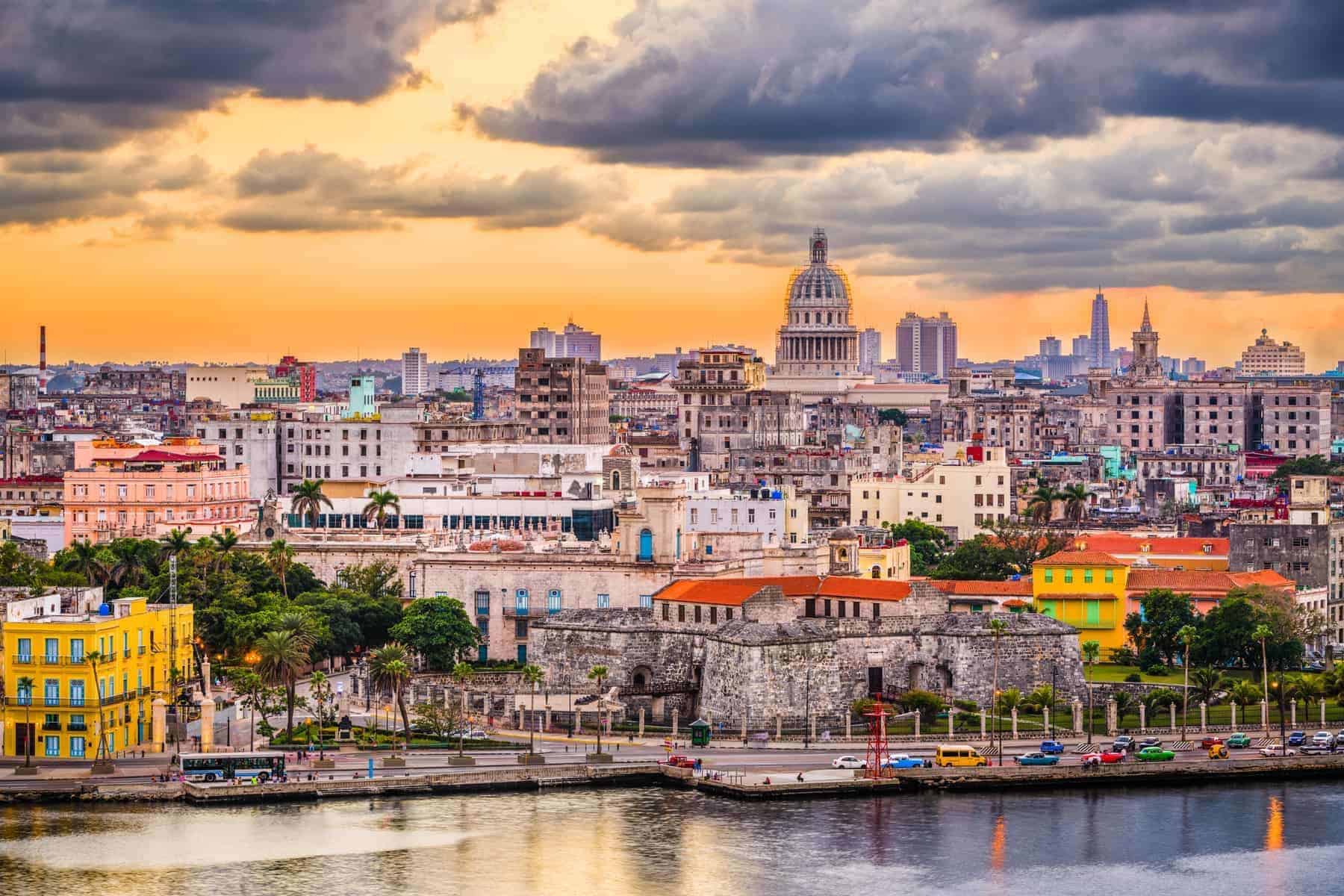
Havana Vieja, the old town centre, was inscribed on the UNESCO World Heritage List in 1982, along with the fortifications around the harbour entrance. Restoration has since been driven by the city historian’s office, the Oficina del Historiador, square by square: Plaza Vieja, Plaza de la Catedral, Plaza de Armas. The work is not finished, and that is part of the experience. You walk from a street where the façades stand freshly painted in three colours into the next, where a building is propped up with timber beams.
Ernest Hemingway lived in Cuba for over twenty years, from 1939 to 1960 — longer than in Paris and longer than in Key West. The Finca Vigía house outside the city is a museum today, and the fishing boat Pilar stands in the garden. The Old Man and the Sea was written here. The bars El Floridita and La Bodeguita del Medio live comfortably on the connection, and it is worth knowing before you join the queue: they are attractions today, not hidden gems.
The power cuts — the thing we promised to come back to
Cuba’s electricity grid has collapsed nationwide six times in 2026. Most recently on 3 August, when it went down again the following day while the utility was trying to bring the grid back up. In July it collapsed three times in nine days. The causes are well documented: fuel shortages and thermal power plants, several of which are more than thirty years old.
For a traveller, this means lifts, air conditioning and fridges that stand still for hours — and taps that run dry because the pump has no power. Take a power bank with you, take cash in euros, and do not count on cards always working. That does not make Cuba a place to avoid. It makes it a place not to travel to unprepared.
The island has lost over one and a half million inhabitants since 2020
The figure that explains most of what you encounter is the population. At the end of 2025, the Cuban statistics office ONEI put the population at 9,434,593. The year before it was 9,748,007, and in 2020 it stood above eleven million. That is nine consecutive years of decline, driven by emigration and by the lowest birth rate the country has ever recorded.
It shows on the menus, which have been cut back to whatever the kitchen could get hold of that day. The private restaurants, paladares, became legal in 1993 and were given much freer rules in 2011, and they are often both better and more reliable than the hotel restaurants. Ask what they have, rather than ordering from the menu.
What it costs
Price levels in Cuba are very uneven. Tourists often pay in euros or in the currency applicable to visitors, and prices at hotels and in the best restaurants sit far above what locals pay. A single meal at a private restaurant can be cheap, but it can also cost more than expected if you eat at a tourist spot. Set a realistic budget, and speak to your bank about exchange rates and fees before you travel.
Food and accommodation are the biggest expenses. Casas are usually cheaper than hotels, and they often include breakfast. A hotel room in the best areas can command a far higher price. Eating in private restaurants is often the best combination of price and quality, while the big hotel restaurants are more expensive. Drinks and transport add up too, especially if you use taxis between towns.
Cards do not always work, and cash is essential. Bring enough cash in euros for the whole stay, and exchange as you go so you do not run out. Avoid relying on a single cash machine, and keep your money split up. Always ask the price before you order, and get receipts where possible.
How to get around
Transport between towns in Cuba is slower and less predictable than the maps suggest. Roads are often in poor condition, and there are fewer motorways than you might expect on an island of that size. Buses between the major cities do exist, but departures are few, and tickets are often sold only the day before. So plan with a buffer, and ask locally how things work in the exact period you are travelling.
Taxis are the most direct solution, and they come in two forms: the official ones, often old American cars, and the private ones, which can be arranged directly with the driver. The fare should be agreed before you get in, and it is a good idea to ask a local host family or a hotel what the journey usually costs. Colectivos are shared cars or minibuses that run on fixed routes between towns. They are cheaper than a private taxi but require patience, as they only leave once they are full.
Rental cars are available, but they are expensive, and it can be difficult to get one at short notice. If you drive yourself, be prepared for poor roads, missing signs and petrol stations that run out of fuel. The journey from Havana to Viñales typically takes a good few hours by road, and the journey from Havana to Trinidad is longer. Check the times with local contacts before you plan your day.
When to go
Cuba has two seasons in practice: a dry period from winter to early spring, and a wet period that really sets in during the summer. The dry season, roughly November to April, is the one most people choose, because the skies are clear and the humidity is lower. It is also the time when walking around Havana Vieja on foot is most pleasant, as the shade between the columns is appreciated and the streets are less hectic during the midday heat.
From June to November is hurricane season. Rain often comes in short, heavy showers in the afternoon, and the weather can change quickly. In the parts of the island that lie high, such as the Viñales valley, it may be raining while the coast is sunny, and vice versa. If you travel in that period, you should have travel insurance that covers changed plans, and you should follow developments closely when a storm approaches.
Eastern Cuba, including Santiago de Cuba and Baracoa, is more exposed to severe storms than the western part, and it is worth bearing in mind if you are planning a route from west to east. The weather also affects transport: cancelled flights and closed roads are not uncommon in storm season, so avoid planning tight connections during that period.
Beyond Havana
The Viñales valley in the west was added to the World Heritage List in 1999 for its landscape: mogotes, vertical limestone cliffs rising from a valley floor where tobacco is still grown with oxen and dried in palm-thatched barns. Trinidad on the south coast gained its place as early as 1988, together with the sugar valley Valle de los Ingenios behind the town. Che Guevara’s mausoleum is in Santa Clara in the middle of the island, not in Havana, but a good 270 km away.
The eastern end requires a caveat. Hurricane Melissa struck Santiago de Cuba province near Chivirico on 29 October 2025 as a Category 3 storm with winds of around 195 km/h, the day after it had devastated Jamaica. Around 735,000 people sheltered in shelters, houses collapsed and roads were blocked. If you are going to Santiago, Baracoa or Holguín, ask specifically about the place you are booking. If you are heading on to the neighbouring islands, we have gathered them in the Caribbean guide.
If you want the whole island in one go, it is covered in our introduction to travel in Cuba.
Where to stay
Casas particulares are private rooms let out in people’s homes and are the most common form of accommodation outside the big city hotels. The host has a room or apartment for guests, and you stay with a family who will often give you good advice about the city. Quality varies, but the best places are clean, well kept and close to the centre. Booking is often done through local websites or directly with the host, and it is a good idea to get confirmation in writing before you travel.
Hotels are larger and more uniform, and they are often located in the areas that have been opened up to tourism. They usually have a steady supply of electricity and water, but this is not guaranteed, and the price can be high relative to the standard. Choose a hotel if you want a fixed framework and service, and a casa if you want to experience more of local life.
Havana Vieja and Centro Habana are popular with travellers who want to be in the middle of the city and close to the music and bars. Vedado and Miramar are quieter and more modern. Outside Havana you will typically stay in smaller towns such as Viñales or Trinidad, where casas are the most obvious choice. Book well ahead in high season, and always ask about electricity and water before you confirm.
Worth seeing
- Havana Vieja, the old town and its fortifications (UNESCO 1982)
- Finca Vigía, Hemingway’s house outside Havana
- The Viñales valley and tobacco fields (UNESCO 1999)
- Trinidad and Valle de los Ingenios (UNESCO 1988)
- Castillo del Morro at the entrance to Havana harbour
- Che Guevara’s mausoleum in Santa Clara
More articles on Cuba
More about Cuba
Nearby
Haiti
Haiti (Haitian Creole: Ayiti, French: Haïti) lies in the Caribbean and shares the island of Hispaniola…
Cayman Islands
Set in exceptional tropical surroundings, the Cayman Islands offer a luxurious blend of sun-drenched beaches and…
Guadeloupe
Guadeloupe, or the Guadeloupe Islands in English, is a small archipelago under French rule that is…


