
From the traveltalk.dk family – started in Denmark in 2018
Read in: Dansk (original)
Come to Curaçao and dance with dolphins
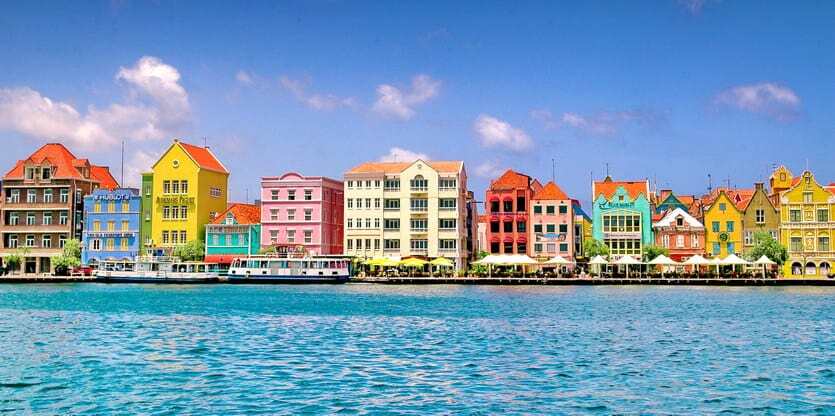
The capital, Willemstad, Curaçao is on the UNESCO World Heritage List and has one of the busiest harbours in the Caribbean. Along the canal that leads into the natural harbour, there are houses and buildings in Dutch architecture and Caribbean pastel colours. Super nice and different. The town is quite unique, and it is really lovely simply to go for a walk.
Curaçao at a glance
The island’s main town is Willemstad, which is the capital of the country that since 10 October 2010 has been an autonomous state within the Kingdom of the Netherlands and lies in the southern part of the Caribbean Sea.
Capital: Willemstad
Area: 444 km²
Currency: Netherlands Antillean guilder
Continent: South America
Population: 158,040 (2015)
Official languages: Dutch, Papiamento, English
The Dutch Caribbean
Practical information
The currency on Curaçao is the Netherlands Antillean guilder, and US dollars are also widely accepted in many places. Card payments are common in town and at the larger hotels, but it is useful to have some cash for smaller purchases and for taxis. If you want to know more about how best to use your payment card abroad, you can read about the topic here: using a payment card abroad – what should you remember?
The official languages are Dutch and Papiamento, and English is widely spoken in the tourist areas. Many people will also get by in Spanish. It is worth learning a few words of Papiamento, as guests are warmly received when they make the effort.
For Danish citizens, the general rules for entry to the Kingdom of the Netherlands and its territories in the Caribbean apply. Always check the current passport requirements and any necessary documents with the official authorities before you travel, as the rules may change.
Prices vary a great deal. A meal at a simple local restaurant is generally lower than in a larger city in Europe, while fine restaurants and hotel bars are more expensive. Taxis and car hire are relatively expensive, and activities such as diving and boat trips can also cost quite a bit, so it is wise to compare before you book.
Food and beaches
Keshi yena is one of the dishes you often come across in local eateries. It consists of a cheese-stuffed chicken baked in a shell of Gouda, and it has its roots in the island’s blend of Dutch and African-Caribbean food culture. The dish is often served at celebrations and holidays, but can also be found in many restaurants all year round. The island’s cuisine is built on fish, meat and spiced sauces in general, and you will find plenty of fresh sea fish in the smaller eateries along the coast.
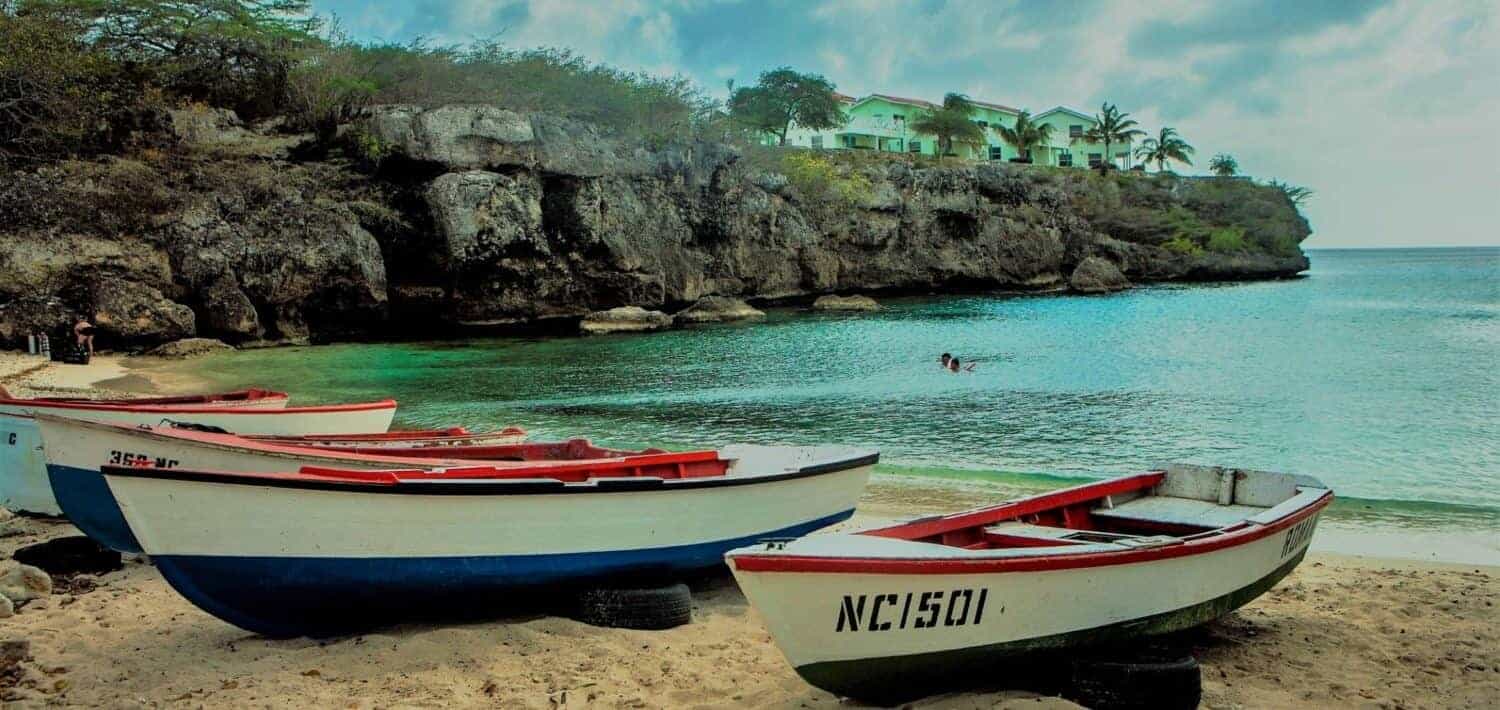
The beaches on Curaçao vary a great deal. Some are small, sheltered coves with clear water, while others are more open and exposed to waves. Snorkelling is one of the biggest experiences, because the coral reefs lie close to the shore. Many of the best spots can be reached without a boat, and it is an obvious way to get a sense of what lives beneath the surface.
The water is often calm on the leeward side of the island, but currents can be strong elsewhere. It is therefore a good idea to ask locally before going into the sea, especially if you are inexperienced on reefs.
If you are interested in diving, you can read more about diving on the island, where the reefs lie close to land. The island’s coasts also offer hiking trails and viewpoints, which give a quite different perspective on the landscape.
Accommodation and areas
Willemstad is the obvious starting point for anyone who wants to experience the town’s colourful houses and Dutch character, and here you will find both smaller guesthouses and larger hotels. Many choose to stay in town because there are good restaurants and the chance to walk around the old quarters. Price levels are generally moderate in the smaller places to stay, while the larger hotels are higher.
Along the north coast and the small bays on the island’s western side you will find the classic beach hotels with direct access to the water. Here there are often more facilities such as a pool, restaurants and watersports, and it is a natural choice for those who want a more all-in-one holiday. The price typically follows quality and location, and the most expensive places are often found by the most popular beaches.
There are also smaller homes and apartments scattered around the island, especially in areas outside the capital. They can be a good choice for longer stays, but bear in mind that shops and restaurants are further away, and you can seldom manage without a car.
It is wise to check the exact prices and locations, as availability changes and the standard varies a great deal from place to place.
Getting around the island
The most flexible way to get around Curaçao is by hire car. The island is not large, but road standards vary considerably, and some of the small roads towards the north and down to the coast are narrow and unlit. It is a good idea to have an international driving licence and some experience of driving on the left, which is the local rule.
Taxis are an obvious choice if you only need transport for individual trips, for example from the airport or into town. It is, however, a good idea to agree on the price before you get in, as meters are not always used. The local bus network exists, but it is less frequent and less suitable for getting to the more remote beaches.
Many travellers combine the two and use taxis in town and a car for the rest of the island. Whatever you choose, you should have local currency in cash to hand for smaller payments, even though card payment is common in most larger places.
Parking in Willemstad can be limited in the busy areas, so it is worth planning your trips well in advance, especially if you want to visit the most popular sights on a weekday.
How to get there
Curaçao has an international airport, Hato Airport, just outside Willemstad. It is served by airlines from Europe and North America as well as a range of connections to the rest of the Caribbean. Many travellers from Europe fly via a hub in North America or Europe, and there are often direct routes from the major Dutch airports in the seasons when demand is highest.
From North America, connections are typically shorter, and several larger cities have regular departures. From Europe the journey can be long, and you should as a rule expect at least one stopover. Always check whether the route involves a change, and how much time there is between flights, so that you are not caught off guard on arrival.
Once the plane lands, you pass through a relatively straightforward arrivals hall. It helps to have a plan for getting to your accommodation, especially if you arrive late in the evening, when public transport is no longer running.
Willemstad’s harbour is also a stop for cruise ships, and on days when several large ships are docked, the city centre can be busier than usual.
Best time to travel
Curaçao lies outside the area where hurricanes typically track, which makes the island one of the more predictable destinations in the Caribbean. The weather is warm and dry for most of the year, and the temperature varies only slightly from summer to winter. This means you can travel almost all year round without having to expect major climatic upheavals.
The most noticeable difference lies in rainfall. Most rain falls in the wetter months from autumn through winter, but the showers are usually brief and soon give way to sunshine. The actual hurricane season in the Caribbean falls later in the year, and Curaçao is one of the islands that is rarely hit directly.
The drier months with easterly winds are popular with divers and snorkellers, as visibility underwater is often good. The wind can, however, be strong along some of the coasts, so it is worth checking the forecast before planning longer boat trips.
The high season falls in the winter half of the year, when there are the most visitors, and accommodation prices follow demand. The greatest tranquillity is found in the warm months of early summer and the early autumn period, when both the beach and the town feel more relaxed.
More about Curacao
Nearby
Bermuda
Bermuda is an island group in the Atlantic Ocean, forming part of the British Overseas Territories…
Grenada
Grenada is close to being the forgotten island of the Caribbean, but it has become very…
Dominican Republic
The Dominican Republic is an affordable slice of the Caribbean that still feels gloriously tropical. You…


