
From the traveltalk.dk family – started in Denmark in 2018
Read in: Dansk (original)
US Virgin Islands
The US Virgin Islands are a rather shameful chapter in Denmark’s history. The islands were sold in 1917, amid financial crisis, following a referendum in 1916 held during the First World War. It produced a two-thirds majority in favour of the sale. Had the islanders themselves been asked, the vote would have been close to unanimous in wanting to leave Denmark. We were not popular. The price was USD 25 million. Today, one of the finest residences on the islands could be had for that sum, or perhaps three of them, a estate agent would no doubt have added.
Enterprising Danes in the West Indies
In the historical context of the time, the Danes produced mainly sugar and rum, with the inhabitants employed as “workers” under conditions that were effectively akin to slavery. The US Virgin Islands had been Danish-owned since the 1700s and were acquired in several stages. So they form an integral part of Danish history spanning several centuries, which was lost in 1917.
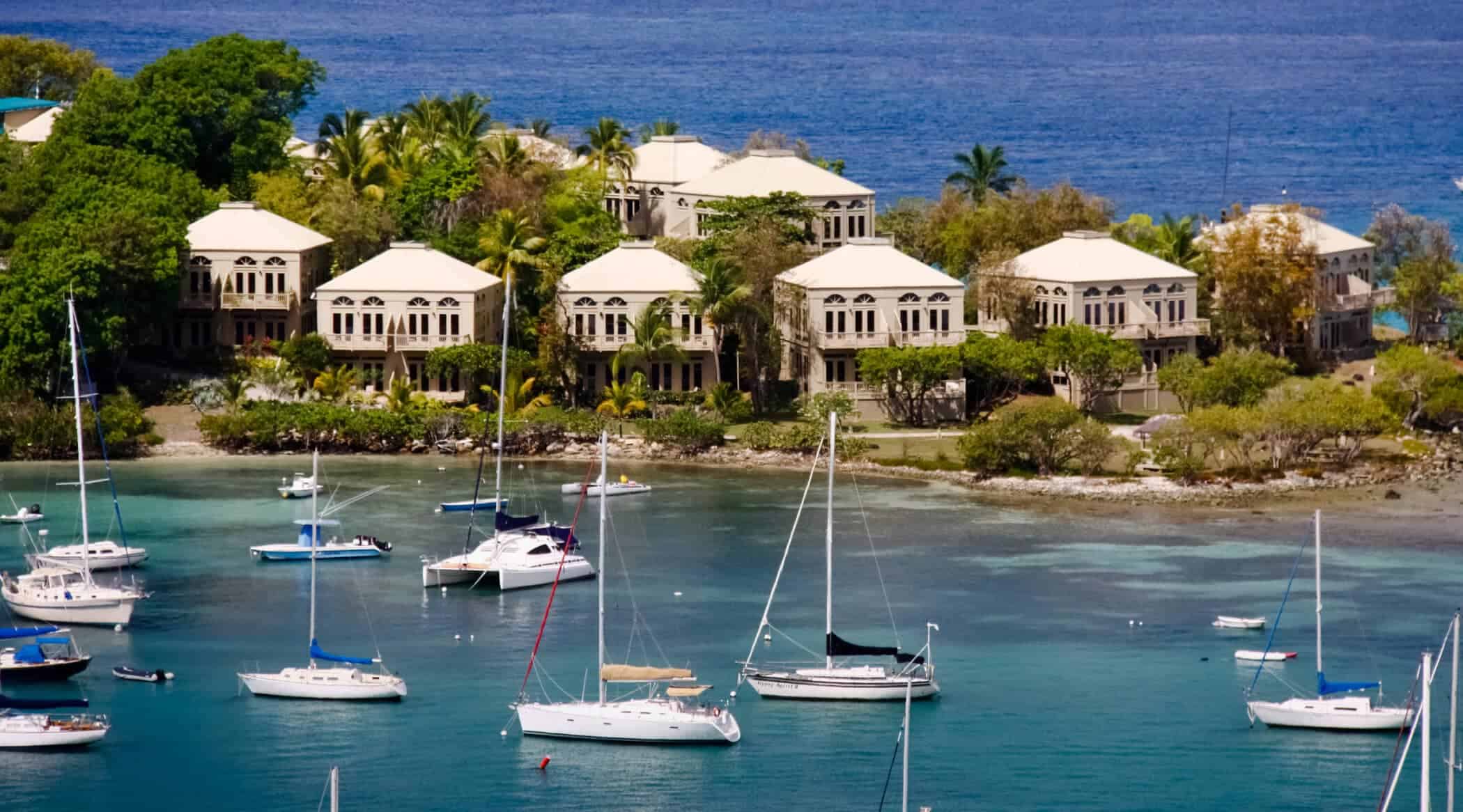
A sense of national baggage and self-understanding, along with the curiosity to see the islands with one’s own eyes, comes along on arrival in the Virgin Islands. It is therefore also a national and emotional journey.
And what greets you are the most beautiful islands, the friendliest people and a wonderfully warm travel experience.
Magical journeys to the Caribbean
How to get there
There are no direct flights from Denmark to the US Virgin Islands, so most travellers go via an American hub. The most common route is to St Thomas, where the international airport is located. The flight from Europe takes somewhere between ten and twelve hours, depending on the connection and stopover, and you should expect at least one change along the way.
It is also worth remembering that the United States requires visitors to obtain an electronic travel authorisation, and that your passport must remain valid for the whole of your stay. Check the current requirements well in advance, as they can change.
Ferries run between the islands. St Thomas and St John are linked by a short ferry crossing from Red Hook on St Thomas, and there are also ferry connections to St Croix, which lies further away and is a longer journey. Schedules vary, so it is wise to check them on the day you travel.
Getting around the islands
On St Thomas and St Croix, the easiest way to see much of the US Virgin Islands on your own is to hire a car. You will need to get used to driving on the right-hand side of the road, as this is the United States. The roads can be narrow and winding, particularly in the hills, and in many places there are no pavements.
Taxis are the most widespread alternative to a car, especially at hotels and in the larger towns. It is customary to agree on the fare before getting in, and it is useful to ask the price in advance, as taximeters are not always used.
On St John there are no major roads, and part of the island is a national park. Taxis or ferries are the norm here, and many visitors hire a small jeep. Water taxis and small boats are a natural way to reach the beaches and coves between the islands, and are often the most memorable way to travel.
Practical matters and costs
In the US Virgin Islands, currency is the US dollar, and it is the only currency you need to plan for. Many places accept cards, but it is a good idea to carry some cash for taxis, small stalls and tipping.
The language in US Virgin Islands is English, and you will often hear the local Creole variety too. The electricity supply follows American standards, so you will need an adapter for sockets and voltage, and many hotels do not always have the best connectivity, so it is sensible to have a plan for charging your devices.
Prices are high in US Virgin Islands compared with many other Caribbean destinations, particularly for food, accommodation and excursions. A meal at an ordinary restaurant can quickly cost the same as in a Danish town, and the same goes for trips to the beach and boat excursions. So set a budget, and consider preparing your own meals where possible. Healthcare is good but expensive, so travel insurance that covers medical treatment is a sensible investment.
Accommodation and areas
The choice ranges from large resorts with their own beaches to private homes that can be rented through booking platforms. In between are smaller guesthouses and small hotels, which are often where you best encounter everyday island life.
St Thomas has the most hotels and the best selection of restaurants and shops, which suits those who want city culture close at hand. Charlotte Amalie, the capital, is located here, and the historic district is an obvious place to walk on a morning.
St John is smaller and quieter. Large parts of the island are national park, and there are few big hotels. It suits those who want to hike, snorkel and be in nature. St Croix is the largest island and has a different character, with several small towns and a more rural atmosphere, making it a good choice for those who want space and calm.
Best time to travel
The islands enjoy a warm and fairly steady climate all year round, so there is no single obviously bad month. The difference lies in rainfall and in price. Winter, from December to April, is the driest and most popular period, and this is when hotels charge their highest rates.
The rainy season typically arrives towards the end of the year. That does not mean it rains all day. It is often short, heavy showers, after which the sun returns. In return, this is when there are fewest travellers and the lowest prices.
You should also be aware of the hurricane season, which spans the autumn months and officially runs from June to November. This is the period when the risk of storms is greatest, and when you should have travel insurance that covers cancellations and changes. If you travel in the low season, it is a good idea to read the current weather forecasts before you book.
More about US Virgin Islands
Nearby
Jamaica
Jamaica means reggae and white sand, and has done ever since Bob Marley turned the island…
Cayman Islands
Set in exceptional tropical surroundings, the Cayman Islands offer a luxurious blend of sun-drenched beaches and…
Guadeloupe
Guadeloupe, or the Guadeloupe Islands in English, is a small archipelago under French rule that is…


